


Feature: ROCKY HORROR PICTURE SHOW at CALS Ron Robison in Little Rock
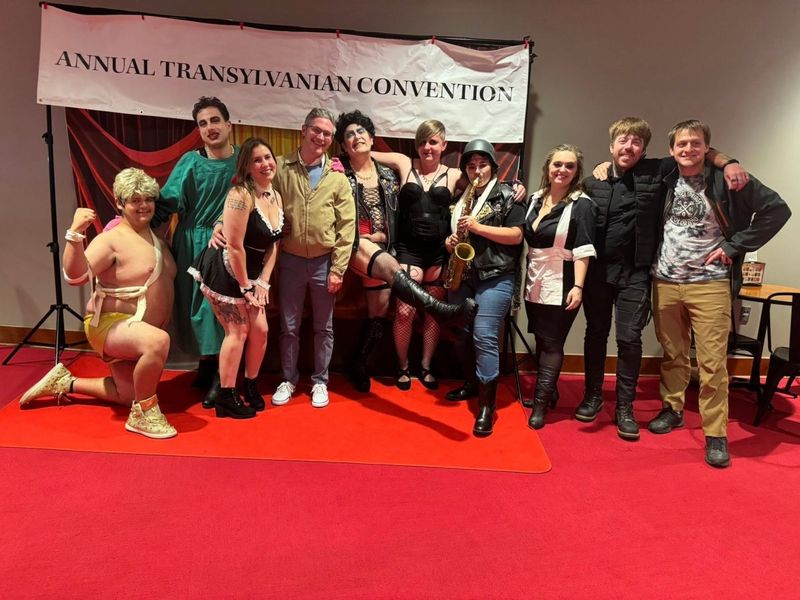
Little Rock Transylvanians keep Rocky Horror alive monthly
Article submitted By Emma Bertram
Fans of The Rocky Horror Picture Show do not have to wait until Halloween to pull on their fishnets, apply dramatic makeup and step into the strange, theatrical world of Dr. Frank N. Furter.
In Little Rock, they can do the Time Warp all year long.
A group of Central Arkansas fans gathers each month at the Central Arkansas Library System’s Ron Robinson Theater in downtown Little Rock to celebrate the cult classic through interactive screenings, audience participation and live performances.
For the people involved, however, the monthly gathering has grown into more than a chance to watch a favorite movie.
It has become a community.
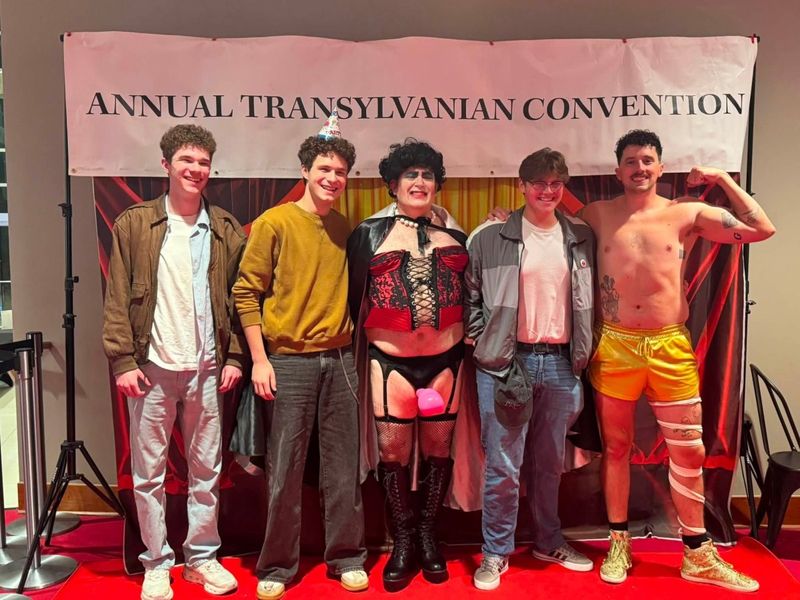
The group is looking for more people to become involved and wants Central Arkansans to know that Rocky Horror is not simply a Halloween tradition. Newcomers are welcome, longtime fans can return month after month, and people who want to become part of the performance can find opportunities both onstage and behind the scenes.
Steven Singleton is the president of Little Rock Transylvanians, a Rocky Horror Picture Show reenactment group based in Little Rock and portrays Dr. Frank N. Furter during the monthly events. He said the goal is simple: Give people an experience they will want to repeat.
“We want you to have so much fun you want to come back each month,” Singleton said. “It’s like a party.”
That party combines a screening of the 1975 film with the audience participation that has become inseparable from the Rocky Horror experience. Attendees can dress as characters, participate in callbacks, sing and dance along and watch local performers recreate moments from the movie.
People do not have to know the callbacks or understand the traditions before attending. In fact, discovering them for the first time can be part of the experience.
That mixture of longtime devotees and curious newcomers has helped create what Singleton and the other regulars call their “Rocky family.”
“We always refer to it as our Rocky family,” Singleton said. “And that’s kind of how we like to have it.”
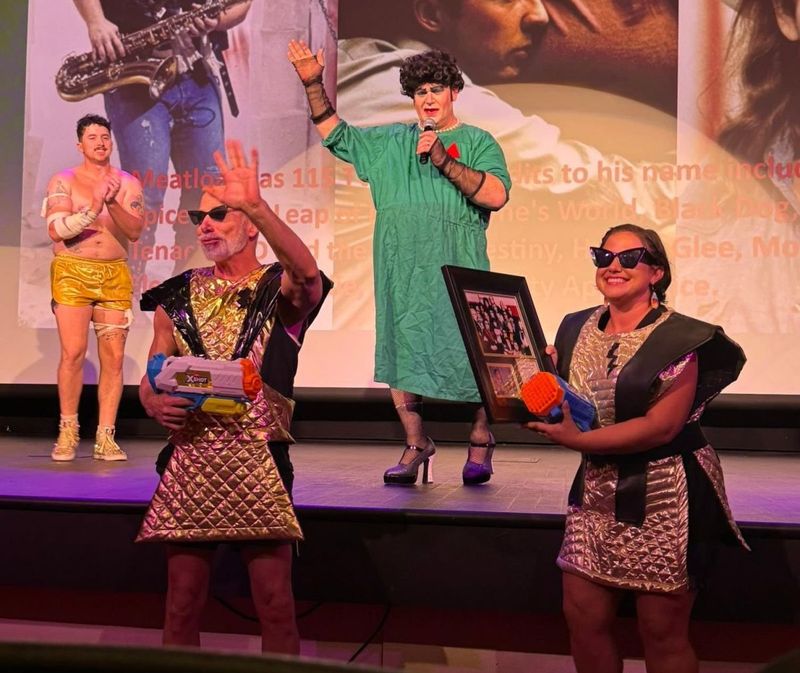
For some members, that family provides a sense of belonging they may struggle to find elsewhere.
“It’s a great sense of community, especially for those who don’t feel like they have a lot of community,” Singleton said.
That community has taken on additional meaning following the death of Tim Curry on Aug. 25 at age 80.
Curry originated the role of Dr. Frank N. Furter in the stage production of The Rocky Horror Show before bringing the character to movie audiences in The Rocky Horror Picture Show in 1975. His performance became the defining role of the film and one of the most recognizable performances of his career. His death came just a year after The Rocky Horror Picture Show celebrated its 50th anniversary, giving fans another reason to reflect on a movie and performer that have remained part of popular culture for generations.
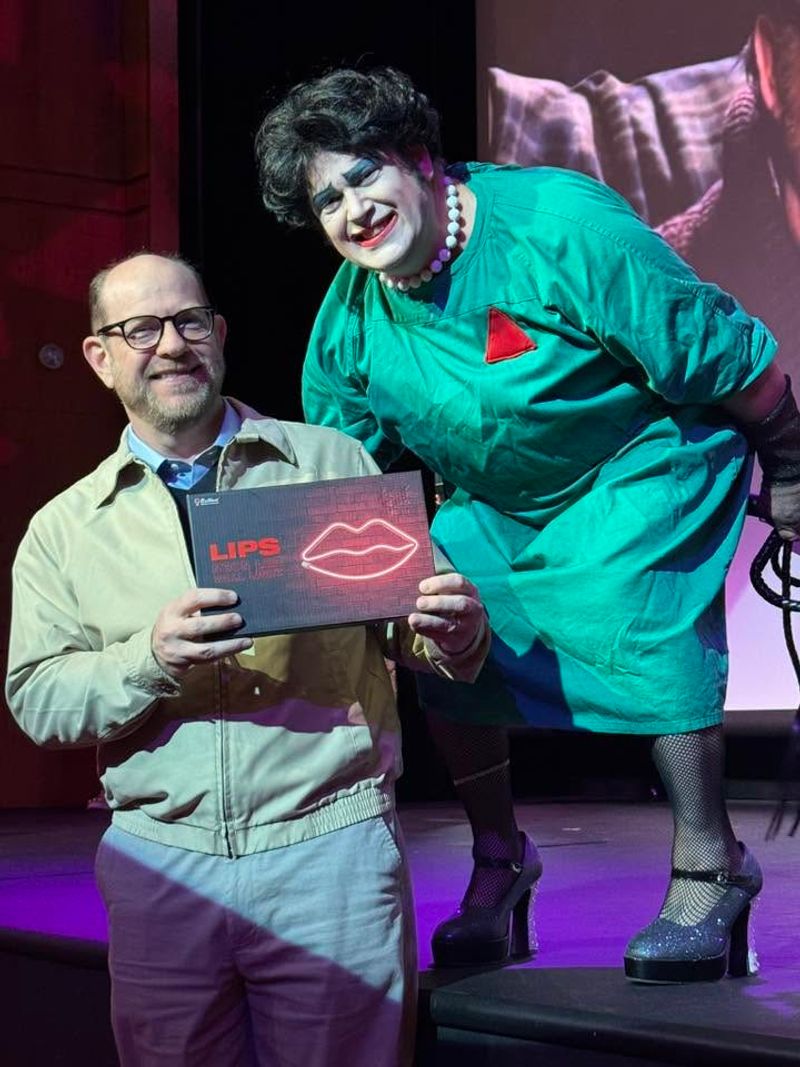
For Singleton, who steps into Frank N. Furter’s heels at the Little Rock screenings, Curry’s influence extends beyond simply creating the character he portrays.
“He’s just so iconic,” Singleton said.
Singleton also admired Curry for continuing to connect with fans and work after suffering a major stroke. Curry continued making public appearances and doing voice work during the later years of his career.
“He worked hard, and he still was doing meet and greets,” Singleton said. “He was still doing voiceover work. He was still, you know, just getting out there. And that was just inspiring.”
Now, every time Singleton portrays Frank N. Furter, he is helping carry forward a character Curry made famous more than half a century ago.
The story of Rocky Horror began before Brad and Janet ever appeared on a movie screen.
Richard O’Brien’s musical The Rocky Horror Show opened in London in 1973, blending science fiction, horror, rock music, sexuality and comedy into something unlike a traditional stage musical. Curry played Frank N. Furter in the original production.
The film adaptation followed two years later.
The Rocky Horror Picture Show follows newly engaged couple Brad Majors and Janet Weiss after car trouble leads them to the home of Dr. Frank N. Furter. What begins as a search for help quickly becomes a bizarre encounter with Frank, his creation Rocky and a collection of eccentric characters.
The film was not initially a major box-office success. Its lasting fame instead grew through late-night and midnight screenings, where audiences gradually transformed moviegoing into something much more interactive. Fans began dressing as characters. They shouted responses at the screen, sang along, danced and acted out scenes as the movie played. Instead of sitting quietly in a darkened theater, audiences became part of the performance. That tradition helped Rocky Horror survive long after many other films of its era disappeared from regular theatrical screenings.
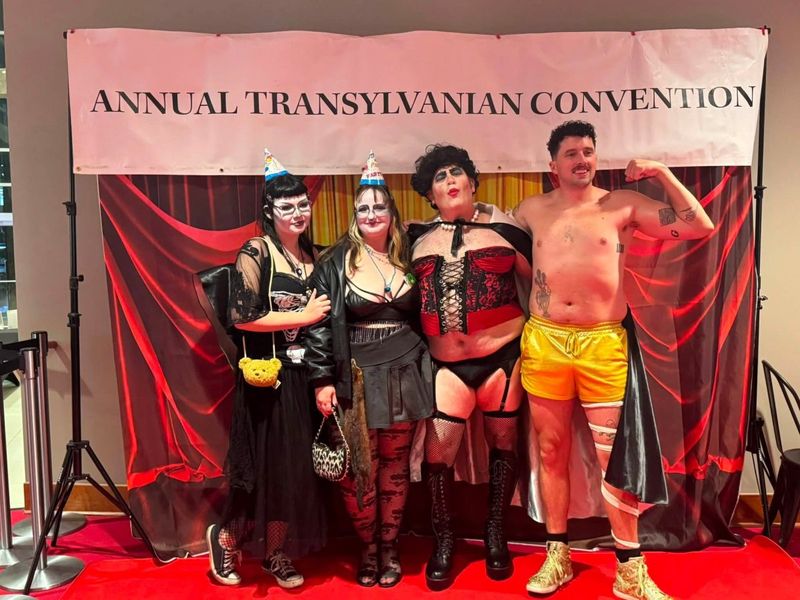
Singleton experienced that unusual world for himself as a teenager in 1988.
He knew little about the movie before walking into the theater. He did not have decades of callbacks memorized or a carefully planned costume. He simply walked into the chaos.
“It was just a noisy, crazy, chaotic party,” Singleton said. “There were beach balls going left and right, and somebody had a Frisbee and they were already on the toilet paper. There was like streamers going, I mean, it was just wild.”
Then the movie started.
Instead of settling down, the audience became even more involved.
“People were yelling and shouting and singing, and then they got up and danced,” Singleton said. “It was just overwhelming in a way.”
For someone who had never experienced Rocky Horror, it could have been intimidating. Instead, Singleton found himself fascinated by it. Not knowing what was coming next became one of the reasons the night stayed with him.
“I love the fact that I went in that way, not knowing exactly what to expect and just being a bit overwhelmed letting it wash over me,” Singleton said. “It was just so much fun and surprise.”
Decades later, Singleton wants first-time attendees in Little Rock to have the opportunity to experience that same feeling. They do not have to arrive knowing every line. They do not have to understand when to yell at the screen. They do not have to dress as a character. They only have to be willing to join the party.
Little Rock has its own history with Rocky Horror. Screenings were held in Central Arkansas during the 1980s, and the movie appeared at different theaters throughout the years.
The Ron Robinson Theater eventually became a new home for the tradition. Interactive screenings brought together costumes, props, callbacks and audience participation, and following the theater’s reopening after the COVID-19 pandemic, the events developed into a regular monthly gathering.
Singleton’s involvement began after he and his wife, Andrea Singleton, moved to Little Rock in 2021.
The couple attended a screening dressed as two of the film’s best-known characters: Andrea as Magenta and Steven as Riff Raff. For Steven, simply watching was not enough. He saw an opportunity to make the evening even more interactive. After the show, he contacted the theater and suggested adding preshow activities to get the audience energized before the film began.
“Let’s get together. Let’s make that happen,” Singleton recalled. “I just need 20, 30 minutes before you actually start it. And we’ll play some games, we’ll get people fired up, we’ll get everybody in the mood.”
At first, Singleton essentially was the preshow.
For about six months, he was the only person onstage. But Rocky Horror has always thrived on people joining in, and Little Rock’s version began to grow the same way.
Other fans started participating.
“Just slowly over the next three years, we’ve just been gathering people here and there,” Singleton said.
As more people became involved, the group could do more with the performances and preshow activities.
That growth continues.
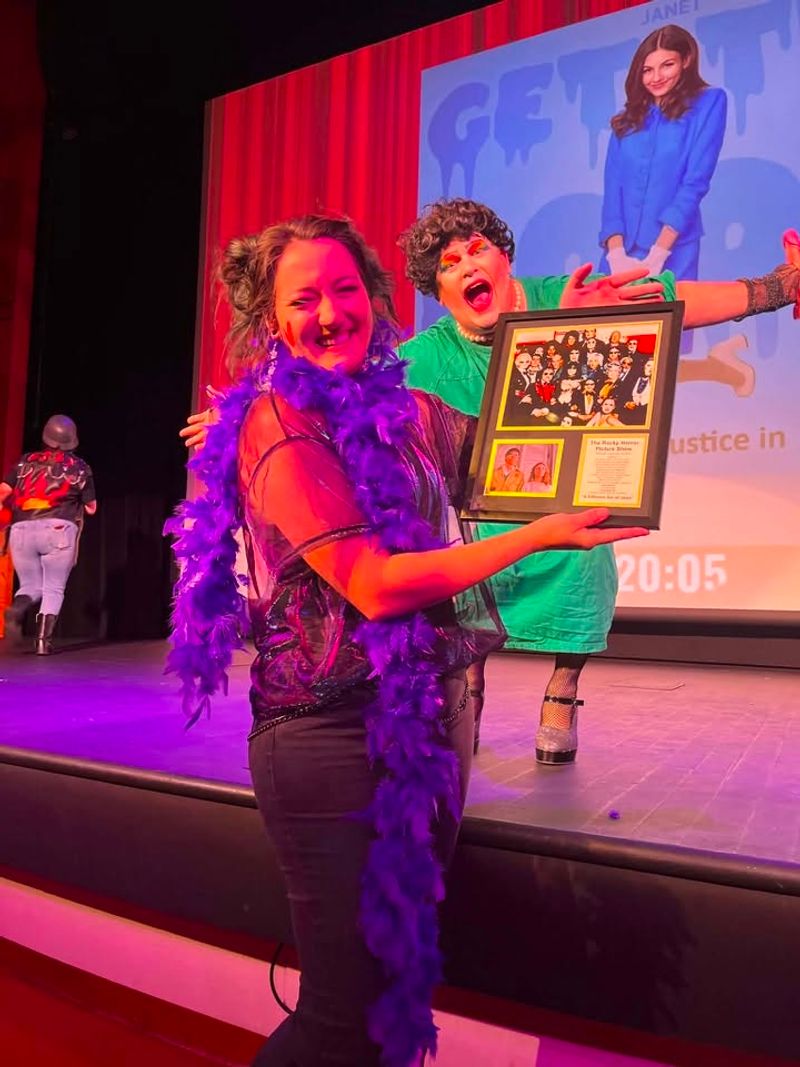
Singleton said the group is actively looking for new people, and joining does not necessarily mean putting on fishnets and standing in front of an audience.
“We could do social media. We could use help with props. We could use help with acting,” Singleton said. “We’re always looking for new ideas.”
Those new ideas are important for something that has been performed, screened and celebrated for more than 50 years.
Part of the challenge of keeping a tradition alive is respecting what longtime fans love while allowing new people to make it their own.
Singleton believes new members can do exactly that.
“You get that by having new people who are different, and help us make it something new each time and keep that 50 years going,” Singleton said.
That openness reflects one of the qualities that has helped Rocky Horror build its devoted fan base.
For decades, screenings have given people permission to dress differently, behave differently and temporarily step outside expectations. In a traditional movie theater, shouting at the screen might get someone removed. At Rocky Horror, it is expected.
A person who might never wear theatrical makeup or dance in front of strangers can walk into the Ron Robinson Theater and find a room full of people encouraging them to join in.
“It’s a safe space for everyone to come, but it also wants you to come out of your comfort zone in a way,” Singleton said.
Andrea Singleton has watched that sense of community develop among both the group and its audience. For her, some of the most meaningful moments happen when people who might appear to have little in common find themselves laughing, playing games and participating together.
“Watching people has been very endearing and wonderful,” Andrea said. “I have seen flannel-wearing, tough guys have fun doing the ‘Assume the Position’ game. I’ve seen strangers paired up — a trans person and a young girl — enjoy themselves and work together to win.”
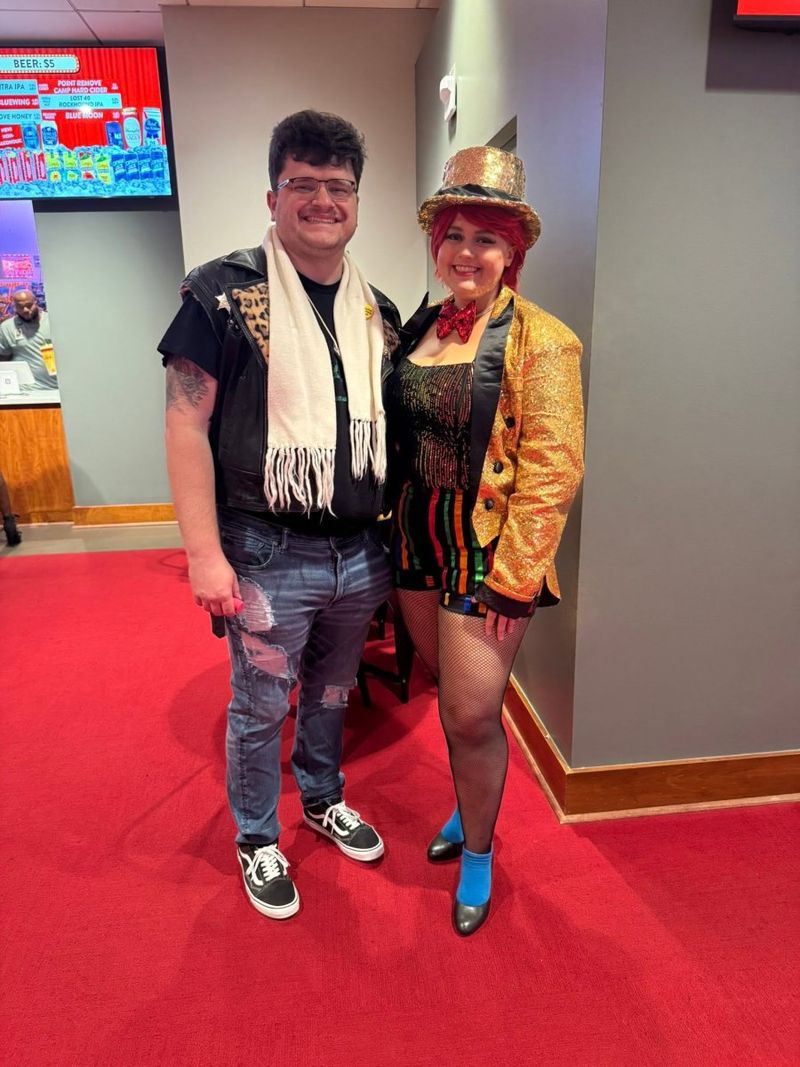
She has also watched people of different ages and comfort levels embrace the freedom that comes with a Rocky Horror night.
“I’ve seen elders squeal with glee when they get the ‘Slut of the Month’ sash,” Andrea said. “I’ve seen people who struggle with negative body image feel free to participate in games and wear costumes.”
Sometimes, Andrea said, that acceptance creates changes that extend beyond a single night at the theater.
“I’ve witnessed someone who barely talked transform into someone doing skits,” Andrea said. “I see people blossoming into leaders and being able to shine in the roles they’ve fallen into.”
Perhaps what stands out most to Andrea is what happens when the movie is over. The people who arrived as strangers do not necessarily leave that way.
“I see people of all genders, colors, ages and lifestyles end the night giving hugs, laughing and exchanging numbers,” Andrea said.
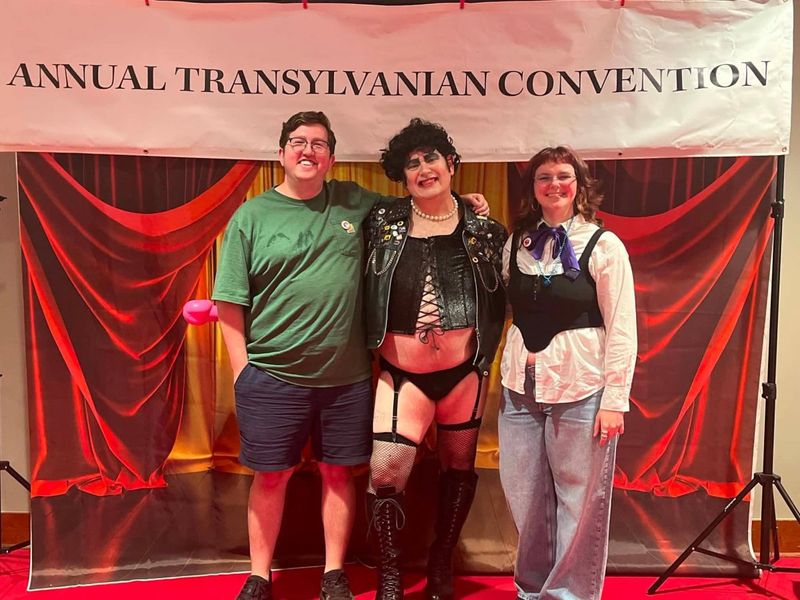
For Andrea, those moments demonstrate why The Rocky Horror Picture Show has remained meaningful to audiences for more than 50 years. Beneath the costumes, callbacks and outrageous humor is an invitation for people to show up as themselves and find a place among others who may be very different from them.
“At our little CALS theater in Arkansas, it is embodying the very thing The Rocky Horror Picture Show is all about,” Andrea said. “We are all welcome at any stage of our life or situation.”
Steven wants people to leave the theater feeling that same sense of acceptance and confidence.
“We want people to feel empowered,” Singleton said. “We want them to feel excited and, we want them to keep coming back and getting that feeling and sharing that feeling.”
That cycle — experiencing the movie, returning and eventually introducing someone else to it — has helped Rocky Horror survive for generations.
Singleton was once the teenager walking into a theater in 1988 with little idea of what was about to happen.
Now he is the person standing onstage helping create that experience for someone else.
A first-time attendee at Ron Robinson Theater today could eventually become a regular. A regular could become a volunteer. A volunteer could end up performing.
That is how traditions continue.
The next Rocky Horror Picture Show screening at the Ron Robinson Theater will be Saturday, Sept. 19, giving Central Arkansas fans another opportunity to put on their fishnets, join in the callbacks and do the Time Warp together.

This month’s screening will also offer an additional accessibility service for visually impaired audience members. Creative Descriptions will be at the theater to provide audio description, helping visually impaired fans experience the movie and participate in the evening alongside the rest of the Rocky Horror community.
The service reflects the welcoming atmosphere Steven and Andrea say the group works to create — one where people of different ages, backgrounds, abilities and life experiences can come together.
For longtime fans, the monthly screenings are a place to return to a movie they love. For newcomers, they are a chance to discover why audiences have continued showing up for more than 50 years. For people interested in performing or helping behind the scenes, they are an opportunity to become part of the tradition themselves.
Following Curry’s death, each gathering also carries another layer of significance. Fans are not only keeping a movie alive. They are continuing a performance tradition connected to the actor whose portrayal of Frank N. Furter helped make Rocky Horror what it is today.
Curry may have originated the character generations know, but every cast member who steps into a costume, every audience member who shouts a callback and every newcomer who walks through the theater doors becomes part of what happens next.
For Singleton, showing up each month means becoming part of the movie’s continuing history.
“Every time we go down there, we are another part of history,” Singleton said.
More than 50 years after The Rocky Horror Picture Show first reached movie screens, that history is still being written in Little Rock — one costume, one callback, one new fan and one Time Warp at a time.
And in Little Rock, the Time Warp does not have to end when October does.
|
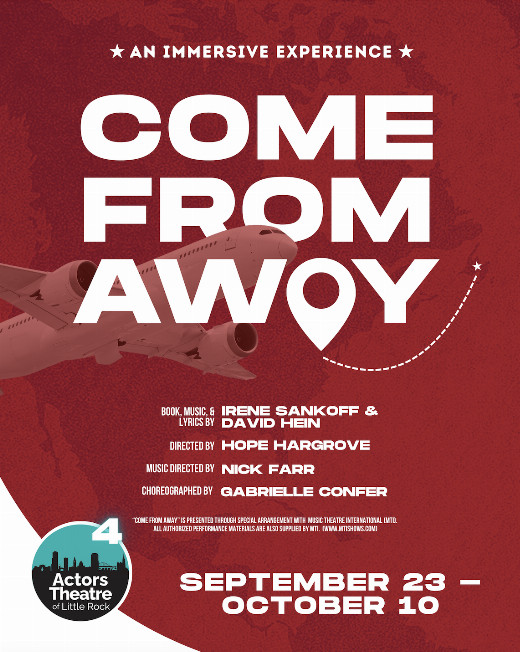
Come From Away: An Immersive Experience Actors Theatre of Little Rock (9/23-10/10) |
|
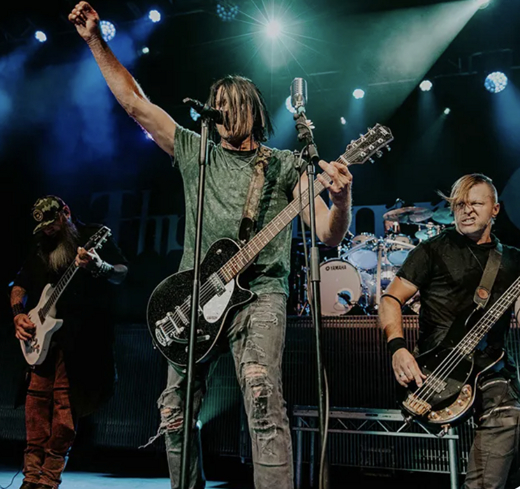
Three Days Grace, I Prevail & The Funeral Portrait at Walmart AMP Walmart AMP (10/28-10/28) |
|
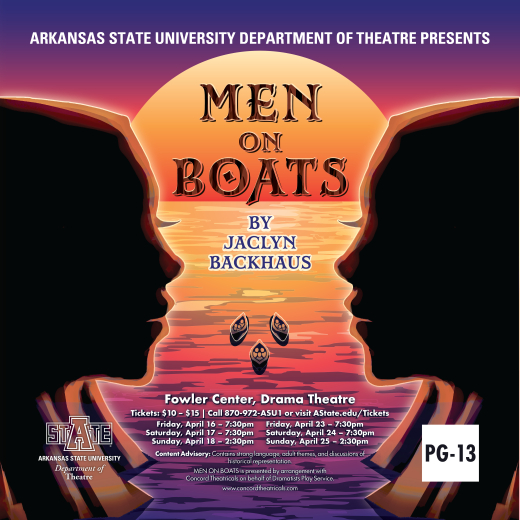
“Men on Boats” By Jaclyn Backhaus Arkansas State University Theatre Department (4/16-4/25) |
![The Complete Works of William Shakespeare [Revised] (Abridged) [Revised Again] By Adam Long, Daniel Singer, and Jess Winfield in Arkansas](https://cloudimages.broadwayworld.com/regionalshows/ndphoto_6a7a3b5db81ed3.31128678.jpg)
|
The Complete Works of William Shakespeare [Revised] (Abridged) [Revised Again] By Adam Long, Daniel Singer, and Jess Winfield Arkansas State University Theatre Department (10/09-10/18) |
|
Three Days Grace, I Prevail & The Funeral Portrait Walmart AMP (10/28-10/28) |
|
Misery Theatre Collective of NWA (10/16-10/18) |
|
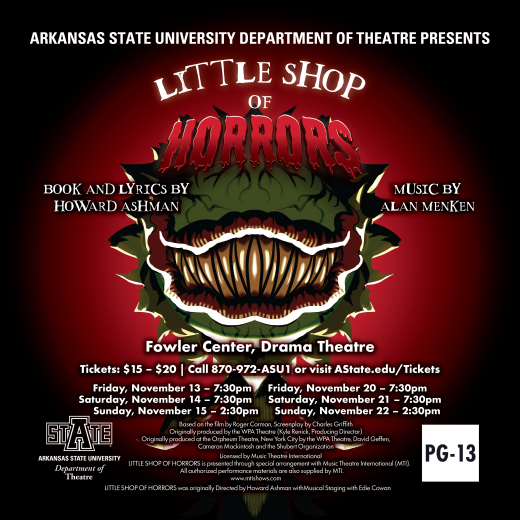
“Little Shop of Horrors” Book and Lyrics by Howard Ashman, Music by Alan Menken Arkansas State University Theatre Department (11/13-11/22) |

|
Wait Until Dark Pocket Community Theatre (10/02-10/11) |
|
Hadestown (Non-Equity) Walton Arts Center [Baum Walker Hall] (2/05-2/07) |

|
Scrooge! The Musical Pocket Community Theatre (12/04-12/13) |
