


Interview: Luyanda Unati Lewis-Nyawo of TIP TOE at STARZ Streaming
The British hit mini-series from Russell T. Davies comes to the US
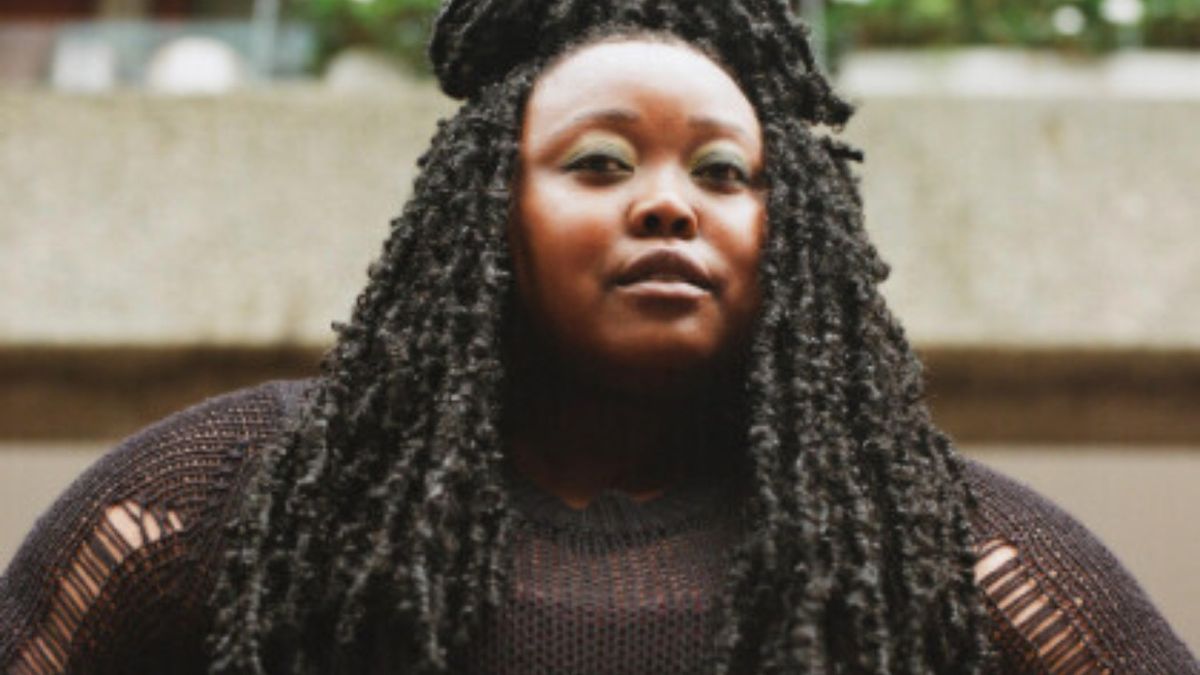
Luyanda Lewis-Nyawo is having quite a year. The non-binary actor and writer appears in the new darkly comic drama Tiptoe, created by Russell T Davies, alongside Alan Cumming and David Morrissey. The series, which has already aired in the UK, arrives on STARZ in the United States on October 2. Lewis-Nyawo is also part of the Wednesday universe and continues to develop their work as a writer, with a play, feature and several short films in progress. In this conversation, they discuss the meaning behind their name, playing Judy in Tiptoe, working with Davies, the experience of appearing in Wednesday, discovering a non-binary identity later in life, and why queer community and found family remain so important.
Brett Cullum: Your name is so beautiful. Where does it come from? Does it have a meaning?
Luyanda Unati Lewis-Nyawo: My mom gave me the name Luyanda, which in Zulu means the family is growing bigger and bigger, and then my grandmother gave me the second name, Unati, which means Christ is with us, or rather, Unkulunkulu is with us, if you want to be more decolonial about its definition. And then, Lewis, I'm separated from my ex-husband, so we double-barreled his name first, my name last. And Yao means foot. Clan of the foot.
There's a lot going on. My gran ended up raising me when I was quite young, a little bit more so than my parents did while they were working and establishing themselves. So everybody calls me Unati.
Brett Cullum: Let's talk about Tiptoe. It's created by Russell T Davies, who everybody knows as the creator of Queer as Folk, and of course he revived Doctor Who. Tiptoe is a story about two neighbors, one gay, played by Alan Cumming, and one straight, played by David Morrissey, and they kind of have a feud. It gets pretty dark, right?
Luyanda Unati Lewis-Nyawo: It gets pretty dark, yeah. I think Russell is, with this particular project, really just trying to sound a rallying cry in the times that we kind of live in. As often as a writer, you write what you know, and you write from your experience. Right now, even in the queer community, there are these kind of festering divisions beginning to grow, and it's just a reminder that, hey, gang, just because you're slightly more socially accepted at the minute, that can change really quickly. Those rights were hard won, but they can take them away, and when they finish with our trans siblings, they'll come for you.
There is no safety here. You can't be the model queer. Because at the end of the day, you'll be queer, and you'll be other. And I think we're stronger as a united community than a divided one. I think Russell just does this so masterfully that he makes it really compelling television. It moves at a pace, and he touches on so many relevant components to this conversation. But also just finds the humanity of these people, because I think it really is in that. It's not our differences, really, it's our similarities, regardless of which side of the conversation you lie on.
Brett Cullum: I am in the U.S., and the transgender community is just completely under attack here. I do a segment at the end of my radio show, Queer Voices on KPFT 90.1 (Wednesdays at 8 pm), where we talk about the news, and I get so tired of talking about legislation being put against them. I read a story where the BBC canceled RuPaul's Drag Race UK, and I saw some of the coverage in the UK as well. Is that the case? What's happening with the UK?
Luyanda Unati Lewis-Nyawo: As a Black South African, who obviously grew up in a country that was colonized by the United Kingdom, I know that obviously a memorable kind of history of division. I mean, division is putting it mildly. From my experience, the UK has always been, if something is happening in the States, there is some other weird, sneaky, bureaucratic, polite way, the brutality of polite violence kind of way that it is happening here. So I think with the EHRC legislating against, essentially, the free movement of trans individuals in public spaces, really. You can call it a bathroom ban all you like, but actually what it's tantamount to is legislation restricting the free movement of trans people by essentially removing them from public life and saying that you have no safety to do one of the most basic things that a human being can do with dignity.
And it's not safe for anyone, and I don't think they're going to stop there. I've got trans friends who are struggling to find housing. Landlords are randomly, without even looking at their application properly, pulling out of renting to them the moment they hear that there could be trans people staying. It's just really, really scary. And I think part of that is also what's been happening in the States. These two things work kind of hand in hand. Now there's permission. It is permissible to punch down, to be bigoted, and ultimately harm our trans siblings, because they are not being seen as human. They're being dehumanized.
It's a shame. It's more than a shame. It's terrifying, but I think that these conversations are really, really important to have, and Russell does an incredible job of humanizing people that really most people only have an experience of through the lens of the media. Through the lens that they are targeting children, or they're mentally unwell, or whatever the nasty rhetoric is. Russell goes, "No, actually, this is just a human being who, like you, wants joy, to have a roof over their head, survive, love, live, laugh."
Brett Cullum: What do you actually play in Tip Toe?
Luyanda Unati Lewis-Nyawo: We've waxed lyrical about the politics, but I play Judy. I'm the bar manager of the Spit and Polish, which is owned by Alan Cumming's character. And I am the kind of caretaker of the space. You always get quite familiar with the bar manager at your local queer bar, like all of these lovely people who have found themselves at the Spit and Polish. It was just such a joy to be able to play a lesbian, a dyke, a proper lesbian. Just a lesbian who loves to garden and has gone and listened to heavy metal.
I think that it was just the first time that I was playing somebody queer in a very direct way. And it was just really liberating to just bring that part of myself to a role. She's a lot of fun, she's a lot of laughs, and she's a lot of heart. Which I think, after the conversation we've just had, we must remember that this is still Russell T. Davies. It's still going to be hilarious the whole way through.
Brett Cullum: I can't get away from the fact that you were in Wednesday on Netflix. What was that like?
Luyanda Unati Lewis-Nyawo: It's a great show. You know when you're just working on one of those juggernauts, right? It's just such a big, epic machine that sometimes it can be really intense, and sometimes I can be quite removed from it for periods. I'm going back to work with people that I've admired my whole life, people who inspired me to do this job. I remember watching the likes of Steve Buscemi, Winona Ryder, Catherine Zeta-Jones, Joanna Lumley, and the list goes on. These are people who I saw on my screen when I was growing up. It's just such an honor and a privilege to get to share space with them and learn from them, really, more than anything else.
Brett Cullum: How did you decide to identify as non-binary? How does that factor into your identity?
Luyanda Unati Lewis-Nyawo: For a really long time, even since early high school, I kind of always felt that I didn't really fit the box of a girl completely. I felt like I was forcing myself into it, or people were forcing me into it. At that time, I am giving away my age, but I'm 38 now. We're talking 25-ish, 26-ish years ago. There wasn't really the language. I didn't have the language of non-binariness. You were either a tomboy, or you were just a masculine girl, and you couldn't come color outside of the lines and explore even what femininity means on one spectrum of the binary, all the way to non-binariness, all the way to masculinity.
As I encountered this language, I was like, "Oh yeah, that makes sense," and I felt like I could be a part of that community. But through some growth and a bit of self-work, I began to accept that and really kind of claim it, and it feels like it fits. I also need to say that part of it is also a deeply political decision. As somebody who has been socialized as a Black woman for at least 33 years of life, I think that the box of woman, ideal woman as is understood, doesn't really have a place for me as a Black, immigrant, plus-size, dark-skinned, natural-haired, Black woman. Even in my non-binary-ness, I exist in the tension point of not being able to negate the years of Black womanhood that I identify with closely — my mother, my grandmother, my aunts, my sisters, my family, women across the globe who I connect with and relate to based on that.
And yet, there is still this feeling in me, and this compulsion in me, and this inner knowing that I exist beyond that, and I want to get outside of it, both spiritually and internally, but also politically as an understanding. I think non-binary can hold all of that. You can hold all of that. So that's why I relate to it, that's how I identify in this way, because I think it allows me to move in the world in a way that I can claim.
Brett Cullum: How did you get into acting?
Luyanda Unati Lewis-Nyawo: It's one of those stories. I've been doing it since I was a kid. I've been doing it since I was a child, at St. George's Prep. I did all the school musicals. I was Baloo in The Jungle Book, and all sorts of things like that. My parents just kind of realized I was dreadful at school. Not dreadful, but really bad at math. I can't count, and I'm fine with that. So my parents just realized that this was more than a hobby. It was more of a calling.
It was something that I really enjoyed and excelled at, not without trying, but just really took to and really found joy in. Throughout my life, I went back and forth between wanting to be in a more technical role, wanting to be behind the camera, and even dabbling in advertising for a while. But then I was like, no, none of this makes me happy. This is the one thing that I enjoy doing. So I stuck my nerve to the sticking place, put something to the sticking place, and just went for it. You've got to be a little bit delulu to do this job, and I stay delulu to this day.
Brett Cullum: You've obviously done big projects. You've been on Netflix productions, you've been part of the Doctor Who universe, you're working with Russell T. Davies, and you're coming back for the next Wednesday season. What else is in the hopper for you?
Luyanda Unati Lewis-Nyawo: I'm writing a lot at the moment. I'm trying to finish a couple of things, several things, actually, at the minute. I've got a play in the works, and I've got a feature in the works, and a couple of shorts in the works. And then we see! I'm excited to be a part of a workshop of a queer play called Love a Work a Mother. I'm really excited to be doing that and working with some people that I've really respected on the queer scene, but also just as artists as well. It's been a crazy year shooting. We started shooting in February, and I'll wrap only at the end of September, so it's take a little beat, take a second, and we'll see where the lay of the land is. But I'm really excited for this to come out on the 2nd of October. I'll book something. I'll book the next thing. You've got to stay delulu.
Brett Cullum: My BRAND is delulu, so I feel you! What was it like working on Tip Toe?
Luyanda Unati Lewis-Nyawo: It was the absolute honor of working with a group of incredible actors who've become such fast friends. I just think the beauty of working with Key Street Productions in general was they were just such kind, even with the most difficult subject matter, one of the kindest, most joyful sets, and most organized sets I've ever been on in my career. I was just truly grateful to be held with such kindness and compassion by such a phenomenal team.
Brett Cullum: I'm so excited for you. I can't wait to see it. I've been stalking this show since it came out. I'm like, where is it? When is it coming to America? When are they actually going to show it?
Luyanda Unati Lewis-Nyawo: Find your Spit and Polish, find your Canal Street, and find your found family, because there's got to be joy in all of it as well.
Sign up for all the news on the Fall season, discounts & more...

|
Waitress Lutcher Theater (10/24-10/24) |
|
Rhinoceros The Catastrophic Theatre (9/18-10/10) |
|
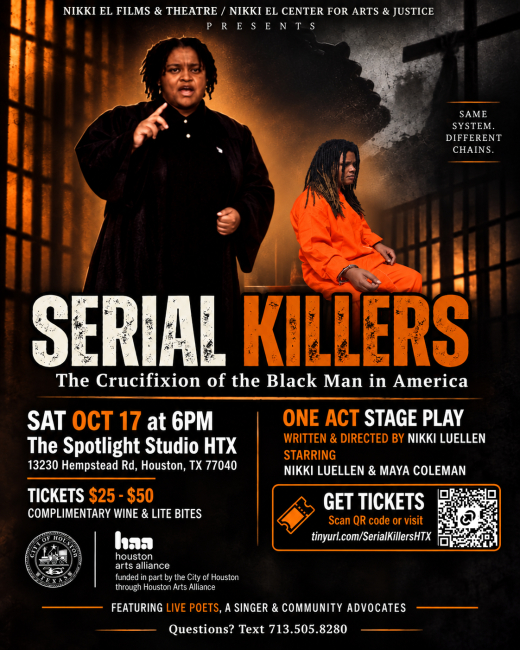
Serial Killers: The Crucifixion of the Black Man in America Nikki El Films & Theatre (10/17-10/17) |
|
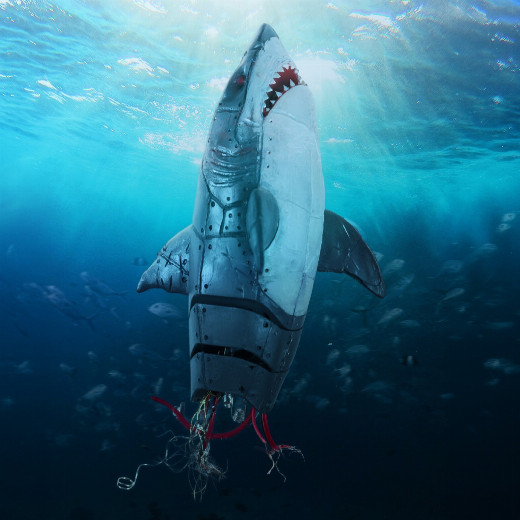
The Shark is Broken Alley Theatre (3/05-3/21) |
|
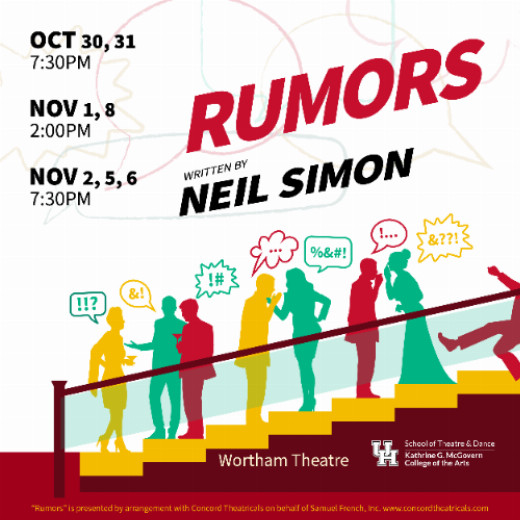
Rumors Lyndall Finley Wortham Theater (10/30-11/08) |
|
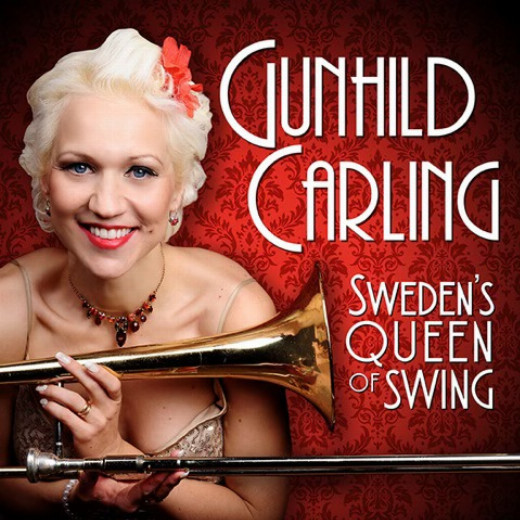
GUnhild Carling at Brazosport College The Clarion (11/20-11/20) |
|
Sweat Theatre Southwest (2/19-3/13) |
|
Carousel Moores Opera House (10/22-10/25) |
|
Emerging Choreographers Showcase Lyndall Finley Wortham Theater (12/04-12/05) |
|
We Only Come Out At Night Company OnStage (10/02-10/24) |
