


Is This Your Show?
Submit Updates & Sell More Tickets
Hamlet at Schaubühne
Dates: 9/21/2012 - 10/27/2012
📍 Theatre: Schaubühne
Schaubühne am Lehniner Platz
Kurfürstendamm 153, Berlin 10709
Phone: +49.30.890023
Tickets: €23,00 - €43,00
Running Time: Approximately 165 minutes.
Share
Hamlet is going crazy. His father has died suddenly of a strange disease, and his mother has married her deceased husband’s brother, of all people, after just one month. Hamlet has nighttime visions of his father, who claims his brother poisoned him, and exhorts Hamlet to take revenge and kill his new stepfather. Hamlet acts the part of the crazy man in order to hide his plans, and loses his grip on reality in the process. The whole world becomes a stagnant swamp to him. Desire and sexuality become a threatening abyss. The friends surrounding him turn out to be spies deployed by his stepfather to keep an eye on him. Even Ophelia, his beloved, is a part of the scheme. The avenger becomes the prey, with an informer listening behind every curtain, as Hamlet’s paranoia proves to be not unfounded. The insane act turns to actual insanity, and Hamlet kills the wrong man: Polonius, Ophelia’s father. His mother and stepfather cover up the murder and keep Hamlet out of the public eye, and Hamlet’s plans for revenge seem to evaporate. He loses control of himself, his goals, and his life. Ophelia falls apart in the face of this and kills herself. When his stepfather decides finally to silence Hamlet, Hamlet seizes the opportunity at hand and with one final rampage forces his world to its knees.
Shakespeare represents the Danish royal court as a corrupt political system which becomes a paranoid maze for Hamlet. Murder, betrayal, manipulation and sexuality are the weapons used in the war to preserve power. Not able to take on and fight the cynical rules of the game at the court, Hamlet stagnates and turns his aggressions against himself. His gift of distinguishing pros and cons becomes an insurmountable hindrance in accomplishing his goals, and as the last person with scruples in a system without any, he is finally doomed. With its central paradox of the incapacitated protagonist, Hamlet remains today a valid analysis of the intellectual dilemma between complex thinking and political action. Shakespeare serves up over twenty characters, allowing a political biosphere to arise out of differing interests and intrigue. In Ostermeier’s production, just six actors will play all these characters, constantly changing roles. Hamlet’s progressive loss of touch with reality, his disorientation, the manipulation of reality and identity are mirrored in the acting style, which takes pretence and disguise as its basic principle.
Shakespeare represents the Danish royal court as a corrupt political system which becomes a paranoid maze for Hamlet. Murder, betrayal, manipulation and sexuality are the weapons used in the war to preserve power. Not able to take on and fight the cynical rules of the game at the court, Hamlet stagnates and turns his aggressions against himself. His gift of distinguishing pros and cons becomes an insurmountable hindrance in accomplishing his goals, and as the last person with scruples in a system without any, he is finally doomed. With its central paradox of the incapacitated protagonist, Hamlet remains today a valid analysis of the intellectual dilemma between complex thinking and political action. Shakespeare serves up over twenty characters, allowing a political biosphere to arise out of differing interests and intrigue. In Ostermeier’s production, just six actors will play all these characters, constantly changing roles. Hamlet’s progressive loss of touch with reality, his disorientation, the manipulation of reality and identity are mirrored in the acting style, which takes pretence and disguise as its basic principle.
Cast and Creative Team for Hamlet at Schaubühne
Autor
William Shakespeare
Regie
Thomas Ostermeier
Bühne
Jan Pappelbaum
Kostüme
Nina Wetzel
Musik
Nils Ostendorf
Dramaturgie
Marius von Mayenburg
Video
Sébastien Dupouey
Licht
Erich Schneider
Kampfchoreographie
René Lay
Claudius; Geist
Urs Jucker
Hamlet
Lars Eidinger
Gertrud; Ophelia
Judith Rosmair
Polonius; Osrik
Robert Beyer
Horatio; Güldenstern
Sebastian Schwarz
Laertes; Rosenkranz
Franz Hartwig
William Shakespeare
Regie
Thomas Ostermeier
Bühne
Jan Pappelbaum
Kostüme
Nina Wetzel
Musik
Nils Ostendorf
Dramaturgie
Marius von Mayenburg
Video
Sébastien Dupouey
Licht
Erich Schneider
Kampfchoreographie
René Lay
Claudius; Geist
Urs Jucker
Hamlet
Lars Eidinger
Gertrud; Ophelia
Judith Rosmair
Polonius; Osrik
Robert Beyer
Horatio; Güldenstern
Sebastian Schwarz
Laertes; Rosenkranz
Franz Hartwig
News About Hamlet at Schaubühne
We have no news on this show at the current time.
About the Theatre
Similar Shows Nearby

|
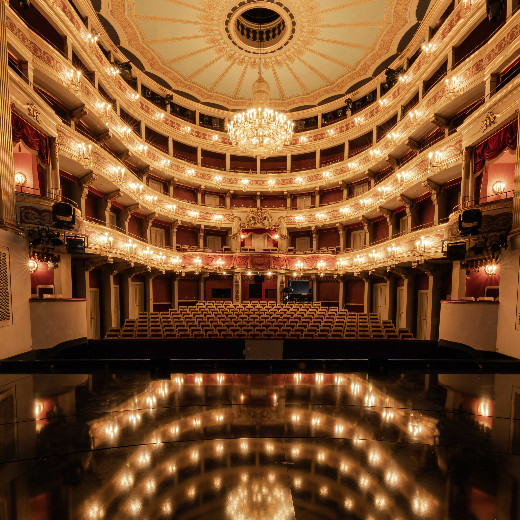
Lempicka (EEA) Staatstheater Regensburg (5/29-7/28) |
|
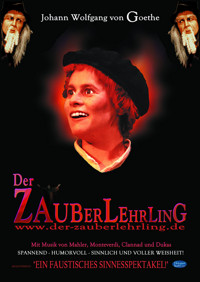
Der Zauberlehrling (The Sorcerer's Apprentice) theater in medias res (1/01-12/31) VIDEOS CAST |

|
DER HERZOG & ICH - Das Theatermacher-Musical von Titus Hoffmann & Christoph Zirngibl Staatstheater Meiningen (12/05-6/22) |
|
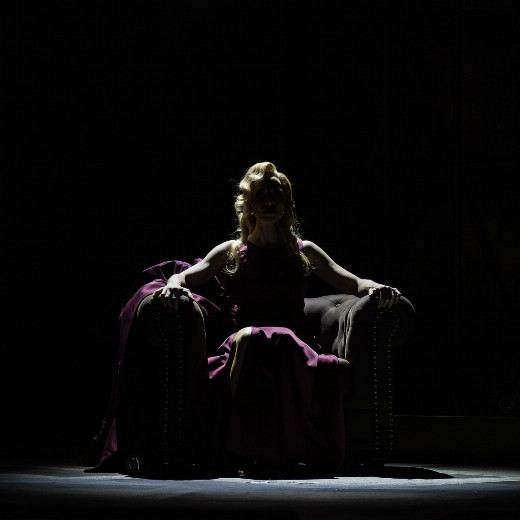
Alcina Staatstheater Regensburg (3/21-7/14) PHOTOS |
|
The Shining Staatstheater Regensburg (5/09-7/15) PHOTOS |
|
Rigoletto Staatstheater Regensburg (6/20-4/27) |
|
|
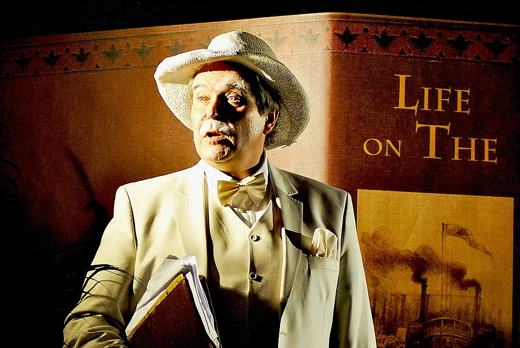
Der grosse Mark Twain-Abend Die Humoristen (1/01-12/31) PHOTOS |
|
Polnische Hochzeit Staatstheater Regensburg (2/07-4/04) PHOTOS |
