


REVIEW: The Festival d'Avignon Presents TRILOGIA CADELA FORÇA By Carolina Bianchi and Cara de Cavalo
What did our critic think of RILOGIA CADELA FORÇA By Carolina Bianchi and Cara de Cavalo?
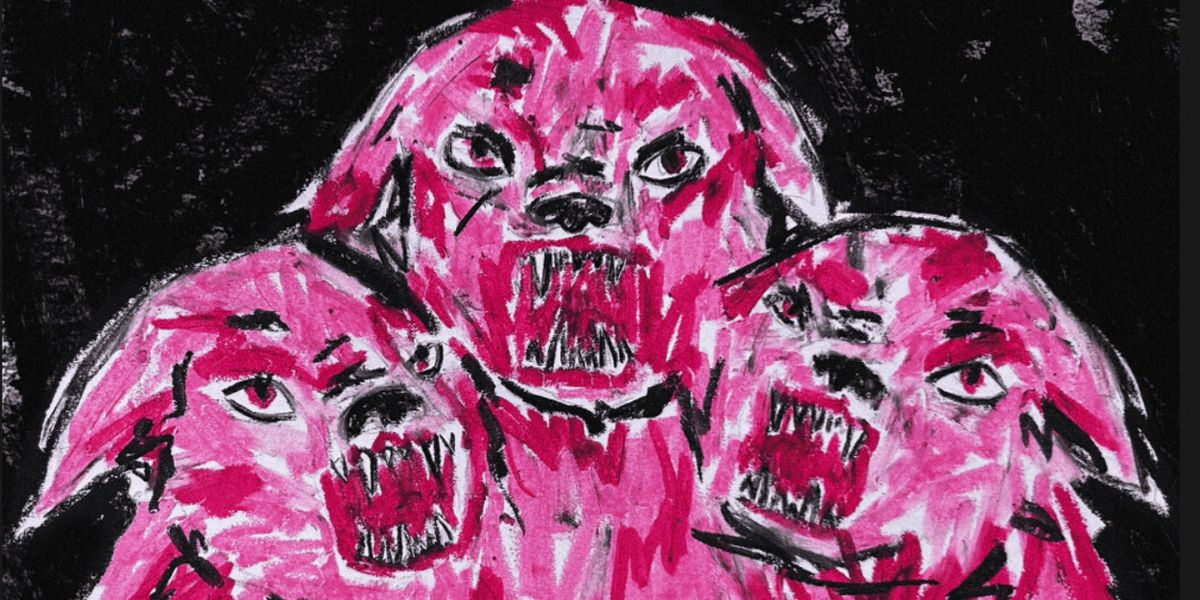
Contrary to the place critics occupy in the cultural imagination, I dread the prospect of an artist reading a negative review I have written. I stand by my perceptions of the works I review, yet I also hold to Anton Ego's maxim in Pixar's Ratatouille: "In the grand scheme of things, the average piece of junk is probably more meaningful than our criticism designating it so." Carolina Bianchi and Cara de Cavalo's Trilogia Cadela Força, presented in its entirety for the first time at the Festival d'Avignon's Opéra Grand Avignon, places me in the opposite position. Faced with a work of such staggering ambition, I find myself embarrassed by the prospect of Bianchi reading this review, a review that necessarily digests with satisfaction a work that is fundamentally undigestible.
Writing it recalls a passage from Marcel Proust, who described
"that abominable and sensual act called reading the newspaper, thanks to which all the misfortunes and cataclysms in the universe over the last twenty-four hours... are transformed for us... into a morning treat, blending in wonderfully... with the recommended ingestion of a few sips of café au lait."
There is an uncomfortable resemblance between Proust's description of the newspaper and the act of criticism itself. Theatre that resists easy consumption must nevertheless be rendered into prose, transformed into something coherent enough to read over coffee. If this review ultimately succeeds at anything, it will be less as an appraisal than as an attempt to untangle an evening of theatre that seems determined to resist explanation.
Bianchi's trilogy unfolds over ten hours, traversing the boundaries of performance art, poetry, confession, satire, hyper-realism, grotesque spectacle, and cultural criticism. Each part approaches violence from a different perspective. The Bride and Goodnight Cinderella confronts sexual violence directly. The Brotherhood examines the fraternity of masculinity that normalizes and reproduces this violence, enacting it upon both others and itself. Finally, A Cordial Light offers not an escape but a turning of violence's Möbius strip, suggesting that creative expression emerges from the same wound. I reviewed A Cordial Light when it premiered independently last week. Seeing it within the complete trilogy has transformed my understanding of it. Judging the final installment in isolation is like attempting to evaluate The Eumenides without first witnessing the Oresteia.
Poets and artists, living and dead, populate the trilogy. Bianchi is not settling scores so much as searching for her place among them. What is poetry in the face of violence, not violence as metaphor, but violence as lived experience? Some figures, particularly the grand metteurs en scène who occupy the pantheon of the Festival d'Avignon, are treated with satirical irreverence while remaining, despite everything, aspirational. Others (Sarah Kane, Emily Brontë, Emily Dickinson) become something like secular saints. Bianchi inhabits their characters, weeps before their portraits as though before religious icons, and clings to their writings like relics. Dante provides the trilogy's underlying architecture as we move from Inferno through Purgatorio toward Paradiso. Bianchi longs for awakening, yet for the audience she functions as both Dante and Virgil, simultaneously pilgrim and guide.
Stylistically, the work invites countless points of comparison. It is an Artaudian response to Montaigne's Essays, a Gertrude Stein landscape haunted by Milo Rau's meta-violence, a Bauschian symphony infused with Proustian introspection. Yet every comparison ultimately collapses before the body on stage. While rejecting the title of "actor," Bianchi relentlessly subjects her own body to the audience's voyeuristic gaze. Here the body is never an abstract ideal of beauty but the site where violence is inflicted, received, remembered, and performed.
But what is violence? In one of the prologues to the trilogy's second part, an actor observes: "Violence was always a part of theatre. Violence is a force that takes you away, that kidnaps you, taking you somewhere you didn't want to go. Where you didn't expect to go."
This understanding distinguishes Bianchi's work from so much contemporary theatre that mistakes provocation for danger. I think of Cabaret, when Sally Bowles asks Cliff, "Do I shock you?" and he replies, "Are you trying to?" Too often, theatrical shock becomes a performance of the artist's own transgression, an exercise in cultivating the identity of the enfant terrible or provocateur. Bianchi seeks something different. Her theatre does not shock in order to flatter its maker's audacity but to carry its audience somewhere they would rather not go. It is dangerous, irresponsible, and vital. All art is political, but art should not be judged according to the logic of public legislation. Laws create systems of protection and aspire toward fairness. Theatre performs a different function. In Bianchi's work, art exists to strip away the civic comforts that allow violence to remain abstract, forcing audiences into proximity with death, anger, domination, and complicity. In the trilogy's first act, Bianchi ingests a sedative. This is meant to both recreate a work by a performance artist as well as her own rape experience. She informs us that she will either succumb to the medication, at which point the members of the cast will take over, or she will not succumb to it, and we will spend the evening listening to her read from her 500 page manifesto. "Don't worry," she assures us, "you're not complicit." Though we are, we are complicit in watching as her limp body is ushered around the stage by trusted collaborators as they enact the performance.
Shakespeare's The Taming of the Shrew offers an illuminating comparison. While many of Shakespeare's tragedies are full of humor, Shrew is a comedy of extraordinary violence. It offers neither comfort nor redemption. It simply demonstrates that, when pushed to their limits, human beings eventually break. Oscar Eustis permitted the play to be staged at The Public Theater only under Phyllida Lloyd's all-female reinterpretation, whose framing transformed Catherine into a figure of indomitable resistance rather than submission. Contemporary institutions often demand such interpretive safeguards before allowing audiences to encounter violence directly. Responsible art, as it is frequently understood, either excludes violence or accompanies it with an explicit mechanism for containing it. Bianchi rejects that consolation. She wants the fracture itself. She wants us to witness it, inhabit it, and recognize our own implication within it.
Her five-hundred-page manifesto functions simultaneously as source text, prop, archive, and autobiography. It gathers testimonies of sexual violence alongside her own attempts to understand experiences that continually resist comprehension. The work is not merely stream of consciousness but the cartography of a catastrophe. Many of its central concerns have dominated artistic discourse over the past decade: the permission structures surrounding artistic "genius," the relationship between artist and artwork, the seductions through which beauty renders violence not merely tolerable but permissible. Bianchi understands the weight these questions exert upon her work. She longs to escape into pure poetry, yet violence continually reasserts itself. Whatever objection an audience member might raise, she has already anticipated it and often voices it herself. No critique, however, resolves the impossible question that drives the trilogy: is there a word as violent as the act?
An extraordinary ensemble surrounds Bianchi throughout this undertaking. Their relationship with her continually shifts. At times, they seem projections of her imagination; at others, they possess complete autonomy. They oscillate between Greek chorus, grotesque comic accomplices, and game-show participants, creating a theatrical language that is simultaneously playful and terrifying. Rodrigo Andreolli, Larissa Ballarotti, Lucas Delfino, Joana Ferraz, Flow Kountouriotis, Fernanda Libman, Amanda Lyra, Danielli Mendes, José Artur, Tomás Decina, Chico Lima, Rafael Limongelli, Kai Wido Meyer, and Carolina Mendonça sustain the emotional and physical demands of this immense work with astonishing precision. Beauty may not be Bianchi's objective, yet it nevertheless emerges through Jo Rios's luminous lighting, Luisa Callegari's flamboyant costumes, and a scenic chaos that transforms Peter Brook's empty space into something closer to a slaughterhouse.
In the piece's second act, Bianchi rejects the bouquets offered for her "courage," at least by the German director she mock-interviews onstage. Courage suggests triumph. It implies perseverance rewarded, mountains conquered, and the indomitability of the human spirit. Bianchi refuses that satisfaction. Some forms of violence cannot be overcome; they can only be confronted. She is not made stronger by what she has endured, and she insists that refusing the mythology of personal redemption is not a failure. Violence remains embedded within the fabric of her body and the social life she confronts. We cannot hide from it, nor can we rationalize it away. It remains confounding. Trilogia Cadela Força is both an encounter and a warning. Bianchi exposes us to violence not out of triumph or heroism, but because she believes the encounter itself has become urgently necessary.
Image Credit: Luisa Callegari
See more BroadwayWorld in Google
Our stories show up more often in Top Stories and Google’s AI answers.
Breaking Broadway alerts by text
Get the biggest stories sent straight to your phone.
Recevez l'actualité de Broadway sur WhatsApp
Recevez les dernières mises à jour, les nouvelles de dernière minute et une couverture exclusive directement dans l’application.

Sign up for all the news on the Fall season, discounts & more...
