


Review: TWENTY THOUSAND STREETS UNDER THE SKY, Southwark Playhouse, Borough
A dark journey through longing
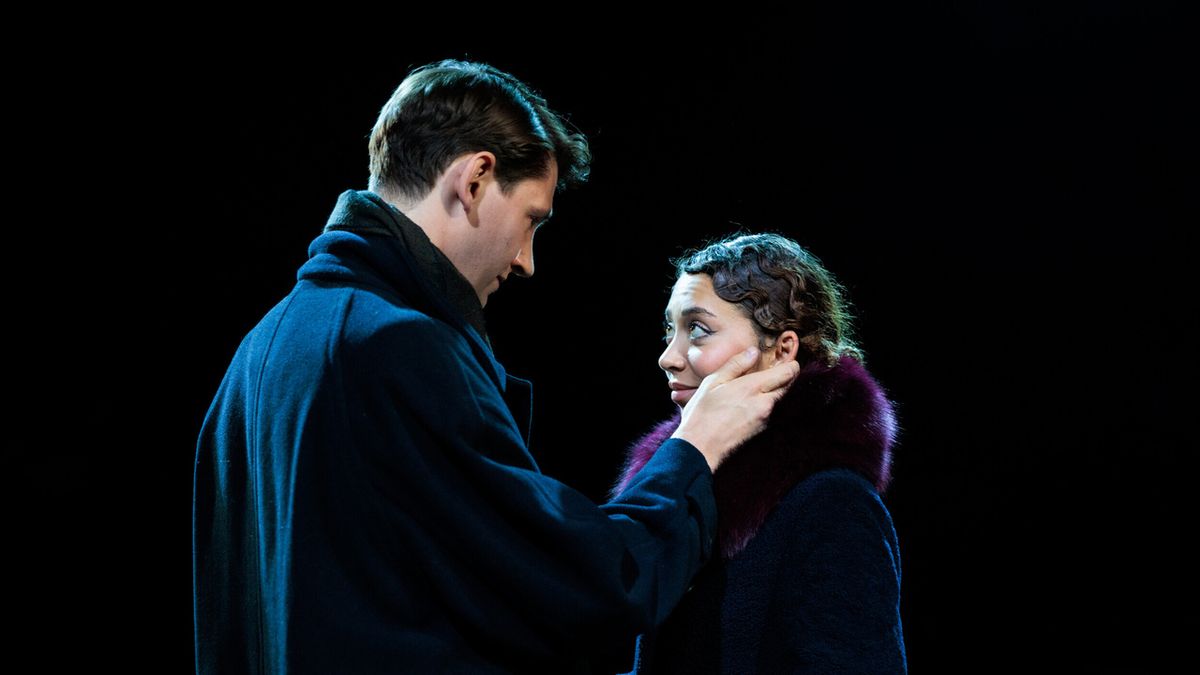

Patrick Hamilton’s bleak portrait of 1920s London arrives on stage in a new adaptation by Simon Reade, exploring the fragile connections between those searching for love and belonging. London has long provided fertile ground for stories of ambition, desperation and loneliness, and Patrick Hamilton’s Twenty Thousand Streets Under the Sky offers a particularly grimy portrait of the capital. Set in 1929, this world premiere stage adaptation brings together three interconnected stories of people seeking affection and fulfilment.
At the centre of the story is Bob played by Jordan Scowen, a barman at the Midnight Bell pub who dreams of becoming a writer. His colleague Ella Dawson played by Rosalind Lailey harbours feelings for him, but Bob’s attention is directed towards Jenny Maple played by Yanexi Enriquez, a prostitute whose presence becomes an increasingly consuming obsession. In his desire to 'rescue' Jenny, Bob spends most of his life savings, revealing the destructive consequences of confusing longing with love. The narrative offers an examination of the ways in which loneliness can distort relationships. Hamilton’s characters inhabit a world where companionship is desired but rarely secured, and where the promise of intimacy can be as damaging as isolation itself. Reade’s adaptation retains the story’s focus on the interconnected lives of its protagonists, presenting a society in which personal aspirations and emotional dependencies frequently collide.
Scowen brings an earnest quality to Bob, whose ambitions and romantic fixation drive much of the drama. His character’s idealism provides a contrast to the harsher realities of the world in which he lives. His choices however do not inspire sympathy, making his eventual manipulation by Jenny feel simultaneously absurd and, to an extent, deserved. Bob appears to lack the insight which might otherwise encourage the audience to feel greater concern for his predicament. His conviction that he can rescue Jenny becomes less an expression of selfless love and more an extension of his own desires. A particular highlight of the production is a dancing scene in which Bob and Jenny go out together at the Globe in the West End. The sequence offers a moment of movement within an otherwise oppressive world, providing a striking contrast to the difficulties which define their relationship. It is a reminder of the pleasures and distractions which London as a city can offer, even as the characters remain trapped within their own personal circumstances.
%20and%20Jordan%20Scowen%20(Bob)%20-%20credit%20Mitzi%20de%20Margary.jpg?format=auto&width=800)
Photo Credit: Mitzi de Margary
Lailey’s Ella represents a different form of longing, with her unrequited affection exposing a painful imbalance. Yet her reaction to discovering Bob with a woman whose employment she regards with scorn is uncomfortable. Ella’s response carries hypocrisy, particularly within a narrative which otherwise explores the double standards and moral judgements surrounding women, class, sex and relationships. The play raises questions about the expectations placed upon women and the ways in which social attitudes can reproduce the very inequalities from which they suffer.
Enriquez’s Jenny remains an intriguing presence, a character whose circumstances and motivations resist easy interpretation. Her relationship with Bob raises questions about agency, exploitation and assumptions. However the manipulation of Bob feels ridiculous within the play’s wider examination of emotional dependence. The production does not build sufficient emotional complexity to encourage the audience to look beyond the surface of these relationships.
The play’s exploration of uncomfortable power dynamics extends beyond Bob and Jenny. The palpable discomfort surrounding Mr Ernest Eccles played by Michael Maloney and his pursuit of Ella adds another unsettling dimension to the production which is explored and presented well. The abuse of power and class exposes the vulnerability of women navigating relationships, with coercion becoming worryingly intertwined. The tension is particularly striking as the play presents the characters starkly, but sadly to its detriment they are unlikeable and difficult to invest in, despite placing them within a society shaped by unequal power and limited opportunities.
The supporting ensemble, including Lucy Gray and Alex Bhat in multiple roles, helps populate the play’s atmospheric world with great committment to portraying selfish and self serving attitudes. The production hints at a sense of a city in which people cross paths, their lives intersecting briefly before continuing along separate routes. The approach also reflects the production’s wider interest in the relationship between individuals and the urban environment which surrounds them.
Under Matthew Iliffe’s direction, the adaptation presents a translation of Hamilton’s expansive literary world into the confines of the stage.The production’s period setting provides a framework for the story, while Ellie Wintour’s minimal set and costume design supports the atmosphere of the late 1920s. However, the adaptation does not consistently achieve the depth of connection which its subject matter promises. The themes of obsession, unrequited love and social isolation are inherently powerful, yet some of the dramatic development feels wild. The characters’ circumstances are clear, although the production struggles to make their personal tragedies resonate.
This is a play which is interested in the darker side of human connection. There is little sentimentality in Hamilton’s world, where love can become possession and hope can lead to disappointment. The play’s exploration of these themes gives it a contemporary relevance, particularly in its portrayal of people who seek validation and belonging in relationships, which cannot offer them what they need. To it's credit the play explores difficult subject matter, including sexual abuse, alcoholism and unhappy, unrequited relationships. These themes reinforce its portrait of a society in which individuals are frequently unable to find security or fulfilment. The main issues lie with a lack of emotional connection with the characters. Its bleakness is evident, but bleakness without a connecting point does not generate empathy.
The lack of likability across the central characters limits the intended emotional impact. It is possible for a production to focus on deeply flawed individuals while still creating empathy, curiosity or a sense of emotional investment. Here, the characters’ actions often make it difficult to care about their outcomes. Bob’s fixation, Ella’s uncomfortable response and Ernest’s pursuit of Ella create a world of damaged relationships, although the adaptation does not always provide the necessary depth to make these experiences resonate beyond their immediate unpleasantness.
The central premise remains engaging, and the cast brings commitment to a story which is unrelentingly bleak. There is momentum, but the narrative, while remaining a loyal reflection of Hamilton’s writing, needs a stronger emotional connection with its characters. Without some level of likability or at least a deeper understanding of their vulnerabilities, the production struggles to establish the empathy which its subject matter requires.
Twenty Thousand Streets Under the Sky offers a sombre journey through the streets of 1920s London, where dreams of love and escape are repeatedly confronted by heartache as a reality. Simon Reade’s adaptation is noble in introducing a lesser-known work to A Contemporary Theatre audience, supported by a committed cast and a production which honours Hamilton’s dark subject matter. However, its considerable potential is not fully realised, with the emotional distance from its characters ultimately limiting the power of its exploration of loneliness, exploitation and human connection.
Read our Guest Post by Simon Reade about adapting the show here.
Twenty Thousand Streets Under the Sky runs at Southwark Theatre, Borough until 17 October
Photo Credits: Mitzi de Margary
Prefer BroadwayWorld in Google Search?
Add us as a preferred source so our stories show up more often in Top Stories and Google’s AI answers — for you.

Sign up for all the news on the Summer season, discounts & more...
|
Powered by

|

.jpg?format=auto&width=365)





Reader Reviews
To post a comment, you must register and login.