


Review: LES MISERABLES At Hudson Valley Shakespeare
A Timeless Story That Feels Remarkably Timely.
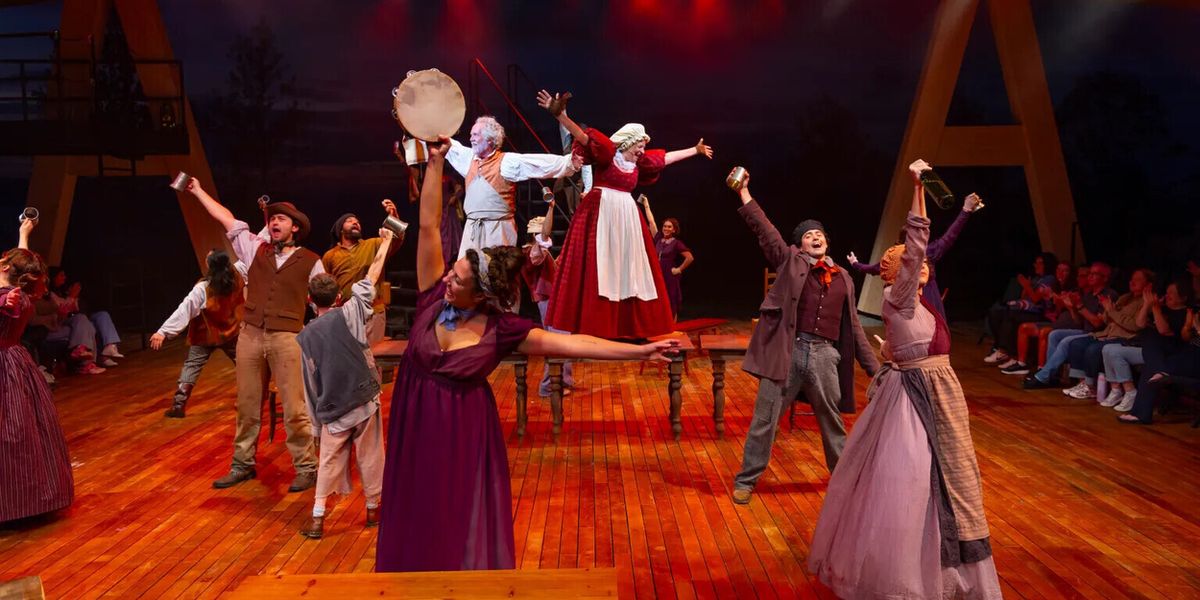
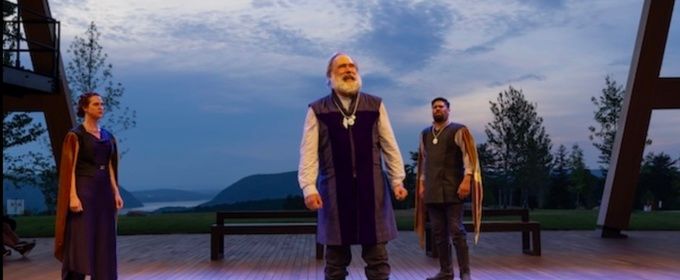
At Hudson Valley Shakespeare, the new Samuel H. Scripps Theater Center is as much about its breathtaking setting as it is about the theater itself. Perched on a 98-acre campus overlooking the Hudson River in Garrison, the permanent venue replaces the canvas tent that welcomed audiences for nearly four decades. Yet the transition from tent to theater has not diminished the qualities that made Hudson Valley Shakespeare distinctive. Instead, the architecture embraces the surrounding landscape rather than competing with it, making nature an active participant in the theatrical experience.
That becomes especially striking at the beginning of Les Misérables. When the performance begins at 7:30 p.m., the audience looks west toward the early glow of what will become a brilliant orange sunset, arriving at precisely the right theatrical moment. The actors emerge from the surrounding landscape, their silhouettes softened by the fading light. It is a theatrical image that no set designer could manufacture.
Les Misérables is the stage adaptation of Victor Hugo’s 1862 novel. The musical, written by Claude-Michel Schönberg, Alain Boublil, and Jean-Marc Natel, premiered in Paris in 1980 before producer Cameron Mackintosh brought an English-language version to London’s West End in 1985, with lyrics by Herbert Kretzmer. The show went on to become one of the world’s most celebrated and enduring musicals. It has enjoyed multiple Broadway runs, international productions, and a successful 2012 film adaptation. More than four decades later, its sweeping score and timeless themes continue to captivate audiences.
At the center of Les Misérables is Jean Valjean, played by Josh Young, a man who spends much of his life running from the law and from the identity imposed upon him by his past. Pursuing him is Inspector Javert, played by Denis Lambert, whose cold, uncompromising understanding of justice makes him Valjean’s lifelong adversary. Their conflict gives the production one of its central moral questions: What matters more, strict adherence to the law or compassion and redemption? Valjean and Javert are not simply fighting one another; they are fighting over fundamentally different ideas of what is right, what is wrong, and what it means to be a moral human being.
Young brings considerable emotional weight to Valjean, allowing the character’s transformation from hardened prisoner to compassionate father and protector to unfold with conviction. His “Bring Him Home” soared. It was one of the finest renditions I have experienced, sung with such tenderness and warmth that the performance became almost hypnotic.
Lambert’s Javert provides a formidable counterweight, embodying a rigid sense of duty that leaves little room for mercy. The battle between these two men is ultimately a battle between two radically different ideas of morality. Javert believes that justice comes from following the rules. Valjean discovers that true justice can require mercy.
Haley Dortch plays Fantine, whose tragic circumstances set in motion Valjean’s relationship with her daughter. After Fantine’s death, Valjean takes responsibility for young Cosette, played by an impressive Madelynn Sue Merced.
As Cosette grows up, the stunning Ana Paola Garcia takes on the role, bringing warmth and grace to the character. She falls in love with the idealistic student revolutionary Marius, convincingly played by Alex Ross, while Éponine, played by the deeply affecting Haley Rose Ciaramella, harbors an unrequited love for Marius. Ciaramella delivers a moving performance, particularly in her memorable rendition of “On My Own,” showcasing a powerful, expressive belt that makes the number one of the production’s standout moments.
In an interesting double-casting choice, Dortch, who plays the tragic Fantine, also portrays Enjolras, the militant revolutionary. Her versatility, commanding stage presence, and powerful voice make the pairing especially effective. The contrast adds an intriguing theatrical dimension while highlighting the production’s exploration of transformation, identity, and the many forms of sacrifice at the heart of Les Misérables.
One of the production’s great pleasures is Nance Williamson and David Beach as the Thénardiers. The pair are brilliantly funny as scheming, shameless criminals, providing much-needed comic relief. Their performance of “Master of the House” is a highlight, with Beach’s mischievous energy and Williamson’s comic timing turning the number into a riotous extravaganza.
The superb ensemble deserves recognition as well. One of the production’s strengths is its uniformly impressive cast, from the principal performers to the supporting players who populate the streets, barricades, and taverns of revolutionary France.
Director Jenn Thompson has created an impactful production that draws the audience in with a relentless storyline and dramatic intensity. Every moment feels thrilling and fresh, even in a musical whose story and score are so familiar. The production is beautifully staged, briskly paced, and always engaging. Like Shakespeare, its story is timeless, and in the current political climate, it can also feel startlingly timely.
The musical’s questions about freedom, justice, mercy, and redemption resonate powerfully today. Its characters are largely people who have been misunderstood, marginalized, impoverished, or denied a voice. They struggle against systems that seem immovable while searching for dignity, love, and a better life. That makes this production more than a grand musical spectacle; it is a story about people demanding to be heard.
The production’s visual and physical design is equally impressive. Matt Richards’ strikingly evocative lighting design complements rather than competes with the natural landscape, seamlessly incorporating the changing light of the Hudson Valley into the theatrical experience. As daylight fades and darkness settles over the theater, the lighting subtly shifts the mood, making the surrounding landscape feel like an extension of the stage.
Tilly Grimes’ costume design cleverly conjures the period while adding a contemporary, edgy twist. The costumes feel rooted in 19th-century France without becoming overly traditional, giving the production a distinctive visual identity that feels both authentic and modern.
Buffy Cardoza’s props design is near perfection, from the strikingly enormous French flag to the detailed elements that bring the world of Les Misérables vividly to life. The barricade, in particular, becomes an essential piece of the production, transforming into a powerful symbol of resistance.
Kudos to Production Stage Manager Janelle Caso for keeping this ambitious production running smoothly with expertise and efficiency!
Luis Quintero’s fight choreography is equally impressive, bringing urgency, danger, and precision to the action. Rhett Guter’s choreography adds another layer of energy and theatricality, creating movement that feels fully integrated with the storytelling. Together, they give the production a physicality that makes the world of Les Misérables immediate and alive.
Claude-Michel Schönberg’s score remains the beating heart of Les Misérables, and conductor Alex Gutierrez leads a terrific 14-piece orchestra through music that ranges from intimate and heartbreaking to sweeping and thunderous.
Ken Travis’s sound design deserves equal praise. The lyrics come through with impressive clarity, allowing the audience to follow the story without sacrificing the orchestra’s power.
And then there is “Do You Hear the People Sing?” The song has always been an anthem of resistance, but in a world where people continue to take to the streets to protest, demand freedom, and make their voices heard at the polls, its meaning feels particularly immediate.
That is what makes this production so compelling. It does not simply ask audiences to remember a revolution that happened two centuries ago. It asks us to consider why people revolt, what freedom costs, and what happens when those who have been ignored finally find their voices.
The show is intense, complicated, and challenging. Its characters are not easily divided into heroes and villains; they are people shaped by poverty, circumstance, ideology, love, and loss. Their struggles force us to confront uncomfortable questions about who receives justice, who is granted mercy, and who gets the opportunity to start over.
Valjean’s declaration that “to love another person is to see the face of God” remains one of the show’s most enduring ideas. In this production, it feels like a challenge to recognize the humanity in people whose circumstances, politics, or beliefs may be very different from our own.
Thompson’s production has the power to make this familiar story feel new again. For newcomers, there could hardly be a better opportunity to discover this enduring classic. For longtime fans, Hudson Valley Shakespeare’s inventive approach, exceptional cast, and extraordinary natural setting make the experience feel freshly alive.
The opening of the Samuel H. Scripps Theater Center marks an important new chapter for Hudson Valley Shakespeare. The company has preserved the intimacy and openness that made its performances under the tent so distinctive while creating a permanent home designed to serve future generations. The company’s remarkable ability to reimagine classic works in inventive, contemporary ways while remaining faithful to their spirit is on full display in Les Misérables.
If you’ve never experienced this classic, treat yourself. If you already know it, see it again.
And hear the people sing.
Performance Dates: Through September 27, 2026
Location: Samuel H. Scripps Theater Center, 2015 Route 9, Garrison, NY
Information and tickets: https://hvshakespeare.org/events
Photo Credit: David Beach, Nance Williamson and the company of Les Mis. By T Charles Erickson
Prefer BroadwayWorld in Google Search?
Add us as a preferred source so our stories show up more often in Top Stories and Google’s AI answers — for you.
Sign up for all the news on the Fall season, discounts & more...

|
The Last Five Years Arc Stages (9/25-9/25) |
|
In Plain Sight Penguin Rep Theatre (9/25-10/18) |
|
Chris Vitarello Power Trio "The Grateful Dead" set Jazz On Main (10/02-10/02) |
|
Jake Hart (Solo Piano) Jazz On Main (1/06-1/06) |
|
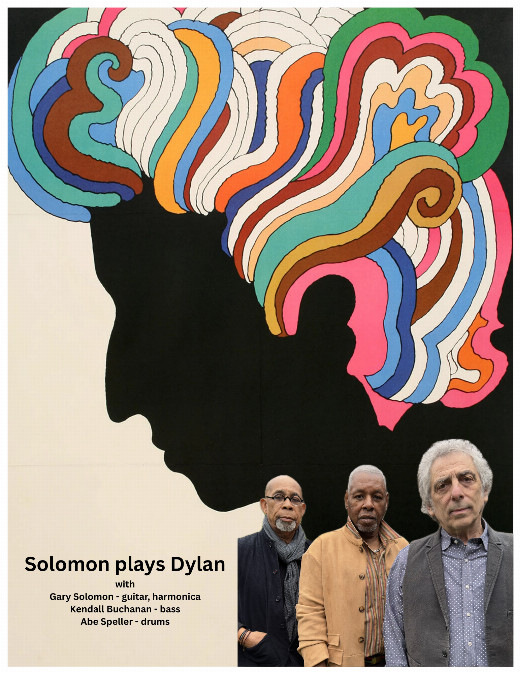
Solomon plays Dylan Trio The Turning Point (10/25-10/25) |
|
Pete Rodriguez Quartet Jazz On Main (9/26-9/26) |
|
Quintin Harris Trio Jazz On Main (10/01-10/01) |
|
Giacomo Gates Trio Jazz On Main (10/24-10/24) |

|
Las Guaracheras Las Guaracheras (10/16-10/16) |
|
Bees Deluxe Bees Deluxe (10/30-10/30) |

Reader Reviews
To post a comment, you must register and login.