


Review: A Night of Mystery and Murder at the Theme Park in BERMALAM
On September 17-20 and 25-27, Eclipse Studios presented their latest immersive theatre experience in collaboration with Trans Studio Cibubur
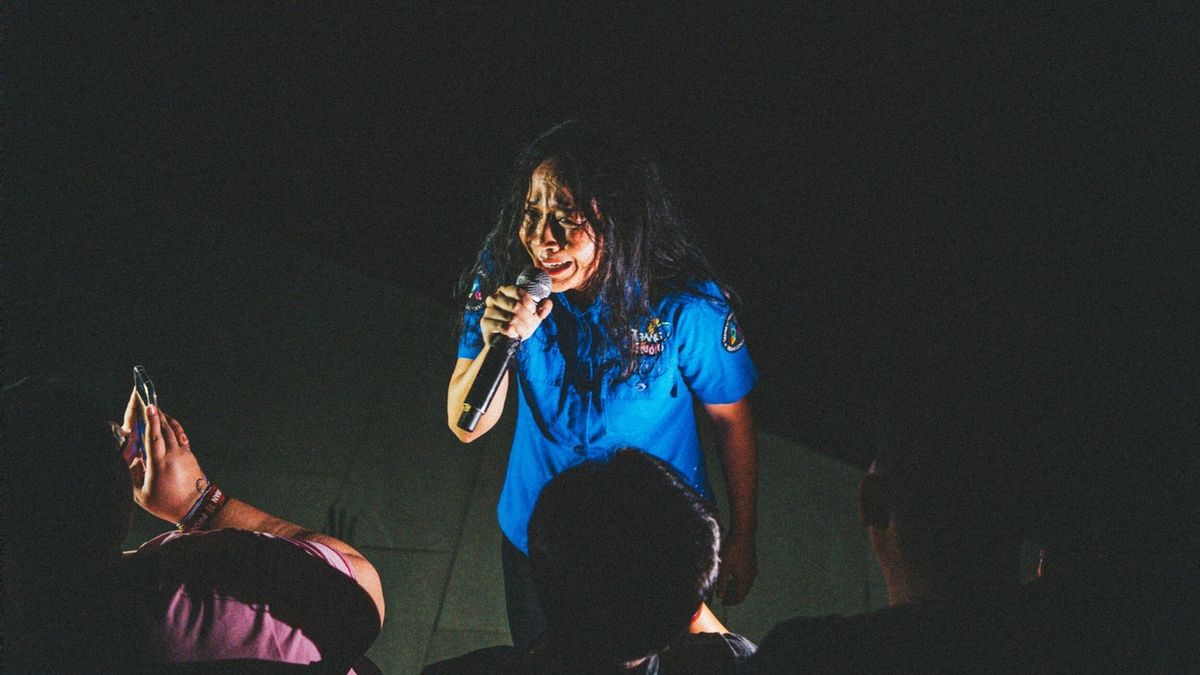
On September 17-20 and 25-27, Eclipse Studios presented their latest immersive theatre experience, this time in collaboration with the theme park Trans Studio Cibubur. Called BERMALAM (“Spending the Night”), it’s a horror-themed show that utilizes the inherent eeriness of a closed theme park.
BERMALAM is the brainchild of Eclipse’s founder Giovanni Harris, who wears many hats as the show’s Artistic Director, Creative Producer and Writer. This time, he’s partnered up with Trans Studio Cibubur, an indoor theme park located in Cibubur on the outskirts of Jakarta.
Before the show, the audience members are asked to join either the Red Team or the Blue Team, with noticeably different experiences. The Blue experience is designed for those interested in discovering “the full story” while the Red experience is for those looking for more thrills.
This review is based on the Red Team experience on September 16, 2026.
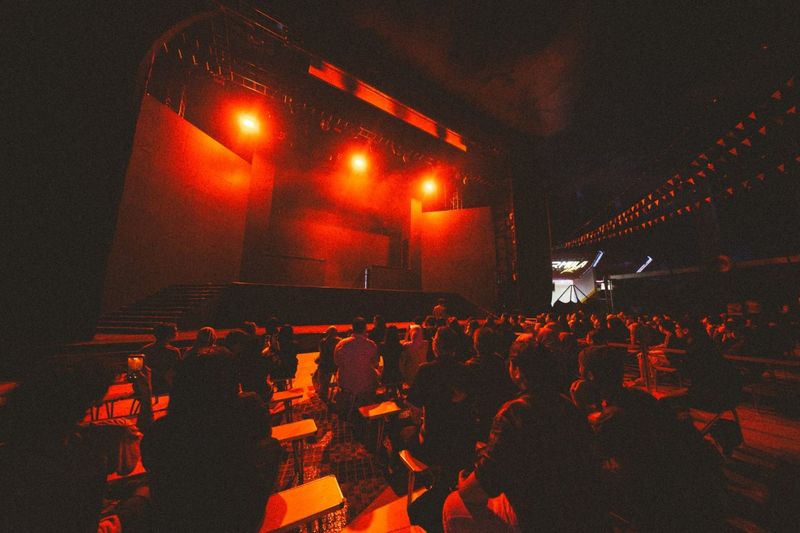
BERMALAM opens with the audience seated in front of the main stage of Trans Studio Cibubur: a towering, multi-leveled stage with gigantic LED screens. Then Wisnu (Andre Panaga), a Trans Studio staff member, walks in to welcome the audience and start the briefing.
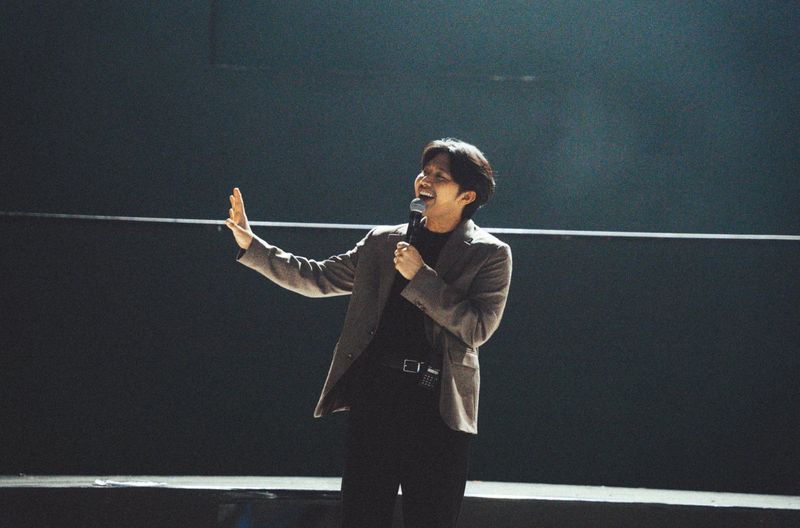
We are then introduced to the framing device of the evening: a safety tour. A while ago, a performer by the name of Lintang had a workplace accident which ruined the public’s perception of the park’s safety. Thus we’re invited on a guided tour of the park after closing hours in order to see the safety measures in place.
Next, more of the park’s staff members are introduced: Rendi Pratama (Barly Armandita), a boastful senior staff member; Hani Putri (Ayu Gurnitha), a junior staff member who’s a bundle of nerves; and Hans Renaldi (Nabil Pawaka), Lintang’s boyfriend and Rendi’s rival.
Just as the opening briefing is about to wrap up, the screen and sound system both glitch, hinting at the strange happenings to come.
The audience is then separated into Red Team and Blue Team. As part of the Red Team, we are ushered to the Formula Kart ride, where Rendi explains the ride’s maintenance process after hours, including one kart that tends to run on its own. In the middle of his explanation, a mysterious ghoulish figure appears behind him. A mysterious howl is also heard in the distance.
As we are about to be ushered out, the ghastly figure pulls and attacks Rendi. Hani, panicking, tells us to evacuate the area and enter the 4D cinema.
In the cinema, both teams are together once more. Suddenly, the screen buzzes alive, bearing gruesome – although censored – images of Lintang’s body. The speakers crack with a haunting voice from beyond the grave. It was Lintang herself, calling out the men in her life who played a hand in her untimely death: Rendi, her senior, who was jealous of her; Hans, her then-boyfriend, who introduced her to this line of work; and, the worst of them all, Wisnu, her boss who masterminded the accident after she rejected his advance.
After the message stopped, Hani and the security Joni Saputra (Dewara Zaqqi) enter an argument: Joni wants to evacuate the audience from the premises, while Hani wants to stay and find a way to help Lintang.
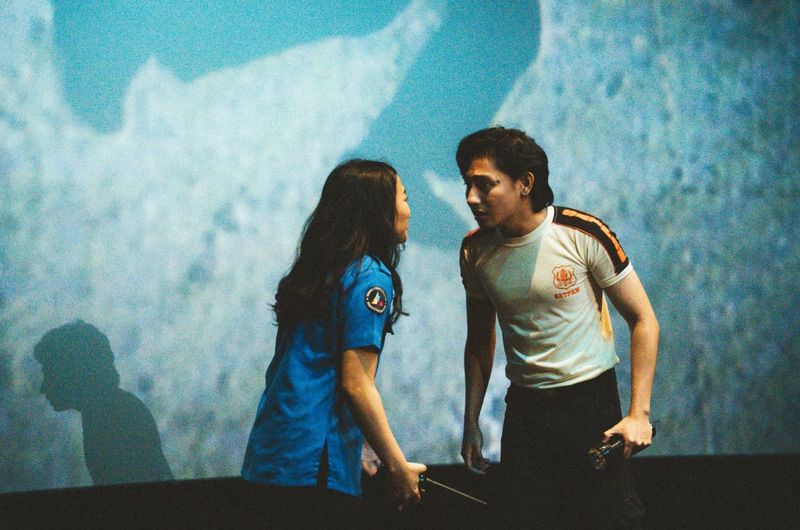
Wisnu walks in to check on the situation and the building goes dark. We then see a ghostly figure, clad in white, slowly walking into the auditorium. It’s implied to be Lintang herself, here to exact her revenge. Wisnu tries to run but Lintang compels him to follow her to the darkness.
After the light turns back on, Hani and Joni go their separate ways to usher out the Red Team and Blue Team, respectively.
The Red Team is brought to the front of the stunt show stage – a huge stage with multiple levels and dressed to look like an abandoned warehouse. After we’re seated, Hani tries to calm everyone down. But she is quickly overtaken by the spirit of Lintang, who’s cackling mad with anger and vengeance.
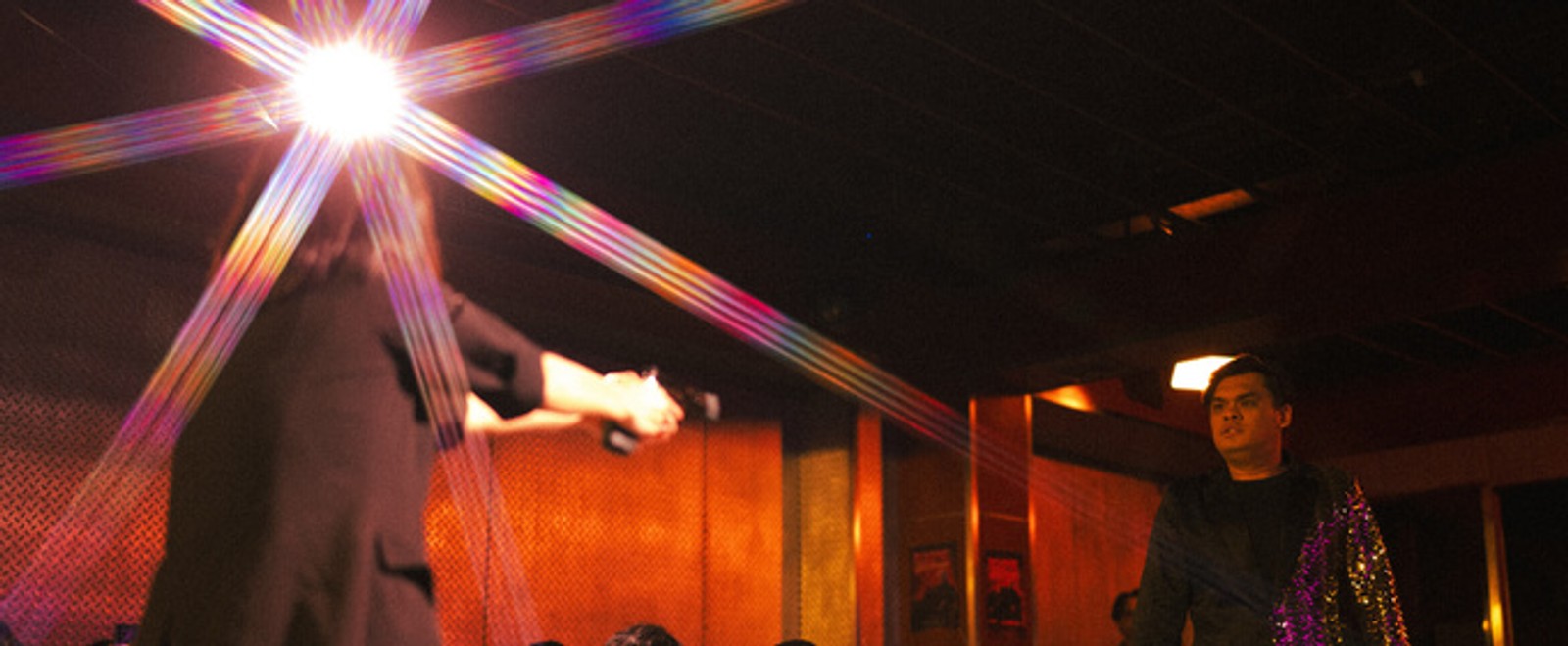
Then Lintang, possessing Hani’s body, uses her spectral powers to force the men who wronged her to jump to their demise from the stage’s higher levels, accompanied by bursts of flames. As Hani falls down to the floor, the spirit having seemingly left her body, the Blue Team arrives, none the wiser about what just transpired.
Conceptually, BERMALAM is a fascinating work – an immersive play being set in a whole theme park after operating hours is, in itself, already provokes the imagination.
Yet it is also inarguably tricky; guiding dozens of audience members through an open, sprawling space for a theatrical experience is a daunting task by any measure.
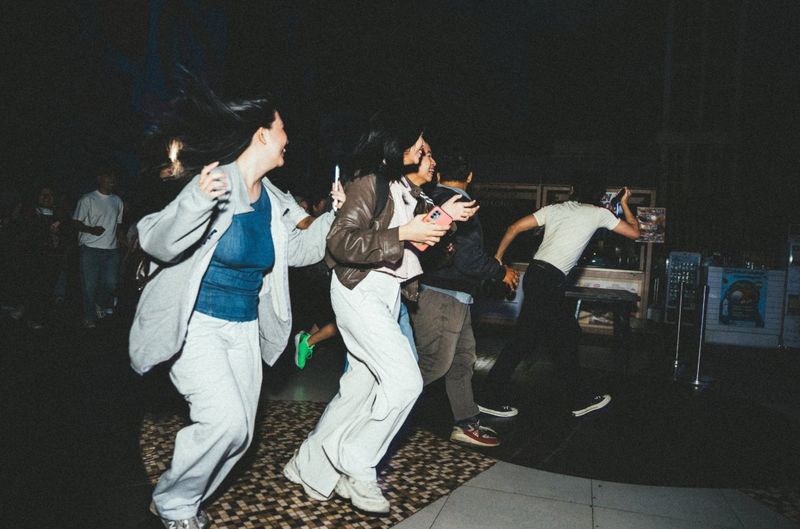
As it was, the execution made decently good use of this playing space. The theme park’s main lights being turned off lent the show an immediate eerie atmosphere. The silence and emptiness further invited mental comparison to the image of a packed theme park during the day. The empty rides and stalls had an uncanny quality to them.
The show’s scares were most effective when they were off in the distance – such as a phantom figure prowling in the background that not everyone noticed at first. It kept the horrors mysterious and untouchable.
In contrast, when we were on our way and a performer in a creepy clown costume was lurking behind a pillar, close enough to touch from our walkway, their physical existence itself washed off the supernatural intrigue.
And the experience was sometimes further worsened by other audience members who heckled or made smart-alecky comments at these figures. Although it’s understandably difficult to control what audience members say, the show’s immersion could easily be ruined by those who didn’t want to ‘play along’ and merely treated the experience as a joke.
The story itself made for a decent backdrop to the paranormal happenings. The show, with the limited runtime and challenging logistics, couldn’t dig very deep into the characters’ motivations or relationships. But what it gave to the audience was easy to follow.
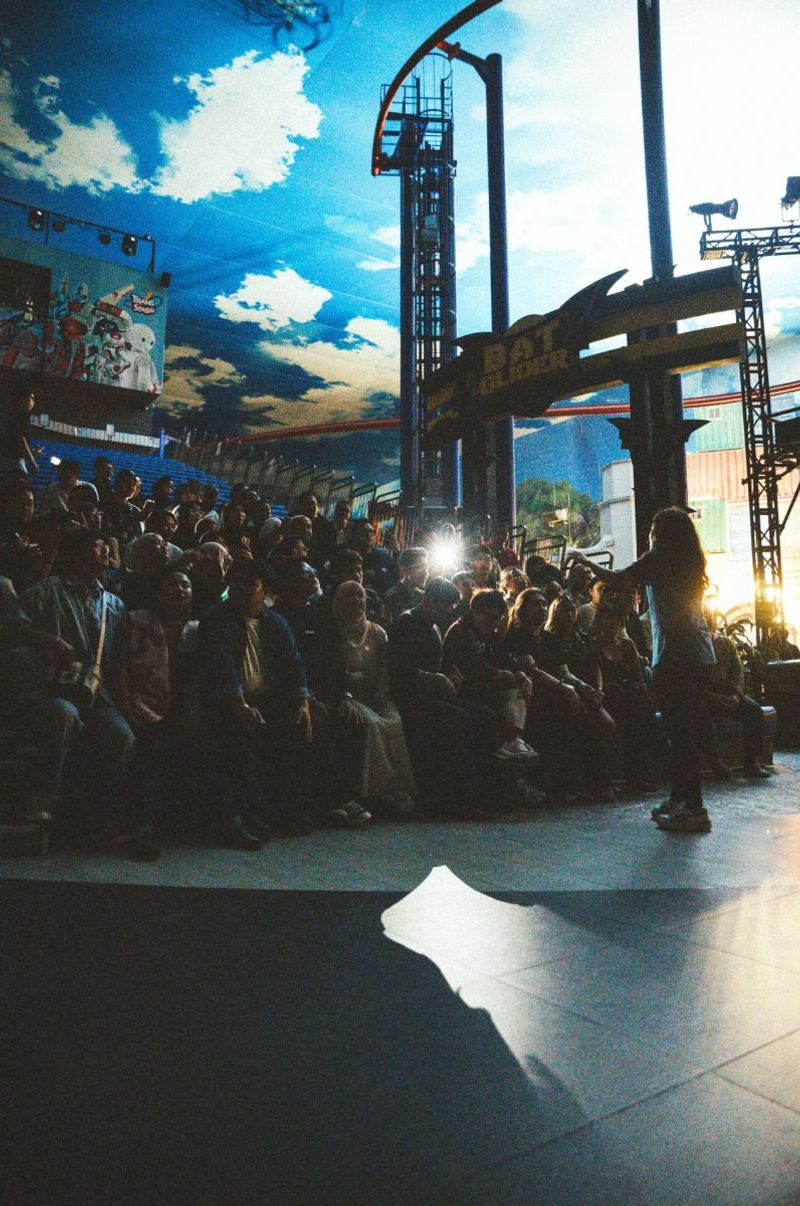
However, there’s room for improvement in how the story is conveyed. For example, Hani’s motivation to insist on “staying” with Lintang was very difficult to comprehend; after all, Lintang’s remains had been taken out of the premises a long time ago, there’s no pre-existing relationship between Hani and Lintang, and Hani herself doesn’t seem to have the spiritual knowhow nor experience to “help” Lintang. Understandably, the majority of the audience preferred to get out of the haunted theme park rather than staying for a vague notion of helping “Lintang”.
On a more individual level, the way the characters interact often does not feel natural as theme park workers, who are trained and expected to show hospitality and professionalism in front of the guests. When they use strong language, stutter in an exaggerated way, or make snide comments towards each other, it runs the risk of ruining the illusion of being guided by actual theme park workers.
Interestingly, the stand-out character moments are those that chill the audience by being more measured and restrained in their approach. One such moment is when the apparition of Lintang appears in the studio, walking slowly yet resolutely towards her killer. Another one is when the spirit of Lintang takes over Hani’s body near the story’s climax; the solid acting of frantic madness by Ayu Gurnitha was not only impressive to behold, but also fun to engage with, since her wrath was directed at the guilty parties and not at the audience. These are a nice variation to Eclipse Studios’s signature high-octane shouting match.
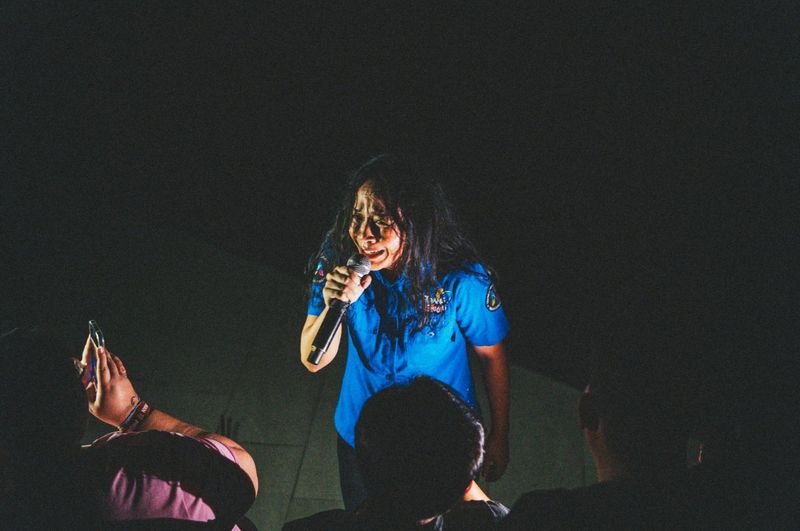
And on a technical level, there were multiple instances where the actors couldn’t be heard clearly. Due to them often not using microphones in such an open area, important story beats or character moments can be missed even with the actors trying their best to project their voice. Other times, it raises a safety concern, as the audience can’t clearly hear the actors’ instructions when moving from one location to the next; are we supposed to walk or run? Does the thrill or safety come first? Clearer instructions would allow for a more comfortable experience.
The show itself ran for about an hour, which was about right; with all the walking in and out of the theme park’s areas, making it longer might make the experience chaotic. Structurally, although the divide between Red and Blue teams means one cannot experience everything BERMALAM has to offer in one go, it also allows for fun moments of exchanging one’s stories, provided one has a friend in the other team.
Taken altogether, BERMALAM is an ambitious show with an exhilarating venue. The scares were most effective when kept in the background; having them close to the audience invites hecklers. The story is simple and the audience interaction is kept to a minimum, which are prudent choices when taking into account the show’s complicated crowd control. Although some of the show’s logic and characterization risks breaking the immersion, BERMALAM’s is still a singularly unique experience that’s unlike anything else. It’s worth your time, money, and perhaps even the effort required to go to Cibubur.
See more BroadwayWorld in Google
Our stories show up more often in Top Stories and Google’s AI answers.
Breaking Broadway alerts by text
Get the biggest stories sent straight to your phone.
Sign up for all the news on the Fall season, discounts & more...

Reader Reviews
To post a comment, you must register and login.