


Review: The Rewarding Journey of HOME SWEET LOAN THE MUSICAL
This show runs from September 30th to October 18th 2026 at Graha Bhakti Budaya
Editing by Rakaputra Paputungan.
From September 30th to October 18th of 2026, Jakarta Art House, Visinema Studios, and Indonesia Kaya are collaborating to produce HOME SWEET LOAN THE MUSICAL, an adaptation of the eponymous novel written by Almira Bastari. This show was written by Widya Arifianti and Yemima Krisantina, with direction by Dinda Lisa Reideka. El Haq Latief and Nudiandra Sarasvati acted as the choreographers. The music was directed by Ivan Tangkulung, who’s also one of the songwriters alongside Idgitaf, and the vocals were arranged by Yandi Brownsu. Hagai Pakan served as the Costume Designer for HOME SWEET LOAN THE MUSICAL.
We, from Broadway World Indonesia, had the opportunity to watch their GALA show on the night of September 30th with Kalya Islamadina playing as Kaluna, and here is our review.
HOME SWEET LOAN follows the same storyline as the novel, albeit with some rearrangement and creative liberties taken in order to adapt to the stage format. The source material having strong writing truly helps set the foundation in making HOME SWEET LOAN an incredible adaptation.
The story starts by establishing who Kaluna is: an office worker who dreams of having her own house. This is due to Kaluna’s circumstances at home, which we will get into later. For years, she has put money into her savings in order to reach that goal of hers. Her three friends, Tanish (played by Alya Zafira), Danan (played by Gerry Gerardo), and Miya (played by Kathy Permata) know this and are in full support of Kaluna gaining her independence.
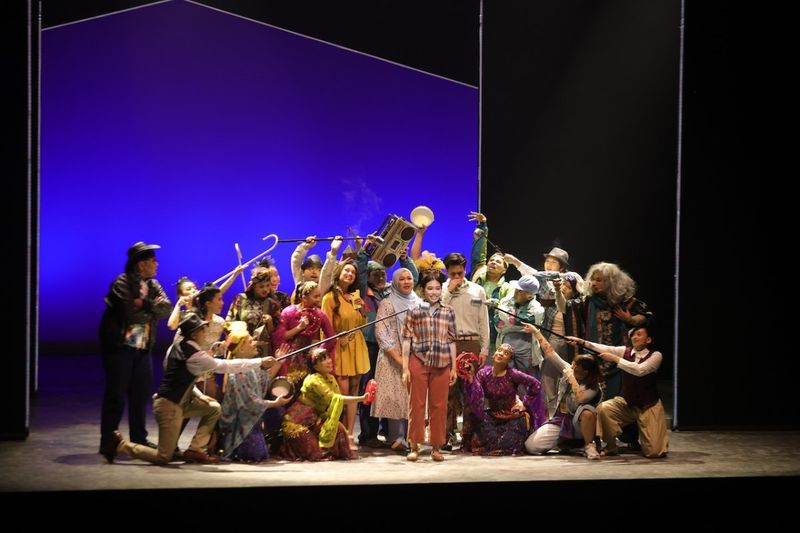
The next scene immediately hits us with an overwhelming franticness. The big musical opening number takes place at Stasiun Manggarai, a train station in which Kaluna goes during her commute. The scene is very crowded and somewhat overpowering, both to Kaluna and the audience. Amidst this chaos, she receives a call from her mother (played by Nita Lesmana) who asks her if she is willing to give up her room for her niece. Although she refuses, due to a misunderstanding, her mother believes that she agreed. The busy staging of this moment risked this information lost amidst the chaos.
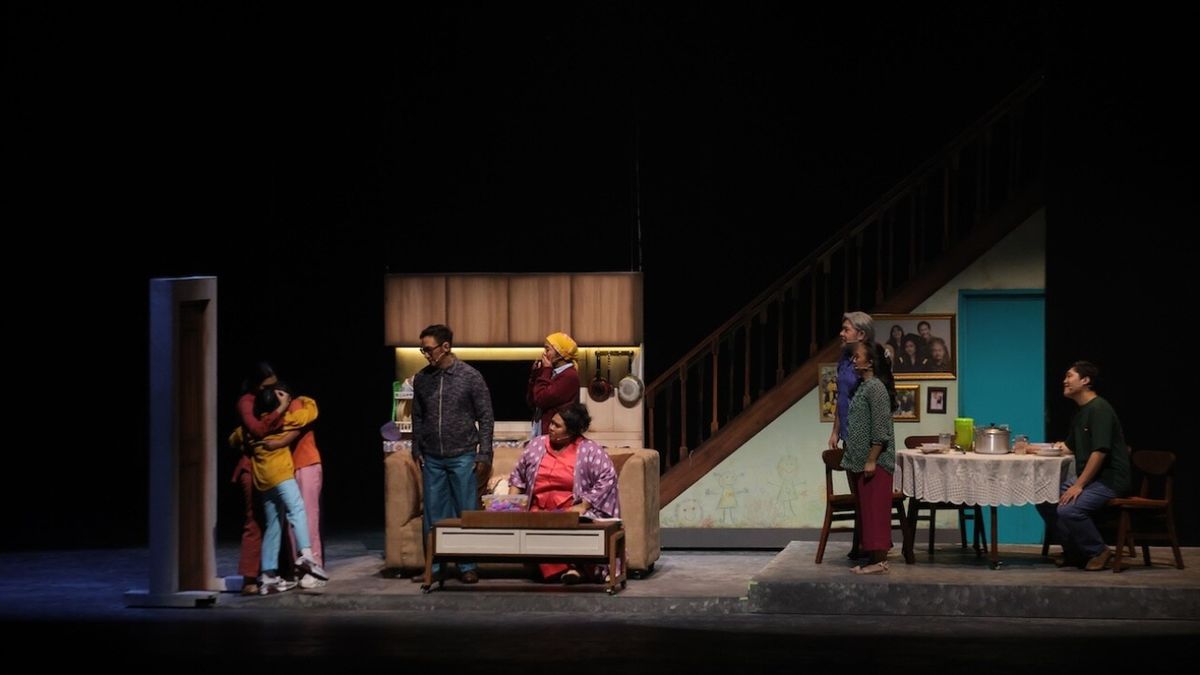
Then we are brought to Kaluna’s family house, where we are introduced to Kaluna’s family. She was the youngest unmarried daughter and the only one with financial stability. Thus it was a given for her to be the one making household purchases (e.g. paying for electricity token). Her family was rowdy, having an entrance that was strong as much as it was chaotic. Kamala (played by Andrea Miranda), Kaluna’s sister, kickstarted the scene, conveying power and an attitude that is unforgettable even after leaving the theatre. This was followed by their brother Kanendra (played by Simhala Avadana), and the first conversation happening between him and Kamala was an argument.
Their first appearance depicts their bold identity and personality very strongly, contrasting our notably meek main character. Once their spouses, children, and parents enter the scene, it becomes obvious what kind of mess Kaluna is in – her reason for desiring a space to call her own. The house was too small for all of them, and so Kaluna wants her escape. However, unless she buys a house, she is stuck in this mess.
Amidst her family, Kaluna notably sunk into the background. Her existence was drowned out by the rest of her family; she didn’t have enough standing to shine amidst chaos—though this might be intentional as perhaps that was the type of circumstances that the director wanted to convey: to have Kaluna feel isolated within her own house. However, since this was a stage production, it might have helped if a bit more spotlight was put onto Kaluna during these chaotic moments; putting us within Kaluna’s shoes.
When Kaluna simply agreed to everything the family demands of her, I found her to be a doormat (someone who simply accepts being treated badly with no complaints). I don’t see the internal emotional conflict when she does the things she obviously does not want to do (e.g. paying for the token bills). I had hoped to see a more complex motivation amidst these ‘doormat moments’ in order to show more of a better build-up to Kaluna’s climactic decision. Perhaps, a feeling of frustration? Because otherwise, her emotion felt like it came out of the blue. There’s a bit of an emotional gap in the process of her being treated as such within the family until the incident that happened later that will push her to the limit. Her desire and want within the first act was drowned by the people and the environment around her.
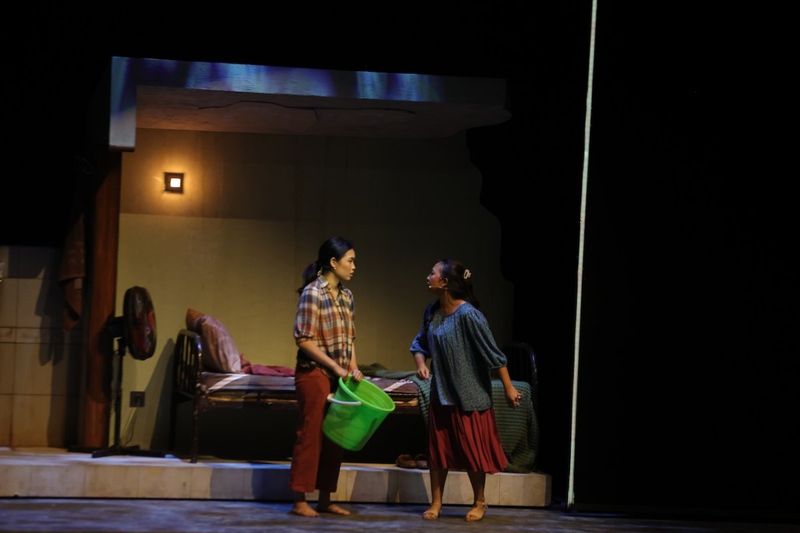
Consequent to the misunderstanding that happened at the train station, Kaluna is pushed into a very small and cramped room (notably referred to as “the helper’s room”). This room lacks privacy, which is showcased throughout the show. It’s also right next to the bathroom, which adds to the discomfort.
We are then brought into Kaluna’s office for a glimpse into her corporate life. Interestingly enough, I felt that there was a bit of disconnect to the office scene, even though the show's branding insistently highlighted the relatability of corporate struggles. HOME SWEET LOAN was flimsy in establishing that Kaluna is an office worker, as we are brought into the chaos of her home life first. The office only seems to serve as a backdrop rather than an integral part of Kaluna’s life.
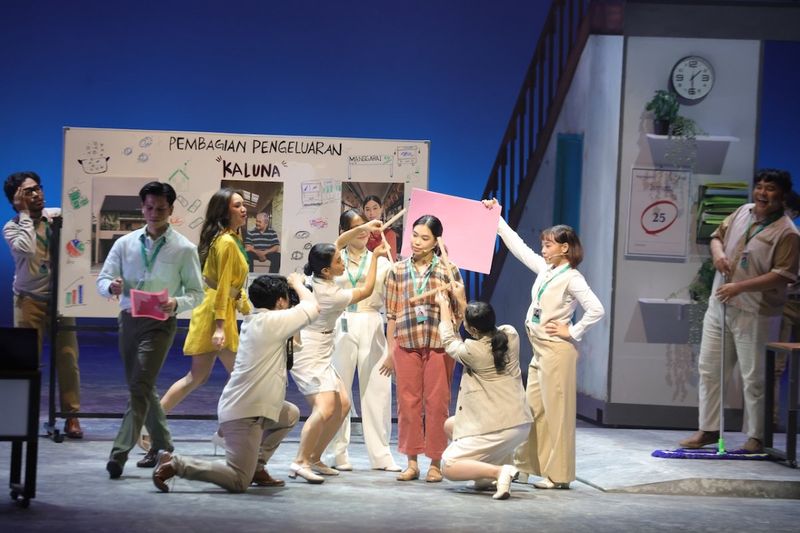
Within the office itself, a small comic relief scene plays out between office boy Sayuti (played by Uyo) and the manager Sonia (played by Ode Waode). While their scenes were unnecessary to the overall plot, the extra addition of their scenes adds humor relating to the current social and political issues in Indonesia. They didn’t overstay their welcome as well, leaving once the pace dictates that they’ve had enough of the stage. It was simply a short and brisk improvisation that adds to the lighthearted tone of the show.
The aspect of Kaluna being a ‘background character’ seems to occur multiple times within the first act, including when she was at the office. It was implied within the office’s environment that Kaluna is a capable worker, able to manage her finances very well and is even given the opportunity to take her job after she resigned by the end of the show. However, these characteristics of her weren't shown. We never truly see her hard work, so it appeared as if her co-workers were praising a completely different person who isn't Kaluna. There was a lack of portrayal of Kaluna as a person within the office and only the purpose that the office has to her. I don’t think we even know what she does for a living either—just that she works there.
Her office offers a house mortgage scheme for its employees, and Kaluna is one of the people qualified to take it. She thus begins looking for the house of her dreams. The following scene is a comedic house tour in which Kaluna’s search for a house leads her and her friends to many interesting locations, notably a house by a graveyard and a house that used to be a murder scene. The execution of this scene utilized choreography synched with the scenography in order to create a seamless transition between scenes, as the group of friends were moving from house to house. However, because the scenography used large black screens in the foreground to cover the on-stage transition, the stage itself ended up feeling rather empty. The artistic design and the choreography were unfortunately not full enough to capture the entire stage.
Finally, Kaluna finds her dream house and decides to apply for the house mortgage from her office. Kaluna returns home, wanting to celebrate with her family, only to find that everyone is in quite distress. This silence feels intense, knowing that her family house has always been chaotic. Turns out her brother Kanendra has been a victim of a fraud, and he had used online loans to make the payment. He asks Kaluna to sacrifice her entire savings to cover the high cost of the loan or else the family house (which was used as a guarantee) is at risk of being repossessed. This is the climax of the first act, which ends with Kaluna deciding to leave the house, refusing to sacrifice any more for her family.
Contrary to what happens at the beginning of the first act, the second act starts off quiet, with the famous song “Kembali Pulang” kickstarting the scene. Kaluna, having nowhere to go, accepts Danan’s offer of using his apartment as a temporary lodging. They begin to get closer to one another, eventually going on a trip together to Seaworld (a marine aquarium attraction in Jakarta). The scene of Kaluna and Danan having fun is followed by Kaluna’s family at their house, as they continue to blame each other for the loan. Guilt consumes them as they realize how much they have been burdening the youngest, Kaluna.
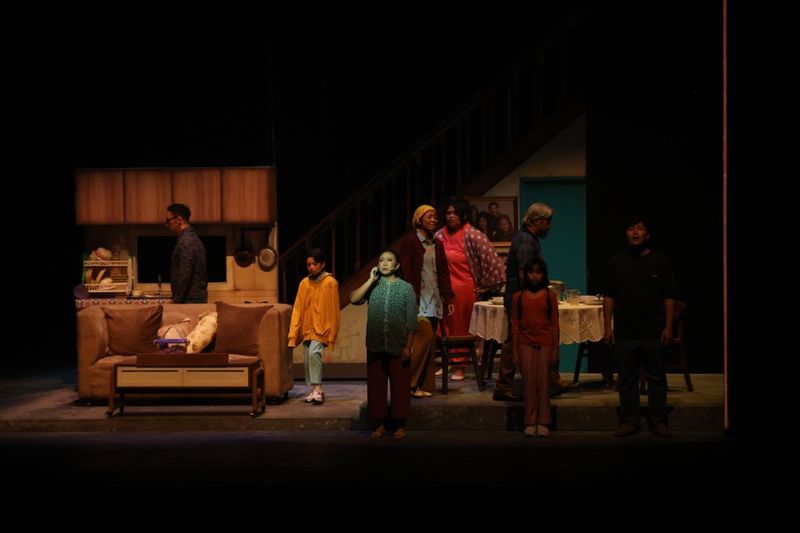
There is an interesting moment in which Kamala’s husband, Kuncoro (played by Eriko Yunus) goes comedic in his approach. This was a short scene in which, within his head, he looks down and makes fun of his brother-in-law Kanendra and his wife Natya (played by Lydia Napitupulu). This scene gave his character time to shine comedically while we are given more perspective into what the house’s dynamic is like within. There is no extended background given towards Kuncoro; just a side of a witty personality.
We return back to Kaluna. With Danan, she is living her best life as she waits for her mortgage to be approved. Their relationship grew quietly, making it one of the most realistic depictions of romance I’ve seen in Jakarta’s theater. Kaluna finally gets her loan approved, and they begin looking at Kaluna’s dream house again. However, when she is just about to sign the purchase, she begins to visualize the existence of her family within her new house. Guilt and regret consumes her as she realizes she is not capable of condemning her family. The following scene after has incredible scenography in which the house’s furniture rises into the sky, signifying the loss of her dream. She makes the difficult sacrifice of giving her savings to her family in order to cover the online loan her brother made.
For some time, Kaluna still does not return home. The house is filled with this quiet, solemn moment of regret; a deliberate emptiness that leaves a significant impact. Comes the question, “Kaluna’s made her choice, so what now?” That is until she receives a phone call from her sister, telling her that their father decides to sell the house. Kaluna is asked to go back home just once, and she obliges. She finds that each of the families in the house will go in a different direction, eventually being separated. The journey up to that point is rewarded by the final reunion, as each of them reached their goal of finding a home and not just a house.
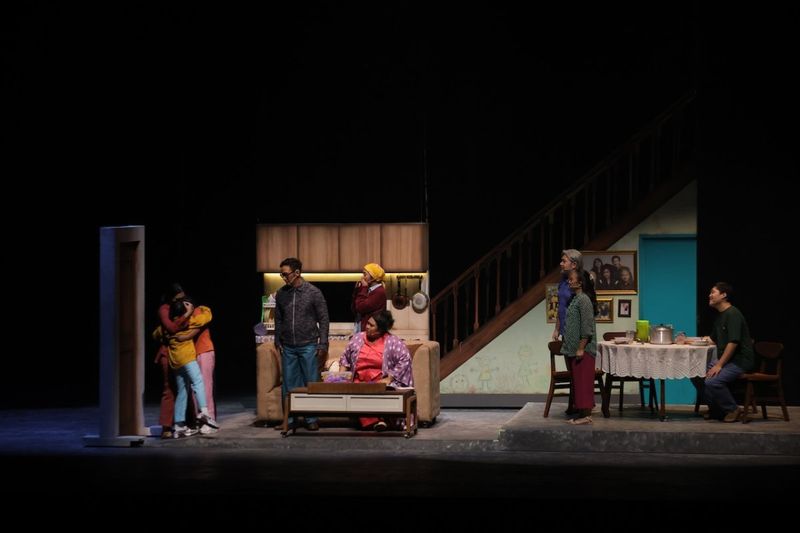
HOME SWEET LOAN was a simple story packed in a grandiose coating, yet it didn’t forsake the quiet moments. These moments were brought up on stage, conveying the simplicity of a story about life and people making mistakes—to forgive, love, and make hard decisions due to it. This was a conclusive story, courtesy of the source material, and it was conveyed without any changes that altered the message.
However, if I were to nitpick the story or pacing itself, the first one would be that the ending extended for far too long. The scene would seemingly come to an end only to continue again and again, unnecessarily overstaying its welcome.
Then there was the contrast in quality between the first and the second act in terms of acting chops as well as the scenography itself. Kaluna’s acting was much stronger and more complex during the second act. In the first act, it was such a debilitating journey due to the character’s persistent, one-note meekness. Infusing power in a timid character is difficult, but it is not impossible. Thankfully, the second act’s acting was quiet but convincing, enough to make the audience cry at the final reunion. In a sense, the love is felt but the hatred wasn’t expressed enough.
Furthermore, due to the way the characters are written – the side characters having bigger, bolder personalities – Danan and Kaluna seem to lose their presence whenever they are pitted against the other cast members. They could carry a scene alone when they were given the spotlight, but there was a sense of unevenness when they shared a scene with others.
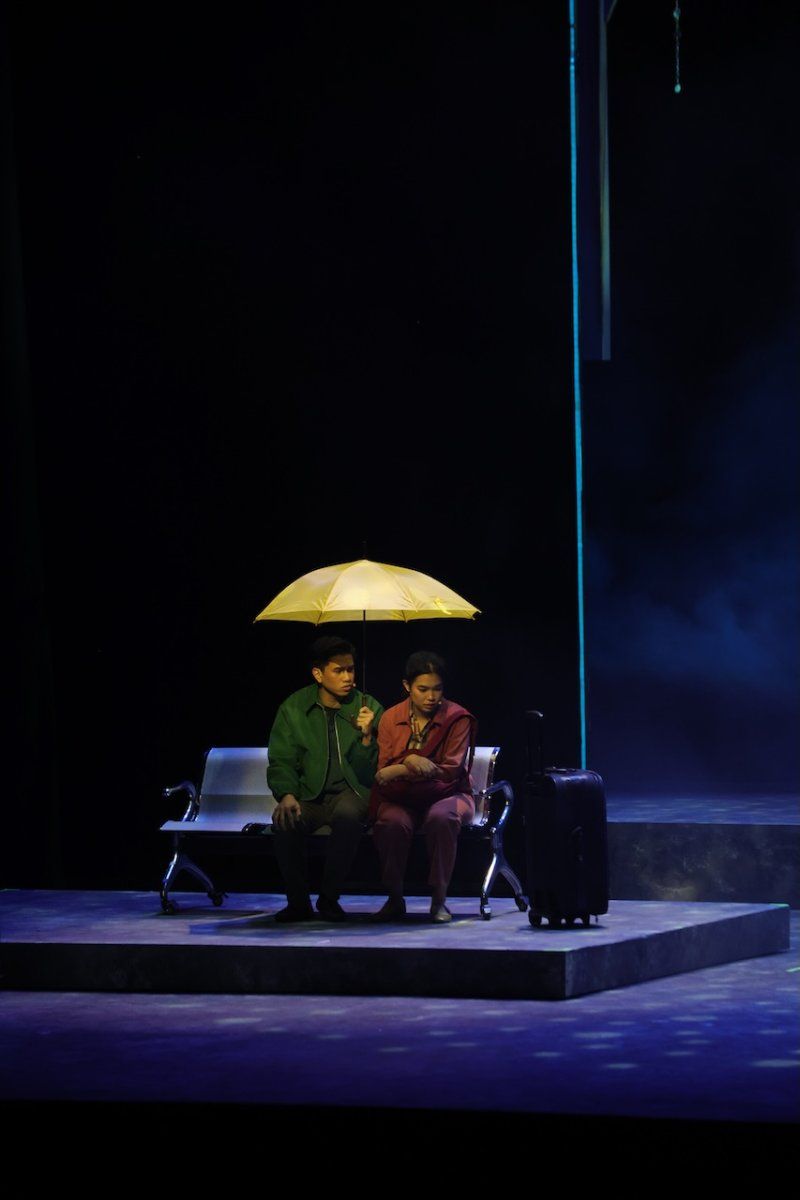
On the artistic side, HOME SWEET LOAN had one of the most unique sets I’ve ever seen, the forefront having black non-reflective screens from three sides (left, right, and top) that create the shape of a house. The borders of this shape used LED lights and the distinct black color it used made the stage feel deeply modern. However, at the same time, the physical set itself feels overwhelmingly empty. There was too much negative space within the stage to convince me that it was intentional.
When the forefront was completely covered by the screens, the obstructed sides felt very empty. I found that there was a missed opportunity to use multimedia on these screens. For example, it could be a visualization of whenever there’s an online communication (i.e. chat messages) between Kaluna and her friends. The ads for the various houses that Kaluna was looking for could also have been projected onto these screens, making the experience so much livelier. Even the qualifier for the office mortgage plan could have been projected onto the screen, making the unbalanced staging much more balanced.
This show used minimal fixed leveling in order to allow transition for the many rotating environments within this show: Kaluna’s family house, Kaluna’s potential future house(s), her office, Manggarai station, and—maybe the most notable one—Seaworld. This open space gave room for choreographers El Haq Latief and Nudiandra Sarasvati to create one collaborative piece of art. Their choreography was cute and super fun. As I watched this show from the balcony, I was able to appreciate the formation so much more.
HOME SWEET LOAN was a musical heaven. The music was incredibly impactful, containing harmony and vocals with intention, delivered by the incredible cast and musicians (and of course, we can’t forget the sound engineer). The scenes with the family also were considerably infused with some vocal improvisation, notably by Lydia Napitupulu as Natya. The songs had a bit of a vocal thrills that added impact, both entertainment-wise and as an outlet to showcase her skills. These ‘improvizations’ were integrated within the scenes, making it something that exists without having to shine a spotlight on. This also applies to any other improvisation within this work; it was smartly portioned so that it doesn’t feel debilitating. The humor made sense with the story.
It’s also a show where it gets better as it goes along. The first act sets up the story and cast of characters – and accomplishes it well – but is merely a fine musical. Meanwhile, although some of the rowdiest spectacles exist in the second act, it also had some scenes that were much quieter and introspective, leaving more of a lasting impression.
Overall, HOME SWEET LOAN is a surprisingly people-oriented play. It relies more on the script and performances to tell a heartfelt story, and the artistry only served to support that. Perhaps, in its next iteration, some things could even be told through the choreography to streamline the storytelling. But even in its current version, it is already such an amazing work, and as the show is still running until October 18th, I highly recommend people to watch this show.
Sign up for all the news on the Fall season, discounts & more...


Reader Reviews
To post a comment, you must register and login.