


MSMT Hosts Second PEEK BEHIND THE CURTAIN
Stars of 1776 Discuss Sherman Edwards' Musical
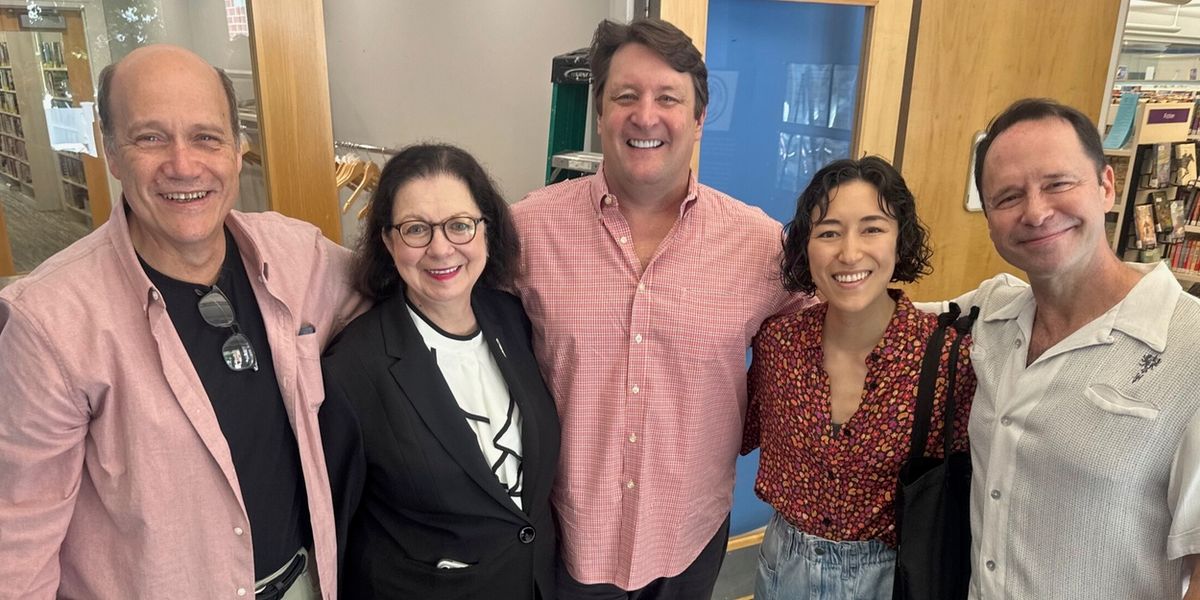
Despite the heat, a large audience gathered at Curtis Memnorial Library on July 1 to enjoy a conversation with four of the stars of MSMT’s smash hit, 1776, now playing at the Pickard Theater in Brunswick through July 11. The panel, moderated by Broadway World’s Carla Maria Verdino-Süllwold, featured MSMT Artistic Director Curt Dale Clark (Richard Henry Lee), James Patterson (John Adams), Alicia Kaori (Abigail Adams), and David Girolmo (John Hancock).
The discussion focused on the unique aspects of the Sherman Edwards/Peter Stone musical, the historical context for this “play with music,” the struggles of the Founding Fathers to achieve the goal of independence, and the complex relationships among the characters. The afternoon concluded with some fun in a lightning round, followed by questions from the floor.
Here is a sampling of some of the panel’s most insightful remarks:
- 1776 is more Shakespeare than musical, more play than spectacle. It is the perfect choice for this moment in our history and for our theatre to present, and I am thrilled to be able to present it this year. I am proud that in the State of Maine we are the only professional company who received the rights to do 1776 for the 250th anniversary.
- Peter Stone’s book for 1776 takes some liberties with history for the purposes of dramatic unity. For example, all the events depicted did not happen in one place; Martha Jefferson did not come to Philadelphia – this was an artistic invention to add a female presence and voice to the mix; the actual adoption of the Declaration of Independence happened in two votes; and the Liberty Bell was not in that building, but having it there adds to the drama of the final moments - to hear the creepiness of the atonal chords in the orchestra as the delegates sign, juxtaposed with the bell growing louder and louder.
- I think audiences take away the realization that some of the issues facing the Congress then are issues we, today, are facing, too. And we need to ask ourselves, do we have the right peope in place to handle the job? I love the moment when Lyman Hall of Georgia admits he is for independence but his state is not, and after struggling with his conscience decides a representative’s job is to trust his conscience.
- John Adams is the catalytic force in the show. He galvanizes everyone in the Congress to vote for independence. He manages to get them to come together. For ten years the colonies have been enduring terrible treatment from Britain and for a year now Congress has been sitting [on the question of independence]. Adams is like a bull in a china shop; he bulldozes his way through to achieve his goal.
- [In a dialogue dense book], I first wondered if the audience would be ready to listen and absorb moments like the 41-minute, all-dialogue scene in act one, but they do listen. The arguments are so well written, interesting, and each one different. So many new musicals shortchange the audience; they don’t trust them to have the bandwidth to sit and listen. I think 1776 proves they can. Everyone in the auditorium is with us.
- I would hope people [audience] see that we can all come together. In the show, a very divided Congress was able to create a miracle – a new nation; they risked everything and came together over impossible odds. I am hoping that now we can reach a place where, all together, we can achieve harmony and believe that it is possible to accomplish what we all know we can if we listen and compromise.
.
- Historically, Abigail and John Adams considered themselves equals. They have so much love and respect for each other that I like playing the character.
- Abigail Adams and Martha Jefferson represent two very different kinds of women. The show was very progressive for its time. Martha is representative of sexual freedom [in her marriage] and Abigail of true partnership. They are different, but both powerful.
- Abigail is a smart woman who is working really hard to keep the family and farm afloat. John Adams always gets the last word, unless it’s with Abigail. There is comedy to the relationship but [as Curt Dale Clark observes, it is situational.] The back and forth is both funny and thought provoking, and that is why it works so well. The humor between Abigail and her husband is all for the purpose of relationship. It helps dispel tension, humanizes them, and gives everyone more substance.
- In 1776 you know the end of the story from the start. Yet the creators did such a remarkable job creating dramatic moments. It’s all in the writing [We wonder] how will thirteen disparate colonies decide anything together? How do they make the most important decision ever made in our history? They realize they must compromise to make it happen. Can you imagine anything like that today?
- My character, John Hancock, came to Philadelphia to preside over the Congress because they needed someone who could see every side of every issue and be able to make decisions that do not alienate half the colonies. Hancock is really good at directing discussion, calling on the right people, and drilling down on the issues. He is the very benevolent President of the Congress who was the right guy at the right time in history.
- If I were to choose my “hero of the era,” the most interesting character whom I’d like to meet is Ben Franklin. He accomplished so many different things in his life; he was a scientist, a statesman, a diplomat, a poet – to me the most dynamic character in our play. He was like a magnet that drew everyone to him. I think it would be fascinating to talk to him!
The conversation concludes with the consensus that 1776 explores the birth of our nation through the lens of our Founding Fathers, who are flawed, human, yet brilliant, committed, and courageous. Alicia Kaori recalls Director Amber Mak’s imparting to the cast this notion that these characters in 1776, despite their arguments and differences, they share the priorities of God, Country, and Family; they understand commitment and compromise and these values produce a miracle.
Photo courtesy of MSMT, Dane Whitlock, photographer
PEEK BEHIND THE CURTAIN was held on July 1, 2026, at Curtis Memorial Library, Brunswick. The program is offered free of charge. Next panel discussion will be devoted to Frozen on July 22, 2026 at 12 noon. For more information www.msmt.org Series sponsored by Wilcox Wellness & Fitness
Sign up for all the news on the Fall season, discounts & more...
|
Seven Sisters Dramatic Repertory Company (10/02-10/11) |
|
Revelation Portland Stage Company (5/05-5/23) |
|
|
Count Arthur Strong - And Its Goodnight From Me! Monmouth Savoy Theatre (3/05-3/05) |
|
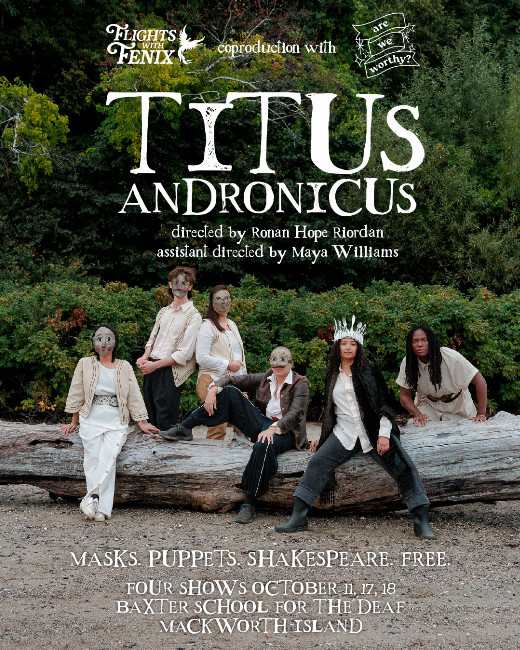
Flights with Fenix: TITUS ANDRONICUS a coproduction with Are We Worthy? Theater Collaborative Flights with Fenix (10/11-10/18) |

|
I Am My Own Wife Portland Stage Company (3/03-3/21) |

|
Arcadia Portland Stage Company (9/30-10/25) |

|
Rooted Portland Stage Company (11/04-11/22) |
|
The Producers OGUNQUIT PLAYHOUSE (8/27-9/26) |

|
Steel Magnolias The Public Theatre (10/23-11/08) |

|
Aztec Two-Step 2.0 performing Simon & Garfunkel Songbook & Aztec Two-Step classics Jonathan's (10/02-10/02) |
