MOZART AND HIS WORLD to Open Bard Music Festival's 36th Season
The festival will present 11 themed concerts at the Frank Gehry-designed Fisher Center on Bard College's Hudson River campus.
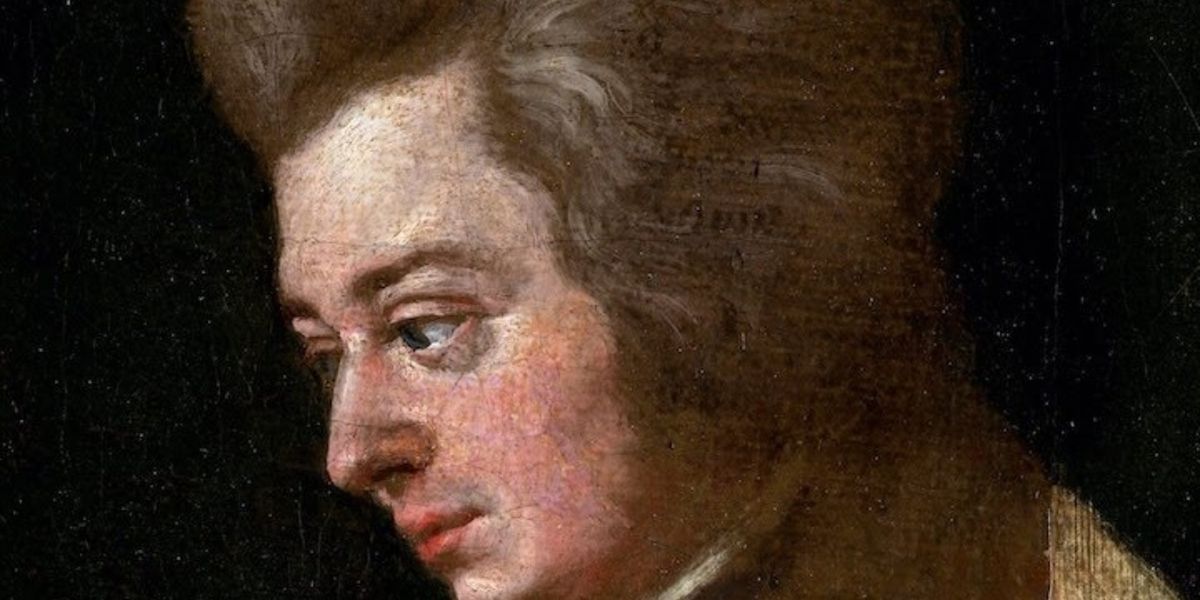
On Friday, August 7, the Bard Music Festival will return with an intensive two-week exploration of “Mozart and His World.” In eleven themed concert programs, the festival's 36th season examines Wolfgang Amadé Mozart, arguably the most celebrated and recognized name in classical music, first considering The Perils of Genius (Weekend One: August 7–9), then investigating the composer's standing as The Universal Musician (Weekend Two: August 13–16). Aside from Program Six, presented in nearby Rhinebeck, all concerts take place in the stunning Frank Gehry-designed Fisher Center for the Performing Arts and other venues on Bard College's idyllic Hudson River campus. Six programs will also stream live to home audiences worldwide on the Fisher Center's virtual stage, and chartered coach transportation from New York City will be available for the final performance.
Festival founder and co-artistic director Leon Botstein serves as music director of both the American Symphony Orchestra (ASO) and The Orchestra Now (TŌN), Bard's unique graduate training orchestra. In a concert with commentary by Botstein, he and TŌN help open the festival with Mozart's Sinfonia concertante in E-flat and delightful “Paris” Symphony [Program 1], before joining pianists Simone Dinnerstein – “an artist of strikingly original ideas and irrefutable integrity” (Washington Post) – for Mozart's Piano Concerto No. 18 in B-flat and Gramophone Award winner George Xiaoyuan Fu for the composer's Piano Concerto No. 5 in D, together with his “Prague” Symphony and works by his older Bohemian contemporaries Christoph Willibald Gluck and Josef Mysliveček [Program 3]. Botstein and the ASO interpret two of Mozart's mature orchestral works – the sophisticated “Linz” Symphony and Concerto for Two Pianos, featuring Andrew Wolf Chamber Music Award winners Michael Stephen Brown and Orion Weiss – together with examples by members of the composer's inner circle: his friend Maria Theresia von Paradis, who lost her sight at an early age; Marianna Martines, at whose musical soirées he was a frequent guest; Franz Xaver Wolfgang Mozart, his youngest child; and Franz Xaver Süssmayr, the friend, student, and assistant best-remembered for his posthumous completion of Mozart's Requiem [Program 9].
With the Bard Festival Chorale, Botstein and the ASO anchor a semi-staged concert performance of The Abduction from the Seraglio (“Die Entführung aus dem Serail”), the opera with which Mozart made his breakthrough in Vienna. Starring Pavarotti International Competition winner Minghao Liu, Metropolitan Opera National Council grand finalist Jana McIntyre, and Grammy winner Aaron Blake, this will be directed by Marco Nisticò, Opera Producer of the Fisher Center at Bard [Program 11]. Led by choral director James Bagwell, the Bard Festival Chorale also performs Michael Haydn's Requiem alongside two of Mozart's own religious choral works and an all-too-rare live account of his Davide penitente, a cantata combining a specially created cadenza and two new arias with original text settings of his personally selected highlights from the unfinished Great Mass in C minor [Program 7].
Bard presents Aaron Blake, Katrina Galka, Jennifer Zetlan, and the Bard Festival Ensemble conducted by Dorian Bandy in selections from two one-act operas that were originally commissioned for competing, back-to-back premieres: Antonio Salieri's Prima la musica, poi le parole (“First the Music, then the Words”) and Mozart's Der Schauspieldirektor (“The Impresario”). This marked one of two occasions when the Habsburg Emperor Joseph II pitted Mozart against his Italian peers in historic contests. The other took place when Mozart and pianist-composer Muzio Clementi were invited to compete at the piano, in a musical duel that will be brought back to life by pianists Danny Driver, a Gramophone Award nominee, and Piers Lane, for whom “no praise could be high enough” (Gramophone) [Program 5]. These six orchestral, operatic, and choral programs will all be livestreamed.
As in previous seasons, the festival presents a wide range of chamber music. The Cleveland Quartet Award-winning Ariel Quartet interprets Joseph Haydn's String Quartet in C, Op. 33, No. 3, nicknamed “The Bird,” and takes part in accounts of Mozart's String Quintet in G minor, a profound, dark-hued masterpiece [Program 8], and of the String Sextet from Capriccio by Richard Strauss (the composer of this season's SummerScape opera, The Egyptian Helen), in whom Mozart's influence ran especially deep [Program 10]. Other chamber and keyboard highlights see oboist Alexandra Knoll, clarinetist Shari Hoffman, bassoonist Gina Cuffari, horn player Karl Kramer, and pianist Danny Driver join forces for Mozart's masterly Quintet in E-flat for Piano and Winds, which he famously considered his best composition [Program 1]; Paolo Bordignon, harpsichordist of the New York Philharmonic, perform the “Sonata d'intavolatura” by Italian composer Giovanni Battista Martini, who mentored Mozart as a child [Program 2]; and organist Alexander Pattavina play an Epiphany anthem by his student Thomas Attwood on the recently renovated organ of the Episcopal Church of the Messiah in nearby Rhinebeck [Program 6].
To complete the lineup, Lisa de Alwis investigates popular Viennese theater traditions in a concert with commentary, for which vocalists Catherine Creed, Aaron Blake, and Devon Russo will be accompanied at the piano by festival favorite Anna Polonsky. Excerpted works include Das Donauweibchen (“The Nymph of the Danube”), a popular opera by prolific Austrian composer Ferdinand Kauer, and from Der Stein der Weisen (“The Philosopher's Stone”), a Singspiel based on the same fairy tales as The Magic Flute, and collaboratively created by the same team, with music by Mozart in tandem with Emanuel Schikaneder (The Magic Flute's commissioner, librettist, and first Papageno), Benedikt Schack (its first Tamino), Franz Xaver Gerl (its first Sarastro), and Johann Baptist Henneberg (its first conductor) [Program 4].
Sign up for all the news on the Fall season, discounts & more...


.png?format=auto&width=365)