Interview: 'It's Been Harder Than I Thought": Actor Lindsey Coulson On Returning To Theatre In ILFORD BOY At The Donmar Warehouse
'If you don't know what the theatre can do for you . . . You can be stuck in a place where you're not accepted'
A new play by Danny Lee Wynter, Ilford Boy, is making its world premiere at The Donmar Warehouse this month. The show follows a mixed-race teenager as he grows up in East London in the 1990s, and how his life changes when he meets an artist named Patrick. Recently, we had the chance to chat with Lindsey Coulson about playing Eileen in Ilford Boy. We discussed the rehearsal process for a new piece of work, what it has been like returning to theatre after more recent performances for television and what she hopes audiences will take away from the play.
How did you first get started in the world of theatre?
I went to a drama school called Mountview. I was a hairdresser beforehand, and I realised at a certain age that if I wanted to do this thing that had lived inside me for a while, and I didn't know how to do it, then I needed to do it before I was forty. That was my thing of, “I need to go and do it,” and I didn't know what it was. I didn't know how to do it. I had nobody in the business - I had no idea how to be an actor. I just applied and got an audition, and I didn't even know really what that was! I don't even know what they saw in me, but I got it. Honestly, I remember getting the letter at home and just going, “This is it. This is going to change my life.” So that's how I started. It wasn't all plain sailing after that, of course!
And what made you want to be a part of Ilford Boy?
So Tim [Sheader] asked if I would like to do it! I was coming to the end of a telly programme called Waterloo Road, and I haven't done theatre since 2009, so I just thought, “Well, this would be a nice segue into something else. Maybe it'd be good for me to jump out of where you're feeling very comfortable and jump into something else.” So I read the script and liked it.
It's been harder than I thought, because it's just such a different way of working, theatre. I've been used to doing a script, discarding it and doing it again. But actually, I've got to dig deep - I've got to be bigger and louder. So it's much more taxing than I thought. And actually, she's very important to the play, because she's quite a big energy that comes on and is filling in the backstory for everybody.
Can you tell us a bit about the role that you play, Eileen?
She's a woman that was born in the 1920s, so when we meet her in 1980, she's sixty. She comes from Poplar, and part of her family would have been Romany, so she has some Romany connection. She had grown up in a very large family and been the oldest of twelve, so she's played a very motherly role. She's a matriarch who cares, but there's something about those East End women . . . That's been my difficulty - trying to find the softness in something that's quite hard, as an accent, as an environment to find.
So at first, I was just listening to Grime Nanny to get this voice out! I'm a Londoner, but I didn't grow up in that particular area, so it's been a little of a struggle for me to be hard because it's quite harsh language, but to find a softness in it. I'm still working on that. In my sense, softness might mean I just need to be slower, quieter. So it's finding that powerhouse of somebody who's in control of her house, in control of her kids. It's been harder than I thought it would be!
What is it like to be back at The Donmar Warehouse?
It's lovely, because in 2008, I was here on a Peter Gill play [Small Change]. I've been living in Manchester for about two and a half years, so being back in London, in Covent Garden, is really lovely. It's in a lovely location, and it's a lovely space to be in! The green room's lovely, and people here are so friendly and supportive. That's the thing you forget about theatres - there's everybody to support you. There's voice, there's accent, you have a drama therapist if you want - it facilitates you to be the best performer that you can. And in the telly world, it's less about that as an actor, and I love that the theatre does that. It's going, “This is your craft. What can we help do to help you do that craft?” So I'm really enjoying that.
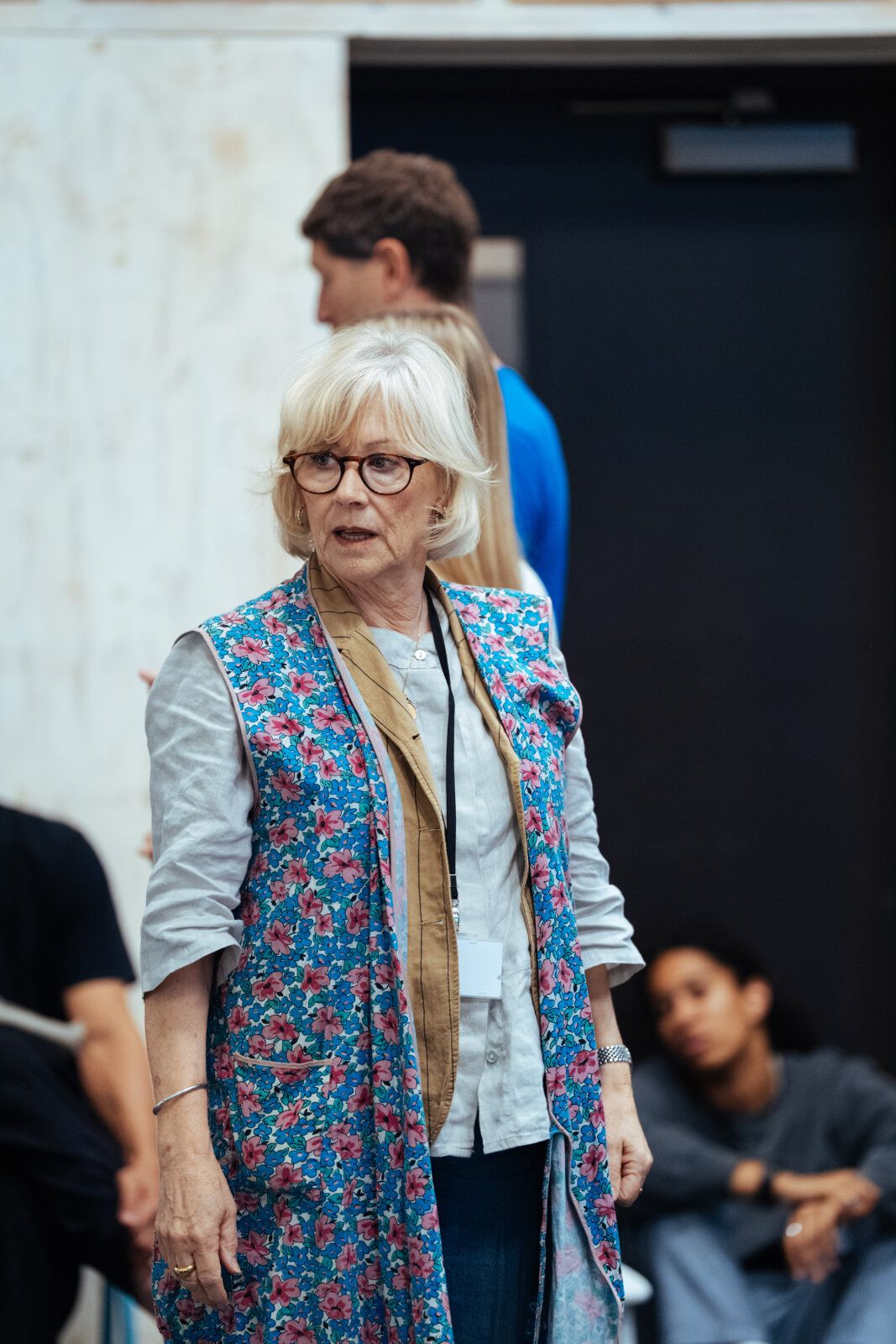
Photo Credit: Helen Murray
And what is it like to be performing in a newer play like this versus something like a Shakespeare play?
It's quite exciting! The first week, we cut quite a lot of stuff, and then we're changing things as we go along. Visually, the director's got a great eye for what he can see as a production. So it's all a little bit in play. I suppose it will be until we get to press night! There will be, “Okay, we don't need that,” or, “What's missing here?” But it's exciting being part of that, watching somebody's writing change. We're all at the stage where we need to put our clothes on, and in terms of character, it's like wearing your insides. You just want to put them all back in and close them back up again!
What do you hope audiences take away from Ilford Boy?
I think they can take away some hope. They can take away that we're all different in how we see the world, how we see others. And certainly in the 80s and 90s, when the AIDS crisis was going on, and how people who weren't in that community saw that community. I had friends who were affected by that, and that's quite sad. There's quite a lot of sadness in the play. But also, there's a class issue here. It encompasses a lot of stuff!
And finally, how would you describe Ilford Boy in one word?
Hopeful.
Ilford Boy runs until 28 October at The Donmar Warehouse
Sign up for all the news on the Fall season, discounts & more...