
Interview: Grayson Kennedy at Gwydion Theatre Company
"We invite controversy because controversy breeds thought. We invite high emotions. We want it to be participatory with our audiences."
There’s a newer storefront theater in town, and it’s starting to make a name for itself with its strong character-driven productions, controversial risks in programming, and artistic commitment to making a socio-political statement that will shape the discourse and resonate with a new generation of audience members. Gwydion Theatre Company, which started in LA, is currently in its fourth season here in Chicago, with the season opener Por’Knockers playing at the Greenhouse Theater Center now through October 4th.
I sat down with Grayson Kennedy to discuss his founding of Gwydion Theatre Company, the philosophy and mission that drives their programming, and his journey as an actor and artistic director.
The interview has been edited for length and clarity.
Thanks for doing this interview, Grayson! Can you tell us a little about yourself and your background?
I got kind of an unusual background. Most people in Chicago storefront right now do the whole high school to a BFA here. They go to Northwestern, Roosevelt, Columbia, etc. and settle here with their college classmates. I did the exact opposite. I’m from Detroit. When I was 17, I very randomly got cast in a TV show off a Craigslist ad and it brought me to Los Angeles. I was there for six episodes and it ended and didn't get picked up. I stayed there and just did a bunch of acting classes and studied with Louis Gossett Jr. from Roots and his wife, Michelle Gossett. Then I studied at the American Academy of Dramatic Arts, which is a conglomerate of studio schools with certain teachers. Through that, I met a group of 10 actors, and we started a theater company. We did stuff at the Hollywood Fringe Festival and did plays right in the middle of the pandemic. We caught some traction in LA, and I, frankly, just woke up one day and realized LA's not for me.
I read the Steppenwolf book by John Mayer, and then I read Ensemble, the theater Bible of Chicago. And I was like, ‘I think the place I want to be in is Chicago.’ It's closer to Detroit. I miss the Midwest, and I came here. Tommy Thams, my childhood best friend, was in college at Wright State University in Dayton, and I knew I couldn’t do this company on my own. Half of the actors stayed behind in LA, half of them came here, but none of them were interested in administrative work. I needed someone to build the structure with me, so I recruited Tommy. He's the Executive Director now, and we fully incorporated in 2023. The rest is history.
How did you pick the name Gwydion Theatre?
Our original name that I wanted was the Greasy Shirt Theater Company, which, in retrospect, is terrible. It's from an Al Pacino quote where he says, ‘An actor needs to wear a greasy shirt.’ I liked it, but the name doesn't roll off the tongue.
I'm very into old mythology and history and religion. I read a book of British mythology, and Gwydion is their Loki figure. He's a trickster god, and one of his purviews was theater. In Welsh mythology, he put on this play that convinced the Queen of Wales. The son that gets the coat of arms is your heir, that's the head of the next generation. She had two sons — one of them was fated to be the hero, and the other was fated to be the villain. She gave the coat to the villain, so Gwydion put on this trickster play and convinced her to switch it to the hero, who became this big hero in Welsh mythology. We wanted our theater to actually have tangible change like that one did. It also rolled off the tongue. When we pitched it to people, they'd look at it and didn't know how to pronounce it, so we had to tell them. The more we told them, they would repeat it back and it stuck in their brain. They didn't forget us. So it solidified itself.
Gwydion’s mission is “Theatre for a new age” and serving as a platform for your ensemble’s generation. On your website, you mention building off of Grotowski’s theory of “Poor Theater.” Can you explain what that is and why that’s your approach in recentering theatre in our generation's socio-political discourse?
Not to be too critical of theaters these days, but I do think we're in a dark age of Chicago theater, and some of that has to do with theater education. I'm very passionate about advocating and changing theater education because it was advertised to me before I got here that this is a blue collar actor town. Everybody's building sets, you roll up your sleeves, you eat your dinner, you say your lines, you really go at it. I learned very quickly that that was not the case anymore. It became this emulation of Broadway, and theater became, ‘How can I use my money to make it seem like I'm Court Theatre or Steppenwolf?’, which felt so contradictory to the traditions that brought me here.
In his book Towards a Poor Theatre, Grotowski ran this experiment at this tiny country theater in Poland. They're famous for an experiment where they made their actors run 15 miles, and then they would beat them with sticks — this was the '50s — and then they would do their plays. The experiment that really got me is when they did Tango by Sławomir Mrożek. They first did it full set, fully funded, light, sound, famous actors, and they ran it for a week. The next week, they did it all, but they took away the lights, and then they did it all again, and took away the set. They did it all again until it was literally 10 actors naked on stage, no props, nothing. They found that as you're developing and moving forward, it's not that you reduce the quality by reducing the amount of things that are in it — it’s that it makes you have to think in a different way and change the play itself to fit the form.
Studio 44 at Greenhouse Theater — which is where Por’Knockers is — is a perfect example of Chicago theater that makes you think inside the box. You have to go into these small theaters, and it's no longer, ‘How can I emulate Broadway?’ It’s, ‘How can I make this play fit this space? How could I make these actors who work day jobs fit their life around this?’ Thinking inside the box makes it much more creative. I've seen some storefront shows where they just cram everything in a tiny box, and the lights get in the way of the story or something gets in the way of the connection of the audience.
Now, instead of coming at a play from the angle of, ‘What do I need to make this great?’ It's, ‘What do I not need to make this great? What's something we can survive without?’ and then we'll play around with it in rehearsals. In Por’Knockers, one thing we felt we needed was the gold teeth. That moment didn't hit well without the gold teeth. But there are certain things that we didn't need. It was very instrumental in the scripts that you needed a rotary phone and these long pauses with it. But we found that if we take the rotary phone away, it informs these pauses with something else, and it allowed us to connect as characters so much better and to have subtle motivations in these silences. That is what Chicago theater is to me.
And that’s the perfect segue, because I really want to talk to you about Por’Knockers, your latest production running through October 4th at the Greenhouse Theater Center. How did you discover this piece, why did you pick this show over Lynn Nottage’s Pulitzer-winning plays, and why did you ultimately decide on staging it now?
The obvious concern our first three seasons was not only that our productions did not reflect the city we were in — the more important part is that the audiences didn't reflect the city we were in. It was a predominantly white audience. Because we were in Lincoln Park, our next biggest demographic was Southeast Asian audience members. We started talking with them after and asked, ‘What made you come see this?’ And we determined it was more or less random. As we kept polling audience members on what would make them come back, it always came down to programming.
I had the opportunity to work with Ron OJ Parson for An Enemy of the People, and he is a champion of Black theater here in Chicago. Henrik Ibsen and An Enemy of the People is very clearly not Black theater, and Ron didn't direct it like that, but he knew that there's a story for people of color who live in the city within this play. and he achieved that through his casting. I remember the show was going up, and Ron sat in the green room during previews and said, ‘I have a really big problem right now. The audiences are all white. We need to get a diverse audience 'cause this play is not just for white people.’ As I’m listening to him talk about programming and casting, I felt like I was doing the casting part right at Gwydion, I was doing the advocacy part right, but my programming was lacking.
Five years ago in LA, I had a job at the Odyssey Theatre. They closed down during the pandemic, and they paid me by the hour to clean out their offices. There was this big cardboard box full of manuscripts and old vinyl records, and they said, ‘You can take those if you want. We don't want them.’ I swear it was like a heavenly beam of light on this Por’Knockers script by Lynn Nottage, and I was like, ‘I know Lynn Nottage, I'm gonna read this.’ And I read it, and while I recognize it's not a perfect play, it's an early work — take an early work of Shakespeare, you're gonna find some crap in it, but Coriolanus is reproduced because there's these nuggets of gold in it — but I just felt her voice was so clearly defined in her dialogue that the story didn't matter to me. I almost couldn't tell you what it was even about, but I was telling all my friends about the monologue, particularly James's monologue about sugar in Black communities. It just stuck in my brain like a song for years. I would call and email her agents about twice a month for four years. Just randomly over the summer, I called and they picked up. I said, ‘Hey, this is crazy. There’s this play that happened 30 years ago. It ran for two performances and closed. I want to do it.’ And they said, ‘Okay.’ A couple weeks later, we got the rights for it for a very generous deal. We got a grant through The Saints to put it on and make sure we hired a cast that I felt we needed since it’s such a performance driven piece. We needed great actors. I wanted to cast myself in it because it was just such a passion of mine, and we did it.
Avery Willis Hoffman, the new Artistic Director at Court, who I think is just such an amazing artist, took a photo of it and sent it to Lynn, who actually reached out to us on social media and invited us to be a part of her nationwide theater festival for our closing weekend. It solidified that this was perfect.
We’ve gotten some harsh reviews. I got an email from somebody that said, ‘Not only will I never see another Gwydion show again, I will never see another theater show again, because this was so tasteless and so offensive.’ And it made us all so excited. Then we’re talking to the audience members after, and it's so many people I've never seen before, so many artists of color who have never been exposed to Gwydion coming in and being interested in the work we're doing.
It’s meant so much to see the controversial divide. Younger people definitely resonate with it more. I was born, and then 9/11 happened, and then the Boston bombing happened, and Iraq. The violence in our generation is just so pertinent, and that's part of our generation's voice. People don't bat an eye. Speaker Melissa Hortman from the Minnesota House of Representatives was assassinated, and we forgot about it the next day because that's how ingrained violence is in us. With the older generations, the violence is getting in the way, but for us, it's a way to express what we're feeling, and that is why we picked it — to put it in our generation's socio-political discourse in a palatable way.
Coming up in your 2026-2027 season, you have Don’t Feed the Pigeons, subUrbia, and Orphans. In general, what’s your process for picking shows, and what are some key things on your mind as you’re deciding which shows are right for Gwydion to put on?
We used to have a formula that we have since done away with: something old, something new, and something borrowed. Meaning, a classic play; something from contemporary canon being something borrowed; something new, like a new work. But then we found ourselves doing new work for the sake of new work, so we simplified our approach and said, ‘Why don't we just do plays that are good, that fit our mission?’ Then it just happened very naturally that we've decided there's a one word theme that will connect these. So we have the season of Violence this year, the season of Class was last year, and a little teaser, next year is the season of Betrayal. It gives us guideposts to think inside the box and to hone our vision exactly. Our season becomes a comprehensive show rather than rapid-fire bursts of entertainment, because that is very important to us. We don't want to just be entertainment. I view theater akin to visual art where I see something sometimes and I'm like, ‘This is affecting me.’ That's how theater should be.
There's just something in the water in this city that breeds good writers. I put a small emphasis on new work, and luckily, one of our ensemble members, Nena Martins — who is one of the most amazing artists ever, humbly — sent us this play [Don’t Feed the Pigeons], and I read it, and I said, ‘That's exactly what we're looking for.’ She came at it with a very honest approach and an allegorical meaning of what this play is. I felt the responsibility to showcase it.
A theater that I really admire is Red Orchid Theater. When I first got here, I had a conversation with their Artistic Director, Kirsten Fitzgerald and I asked, ‘What is a Red Orchid play?’ And she said, ‘Really intense character relationships.’ I kind of took that and put it in my pocket. I find these intense character relationships better than this spectacle of theater. subUrbia was chosen because there's no forward moving story, there’s no ghost of my father that pushes things forward. It's simply people talking and moving things forward with anger or interpersonal love — that is just as important as anger. Orphans is such a deeply loving play. This is what we want, this is what we need. There's no shade to spectacle theater — and there are some really great places for that — but that's just not what attracts me.
So as a relatively newer storefront theater company in Chicago, what are you hoping that Gwydion Theatre can accomplish in terms of the stories you tell and what Gwydion becomes known for?
We want to be known as what we're doing right now. We invite controversy because controversy breeds thought. We invite high emotions. We want it to be participatory with our audiences. It's very easy for a Chicago theater company to go, ‘I want to be Steppenwolf, that's what I wanna be.’ But as I've worked in larger theaters like that, I find that large theaters have a new set of limitations on their own. A smaller theater like Red Orchid or Rivendell has a set of limitations, but it also has so much more freedom to connect with their audience when it's 40 people in a room. You can almost hear the heartbeat of the person sitting right there. As an audience member seeing their shows, I feel so much more connected with my fellow audience members and with the actors. When I'm performing, I also feel so much more connected. That's our end goal, and I never feel like we're compromising. That is the heart of what art is here in Chicago. If I could wave a magic wand and have a $10 million endowment, that's going into 40 seats. It’s not going to go into 4,000.
What’s been some of the biggest challenges and lessons learned as an artistic director, a role and title you didn’t think you’d have growing up?
It has been a learning process every day. Sometimes I have a little bit of imposter syndrome. I'm a big nerd if you can't tell about Chicago theater, and I just admire artistic directors so much here. To think that I'm at least close to their same country in a way is such an honor. That being said, I became an artistic director because I wanted to do plays. I wanted to direct them. I wanted to be with my friends, and I wanted to be in the room and have my hands on it. But I realize that's only about 15% of the job. A lot of it is defining a culture within the ensemble. How do we conduct ourselves in rehearsals? When we go to the bar after a show, how do we look to these audience members? How do I communicate with audience members, get their feedback, make sure that we're serving them?
The reality of it is, art isn't free. It's working with donors and donor relationships. I used to feel very superficial about asking for money for what might seem to some people as a selfish endeavor. We’ve had really wonderful supporters, particularly Chip Bamberger and Martha Van Haitsma from Court Theatre. Their passion for theater comes through in their donations and their attendance. I always ask them how they’re feeling with the shows, what they like and what they don't like. I've learned it's just a different kind of friendship. It's not a donor-receiver relationship. That is 80% of the job.
There was a day when I was 19 and we'd finish the show, spend our $50 stipends at the bar, and stumble home at 3am. Now it's not about me and it's not about the fun. It's about connecting with these donors and saying, ‘Do you like that? How can we achieve our goals? How can you help us achieve our goals? What are your goals as philanthropists here?’ Any other artistic director will tell you the same thing. One of my mentors was a professor at UIC, Yasen Peyankov. He used to be the Artistic Director of European Repertory Company, and we had a very earnest conversation one day. I was like, ‘Man, I'm just so bad at this donor stuff.’ And he's like, ‘Well, then stop. Your theater's done. This is everything for you. Learn to enjoy it.’ And I did.
I first saw you perform in TimeLine’s An Enemy of the People, which was phenomenal. How do you balance other acting gigs outside of Gwydion, and what’s on the horizon for you personally?
I balance it because we're a team and there are so many people who care. I'm so lucky to be in the position that I'm in, and Tommy Thams as my executive director is a tank and a force of nature. We're all realistic about it. We all agreed that we're not taking a dime of money until 5 years, so none of us make any money off of it. So when TimeLine comes up and I get an opportunity to work with Ron and all these amazing actors, we look at it as 1) we're helping build the audience in this way, and 2) it makes us better actors, designers, or directors, and we come back to the theater and bring what we've learned. We are very encouraging of people taking time off and inundating themselves in the Chicago community. It has been seamless thus far.
I don't submit myself to non-union theaters if it's in any way conflicting with anything with Gwydion. I’m repped by Grossman and Jack so I take whatever auditions they give me. I'm going to keep auditioning for things here. I have begun straying away from anything out of the city. I’ve done some things in Indiana and Michigan, but I’ve decided to centralize myself here. Hopefully, on the horizon, I keep doing what I'm doing now, and take whatever theater gig I can outside of here, and just keep building my company from the inside.
You said the theme for this season is Violence. What’s one other phrase you would use to sum up and describe what’s in store for Gwydion this year?
Risky. Our final show, Orphans, is a Chicago classic. It was very much loved in the ‘80s. It ages very well, but it is harsh. The community, in terms of their reception of plays, is also separated by generations and pretty divided on what is allowed and not allowed on stage. We are really trying to push that again. They're hard plays.
subUrbia, in particular, is a tough one. The reason we chose subUrbia was because we lost the election in 2024, and everyone was so shocked. But to me, it made a lot of sense because we have forgotten our enemy. This play is a very honest take about real people who live in the world, and these are the people who we forgot about that pushed the sway towards Trump, and in the '80s pushed it towards Reagan. This is the Silent Majority that was remembered and forgotten so quickly. I'm not doing it to honor them. I'm doing it to remind people that these people exist, and the more we understand them, the more we set ourselves up for success. I always say depiction does not mean endorsement. You can never predict exactly what an audience is going to take away, but I am always willing to risk the whole thing. I go all in with every show, chips in, and we've had a good streak of winning.
I don't think any one show in particular is going to tear a theater down. But I would tell audiences to come in and just expect to be challenged, expect to think, expect to go out, and you might hate us. You might hate the show, or you might love the show, or be sickened that you relate to it. That’s really what we're going for this season. Being the season of violence is not just bombing buildings and gunfighting. Violence happens verbally too. Violence happens intellectually and subUrbia talks about that kind of violence. Orphans talks about a very different kind of familial violence, a violence of identity.
I’m excited to see the rest of this season. Thank you for your time, Grayson!
Thank you, I'm so honored to be in the position I am. Storefront felt like it was dying for a little bit. John Steinbeck has a quote I’m going to paraphrase: ‘The theater is the phoenix that is constantly dying, but never reaches the ashes.’ It felt like storefront could have turned to ashes during the pandemic — not just Gwydion, but a wave of incredible theaters took responsibility on themselves to make sure this doesn't die. I think we're in the clear now. Audiences are growing. We used to have audiences of two people regularly. A small audience to us now is 10, and that's a huge jump for us. I'm just so honored that storefront is getting the mouthpiece from BroadwayWorld that I think it deserves. I'm headstrong and pretentious, and I will say with my chest that this is the best theater in the country. It's not going to make the most money. You're not going to have celebrities in storefront most of the time. But if my friends from Austria come and want to see a play, I'm gonna say, ‘Go to Chicago.’
Thank you to Grayson Kennedy and Gwydion Theatre for this interview!
Learn more about Gwydion Theatre Company’s work and upcoming season on their website.
Grayson Kennedy is the founding Artistic Director of Gwydion Theatre Company. His credits with Gwydion include The Zoo Story, This is Our Youth, Line, Death of a Salesman, Dry Powder, and Por’ Knockers. With Gwydion he has directed their productions of Waiting for Lefty and Action, and will be directing subUrbia later this season. Grayson’s other credits include An Enemy of the People (TimeLine Theatre), Rosencrantz and Guildenstern are Dead (Court Theatre), A Bright Room Called Day (Blank Theatre), and Love’s Labour’s Lost (Hoosier Shakes). On screen you can see Grayson in Dark Matter and the film Oppenheimer. Grayson is represented by Grossman and Jack Talent.
Prefer BroadwayWorld in Google Search?
Add us as a preferred source so our stories show up more often in Top Stories and Google’s AI answers — for you.
Sign up for all the news on the Fall season, discounts & more...
|
Fleetwood Max Raue Center For The Arts (10/03-10/03) |
|
Love Story: A Tribute to Taylor Swift Raue Center For The Arts (11/07-11/07) |

|
Mean Girls Paramount Theatre (8/26-10/11) |

|
Million Dollar Quartet Stolp Island Theatre (10/07-1/03) |

|
Rotary Rocks The Raue: James Garner's Tribute to Johnny Cash Raue Center For The Arts (10/24-10/24) |
|
The Dave Matthews Tribute Band Raue Center For The Arts (9/25-9/25) |

|
Blond Ambition: A Tribute to Madonna Raue Center For The Arts (11/07-11/07) |
|
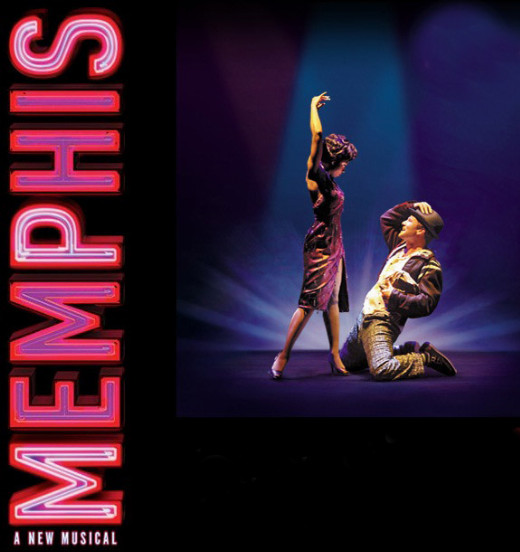
Memphis The Musical Studebaker Theater at the Fine Arts Building (10/24-10/25) |

|
Sinatra ’56 — Songs for Swingin’ Lovers Hey Nonny (10/22-10/22) |
|
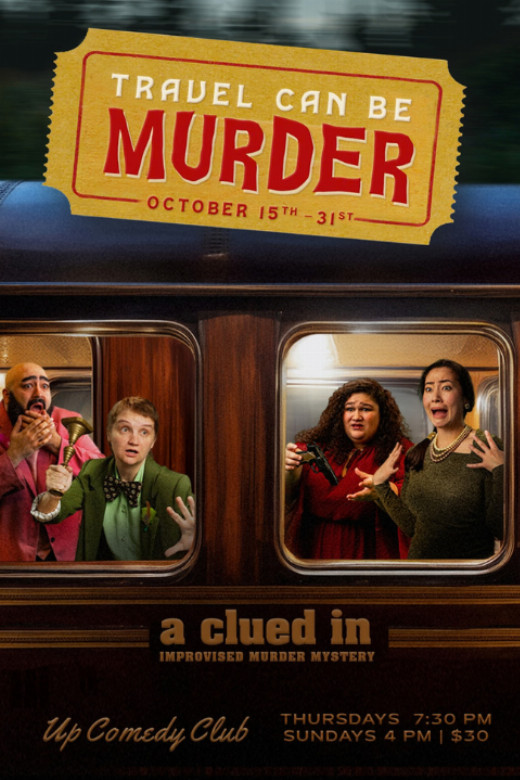
Clued in Presents: TRAVEL CAN BE MURDER UP! Comedy Club (10/15-10/30) |
