


Debut of the Month: Rachael Stirling on the Importance and Power of Language in GIANT
Rachael reflects on UK vs. Broadway audiences, post-show subway encounters, and the lasting influence of her mother, Diana Rigg.
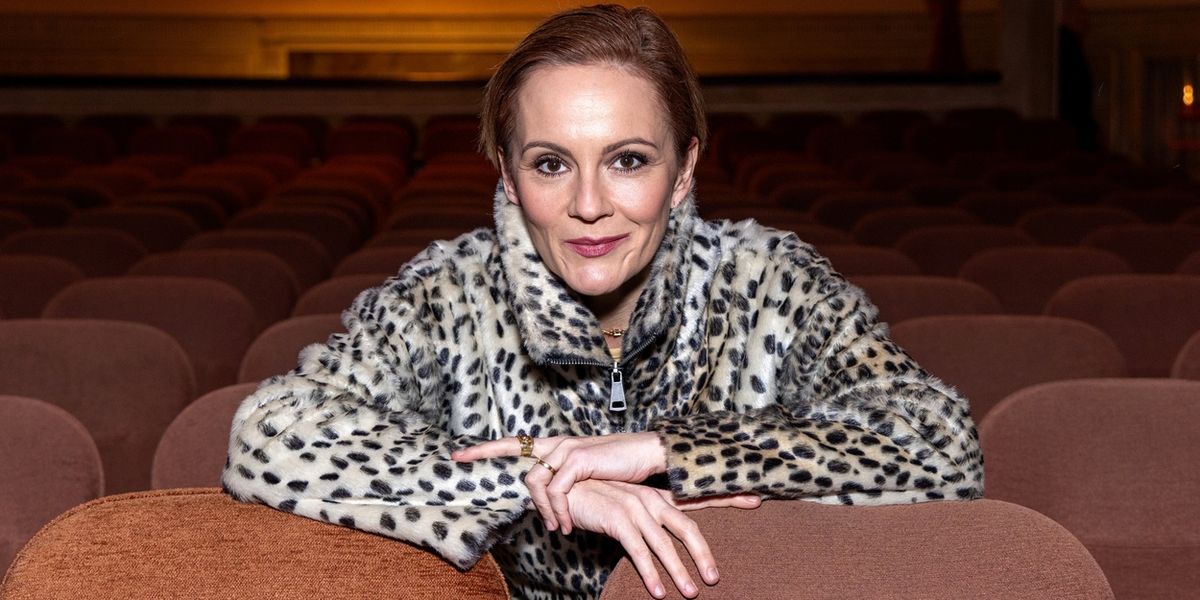
Rachael Stirling is currently making her Broadway debut as Felicity opposite John Lithgow's Roald Dahl in Mark Rosenblatt's Giant! Rachael has been nominated for two Olivier Awards, one for her performance as Rebecca in The Priory at The Royal Court Theatre and the other for her performance as Lady Chiltern in An Ideal Husband at the Vaudeville.
Additional theatre credits include the UK productions of Giant at The Harold Pinter Theatre and Royal Court Theatre, The Divine Mrs. S, Anna in the Tropics (Hampstead); Private Lives, The Recruiting Officer, Helpless (Donmar); Scandaltown, Love Love Love (Lyric Hammersmith); Labour of Love, An Ideal Husband, A Woman of No Importance (West End); The Winter’s Tales (Sam Wanamaker); An Intervention (Paines Plough/Watford); Variation on a Theme (Finborough); Medea (Headlong); A Midsummer Night’s Dream (Rose); Pygmalion (International Tour); Taming of the Shrew, Uncle Vanya (Wilton’s); Look Back in Anger (Theatre Royal Bath); Tamburlaine (Bristol Old Vic); and Theatre of Blood (N.T. Improbable Theatre Company). She has also appeared on television in Believe Me, Heartstopper, The Chelsea Detective, and others, and in film in Snow White and the Huntsman, Salmon Fishing in the Yemen, Centurian, The Young Victoria and much more.
In BroadwayWorld's Debut of the Month interview, Rachael discusses the differences in UK and American audiences, cheekily riding the subway alongside theatergoers and jumping into their post-show conversations, and how her late mother, Diana Rigg, continues to guide her—both in life and in her nightly pre-show ritual. Read BroadwayWorld's full interview and see photography from Jennifer Broski here!
You first played Felicity in the UK, and now you’ve brought her to Broadway—how has your understanding of this character evolved across productions, and what new layers have you discovered this time around?
It’s more really about learning the audiences' reaction. Of course there are certain nuances we took for granted in England that would land with an English audience. The play goes over wonderfully differently—but very differently—over here, in the sense that the central character of Mrs. Stone, who is a young Manhattanista, is kind of the audience’s champion. Whereas in England, I suppose the way into the play was partly through my character. My character is a bit more alien over here, so what I’m learning to do is make sure I get her over to the audience as clearly as she was taken to the hearts of the English audience. So, it’s not so much about learning about the character, it’s learning about how to put her over to the audience in the way that best serves the story and the script.
.jpg?format=auto&width=800)
So, how would you say the differences in reactions have manifested? Do you notice it when you’re onstage, like ‘Oh, this line got a different reaction in the UK!’
Oh yeah, completely! There are gags about areas in London which don’t land, there’s a joke that Roald has where he says “The eaglette has landed.” And it gets a huge laugh over here, whereas it didn’t get a massive laugh in the UK. So, jokes land differently! The play is very welcomed, both by English and American audiences, but certain things jump out at American audiences, and certain things jump out at English audiences, and that’s the joy; the differences.
The difference is the adventure, the difference is in how it goes across. The story is the same, and the reaction is the same; everybody is going crazy at the end, still, for wonderful John’s performance, and the play, which is just less than an hour each half. It's kind of the perfect night out, if you don’t mind my saying so! [laughs]
And John Lithgow, how has it felt to reunite with him onstage?
Oh, I love him! It’s just love! I knew of him before doing this play, because my mother played his wife in a movie. My mother was the gorgeous Diana Rigg, who’s no longer with us. So, my mum played his wife in a movie called A Good Man in Africa, I was about 15 at the time, and I went to go and visit her on the set in Africa, and I declared on this holiday that I wanted to become an actress. My mother arrived on set after our holiday and said to John, “My daughter has just told me she wants to become anac tress. She going to get no f*cking help from me!” [laughs], which is exactly how it was, I might add.
I loved your mom!
Oh my god, me too, I’ve written a book about her, called ‘All About My Mother’ which comes out in September, and in the daytime I’m editing this book, and then I’m coming here in the evening, so I’m thinking about her the whole time. I have a theatrical tradition, which may make your readers panic—every night, since mum has died, I eat a couple of her ashes before I go on stage [laughs]. It’s become a trad! I’ve done about five plays since she died, and I’ve done that every night, and I will be doing it again. My mum said to me she always hoped I’d be in a hit on Broadway before I was 30, and she was only 20 years out!
She’s with you in every way, she’s onstage, backstage, inside of you!
She is, you’re right! I’ve been having such a glorious time writing about her, the joy, and the naughtiness, and the fun, and getting all the joy out of life that you can! And that’s the tradition I carry on, in work, and in life. The last time I was in New York, my son had just turned one, and it was mum’s 80th birthday, and we came over for her birthday party at a bookshop in Lower Manhattan while she was doing My Fair Lady at Lincoln Center, and getting standing ovations every night. And I flew over with my husband and my son for her 80th birthday party. She called it the ‘Who’d have thought it? Party’ because she never thought she’d get to 80, and she danced until dawn with all the gorgeous dancers from the play. So, being here now is incredibly poignant, and I do it for her, every night really.
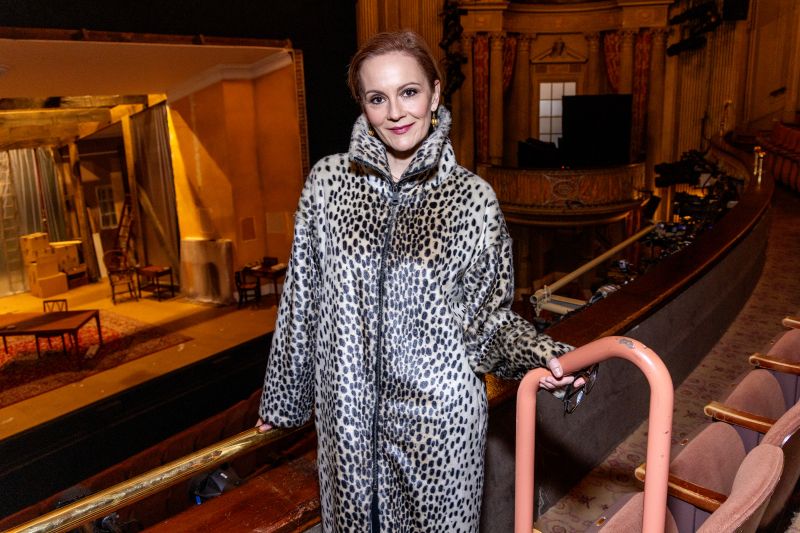
What stands out to you most from your first performance on Broadway?
The clapping before anything’s happened! What the heck is that about? John tried to get rid of it, he tries to talk the minute the light comes up in order to mitigate it, but you can’t stop a hurricane! And everybody just wants to say, ‘Thank you, well done, John,’ and they just want to celebrate him the minute the lights come on. There’s nothing you can do about that! So that’s different.
I was on the subway, and I saw, because I’m very quick out of the theatre— faster than a speeding bullet—that I was on the subway with loads of people from the audience. And I never do this in London, but just before I got off at my stop, I went up to these people who were discussing the show, sitting down, and I said, “Did you enjoy it?” And they were just like, “Oh my god!” Because it’s a play that grips you, and then everybody wants to talk about what they’ve seen afterwards. It’s the only play where people have had to be dragged back from the bar in the interval because they’re so hot on the topic of conversations that are brought up in the play. Conversations we should be having all the time but are quite frightened to have most of the time these days.
So, it was thrilling. And then another couple piped up and said, “Oh, we’ve just been to go and see the show!” And it feels like kind of a community. When I get on the tube in the West End after a show, I kind of hide and I scuttle. But here, for some reason, I feel very grateful to the audiences. Broadway is its own beast, isn’t it? In England we’re very quick to mock ourselves. This is what it is, and it is the beast of Broadway, and it’s unstoppable, and it’s something to celebrate, not something to kind of be all British and stiff upper lip about. It’s big and bombastic, and I love it. I feel very grateful to the audiences, so I don’t feel embarrassed or ashamed about going up to them afterwards on the subway and saying, “I’m so pleased you liked it!” [laughs].
We are loud about our appreciation here!
Exactly! And celebratory about it! And this is a great straight play. It’s not a musical, it’s a great straight play that gets your brain going, and it really feels like people are hungry for it. Like there’s an appetite for it, a voracious appetite for it. So, mostly I just feel very, very lucky to be here. And I feel like I’m wearing the superhero cloak of my mum with me wherever I go. I feel very thankful, and very lucky.
When you’ve lived with a character like Felicity across multiple productions, how do you keep every performance feeling fresh and immediate while still honoring what’s been built over years?
This is a kind of chamber piece with four musicians. It is so precise. I probably have the least dialogue on stage of the four main characters, but you have to keep on the ball, and you have to listen. It’s a very finely orchestrated piece, you can’t get bored, because the minute you get bored you miss your cue [laughs]. I have been in plays where I can do my weekly shopping. And this isn’t one of them. You can’t not be present in this play. It would be a serious humiliation if you were caught not on the ball. And so, listening, and really concentrating every night.
We’ve all got the concentration spans of a small gnat these days, and this is very challenging just purely from the concentration point of view. And also for stillness, and making sure the focus is where it needs to be. A lot of this iteration of the play has been us all scraping off the barnacles, i.e. little habits that we’d formed over the 180 performances of this that we’ve done so far. Little corners where we got into a bit of a rut, we’re scraping all that away and leaving the very simple getting the play across to the audience. Which actually is harder than you think, to go back to a simplicity of performance, and taking away all the habits that you got into, probably to draw attention to yourself [laughs].
It's a real credit to the writing that the more you take away all the things that actors end up adding over time, the more satisfying it is to perform. So that’s what we’ve been doing, going back to basics, and just serving the play, and making sure the audience is understanding where all the characters are coming from, because they’re all so important to the telling of the story.
I then go back and I edit the book until 3 o’clock in the morning. So, at the moment I’m burning that candle at all the ends. She wrote this wonderful book called No Turn Unstoned all about the terrible reviews actors have received, and I was editing that chapter, howling with laughter. So I’m living and breathing not just this play, but theatre in general. And the importance of it. I got married in a theatre, I got married on the Sam Wanamaker stage in London, the theatre was our church. It really was. And my mum always believed, and I believe, it’s more important now than ever. To have 1,000 people all sitting under a roof listening, all lending their concentration and their thoughts to you, that is a great privilege. A place where people aren’t looking at their phones, there aren’t many of these situations left in the big wide world. So, I’m loving it very much indeed.
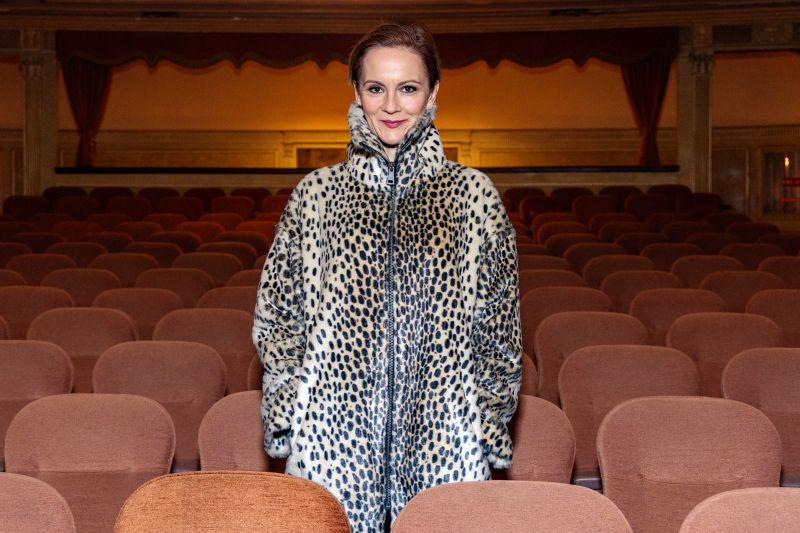
What do you ultimately hope that audiences take away from this show? When you’re sneaking onto the subway and overhearing their conversations! What do you hope that they’re thinking, or feeling, or discussing?
The play, for me, has meant many things, but what it really means to me at the moment is it’s about the importance, and the power of language, and of meaning what you say. And Roald Dahl understands the power of language, and how it can be used for ill or good. The play, increasingly for me in this day and age, points out how important it is to recognize the value of words.
Theatre, any kind of live entertainment really, should be more cherished than ever. And I think this play has an important message to give.
Me too. The play, it’s bigger than me, it’s bigger than all of us. It will probably be the most important piece of theatre I ever do. And so, I am very humbled by how lucky I am to be here.

Sign up for all the news on the Fall season, discounts & more...
Powered by

|
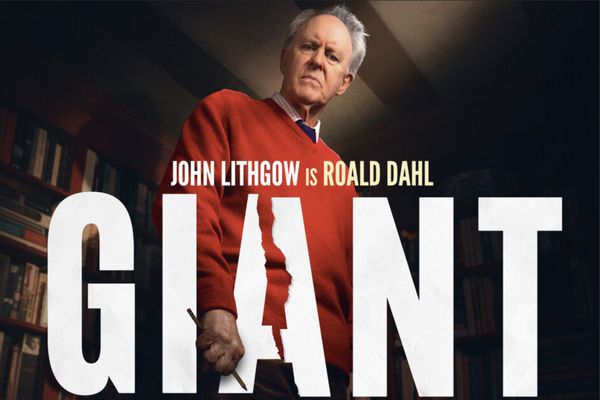
.jpg?format=auto&width=300)
.png?format=auto&width=365)




