
A FEW GOOD MEN Director Michael Arden On Finding New Truths In An Aaron Sorkin Classic
The first Broadway revival starring Bradley Whitford and more begins performances this month at Lincoln Center Theater’s Vivian Beaumont Theater.
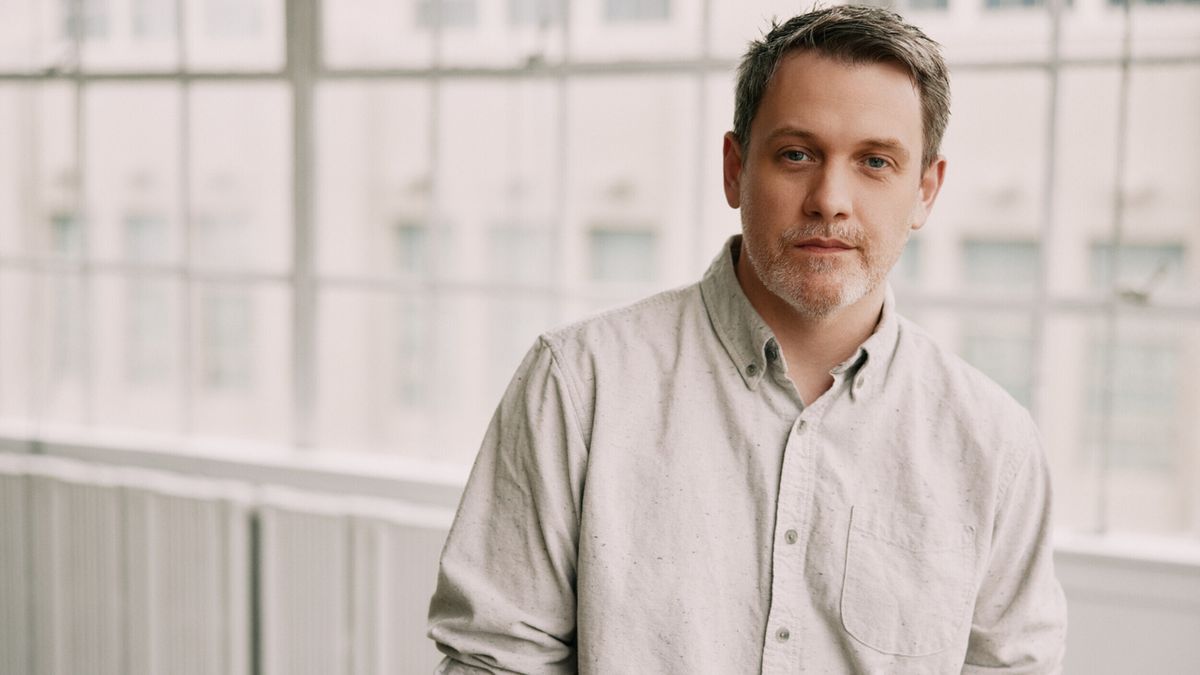
Few Broadway directors have built a body of work as distinctive or as varied as Michael Arden. From the futuristic fairy-tale world of Maybe Happy Ending and the sepia-toned gravitas of Parade to the sand-swept fantasia of Once on This Island, the revelatory reinvention of Spring Awakening with Deaf West Theatre and the gleeful gothic spectacle of The Lost Boys, Arden has earned a reputation as one of Broadway’s modern giants. Though theatrically explosive, his productions remain firmly rooted in the emotional core of each story, giving audiences experiences that are as deeply felt as they are visually unforgettable.
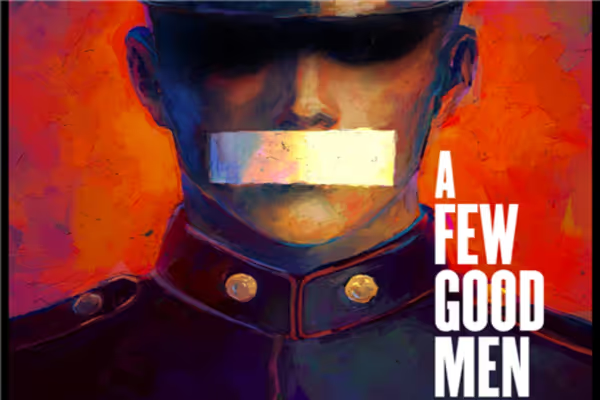
Aaron Sorkin’s A Few Good Men first premiered on Broadway in 1989 before becoming the iconic 1992 film starring Tom Cruise and Jack Nicholson. This fall, the six-time Tony Award-winning Arden will bring the courtroom drama back to Broadway for its first-ever revival, with Tom Blyth as Daniel Kaffee and Bradley Whitford as Colonel Nathan Jessup.
In the rehearsal room, Arden and his company have gradually stripped away props and other theatrical elements, discovering how little the play needs beyond the power and musicality of Sorkin’s language. He spoke with BroadwayWorld about why A Few Good Men feels newly urgent in 2026, treating the audience as the jury, and watching Whitford take on one of the most famous roles in modern American drama.
Where are you in the rehearsal process, and how is it going so far?
It’s going really well. We’ve kind of done a first—I always think of it as coats of paint. We’ve done our first coat of paint over the entire show, and it’s exciting. Now we begin detailing, adding second coats, and refining. It’s just such strong material that it works at the table. It’s so nice to get to be up on our feet, and working with these incredible actors is truly incredible. Every single person is world-class.
How did A Few Good Men get on your radar? Had you wanted to direct it?
I was in conversation with Lincoln Center about working on something and doing something in their space, and this was one of the things that I was interested in doing. I kind of knew it from years ago, but then I revisited it, thinking about the Beaumont and this time, rereading it and, of course, watching the great movie again. In this political climate, it really came alive in a way that I didn’t quite expect or even remember. It just felt like, “Oh, this feels like it was written today.” Given what we’re seeing in our own government and military operations, and with questions of following orders, it just flew off the page in a really exciting way. It felt like a great opportunity to revisit a great work while also pushing the needle forward with American storytelling.
In what ways do you think this moment in time really illuminates A Few Good Men?
I think we’re looking at a reshaping of our military by certain players. When you’re examining the idea of what it means to follow an illegal order at one’s own peril, I think it definitely resonates with the kind of endless wars we’ve been in and how America operates in the global sphere and within its own borders. I think it reignites the fire under the cauldron of the question: How do we define morality within a system that is hierarchical?
A lot of people are coming to this material through the film, which is so iconic. What does this work do in a live setting, differently from what it does on screen?
I like to think about the fact that, in a film, you can look away—which I guess you can do onstage—but there are living people going through something all at once in front of you. That is something undeniable and palpable, and I think it has the ability to have a greater impact than any other dramatic art form because there are actually live people onstage. With a film, you can pause it and stop if it gets to be too much. With a play, there’s no stopping it.
Also, the audience, in a way, is the jury here. It casts the audience in an active, participatory role in the proceedings. I think that is such an exciting thing to be able to do. And to hear language like this come alive within a space—there’s nothing more powerful than live language received in the room where it happens, so to speak.
You're collaborating with Aaron Sorkin on this production. What has it been like to collaborate with such a formidable figure?
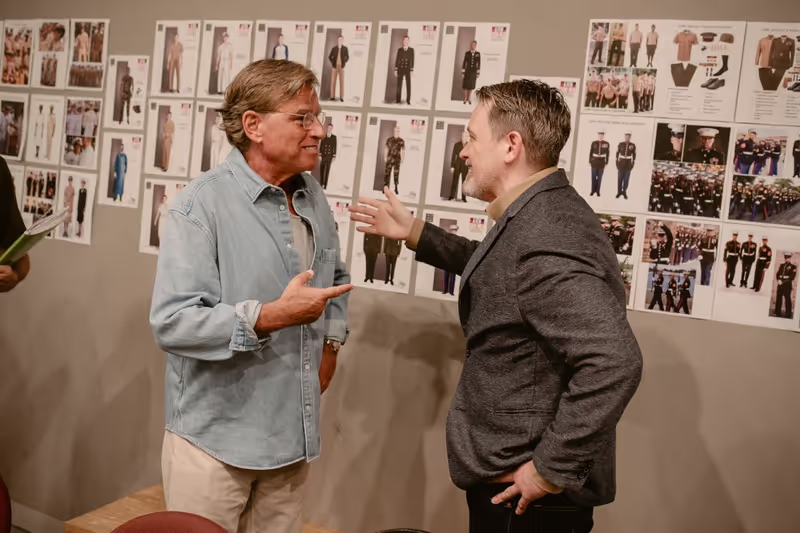
It’s a real dream come true. He’s the closest thing we have to Shakespeare, I think, certainly in this country, in terms of what he’s able to do with language, story, and the dexterity of thought. It’s really exciting. He said to me from the beginning, “I want you to approach this like it’s a new play.” Of course, I have the utmost reverence for this play, so it’s been really inspiring to see how game he is to make changes, take notes, try new things, and let us find it in the room as if we’re discovering it in its first run.
His work has such a specific music to it. What has it been like to work within the framework of the Sorkin rhythm? Have you found it challenging?
No. What’s incredible is that it’s such a great roadmap, and it’s like a ride that you get on. It’s like great music. He is both the composer and lyricist in this. Oftentimes with playwriting, the lyricism is there, but not necessarily the musicality. His musicality, progression, and tempo are built in. I think it’s about giving oneself over to it as opposed to trying to find it. You just have to submit to what the play wants. I love that, because it certainly makes my job a lot easier. We just get to get on the ride. If we speak every word clearly and listen to what the text is telling us, then we can kind of be in a flow state, for lack of a better word.
You also have an expert on hand with Mr. Bradley Whitford, who is not only a staple Sorkin player but also a member of the original Broadway cast of this play, playing Colonel Jessup. What has it been like working with him on the character, and what can audiences expect from him in this role?
He’s amazing. What’s so incredible about Bradley is that he’s the most prepared person I’ve ever worked with. He submits to the language and allows it to guide him. That doesn’t mean there’s one way of doing it, but it’s like a river in which you get in and the current takes you where it wants. It’s so exciting to watch. He’s so alive. It’s different every time he rehearses, which is just a real joy for me.
It’s been really, really fun because he knows the play so well. Yet, as he admitted on the third day, he said, “God, I thought I knew this play a lot better than I do.” It’s so nice for him to revisit it in his adult life. He’s just so open and game and responsive to other actors and stimuli onstage. Of course, everyone’s wondering, “Oh, how’s he going to say the line?” You know what I mean?
Right. He’s got the big line.
Which we now just joke about. “How’s it going to come out today?”
He just stands in the mirror doing it over and over again.
Exactly. But I think what’s so exciting about having such a skilled and free actor onstage is that each audience is going to get a different version. His Jessup is incredibly smart, incredibly proud, understands the military, and is firm in his beliefs. I really appreciate the fact that he’s not approaching him as a villain, but rather as someone who believes, in his core, that this is how a country can survive: through his ideology. Every day, I leave and I’m like, “Well, that’s the best acting I’ve ever seen.” I’ve been lucky enough to work with a lot of great actors, so it’s a real joy. And the company around him is just as spectacular.
He’s in excellent company. Have there been any surprises in the rehearsal room so far? What has been your greatest revelation, whether it’s a performance, a choice, or something that resonates in the play that you hadn’t necessarily seen before?
I think what’s most surprising and unexpected is how little the play needs to exist. We started with lots of props and pieces, and we’ve kind of whittled it down to nothing because the language carries it. That’s a testament to great writing. It feels like I’m at the Globe, maybe in a time before sets and props. Of course, we have other storytelling elements, but all we really need is the language. We could do this with nothing, and it would still be as impactful.
That has been the most wonderfully surprising and exciting—but also challenging—part of it. It forces you to really trust the simplicity of what’s on the page and let the thoughts be the event.
What do you hope people take out of the theater with them?
I hope there’s an engagement with democracy. Things can seem insurmountable. We’re certainly living in a world where every day we open our phones first thing in the morning and it’s like, “God, what horror is awake, and how insignificant I feel amidst it all.” I hope, in a way, it’s a call to arms: to not lose hope, to maintain optimism, and to engage with civics on any and every scale. Even if it means—even if you know you’re going to lose in the face of great adversity—that the trying is what matters.
A Few Good Men will open at on October 29 at the Vivian Beaumont Theatre.
Photo Credit: Emilio Madrid, Michaelah Reynolds

Sign up for all the news on the Fall season, discounts & more...
|
Powered by

|

.png?format=auto&width=365)




