Interview: The Team Behind HARRY POTTER AND THE CURSED CHILD On A Decade Of Magic
Writer Jack Thorne, director John Tiffany and producers Sonia Friedman and Colin Callender reflect on the magical show
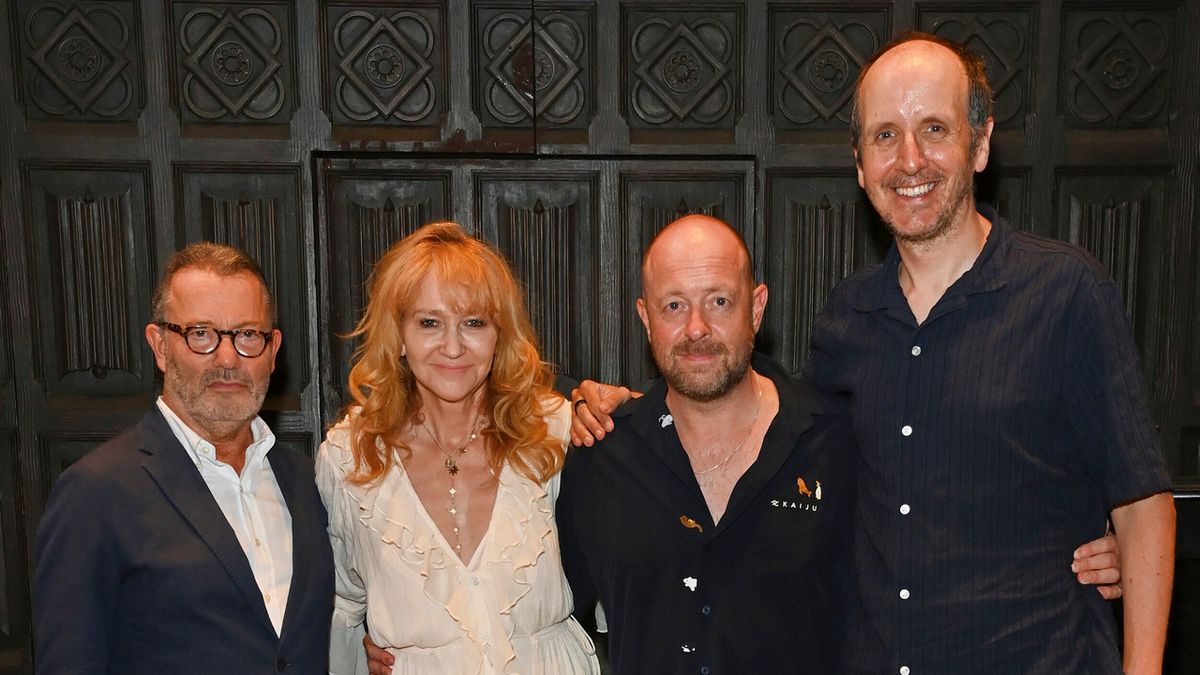
As Harry Potter and the Cursed Child celebrates a decade of magic, the show is now looking forward to a new chapter when it re-opens as a one-part production on 9 October. Writer Jack Thorne, director John Tiffany and producers Sonia Friedman and Colin Callender, reflect on a decade which has seen Harry Potter and the Cursed Child become one of the most successful and awarded plays in British theatre.
The production originally opened at the London Palace Theatre in July 2016 to enormous critical acclaim. Since then, it has travelled around the world, collecting more than 60 major awards, including nine Olivier Awards and six Tony Awards, while introducing millions of people to the theatre.
The two part production gave its final performance on 20 September 2026, marking the end of a remarkable ten year run. From 9 October, the Palace Theatre will instead welcome a reimagined one-part production, bringing the story to audiences in a shorter and more accessible format.
The origins of Cursed Child date back to 2013 or 2014, when Sonia Friedman and Colin Callender were in America discussing another project. Above them was a poster for one of the Harry Potter films. What began as a conversation about what the Potter’s eighth story might look like on stage, quickly developed into an idea about Harry as an adult and, crucially, as a father. Friedman explained:
“We started talking about what that story might be if it were ever staged and pretty quickly, because I mainly do plays and Colin’s background is in plays as well. We came up with an idea of Harry, 19 years later, as a father, and what it would be like to be a father if you’d had no parenting yourself, not good parenting, Harry as a kid was living under the stairs, and had a lot of abuse. So we started to unpack this idea about Harry as an adult.”
The pair secured a meeting with J.K. Rowling, where the possibility of exploring characters and stories beyond the original books was discussed. Theatre, Friedman explained, offered something different from film.
“We talked for many hours about what theatre can be, and by the end of the conversation, you could see that she’d got very excited and interested in us taking on that final chapter 19 years later. As we left, she said, If you can find a writer, because, of course, she’s not a playwright, and find a director, that will work with me and will understand my world, then we’re on. Which leads us to John and Jack.”
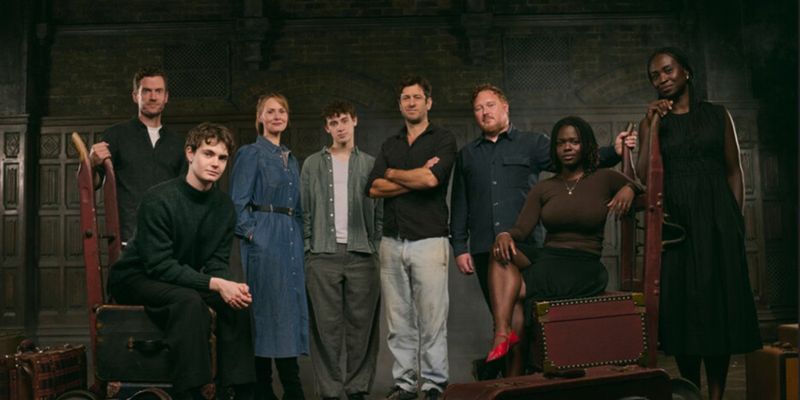
That brought together writer Thorne and director Tiffany, whose creative partnership would become central to transforming the idea into a theatrical experience unlike anything audiences had seen before. For Tiffany, the scale of the Harry Potter franchise initially came with obvious reservations. “If it hadn’t been for Sonia and Colin, I don’t think I would have (become involved)," he says. "Because I didn’t know what the idea was, whether it would be trying to do a theme park as theatre on stage. Which I don’t think I would ever be involved in, that could be brilliant, but I don’t think I would have been very good at it.”
What persuaded him was the possibility of making Cursed Child a genuine new play rather than simply recreating the films on stage. The production team wanted theatre to provide the magic, rather than technology simply attempting to reproduce the cinematic world. For Tiffany, that meant bringing together a creative team capable of making the impossible appear to miraculously happen directly in front of an audience. Friedman remembered one particularly simple example from the development process:
“It was so simple, in many respects, what we were seeing in front of us, (particularly) how we were doing the dementors. I remember you brought us into a room and it was a fan and organza, and we just turned the lights off, put a little light underneath the organza, and there was a dementor. It was so beautiful and so simple. And if you can convince us in a room that that is a dementor, then you can go anywhere, and you can take the show anywhere.”
That philosophy became fundamental to the production. The team wanted magic on every page, but they also wanted the spectacle to serve a story which could stand on its own. Thorne recalled the importance of discovering that the script itself worked before the illusions and stagecraft were added.
%20and%20Scorpius%20(Kai%20Spackman)%2C%20photo%20credit%20Manuel%20Harlan.jpg?format=auto&width=800)
Photo Credit: Manuel Harlan
“We are very proud that we play in 1600 seat theatres. And when you get to Albus and Scorpius in the library, talking about friendship. and how they haven’t looked after each other as friends, then you see through the arc of them coming back together again. This is a major piece of theatre playing to the sort of audiences that would normally go to giant musicals. This story is about parenting, about friendship, about love and about all the themes that you all know so well about Potter.”
That combination of spectacle and intimacy became one of the defining characteristics of Cursed Child. There are creatures, spells, fire, water and seemingly impossible transformations, but at its heart is a story about parents and children, friendship and the difficulties of growing up.
Callender recalled one pivotal reading of the play, before any of the spectacular effects had been created. “We read the play, part one in the morning and part two after lunch, and by the end of the day, everybody in the theatre was in tears, we were speechless, and it was clear that just from Jack’s writing, the script, never mind, all the illusions, the script was a real play.”
That was important to the team. The magic could astonish an audience, but it could not replace the emotional heart of the story. The original production was shrouded in secrecy. With audiences desperate to discover what happened in the eighth story of the Harry Potter universe, the creative team went to extraordinary lengths to protect the plot. Rehearsals were disguised as a Shakespeare production, while scripts were kept under strict security.
The actors were not even permitted to take their scripts home. The result was an extraordinary atmosphere when the show opened. Friedman remembers the first performances as an overwhelming experience. “This had been such a secret in our lives for years and years, and we were giving it away at that point. It was so beautiful and the reactions were everything and so much more so than we could have ever hoped. It was pure magic.”
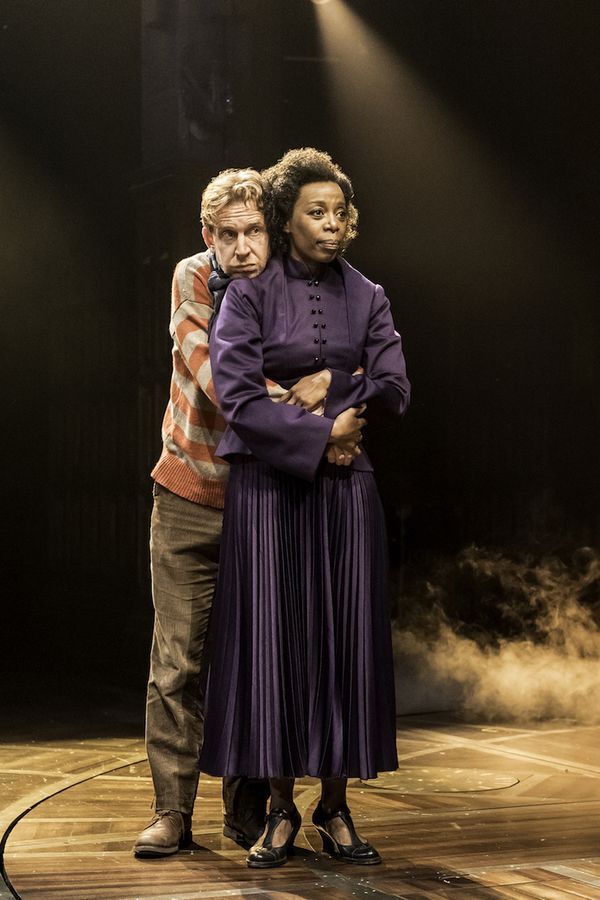
Photo Credit: Manuel Harlan
The production also made headlines for its casting, particularly the decision to cast Noma Dumezweni as Hermione.The creative team had no hesitation about the decision. Callender reflected:“I just couldn’t see a world where the three leads were all white. In the workshops, Noma who we had known and worked with for many years, came in to work with us and she was just a 90. From an idea concept, it was actually made real by the right actress, it’s only 10 years ago. It’s quite shocking that 10 years ago, that piece of casting was considered controversial.”
The production’s casting became part of the show’s wider legacy, demonstrating that these much loved characters could be reimagined for the stage without simply replicating their film counterparts.
The success of the London production quickly led to Broadway as New York followed in 2018, with much of the original British company travelling across the Atlantic.The production has since travelled extensively, with performances staged in multiple countries and millions of audience members experiencing the story. But for the team, one of the most important achievements has been introducing people to theatre who might never previously have considered themselves theatre goers.
Friedman explained that Harry Potter and the Cursed Child is known as a first theatre experience for audiences. The show became a gateway into theatre for a new generation. Thorne noted that 70 per cent of the audience during the first year were first time theatre goers, reinforcing the team’s belief that the production had a responsibility to demonstrate what live theatre could do.
After a decade, however, the original two part production has reached its conclusion. The decision was not simply creative. Rising costs have fundamentally changed the economics of running large scale theatre. Friedman explained:
“The cost of living has gone up 30-40% since the pandemic, including running shows. The only way we could continue to run it in a two parter would be by charging more for tickets, which was unaffordable and inaccessible. It was not possible.”
%20and%20Bane%20(Dewayne%20Jameson%20Adams)%2C%20photo%20by%20Manuel%20Harlan.jpg?format=auto&width=800)
Photo Credit: Manuel Harlan
The team had already considered the possibility of a shorter version before the pandemic, but the events of recent years accelerated the process. Thorne and Tiffany admitted that the process was not straightforward. “We were dragged to it kicking and screaming to make a one part person. Ultimately that’s the biggest driver for me, it’s going to be made more accessible and it means it can tour, it can go to lots of cities in the States, who cannot afford to go to Broadway.”
The new production retains the story, magic and emotional core while offering audiences a different way of experiencing it. And for those worried that shortening the production might mean losing what made it special, Thorne believes the new version stands on its own. The journey from the original two part production to the new version has involved revisiting the script, stripping back scenes and reshaping the story.
But Cursed Child is not simply a nostalgic trip back to Hogwarts. At its heart, it is a story about what happens after the adventures have ended. It is about the children of those characters growing up, and the original heroes discovering the challenges of adulthood and parenthood. As the production prepares to enter its next chapter, the central idea remains remarkably simple: bring people together and tell them a story. Friedman summed up what she hopes audiences will take away from the new production:
“In the end, it’s about closing the door on the world outside, and escaping with friends, on stage. This is an escape, just for a few hours we follow the story of two boys, their parents struggling to connect with them, obstacles to overcome and an exploration of change leading to one unforgettable moment”
Harry Potter and the Cursed Child reopens as a one-part production at the Palace Theatre on 9 October

Sign up for all the news on the Fall season, discounts & more...

|
Powered by

|