


Interview: Noam Tomaschoff of OUR LITTLE SECRET: A TRUE NEW MUSICAL at CAA Theatre
What does a 31-year-old theatre kid do when he finds out his parents aren't quite who he thought they were? Write a musical, of course!
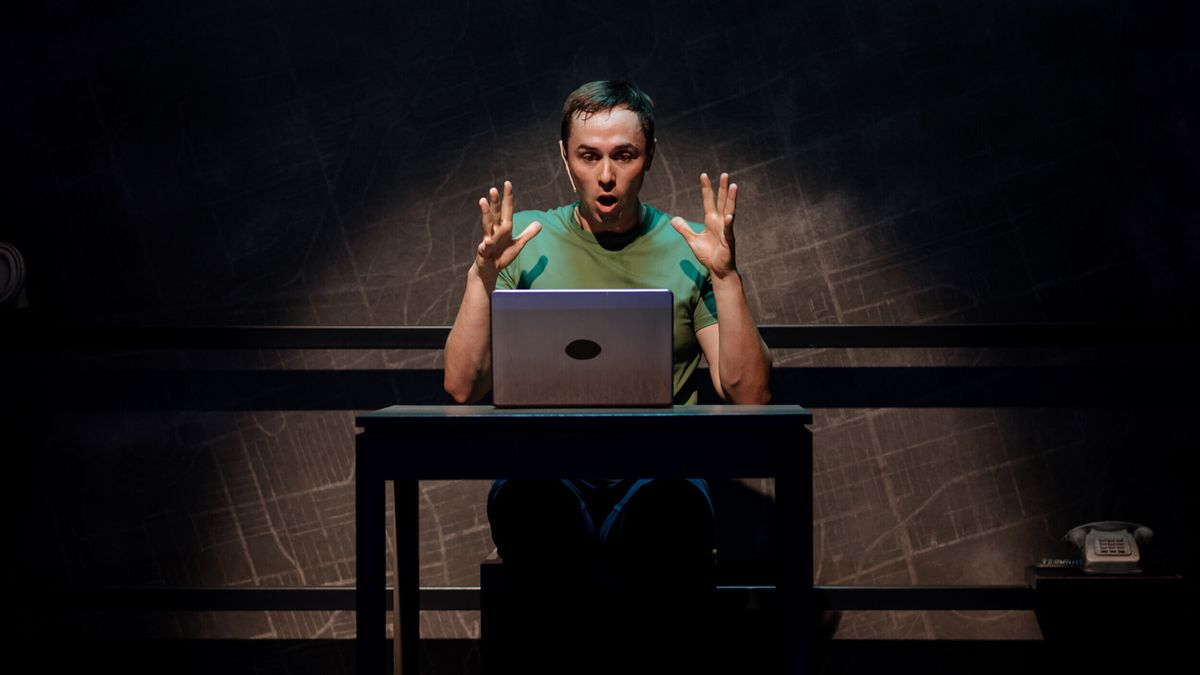
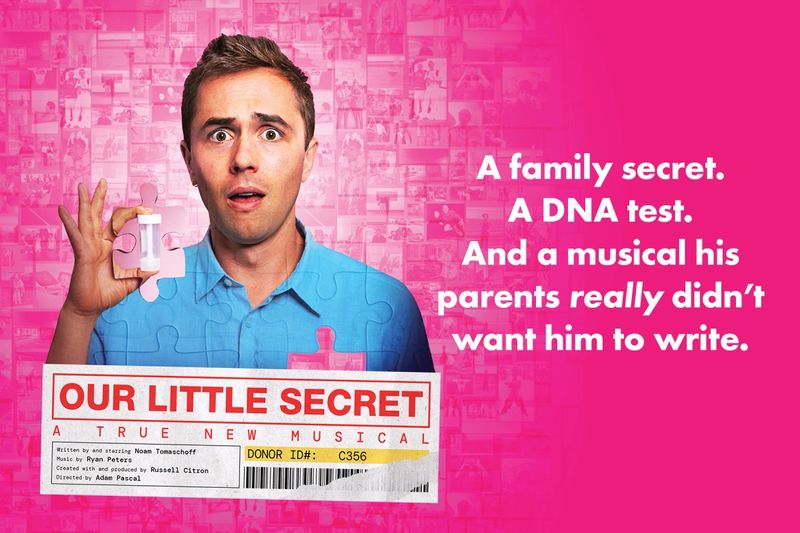
Toronto-raised Noam Tomaschoff's shocking discovery of his true biological father and dozens of half-siblings around the world is told onstage in Our Little Secret: A True New Musical at the CAA Theatre from November 3rd-22nd. After its sold-out debut at the 2023 Toronto Fringe Festival (where it won the Patron's Pick and Best of Fringe awards), the "hilarious, moving and completely true story" has had successful, award-winning runs at the Edinburgh Festival Fringe in 2024 and Montréal's Segal Centre in 2025.
Our Little Secret: A True New Musical is a Russell Citron Production, written by and starring Noam Tomaschoff, featuring music by Ryan Peters and created with Russell Citron. This new production, directed by Broadway favourite Adam Pascal, will return to Toronto to launch the 2026/2027 off-Mirvish season, after a run at Edmonton's Citadel Theatre.
BroadwayWorld spoke with Tomaschoff to discuss the show's origins and Toronto Fringe run, writing musicals with his high school friends, performing the show at 23andMe headquarters, Adam Pascal's recent involvement, and how Mirvish Productions' John Karastamatis played a pivotal role in the musical's development.
Growing up in Toronto, did you see many Mirvish shows, or watch a lot of theatre in general?
Noam Tomaschoff: Yes. My most formative Toronto theatre experiences were actually at the Fringe Festival. There's one that I'll never forget – I mention it in the show and a lot of people in Toronto theatre who I talk to remember it. It was this kind of legendary performance of Waiting for Godot, in the basement of Honest Ed's [The Godot Cycle, a 54-hour continuous marathon of Samuel Beckett's Waiting For Godot, performed during the 2011 Toronto Fringe Festival]. I was working at Dolce Gelato on College Street that summer, and I had a motorcycle. I would go to work, and we'd end at 1:00 in the morning. When you bought a ticket to that show, you could go any time, so I went during the day and then I went after a shift. Every time the two guys finished a run of the show, they moved a thing across the abacus to show you how many times they'd done it – I think they did it 24 times. So, I walked in at, like, 1:30 in the morning. I was the only one there and they were just doing the show, and I thought, This is awesome. I'll never forget it. I also, of course, went to see Mirvish shows. Most recently the ones I saw there were The Book of Mormon and Come From Away. I was always really happy to see the biggest Broadway shows and then also the big local shows, and, I mean, everyone in Toronto who wants to do theatre – it's so important to see local shows come up and get to be featured in the big spaces. It's just great to have that mix.
Another interview I read mentioned that you wrote musicals in high school with your Our Little Secret collaborators, Ryan Peters and Russell Citron. What were some of the titles or ideas you wrote about?
I mean, our friendship was forged around the piano. We were fortunate with the blend in our group. Ryan was the piano guy. He was in musicals before I was, and he just could play anything. We all loved to sing and do harmonies, so we would hang out around the piano. When it came time to do our final projects in drama class in grade 11, there was a certain assignment we were supposed to do, an anthology, and we were like, "You know what? No, we're not doing that. We're gonna write a musical." We just unilaterally decided not to do that assignment and do our own thing, and our teacher let us do that, which was, you know, great foresight from him. The musical, I mean, it's almost amazing to think about how incoherent it was. It was called Just a Regular Day, and it was about four or five friends all playing hyper-archetypal characters – the jock, the drugs kid, the supernerd and the normal guy who just wants everyone to get along. It was about the whips and scorns of being in high school. We poured our whole selves into it. We still sing those songs today. You know, we produced it, our dads helped us build the sets. We rented out the Crestwood Theatre at the school and sold tickets and had, like, two performances. It was totally a formative event, and that really sustained our friendship for 15 years, until my story started. That gave us the inspiration to write the next piece.
After 15 years of singing Just a Regular Day, my story started to happen and we were all like, "Okay, this needs to be a show. And we all love musicals, so it's not just going to be a play, it's going to be a musical." It brought all of our best strengths together. In the meantime, I had done some theatre and film and TV stuff. Ryan continued as a teacher at our high school, but he still runs the school musicals, he's still in the game. Russell went to get his MBA at Harvard, so he's now a business-minded person with the perfect mentality and skill set to be a producer. When I first pitched him the idea of him being the producer of the show, he really didn't want to do it because he thought, "Oh, a producer, that's all the boring work." And I said, "Well, yes, but you get to make it happen." Anyway, he's a one-man production company right now. Nobody works harder than him. Each one of us fulfills an essential role in the process. The show wouldn't exist without each of us doing our specific thing.
As you mentioned earlier, Our Little Secret started off at the Toronto Fringe Festival in 2023. At that time, did you have any idea that your show would take off the way it has, selling out several runs and now making its off-Mirvish debut?
When we wrote the first version of the show in April '23, we were very happy with what we were able to put together. I think it felt like 15 years of backed up creative energy coming out for us as a group. We were optimistic. I mean, we had no frame of reference. This was our first show that we'd put on together and it was my first time doing a solo show. What we really wanted was to sell out the Toronto Fringe run because we understood that having a hot, close crowd makes a huge difference. So we really put our whole hearts and souls and effort into marketing the show. I remember I tried to go to every Fringe-affiliated event. We mined our community to try and fill those houses, and we did sell it out, and that was huge. It was so nice to be able to perform in front of a big crowd down at the Alumnae Theatre. We did not have any frame of reference for what could happen with the show. Fringe was the target and just doing a good job there was all we cared about.
What would you want to say to those who have been following and supporting this show since its Toronto Fringe debut?
First of all, we're so grateful for people who came to see the Toronto run and, you know, some of them later came to the Segal Centre in Montréal. Some of them might come to this [off-Mirvish production]. We're very grateful to them. We keep working to make the show better, to bring more out of the story, and to have the story keep pace with events, since the story is autobiographical. Life continues to happen, and we want the show to reflect that. We never want the show to feel stale. It's always changing, and being touched and moved in different ways. Also, their feedback has been critical in this process. Russell – again, he's very data-minded – he often has audience members fill out surveys at the ends of the show with different questions, and, using that feedback, we can really hone in a deliberate way.
What were some of the most notable changes made to the show?
Well, the show began as a celebration of that story [Tomaschoff's DNA discovery] and that moment in time. It was totally genuine. It was effortless and joyful. But, in order to mature the show beyond its initial kind of exuberant debut, we realized that we had to bring out more of the peril of the story. The ending and the journey becomes much more satisfying when you dive into, you know, the darker side of the story. A lot of our work has been to do with that side of things and, frankly, that's the side of the story that is not most natural for us to touch because it's more difficult. Other people along the way have been really instrumental in pointing us, like, "No, you really need to go there. You need to really show us the dark moments along the way and how it affected you, and the stakes of what was going to happen." So, the biggest difference is that the first version of the show was purely happy. This version of the show retains that humour and lightness but also, we hope, shows you the full spectrum of what my family and I went through on this process.
Was this your first time writing a one-person show?
Totally. I mean, I went to theatre school and did some theatre out of school. I did a bunch of Shakespeare, like classic [works], you know... did some children's theatre. Who among us hasn't done that? I actually directed a feature film that I co-wrote, which was an entirely wild and separate experience. But this format was totally new to me. I'd always loved solo shows. Some of the best theatre I've seen is solo shows. The one that always comes to mind is Fiona Shaw in The Testament of Mary, which was her second, I think, big solo show on Broadway. I love the format, and it's a useful format for me because I feel more comfortable communing with the audience as a scene partner rather than being put into, like, given circumstances. So, it's acting, but I think it's much more like storytelling and more of a dialogue with the audience, and that is better suited to my skill set. In general, the advantage of a solo show is that you can tailor it to your skills and to your best abilities. So, you're not going to see a ton of dancing in this show, but you will see a lot of other stuff.
Overall, the tone and the truth of the story is that it's ultimately going from darkness to light, going from imbalance to balance. I believe that the more information people have about themselves and their family, while difficult to process initially, will ultimately lead to a more honest relationship, and that's really what I hope to leave people with. And specifically, to our community, which I've since learned is called the donor-conceived community, so many people who go through that process – whether they're donor-conceived, donors themselves or parents who have used a fertility product – go through it alone. The most gratifying audience interactions that I've had are with people from that world who are able to find kinship, support, and community and visibility through the show.
Has anyone who has seen Our Little Secret shared a memorable story with you related to the themes of the show?
One of the first meetings I had was, during Toronto Fringe, a woman brought her daughter, who was, like, eight, to the show because she was donor-conceived. The mom saw this [musical] and she was like, "This is a great opportunity for her to see that this is normal. There are other people like her." This idea of representation, visibility. And that girl came up to me after the show and she said, "I'm just like you." It was very touching to see that and to be a positive influence.
I’m curious about the performance of this show at the 23andMe headquarters (who would become sponsors for the production). What was that experience and reaction like?
Yeah. That was unbelievable. They had become aware of the show due to a frankly unsanctioned reach out by one of our friends' moms. We were scared, and we thought they were going to tell us to not do this [musical], but they actually ended up being really supportive and to the point where we were really excited to organize a viewing of the show. I was living in LA at the time, and I was moving. So, what happened was: I left my apartment, drove up to Sunnyvale in the Bay, to their headquarters, and I did the Toronto Fringe version of the show for the entire staff, which at that time was about 400, in-person and over Zoom in their big lunchroom. It was an absolute party. They were so excited to see the show. They especially loved the part where I was making fun of how long it took to get the results back. At that point, they became really sold on the show, not just because it was about their company – there's plenty of stuff about genetic revelations – but specifically because this was positive. It was a message and a story that they could get behind as a company. So, it made sense, and it was incredible to get the sponsorship because that allowed us to take the show to Scotland and continue to develop it to where it is today.
You mentioned in another interview ahead of the Toronto Fringe debut that creating this musical was a cathartic experience for you. How has that changed or evolved throughout the journey you’ve been on with this show?
Well, my experience – and with, you know, donor siblings, other people I've spoken to – is that this revelation is kind of like a big question mark. It's a massive thing that plops into your life, and the real question is, What are you going to do with this information? How do you organize this piece of information into the story of your life? I think the reason that my instant impulse when I started learning this [news] was, I need to make something out of this, was because that would be how I could corral and harness this chaotic piece of information and put it into the story of my life in a way that made sense to me. So, that was cathartic. It was a way to process the information. You're taking something raw and turning it into something utile. For my parents and I, having this show has been a way for us, as a group, to process it and reorganize our relationship in a way that takes into account this new reality now that I know the truth of what happened. Also, we are now involved in this artistic venture together, telling our story, and, in doing so, and with meeting people after the show, becoming a focus of visibility and recognition for other people who have similar stories. It's not always easy at all, actually, and in many cases it's extremely contentious. When you're telling the story of your family, and you're the only one speaking, you are responsible for how you and your family are portrayed and what the audience feels about you. So, there's a lot of negotiation and responsibility there, for sure, and that is not always easy because it's so personal. But, overall, I think it's been really great for our family to have this as our project.
Have your parents seen every production?
They have seen the show. They definitely have seen the show. I refused to share anything about the show with them until it premiered at Toronto Fringe, so they had about six months of knowing that this thing was coming, in their hometown, but not having any sense of what was in it. That was kind of my little karma revenge. But I also wouldn't have done that if I knew that they wouldn't have liked it. So, that worked out well.
How did Adam Pascal become part of the project?
Russell [Citron] was involved with Operation Mincemeat and other ventures, and he was talking to people. Adam had been meeting with him about something else that he was doing and, at the time, we were looking for somebody with a ton of musical experience on the big stage, in the big leagues, to really help us take the show to the next level. And so he [Citron] just pitched him on it at the time, and he [Pascal] was interested in getting into more directing work. From an artistic standpoint... to feel like you're in good hands when it comes to somebody who has decades of experience in musicals, working with music at the highest level... I'm very excited.
What advice would you give people looking to tell their own story on stage?
One of the things that I love most about having done this show comes from a previous experience that I and many others have had. Where you have a great idea for a script or something, and then you go on Deadline and see that, Oh, Seth Rogen has this exact story in production. Perfect. Your story is your own. Nobody can take it from you, and it's just the ultimate asset. So, my advice would be to play to your strengths. Do the show that you want to see. Don't do the show that you think anybody else wants or that the market wants. Make the show that is to your taste. Make the show that you want to see and that you want to perform, and that honesty and pure motivation will shine through. Audiences really love when you are real with them and at ease. So, just release yourself into the truth and comfort of your own story, and make the show that you want to see, because that's going to be the one that you're most excited to perform.
That's all I had, unless there's anything else you'd like to discuss?
You asked earlier about, you know, going to Mirvish... Another kind of funny story, I don't know if we're naming names, but, like, John Karastamatis [Director of Sales & Marketing for Mirvish Productions]. Initially, we, through a mutual connection, met with Michael Rubinoff, the originating producer of Come From Away. We sat down with him, and we really wanted him to see the show. He was unable to come to Fringe, but he sent John and that ended up being really fateful, because John saw the show and sent us an email with pages of notes. But we were happy about that because, clearly, he came from a place of, like, "This is really great and here's what needs to happen." That initial email has been the foundation for all of our development to this point. Basically, that's the bible that everything else was built on – John's notes email after Toronto Fringe. So, it was a really nice coincidence that Michael sent him instead. John then came to Edinburgh, along with Lisa Rubin, who's the artistic director of the Segal Centre, who was also huge in the development of the show. That's where we had our first professional run. So, Rubinoff, John, Lisa Rubin, they're all instrumental in helping us. We're new, and so having their experience and big-picture thinking on this has been key to the whole process.
Featured Photo Credit: Amanda Chieco
Sign up for all the news on the Fall season, discounts & more...
|
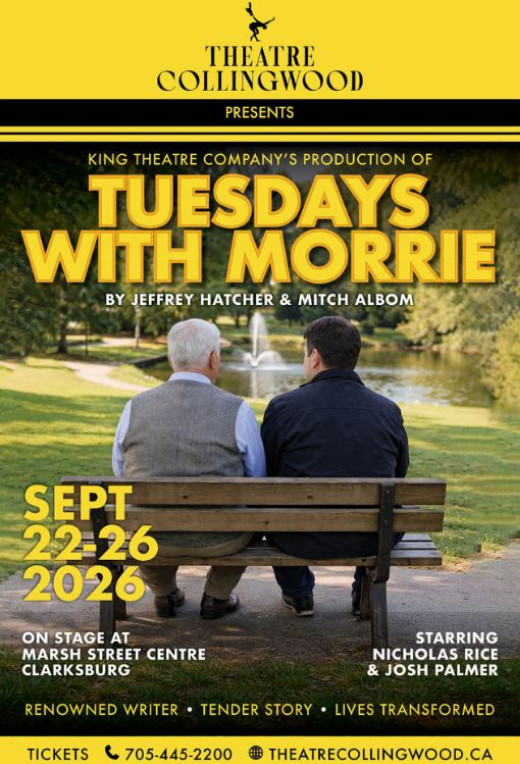
Tuesdays With Morrie Marsh Street Centre (9/22-9/26) |

|
Jordan Young People's Theatre (10/16-10/23) |
|
A Midsummer Night's Dream Stratford Festival (5/01-9/26) PHOTOS |
|
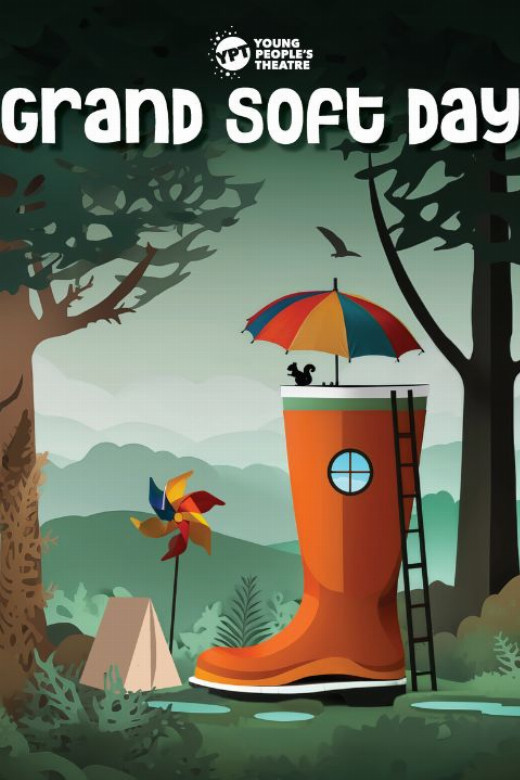
Grand Soft Day Young People's Theatre (4/24-5/02) |
|
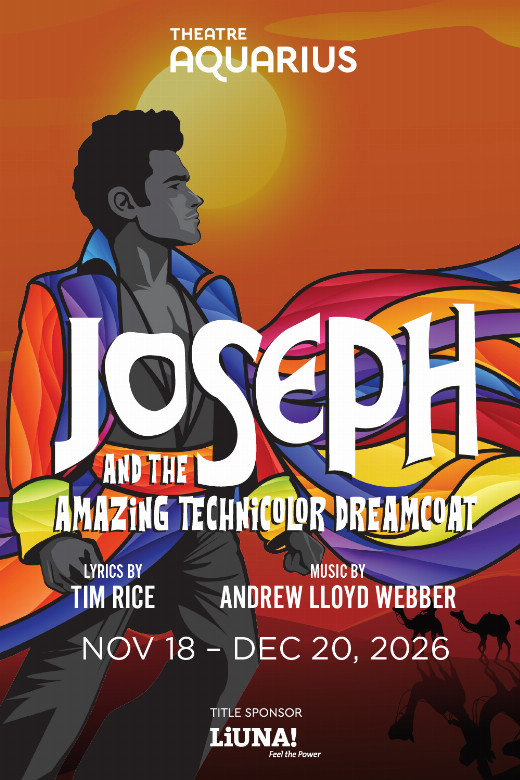
Joseph and the Amazing Technicolor Dreamcoat Theatre Aquarius (11/18-12/20) |
|
ROMANCE IN BLUE AND GOLD Flato Markham Theatre (12/05-12/05) |
|
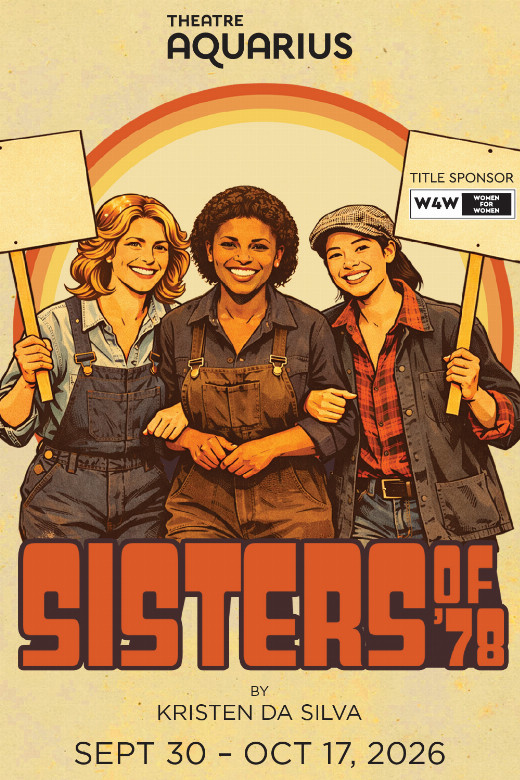
Sisters of '78 Theatre Aquarius (9/30-10/17) |
|
ELECTRIC SILENCE Cornell Recital Hall (4/10-4/10) |
|
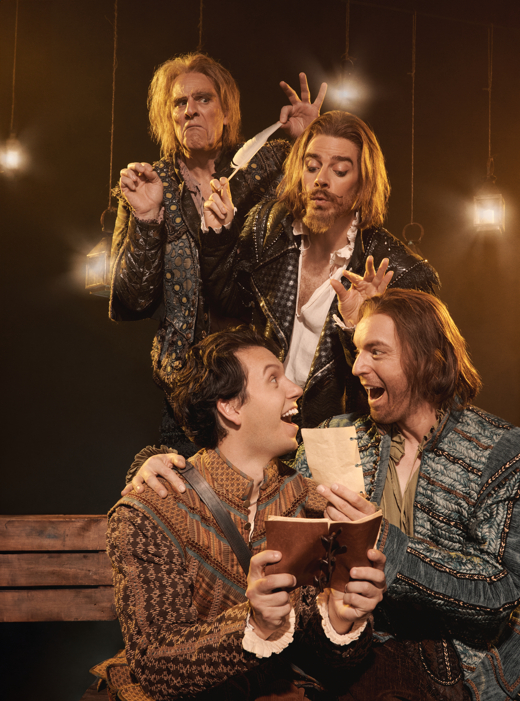
Something Rotten! Stratford Festival (5/11-11/15) PHOTOS |
|
HYPROV Is Back in Fredericton! A Night of Hypnosis, Improv & Comedy HYPROV Is Back in Fredericton! A Night of Hypnosis, Improv & Comedy (11/17-11/17) |
