

Interview: Donna Feore of GUYS AND DOLLS & SOMETHING ROTTEN! at Stratford Festival
Feore, dubbed "Stratford's secret weapon" and "one of Canada's most versatile creative talents," discusses past, present and future projects.

Donna Feore has achieved many impressive theatrical feats, including being the first to create new choreography for a professional production of A Chorus Line, and directing and choreographing the two longest-running Stratford Festival productions: Annie and The Rocky Horror Show. This season, Feore has had the rare opportunity to helm two Stratford Festival productions: Guys and Dolls, running through November 14th, and Something Rotten!, running through November 15th, which share a stage and company of actors.
BroadwayWorld sat down to chat with Feore – who has been called “one of Canada’s most versatile creative talents,” “the master of musical theatre” and “Stratford’s secret weapon" – about her current and upcoming work with the Stratford Festival, staging two shows in one season, revisiting material, and her advice for theatre director-choreographers.
So, first of all, congratulations on Chicago! [Donna Feore is set to direct and choreograph Chicago as part of the Stratford Festival's 2027 season]. I saw that news this morning.
We'd been talking about bringing Chicago back for some time. It's a show that's always held a special place for me. One of the reasons it meant so much was that getting the rights was no small feat. Barry Weissler, who controls the show, is famously protective of it and rarely allows changes to the production. Antoni [Cimolino] and I spent a great deal of time building that relationship and making the case for Stratford. Ultimately, Barry not only agreed to let us produce it, but also gave me permission to reimagine it for the Festival stage, with new choreography and a staging designed for the thrust. That was a remarkable vote of confidence.
We were preparing the production for the 2020 season when COVID shut everything down. It was heartbreaking because we were so excited about what we were creating. When we finally returned to it in 2022, we were still navigating the realities of the pandemic, with extensive health protocols and a very different operating environment than we'd originally envisioned.
I'm incredibly proud of the production we created in 2022 and of everything the company accomplished under those circumstances. What excites me about revisiting Chicago now is the chance to return to a piece I love with fresh eyes. Great musicals continue to reveal new layers over time, and it's a joy to rediscover the material and bring renewed energy to a show that has meant so much to me throughout my career.
Donna, growing up in B.C., did you see a lot of theatre?
No. No, I was from a small town and went to a ballet school, and that [theatre] wasn't a big thing. I grew up in a town that was very hockey-oriented and produced a lot of great hockey players. Not a lot of great dancers; wasn't really that kind of place. I moved away and, like a lot of people have to do from smaller towns, trained in a bigger centre, and was primarily in the ballet world. This whole world of musicals was really late for me. I was in the ballet world for a long time. Strictly ballet. I was in Vancouver, and then I kind of did a 180 and went, You know what I need to do? I need to not do this. I actually moved to LA, and then it was a little easier to go back and forth and try to pick up things to work on. And I just dove into the commercial world, and, I'm dating myself, but back then that was, you know, breakdancing. So, the ballet girl with the bunhead was there trying to make her way in this commercial world. I fell in love with that, and the different styles of dance. I just had my eyes open to all the other kinds of dance there was, other than ballet.
So, then, moving to Toronto in my twenties – at that point I had lived in LA and New York to study and train – there was a lot of work back then in the video world. We were shooting videos and commercial work, television... There was tons of work for dancers, so I was working a lot. Then I got a call in late '89, '90 asking if I wanted to come to Stratford to do a show. I was like, I don't even know where that is. I don't even know what that is. The show was Guys and Dolls, so, I thought, Oh, a big featured dance part. That might be fun. So, I said, "How long is the contract? A couple of weeks?" And they said, "Nine months." I was like, "Oh, no, I can't do the same thing for nine months." Anyway, long story short, I did, and I was also in a Shakespeare that year. My first season. I literally came here and my first season, no joke, I was in Guys and Dolls. I'd been singing before, but I was gigging, I wasn't doing musicals. And then I was in Julius Caesar, and they gave me the understudy for Calpurnia, who was played by Goldie Semple, who was an icon. I was like, Wait, what? No. I don't even know Shakespeare. I hadn't read Shakespeare, I couldn't speak Shakespeare. Anyway, I did that, and that was trial by fire, and I kind of fell in love with the whole idea of it. And I just fell in love with everything that Stratford offered. It's an unbelievable incubator for training and to learn. I got really lucky because I came here at a perfect time in my career that allowed me to train. Before I moved here, by the way, I was choreographing really young. I was choreographing gigs and I had a company of my own, a dance company. When I came here in my early twenties, I was afforded the opportunity to keep choreographing and perform. It's harder to do that right now in the schedule, but, so, I could be in a play, I could be in a musical and I could choreograph a play. I choreographed Shakespeares, a lot of them. That's hard, but that makes you a good choreographer. Really learning how to choreograph something with such a strong narrative. So, that's how I got here.
As you mentioned, you made your Stratford debut as Carmen, a featured dancer, in the 1990 production of Guys and Dolls directed by Brian MacDonald. What did you learn from watching Brian direct?
Well, Brian was an icon at that point, and he was also very heavy in the ballet world. So, I already knew him, because I knew he had been at Les Grands Ballet [Canadiens] and I knew some of his ballets. So, it wasn't so foreign to me, which was what kind of intrigued me to come and work for him. Because he had done ballet and he was doing musicals. So, I thought, Well, that's interesting. He always hired really technical dancers, and his dance was very technical, which I loved, and challenging. I loved working with Brian. I learned so much from him as a choreographer and as a director, too. But I really learned so much about his group scenes. I've worked on that festival stage a lot, and learned from that, but I really learned from Brian what it is to create a community on stage. He loved that, and he always gave everyone little stories and everything mattered. I always have brought that with me to this day, that everything onstage needs to have a story. I'm hoping to pass that on to my associates, too, and they all seem to be in the same world of how important the narrative is. I learned a lot about big, massive production numbers from him. A lot.

And then, in addition to that 1990 production that you performed in, you also directed and choreographed the show in 2017. How has your relationship with the material evolved over time?
This is my third time on this material. The biggest difference– In 2017, [when I first got] to direct and choreograph it, I was able to get the orchestrations from the 1992 Broadway production with Faith Prince and Nathan Lane. That was a very famous production, the music was extraordinary, and Michael Starobin had done all these new orchestrations for it, which I was obsessed with. From that moment on, from the time that show closed in 1992 – so that would have been just after I had done it – those orchestrations were put away, mostly by Learner's widow. Then, by the time I got to [direct and choreograph the show] in 2017, I thought, I'm going to get those. We worked hard on trying to get those orchestrations, and we succeeded. That was a massive change for me on how I approached the show, because it turned it from a level of dance that was a little dated, to this really unbelievably sexy, exciting orchestration with big brass. It became a dancer's dream and a choreographer's absolute bliss. That's when I decided to go another way than what Brian had done. There was tons of dance in the one that I performed in, and there was a "Havana," but this changed it. Guys and Dolls happens all over the world, but not with those orchestrations. So, I guess it was something that we kind of wrestled [for] and got. And I got them again for this year.
I had terrific dancers in 2017. Some of them are returning in 2026, along with fresh faces – all with unbelievable skills and experience. They can all do anything. And that allowed me to do anything. Anything. And that’s the evolution of my Guys and Dolls.
I started, for me, being in it and the choreography was really taxing and hard when Brian did it, I loved it – to doing my production in 2017, which also was pretty taxing. And then, I thought, I'm going to have to make this more, because now it's 10 years later, almost. So, I did. And it's a lot. I don't know how they [performers] do it, but they do it. They're athletes, right? They're trained and we trained for it. There's a method to how I train dancers, and so that no one's injured, and we train smart. Like an athlete, nobody would go out there and just do it. You get ready for those things.
So, yeah, I love that show. Listen, I'm so lucky; these titles are the best. I'm really careful about what I choose with a revival. I'm working on a lot of new work right now, in development, and that's sort of my focus right now. But there are a couple of revivals that I love: Chicago, which I think has a lot to say. It's a female, powerful show, which I'm obviously very interested in. Guys and Dolls is as well. I felt like those writers – those are all male writers, of course – were ahead of their time. I think my fantasy is that they were really writing these women as incredibly strong characters, and nobody else knew, because nobody would want that in 1949. But it's on the page. They're in charge and they're smart. I decided to add another female identifying character [in Guys and Dolls]: Lt. Brannigan. I thought, Why wouldn't we? It makes sense to me.
Something Rotten! seems uniquely tailored for the Stratford Festival, given the prominence of Shakespeare and the amount of references to other musicals (several of which you've worked on at Stratford). Do you find audiences react differently, or more strongly, to this particular show?
I think that it's a different kind of reaction. It's why having both shows in one day is kind of crazy. And it's the same cast, that's what's even more crazy. There's nowhere else in the world you can do this [two shows sharing a cast and stage], let's be honest. Something Rotten! is so smart and, yes, of course it's really good for our audience, because if you do not know what actually happens in Hamlet, it's [Something Rotten!] still going to be funny for you. But, if you do know, it's hilarious. Right? So, we have audiences that know. I really thought it was terrific in New York in 2015 [the Broadway production directed and choreographed by Casey Nicholaw] and I thought, Oh, this would be good here. It took me a while to get the title across because it's not a known title; it's not Carousel or Oklahoma! or an older Golden Age musical. But, to me, it was just as good. The writing is smart. And I'm looking for good comedy. If it's going to be a comedy, it has to be clean and clever. I mean, it can get into that world, but it's not overly vulgar. It's sincere. Everything that happens, I would call it situational comedy. It's not necessarily like, here we go. It's more: the joke, and the joke lands, and then people get it. Everyone's delivering it with complete honesty and sincerity. That's what I love about the show, and that's what I love about being in an audience listening, is that people get it. And it's a little bit like a wave. It's so fun to hear, and it gives me such joy, in this day and age, to get that communal laugh together as a group of people... I love it. I love hearing it, I love the reaction.
Of course I doubled down [directing and choreographing Something Rotten! twice]. And of course I was going to refer to a bunch of musicals I've already done. We're on the stage, I have the costumes. Of course I'm going to do that! And I added some. I thought, We should have a contest, because there's 47 references in this show and, I was thinking, I wonder if we could see if anyone knows what I added from 2024 to 2026? I've added seven musicals as a reference, but I'm not telling you what they are. It's Extra Rotten! this time around.
And we have people coming 15 times. I've got a lot of experience in that theatre, obviously, but what I love about that space is that I can create different stories depending on where you are. So, if you sat extreme right, you might get something special that someone in the centre didn't get. I love that, because those are expensive seats in the centre, and I want that show to be fantastic everywhere, and a little special for everybody. That's what I like, and that's what Rotten! does, too, because it's so wacky and so silly and so outrageous. There are moments where you just think, There's no way they're gonna do that.
Yeah, I just think the audience response is different. Here's what I compare it to: I think that Guys and Dolls is a bit of a sprint, while I would call Something Rotten! – and I think the cast would agree – the marathon that never stops. Curtain up until curtain down, they don't stop. Because, just when we finish one production number, there's another one, and another one. Also, there's a cross pollination of dance style. So, that [Something Rotten!] has a lot of tap in it, which is why we can kind of do both shows, because one's tap and one is not. Rotten! has so much tap in it and, of course, Guys and Dolls doesn't. Otherwise their bodies would be pretty bad.
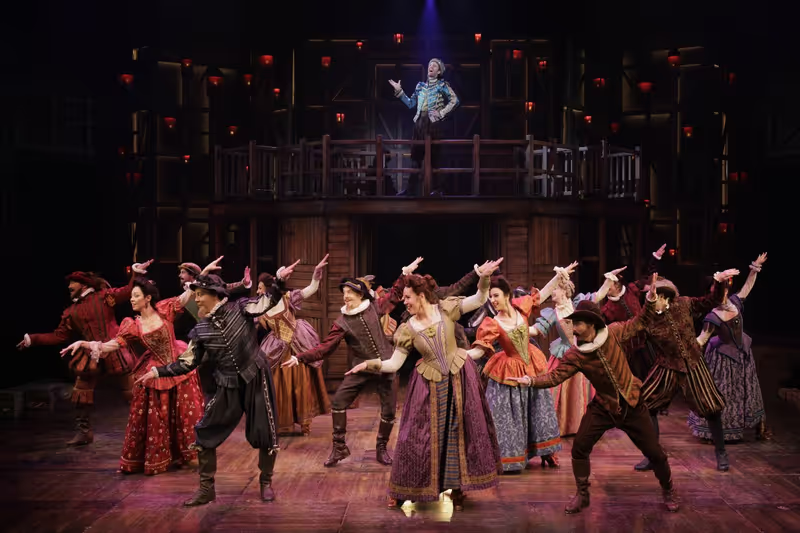
Most of your work at the Stratford Festival has been reimagining existing musicals. What do you love about working with existing, often very well-known material, and making it your own?
The difference between new work and revivals is that with new work, you have nothing to compare. It's a kind of a clean slate. A revival, the challenge is to reimagine it and to find the relevancy in material that was written so long ago. I love that needle in the haystack. I get jazzed about, Wait, were they ahead of their time?, like Guys and Dolls. If I cast it in a certain way, does that give it a new spin? I love that. I love that when Nehassaiu [deGannes] comes on stage as both Lady Clapham and Lt. Brannigan, it's all plausible, because I do a ton of research and work with a team to make sure that every actor is set up for success, and everyone understands why they're there. It's hugely important. But there is a way to look at casting of a revival that does turn it on its ear and could be interesting. I love that. And I love looking at the material in a different way, with a modern lens. As someone who is a woman and identifies with stuff that might be written in a way that feels derogatory, finding that way to put a different spin on it, but yet keeping the integrity of the writing, that's a challenge that I love. But new work is very freeing. So, there's room for both. I think revivals are very hard to do really well. Sometimes it's hard to reimagine something that's happened before. People have an idea in their head of what it should look like or whatever. But Shakespeares get reimagined all the time, all the time, and no one thinks about it. So, I think musicals have a place for that, as long as we're not taking a pen and rewriting someone's work. It always begs the question, when someone wants to change a musical that much, I'm kind of asking, Why do you want to do it? Is it because the score is good? Why do you want to do it if you're going to really go after it like that? So, I think there are some revivals that are harder to do in this day and age, in this culture, and in this climate. I do. I think there are musicals that are harder to do with content, even though it might have a great score, that may not be right. I also feel like there's room for revivals that could be really relevant now that maybe weren't even as relevant 20 or 30 years ago. So, I think that's interesting.
How difficult was it to find actors who could pull off these dual roles in your productions?
Oh, hard. The journey of where we are right now was because we had done Something Rotten! and it went well, and they wanted to bring it back. Antoni [Cimolino], it was his last season. I'm very close with Antoni, and he had loved Guys and Dolls when I did it last time. I really wasn't going to do another show that I'd done, because I'd already done Rotten!. And he said, "Well, you can redo it. You can do this..." I'm like, "Okay, easy for you to say." But then I started to think of the best show that could cross with Rotten!, because we wanted to do this thing where we crossed it. This is the first time we've done two musicals on the main stage. That's never happened at Stratford. We've never crossed it completely, 100% cross, which we also did. So, it was a bit of a challenge. I thought, Well, this is the title, and I think we can show off this company's skills the most that we've ever done. Ever. And, was it hard? No, because Something Rotten! was so good, as far as the cast; they're my A-Team. There are a couple of them who had done Guys and Dolls before, but all my leads are new. They're fabulous and they're talented, and they wanted the challenge. So, as long as I had everybody on board that wanted the challenge, it wasn't too bad. Now that they're running eight shows a week, ask them how hard it is. It's hard, for sure.
What advice would you give to women who want to be successful theatre director-choreographers?
I think that I would give the same advice, to some extent, whether it's a male or female identifying person, to be honest with you – and then there are a few other things on the side, as a woman. I think the thing is to be really good. On any level, you need to know there's going to be a huge commitment of time to invest in your skills. When I became a director-choreographer – those are two different skills. And, to call yourself a director-choreographer, I think one has to be mindful of that, and to make sure you do have the skills of both so that your confidence is there to take one away and still be able to do both. My advice would be this: If you want to be a director-choreographer, you choreograph, and then put that away. Spend some time and do your shows and really choreograph. Don't think about directing, put that away, and then just direct. And when I say that, I mean be an associate, be an assistant. Do not skip those steps. And I'll tell you why: I did every single job you could imagine because I had the privilege to look behind a curtain and figure out how things are done without the pressure on me. Right? So, I could try things, I could go and learn without the pressure of, You should know that. You say you're a director-choreographer, then you should know that. I would be terrified if I didn't have the information. So, my advice would be to really assist, and get in there, and work with people you want to work with. But, if you're going to be a choreographer, you do that. If you want to be a director, you direct. But, if you want to bring those two skills together and call yourself both, I think you really have to master both of these skills.
I would say, as a woman, we're still in the minority as far as how many women are doing it. I don't know how you feel about that, but I still don't think there are as many women doing it, and certainly not in my position of director-choreographer. That's a very strongly male-identifying career, as far as the ones that are working and successful. I would say, be really good, and sometimes you have to be even better. But, guess what? That just makes you better. As long as everything you're doing is for the greater good for your well-being, as far as your career and your creativity, that's not a bad thing. I think that it becomes difficult when you hit ceilings. And I see that. I don't really have an answer for that, other than just to keep going and keep showing up. I know it sounds so cliché, but just keep showing up. You're gonna get it. Honestly, all we really have is our work, right, to show. And being really prepared in the room. I don't ask anything from anybody that I wouldn't ask of myself, I really do mean that. And learning pretty quickly to understand that it's not a threat, and it doesn't undermine anything, it doesn't make you look like you don't know what you're doing. When other people have great ideas – great ideas are really important. All the time. I think I've been quoted as saying this: "The best idea wins in my room every time." I don't care who it is. I don't care if it's a veteran who's been with me for 20 years or someone where it's their first day. So, speak up, say things, ask questions. Don't be afraid to do that. I love it when people ask me questions. And I don't know what I have to offer people sometimes, I just say, "Well, this is how I would try it. Not sure it's going to work, but you can try it." I think that that's the greatest thing. I do support a lot of female identifying directors and choreographers in their journey. A lot of young ones find it hard, and I get it, but you're just going to get better and better, right? Don't give up.
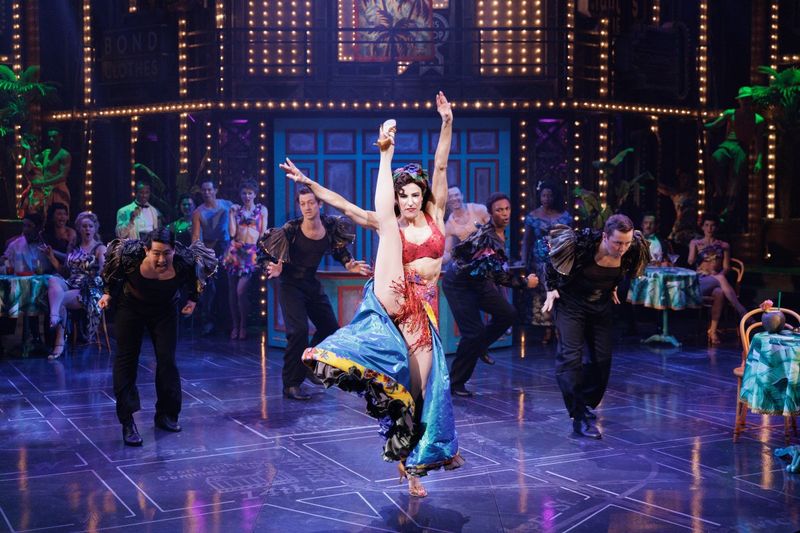
Guys and Dolls has been extended until November 14th and Something Rotten! has been extended until November 15th. Tickets are available at www.stratfordfestival.ca



Weekly top stories - unsubscribe anytime.

|
All's Well Theatre Aquarius (1/27-2/13) |

|
Buster Canfield's Nutcracker Prince vs the Rat King Red Sandcastle Theatre (12/17-12/20) |
|
The Happily Ever After Actors Wychwood Theatre (11/07-11/08) |

|
Cabaret Canadian Stage (2/13-2/28) |

|
The Plague Outliers Theatre Collective (11/17-11/29) |

|
HARMONY OF THE WORLD Meridian Arts Centre (3/06-3/06) |

|
Jack and Jill and the Beanstalk Wychwood Theatre (12/05-1/17) |

|
Disney and Pixar's Finding Nemo Ada Slaight Stage, Young People's Theatre (11/26-12/27) |

|
SERENADES AND SWEETHEARTS 19 on the Park Stouffville (2/11-2/11) |

|
The Hobbit Avon Theatre (4/21-10/23) |