


Review: THE LITTLE BIG THINGS at Royal Theatre Carré Amsterdam
A breathtaking celebration of resilience, family and the beauty of difference
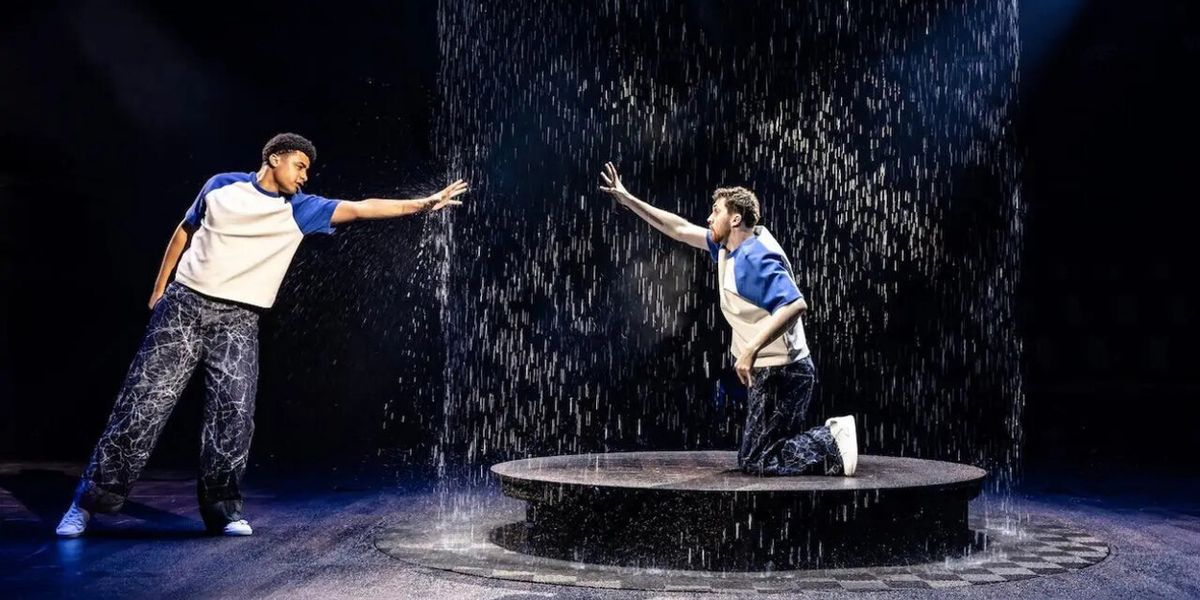
“It’s the little big things you leave behind.” Few new musicals have captured audiences quite like „The Little Big Things“, and Amsterdam's new non-replica production proves exactly why. Presented as part of the Carré Theatre's tenth-anniversary „Broadway in Carré“ series, Ola Mafaalani's staging combines an outstanding cast, breathtaking visuals and remarkable emotional depth to create an evening that lingers long after the curtain calls. More than a moving story about resilience, it is a celebration of family, healing and inclusion—told from a perspective that feels both deeply personal and profoundly universal.
Premiering at London's @sohoplace in 2023, The Little Big Things received three Olivier Award nominations. A professionally filmed live capture and the Original Cast Album, both released in 2024, soon introduced the musical to audiences far beyond the West End, steadily building an international following. Now, for a strictly limited engagement, the show arrives in Amsterdam in an English-language non-replica production directed by Ola Mafaalani.
One of the production's greatest strengths lies in its cast. West End performers and Dutch musical theatre artists blend together with remarkable ease, creating an ensemble that feels entirely unified despite its international makeup. The production values are equally impressive, resulting in a visual spectacle unlike anything previously seen in either London or Amsterdam. Although Mafaalani clearly takes inspiration from the original staging, she and her creative team confidently pursue their own artistic vision rather than attempting to recreate—or outdo—it. One important constant remains, however: Ed Larkin, who made theatre history by becoming the first wheelchair user to originate the leading role in a musical, reprises the performance he first created in London.
Based on Henry Fraser's 2018 autobiography, the musical tells the extraordinary true story of a young man whose life changes irrevocably after a diving accident leaves him paralysed from the shoulders down. Written by Nick Butcher (music and lyrics), Tom Ling (lyrics) and Joe White (book), the show follows Henry as he struggles to rebuild his life after losing not only his promising sporting future but also the physical independence he once took for granted. At the same time, the accident transforms the lives of his parents and three brothers, whose own journeys through grief, guilt and acceptance become just as central to the narrative.
Henry's story unfolds through an inspired theatrical device: he remains in constant conversation with his younger, able-bodied self. These recurring "sliding door moments" allow both versions of Henry to examine the life he once imagined alongside the reality he now inhabits. Gradually he begins to rediscover purpose, embracing new ambitions without abandoning the optimism that has always defined him. Along the way, he not only reconciles with himself but also forms meaningful relationships—with his childhood sweetheart Katie, his life-saving doctor Graham and his physiotherapist Agnes. Through Agnes, whose own experiences with disability allow her to guide Henry with warmth, honesty and humour, he discovers that courage is not the absence of limitation but the willingness to live fully despite it.
As Henry and his family slowly confront blame, grief and responsibility, colour begins to return to their lives. Eventually even the darkest chapters of his story are transformed into something beautiful, as Henry becomes an internationally celebrated artist, painting with a mouth-held stylus and inspiring countless people through his unique perspective on life.
Joe White's exceptional book and Nick Butcher's emotionally layered score create a theatrical experience that is impossible to resist. The decision to divide Henry into two versions of himself allows the narrative to unfold simultaneously across different moments in time, while frequent breaks of the fourth wall establish an immediate connection with the audience. The show's opening address eventually comes full circle during Henry's triumphant speech at the launch of his Hand-to-Mouth exhibition, giving the musical a beautifully satisfying sense of completion.
Between these framing moments, every member of Henry's family receives the opportunity to process their own trauma. Some find acceptance; others struggle to move forward. The writing approaches each emotional journey with remarkable honesty while carefully avoiding melodrama or sentimentality. Even the most devastating aspects of Henry's experience remain understated. The full extent of his physical limitations is suggested rather than explicitly shown, allowing theatrical imagination to fill the gaps. Likewise, the repeated resuscitations, weeks spent on a ventilator and the emotional collapse of his parents remain largely on the periphery of the action instead of becoming its sole focus. It is precisely this restraint that allows the story to balance heartbreaking tragedy with unwavering hope.
During the first act, reality frequently gives way to vivid hallucinations shaped by Henry's medication. While lying unconscious, Doctor Graham transforms into a gospel icon, and later reappears within memories of the carefree holiday in Portugal that culminated in the accident which changed Henry's life forever. Once Henry awakens, the storytelling becomes more intimate and grounded, yet his imagination continues to shape the world around him. It carries both Henry and the audience through his search for love, his attempts to repair damaged family relationships and his slow rediscovery of himself.
Again and again, moments of despair give way to a distinctly British spirit of resilience, where humour and perseverance coexist naturally with grief. Butcher's score mirrors that emotional journey with extraordinary sensitivity. Flowing like brushstrokes across a canvas, it gradually reveals Henry's inner world through recurring musical motifs and carefully placed reprises. Moving effortlessly between contemporary pop, folk, gospel, touches of R&B and soaring choral writing, the music prioritises emotional truth over instant catchiness. In doing so, it becomes the perfect companion to one of the most affecting books written for a contemporary musical.
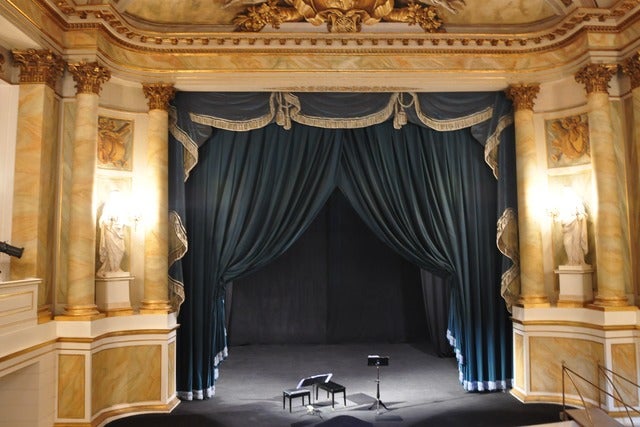
If the book forms the emotional heart of The Little Big Things, the Amsterdam production's visual language is its soul. Mafaalani successfully captures the poetic beauty of the original London staging while confidently establishing a distinctive identity of its own. To accommodate this ambitious vision, the Carré Theatre auditorium has been completely transformed. The audience surrounds the stage in the round, allowing the action to unfold from every angle. Performers repeatedly emerge from within the auditorium itself, dissolving the traditional boundary between audience and performance and drawing spectators directly into Henry's world.
Every scene has been staged with meticulous attention to perspective. Regardless of where one is seated, the emotional impact remains equally powerful. Yet the production also rewards repeat viewings, constantly revealing subtle visual details that might otherwise pass unnoticed.
While Colin Richmond created the original London design, Ruben Wijnstock reimagines the production for Amsterdam with remarkable imagination. The considerably larger playing space, combined with Timo Arling's inventive prop design, allows the stage to evolve into an almost cinematic environment. Every visual choice feels inseparable from the storytelling itself, recalling productions such as Hadestown or Starlight Express, where design and narrative become virtually indistinguishable.
The original production's spectacular flying sequences—used both for Henry's emotional liberation and his terrifying return to the accident beneath the water—may be absent, but Amsterdam replaces them with imagery that proves just as striking. At the centre of the stage stands a circular water fountain that becomes the focal point of these defining scenes. Surrounded entirely by cascading water, Henry confronts both his trauma and his past, creating some of the evening's most arresting theatrical images.
Bart van den Heuvel's lighting design extends far beyond the stage, transforming the entire auditorium into part of Henry's emotional landscape. As Henry gradually rediscovers the colours of his life, the theatre itself slowly blossoms alongside him, making these moments genuinely overwhelming. Floor projections and laser effects turn the stage into an ever-changing psychological landscape, echoing the LED floor of the original production while creating a visual language entirely its own. Physical and emotional spaces emerge, dissolve and reform as Henry's imagination and creativity gradually take shape before the audience's eyes.
Above the stage, an intricate arrangement of lighting rigs and descending lanterns—evocative of Hadestown—creates shifting emotional worlds that seamlessly merge with the characters' physical reality. When Katie delivers letters from Henry's classmates, they drift gently from above like a shower of colour, representing the first glimmer of hope during his recovery. Every new colour Henry rediscovers through his relationships with family and friends finds a visual counterpart in the lighting design, allowing the production to evolve naturally from monochrome restraint to radiant vibrancy.
Marc de Meijer's video design makes equally inventive use of a full 360-degree gauze curtain that descends around the stage. Henry's artwork appears suspended within the playing space, while projected imagery subtly guides the audience's focus without ever overwhelming the performances. During the show's most hopeful moments, delicate white feathers fall from above—the final colour within Henry's emotional palette after fear and darkness have finally given way to acceptance.
Remarkably little physical scenery is required. Instead, a handful of symbolic elements define the production, foremost among them the hospital bed that repeatedly drifts through scenes of hope and despair alike, hanging over Henry's journey like a constant reminder of everything he has lost—and everything he still stands to gain.
Zyanya Keizer's costumes beautifully reinforce the production's central visual metaphor. Gradually, Henry's world fills with the colours of the rainbow, transforming creativity itself into a symbol of hope. Katie's costumes evolve just as thoughtfully. Initially presented as the seemingly perfect object of Henry's teenage affection, subtle changes gradually reveal her own physical differences, gently reminding both Henry and the audience that the two young people are far more alike than either initially believes.
George Francis and Xander Vrienten ensure that an ensemble with a wide range of vocal backgrounds performs as one remarkably cohesive company. Under Jasper Slijderink's musical direction, the seven-piece band—positioned beneath one of the audience platforms—plays Butcher's richly textured score with tremendous sensitivity. Delicate intimacy and soaring emotional climaxes coexist effortlessly, allowing the music to support the performances without ever overshadowing them.
Eric Nelissen's sound design is equally exceptional. Cinematic in scope yet consistently crystal clear, it amplifies every emotional shift with remarkable precision. Whether embracing thunderous musical climaxes or moments of near silence, the soundscape remains immersive without ever drawing attention to itself.
The choreography by Alice Sheppard and Chiara Re seamlessly combines energetic ensemble numbers, exuberant party scenes and intricately crafted wheelchair choreography—including several breathtaking stunt sequences—with expressive contemporary dance. Particularly affecting are the intimate duets between Henry and Katie, where movement becomes a language of trust, vulnerability and acceptance. Throughout the evening, choreography reveals emotions words alone cannot express, working hand in hand with the lighting, music and staging to create a remarkably cohesive theatrical experience.
Across every creative department, excellence becomes the norm. The Little Big Things is not simply an outstanding musical—it is a fully realised work of theatrical art.
Perhaps the production's greatest achievement, however, lies in how naturally it portrays physical diversity. Disability and the countless nuances between what society labels "normal" and "disabled" are neither highlighted for effect nor reduced to symbols. Instead, they are woven organically into every aspect of the production, acknowledged, celebrated and presented as an entirely ordinary part of human life. In doing so, Mafaalani's production embodies the inclusive world it so passionately advocates.
The production's outstanding creative vision is matched by an equally accomplished cast. Diverse, international and deliberately colour-blind in its casting, the company embraces the story with remarkable authenticity and generosity.
Alwin Knijp, Valerie Gwyneth Lai, Vivian Gomez Cardoso, Rijanne Mink, Julia Bronkhorst, Sam Stephen and Imke van Putten form an ensemble that effortlessly combines West End performers, Dutch musical theatre artists, wheelchair users, dancers and singers. Fully integrated into every musical number and choreographic sequence, they portray friends, strangers and others whose lives intersect with Henry's, while also serving as physical manifestations of the characters' emotional landscapes. Sometimes frantic, sometimes comforting, sometimes oppressive and at other times exuberantly joyful, their movement becomes an expressive storytelling tool in its own right. Among this outstanding ensemble, Imke van Putten leaves a particularly strong impression with her breathtaking wheelchair choreography, while Valerie Gwyneth Lai repeatedly commands attention through her superb vocals.
Silyan el Kattabi brings warmth, humour and effortless charm to Marco, Agnes' devoted husband. His understated performance further reinforces the production's refreshingly matter-of-fact portrayal of disability, allowing Agnes to exist first and foremost as a fully realised person rather than being defined by her physical condition.
That role belongs to Tessa Jonge Poerink, who delivers one of the evening's most memorable performances. Combining affectionate determination with dry wit and quiet wisdom, she creates an Agnes who instantly wins over the audience. Open, self-assured and unapologetic about her disability, she becomes both Henry's mentor and moral compass, nowhere more movingly than during her heartfelt rendition of Part of the Plan.
Sarah-Jane Wijdenbosch proves equally compelling as Doctor Graham. Vocally exceptional, she lights up the stage with the uplifting Work of Heart, bringing warmth, humour and optimism to Henry's darkest hours without ever allowing the character to become overly sentimental.
Henry's brothers are portrayed with remarkable sincerity by Tom Nye, Jurriaan Bruiner and Francisco Schuster. Together they establish an entirely believable family dynamic built on affection, shared responsibility and quiet desperation. During Don't Wanna Have To, the three brothers grapple not only with supporting Henry but also with holding their family together while coping with their own grief.
Bruiner gives Will's survivor's guilt genuine emotional weight as he struggles with the knowledge that he is able to pursue the sporting career Henry was forced to abandon. Nye portrays eldest brother Tom's overwhelming sense of responsibility with moving restraint, while Schuster captures Dom's painful struggle to come to terms with his brother's disability. Because Dom was absent during the fateful holiday in Portugal, his grief takes on a different shape, adding another layer to the family's emotional complexity. Even one of the musical's funniest scenes—in which Dom awkwardly helps Henry through an intensely personal situation—ultimately deepens the tenderness of their relationship rather than simply providing comic relief.
Together, the three actors present a refreshingly healthy portrait of brotherhood. Their relationship is built on empathy, forgiveness and the willingness to acknowledge mistakes instead of hiding them. This emotional honesty reaches its peak during the transition from What I Need into Sympathy in Act Two.
Lucia Zemene gives Katie warmth, vulnerability and quiet determination. Living with a prosthetic leg herself, Katie gradually invites Henry into her own experiences, revealing that insecurity and self-consciousness are emotions they both share. What initially appears to be an idealised teenage crush slowly develops into a nuanced portrait of two young people learning to embrace both themselves and one another. Although several scenes have been trimmed compared with the London production, slightly reducing Katie's narrative prominence, Zemene ensures she remains a fully convincing and emotionally engaging character. Vocally, she is among the strongest members of the cast, particularly during the breathtaking Act One finale, The World Is Waiting.
Liam Tobin gives a beautifully understated performance as Henry's father Andrew. Torn between grief and determination, Andrew throws himself into work while desperately searching for a way to restore purpose to his son's life. His emotional journey culminates movingly in Miles and Miles, where he helps Henry redirect his passion from football towards art. The scenes between father and son become particularly affecting once Andrew finally allows his emotional façade to crumble, revealing the depth of his unconditional love.
Joy Wielkens is equally outstanding as Fran, the emotional centre of the family. Following her devastating breakdown in One to Seventeen, she gradually rebuilds herself with extraordinary resilience. She sacrifices her own needs to support Henry, often losing herself in the process, yet continues simply because she believes a mother has no other choice. Wielkens paints a profoundly moving portrait of a woman who slowly rediscovers both her own identity and the relationship she shares with her husband.
At the centre of the production stand Djavan van de Fliert and Ed Larkin as the younger and older versions of Henry. Their performances form the emotional and dramatic core of the entire evening. Initially, the two characters seem almost irreconcilable—one carefree and full of youthful confidence, the other burdened by trauma and uncertainty. Yet as the story unfolds, they gradually move towards one another until they ultimately become reflections of the same person. It is an inspired theatrical metaphor for healing and self-acceptance, and both actors realise it with extraordinary emotional precision.
Their gradual confrontation with the accident, the painful process of accepting Henry's new reality and the slow reconciliation between his past and present selves repeatedly produce some of the evening's most heartbreaking moments. Van de Fliert shines vocally in Feel Like This before delivering one of the production's defining highlights with the haunting Silence of the Sea. Larkin, meanwhile, once again demonstrates why he originated the role. If anything, his performance has gained further nuance and emotional depth since London. His deeply affecting interpretation of Why? is only one of many moments that reveal an actor performing with extraordinary honesty, restraint and humanity. Quite simply, his Henry remains the production's greatest achievement.
Ultimately, The Little Big Things is far more than a musical about disability. It is a celebration of resilience, compassion and human connection—a passionate plea for empathy and an affirmation that our differences deserve not merely to be accepted, but celebrated. In Amsterdam, this extraordinary work receives a production fully worthy of its message: visually breathtaking, emotionally devastating and profoundly life-affirming. It is, without question, one of the finest musical productions currently on stage anywhere in Europe.
Ontvang Broadway-nieuws op WhatsApp
Ontvang de laatste updates, nieuws en exclusieve inhoud rechtstreeks in de app.

Love Theater in Netherlands? Join The Community!
Whether you've got past experience writing about theater or just starting, the BroadwayWorld Community offers a unique opportunity to become a champion for your local arts community, helping raise awareness of local offerings and adding another local voice to the conversation at a time arts coverage is shrinking in the press across the continent. Join us and become a pivotal part of the movement that celebrates and promotes the arts in the digital age.
Learn MoreSign up for all the news on the Fall season, discounts & more...
|
Kalter weißer Mann Stadthalle Verden (10/26-10/26) |

|
Stuttrest helaften Matfatet (10/16-10/16) |
|
|
Mat- og vinquiz med Terje Melheim Matfatet (10/15-10/15) |
|
|
Christine Schütze Stadthalle Verden (12/20-12/20) |
|
|
Liv i lavvoen med Trubadur Bayer Lavvoen (10/16-10/16) |

|
Eldar Vågan Trio Teltet (10/16-10/16) |
|
3x3 Eyes (1991) Melkweg (12/12-12/12) |
|
Liv i lavvoen med Trubadur Bayer IKKE I SALG Lavvoen (10/17-10/17) |

|
Dr. Rangan Chatterjee RAI Theater (11/29-11/29) |
|
Enebakkhallen - Oktoberfest m/Karlstadpojkarna Enebakkhallen (10/24-10/24) |

Reader Reviews
To post a comment, you must register and login.