


Review: JESUS CHRIST SUPERSTAR at Music Theatre Heritage
A contemporary rock opera transforms a familiar biblical story into a powerful examination of faith, fame, loyalty, and political power.
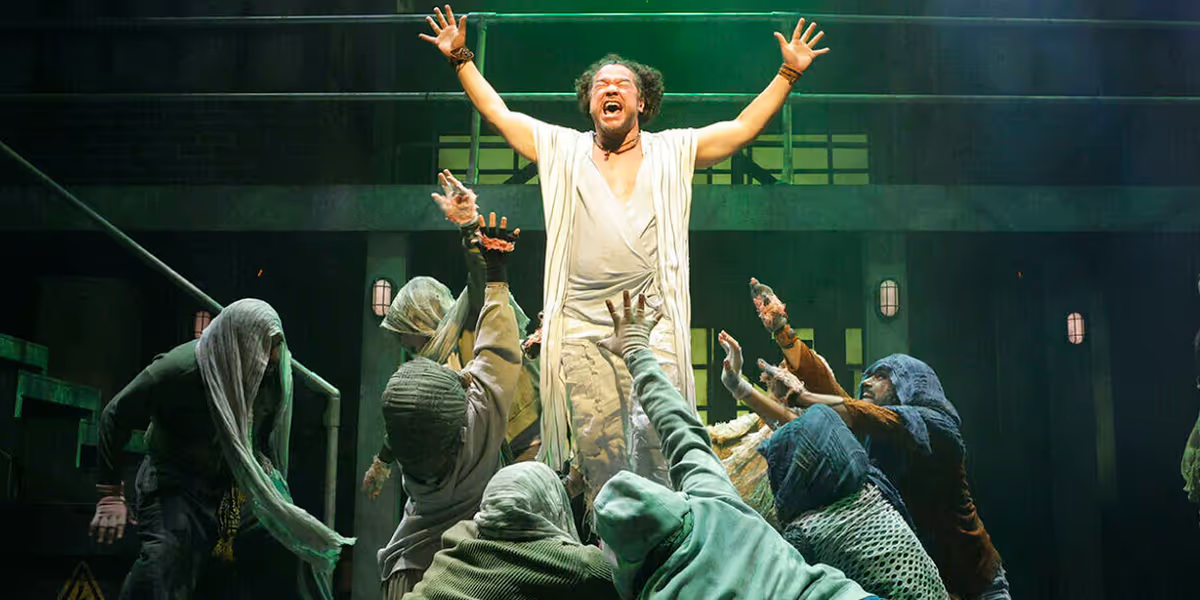
JESUS CHRIST SUPERSTAR Finds New Urgency—and Humanity—at KC's Music Theater Heritage
Andrew Lloyd Webber and Tim Rice’s JESUS CHRIST SUPERSTAR has never been a conventional retelling of the final week of Jesus Christ’s life.
From its origins as a groundbreaking concept album to its status as one of the defining rock operas of the twentieth century, the musical has always approached its biblical subject through a distinctly contemporary lens. It is less interested in presenting a traditional religious pageant than in examining the human relationships, political tensions, emotional conflicts, and questions of loyalty that surround one of history’s most familiar stories.
Music Theater Heritage’s current production embraces that complexity with remarkable confidence.
Directed and choreographed by Christina Burton, this JESUS CHRIST SUPERSTAR feels immediate, muscular, and deeply theatrical. It is part rock concert, part political thriller, and part intimate character study—a production that understands the musical’s enduring power lies not simply in its iconic score, but in its willingness to ask difficult questions about faith, fame, power, doubt, and sacrifice.
The result is a production that feels both reverent and rebellious.
A Familiar Story Through an Unexpected Lens
Rather than centering Jesus exclusively as an untouchable religious figure, JESUS CHRIST SUPERSTAR places Judas at the emotional center of the story.
That choice remains one of the musical’s most compelling features.
Through Judas’s perspective, the audience is invited to reconsider the familiar events of Holy Week—not as a predetermined sequence of sacred images, but as a series of increasingly desperate personal and political decisions. Judas is not presented as a simple villain. He is frightened, frustrated, conflicted, and convinced that the movement surrounding Jesus is moving toward catastrophe.
The production’s greatest strength is its refusal to offer easy answers.
Jesus, Judas, Mary Magdalene, Pontius Pilate, Herod, and Caiaphas are all caught within systems of expectation larger than themselves. Each character is responding to pressure—spiritual, political, emotional, or social—and the tragedy emerges from the fact that their individual choices collide with forces they cannot control.
That approach allows this nearly fifty-year-old musical to feel strikingly current.
Its questions about celebrity, public image, political influence, mass movements, and the danger of placing one individual at the center of a cause continue to resonate with startling clarity.
Francisco Javier Villegas: A Compelling and Human Jesus
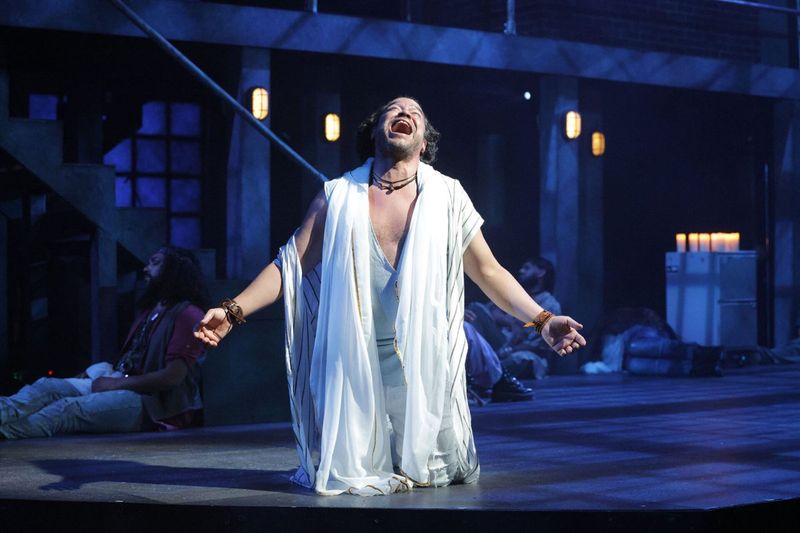
Francisco Javier Villegas brings an appealing combination of vocal authority and emotional openness to the title role.
His Jesus is not portrayed as distant or overly sanctified. Instead, Villegas presents him as a figure carrying the enormous weight of public expectation while still attempting to understand his own humanity.
That balance is essential to the role.
Jesus must possess the charisma to inspire crowds while also communicating the exhaustion, isolation, and uncertainty that accompany such influence. Villegas achieves that contrast with impressive consistency. His performance allows the audience to see both the public figure and the private individual beneath the mythology.
Vocally, Villegas is more than capable of handling Webber’s demanding score. His performance possesses strength without sacrificing vulnerability, particularly in the musical’s quieter and more introspective moments.
The most effective moments arrive when Jesus is surrounded by people yet seems entirely alone. Villegas understands that the character’s central conflict is not merely whether he will fulfill a prophecy, but whether he can remain emotionally connected to the people closest to him while the world increasingly turns him into a symbol.
Stephonne Singleton: The Emotional Engine of the Production
.jpeg?format=auto&width=800)
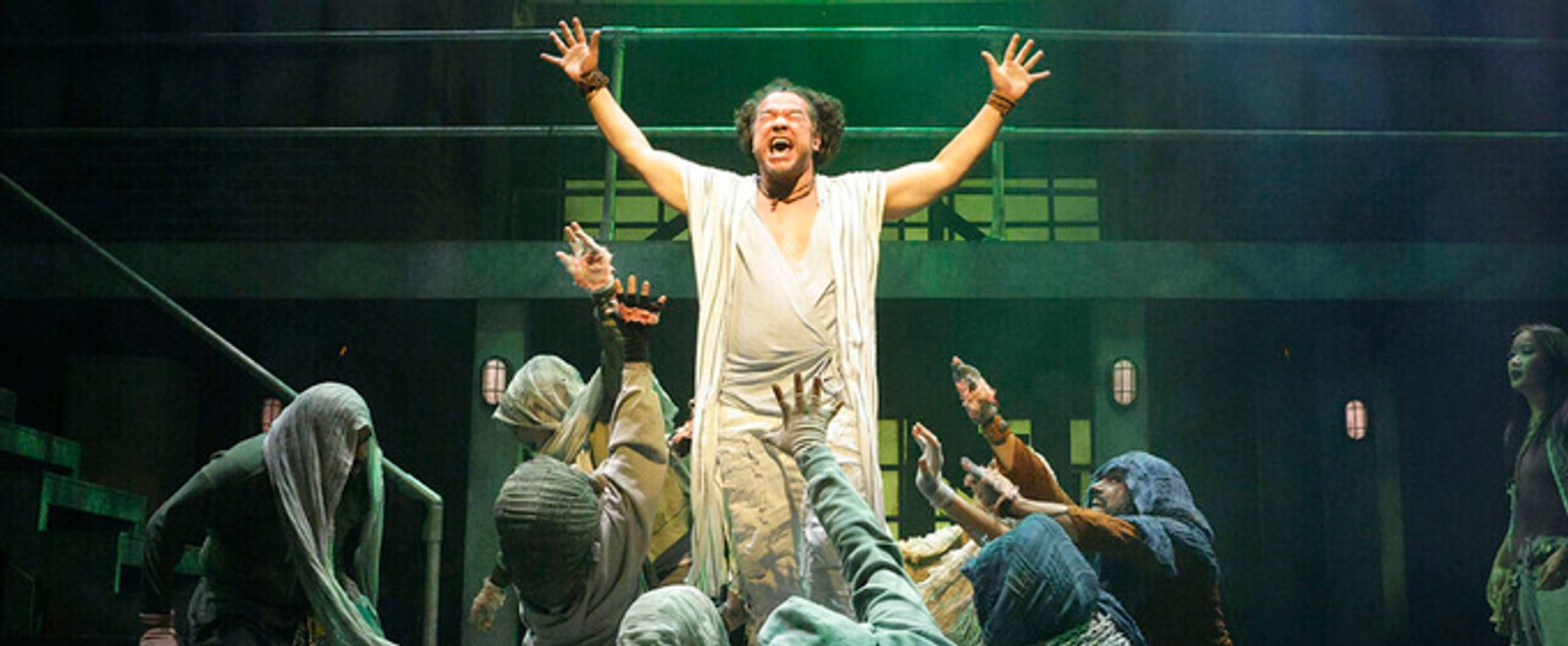
As Judas, Stephonne Singleton delivers one of the production’s most layered performances.
Judas is often treated as the antagonist of Jesus Christ Superstar, but Singleton reveals the character’s fear and frustration without excusing his actions. Their performance makes clear that Judas believes he is attempting to prevent disaster, even as his decisions contribute directly to the tragedy he hopes to avoid.
That moral contradiction gives the character—and the entire production—its emotional charge.
Singleton brings exceptional intensity to the role, but the performance never becomes one-note. Anger is accompanied by anxiety. Defiance is accompanied by grief. Political concern gradually becomes personal devastation.
The result is a Judas who feels painfully human.
Rather than presenting betrayal as a single moment of evil, Singleton allows the audience to watch a person become increasingly trapped by his own convictions. His relationship with Jesus is marked by affection, disagreement, resentment, and profound emotional dependence.
That complicated bond becomes the dramatic heartbeat of the production.
Madoka Koguchi: Grace and Strength as Mary Magdalene
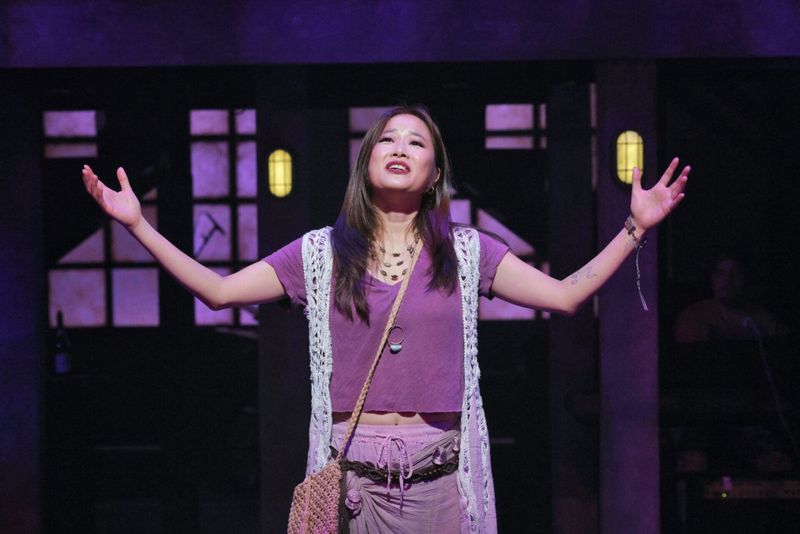
Madoka Koguchi brings warmth, clarity, and emotional intelligence to the role of Mary Magdalene.
In a production filled with political arguments, religious symbolism, and escalating conflict, Mary provides an essential emotional counterweight. Koguchi’s performance offers a vision of compassion that is neither passive nor sentimental.
Her Mary understands the human cost of the events unfolding around her.
Koguchi brings a rich vocal presence to the role, particularly in “I Don’t Know How to Love Him,” one of the musical’s most recognizable and emotionally exposed numbers. The song is difficult because it must communicate uncertainty without becoming vague, and love without reducing the character to romantic devotion alone.
Koguchi approaches the material with admirable restraint.
Her performance suggests a woman attempting to comprehend the extraordinary figure at the center of her life while also recognizing the danger surrounding him. She is compassionate, but not naïve; devoted, but not without agency.
That emotional complexity makes her presence essential to the production.
The Supporting Players: Political Power and Human Vulnerability
The supporting performances contribute significantly to the production’s sense of urgency.
Morgan Walker brings a watchful, imposing presence to Pontius Pilate. Their performance emphasizes Pilate’s discomfort as a political leader forced to respond to a situation he does not fully understand and would prefer to avoid.
Pilate’s dream and subsequent confrontation with Jesus reveal a figure caught between personal conscience and public responsibility. Walker captures that tension effectively, allowing Pilate to emerge not as a cartoonish villain but as a bureaucrat confronting the consequences of power.
Marc Wayne’s Caiaphas possesses an equally compelling authority.
Wayne understands that Caiaphas is motivated not only by personal hostility, but by fear of instability. His performance presents a leader who believes he is protecting an institution and a population from political consequences that may be far larger than Jesus himself.
Bob Wearing brings comic sharpness and theatrical energy to Annas, helping create the production’s uneasy blend of menace, satire, and spectacle.
As Herod, Robert Vardiman provides one of the evening’s most flamboyant turns. “King Herod’s Song” allows the production to briefly explode into theatrical excess, and Vardiman embraces the number’s eccentricity with confidence and precision.
Each performance helps expand the world of the musical beyond its central triangle of Jesus, Judas, and Mary. Together, these characters create a society shaped by fear, influence, religious authority, and the constant pressure of public perception.
The Ensemble: A Crowd, a Chorus, and a Political Force
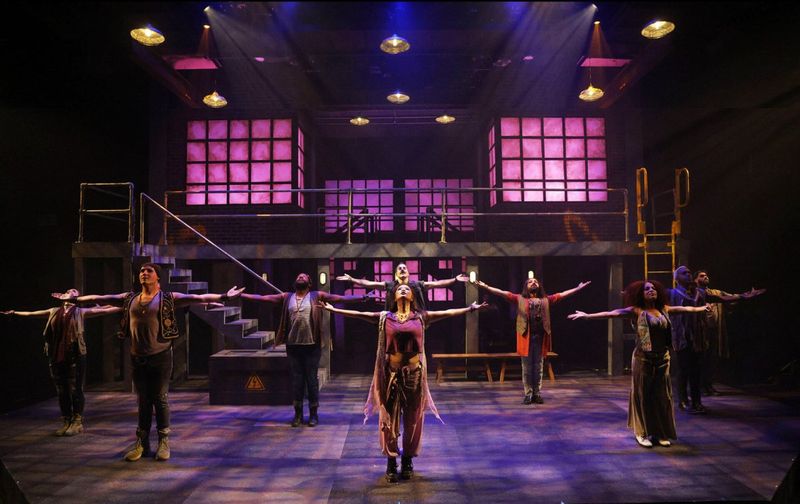
The ensemble is among the production’s greatest assets.
Koko Blanton, Bryson Kendall, Madoka Koguchi, Maeve Murphy, Tony Pulford, Melvin Thampy, Robert Vardiman, Francisco Javier Villegas, Morgan Walker, Marc Wayne, Bob Wearing, and Stephonne Singleton create a constantly shifting world around the principal characters.
They become followers, crowds, authorities, disciples, political observers, and witnesses to history.
More importantly, they function as the living pulse of the production.
The ensemble’s physical presence gives the musical its momentum. Their movement reinforces the sensation that Jesus’s rise is not taking place in isolation, but within a volatile social environment where enthusiasm can quickly become suspicion and devotion can quickly become danger.
In Jesus Christ Superstar, crowds are never merely background decoration. They represent public opinion, political pressure, religious anxiety, and the terrifying speed with which a movement can change.
Burton’s staging ensures that the ensemble remains dramatically engaged throughout. The performers do not simply wait for their next entrance; they create the atmosphere in which the story unfolds.
Direction and Choreography: Christina Burton’s Electric Vision
Christina Burton’s direction and choreography provide the production with its distinctive energy.
Burton understands that Jesus Christ Superstar must retain the rawness of a rock concert while remaining grounded in character and story. The production never feels like a museum piece or a static biblical reenactment. Instead, it possesses a restless, contemporary pulse.
The choreography is especially effective in moments when the crowd becomes almost indistinguishable from the political and spiritual forces surrounding the characters. Movement frequently feels urgent and instinctive, reflecting the instability of a society moving toward confrontation.
Burton also demonstrates a strong understanding of contrast.
Large ensemble sequences are balanced by quieter moments of emotional isolation. The score’s explosive numbers are allowed to build momentum, while the production makes room for vulnerability, uncertainty, and silence.
That balance prevents the evening from becoming emotionally monotonous.
The result is a Jesus Christ Superstar that moves with the force of a concert but thinks with the complexity of a drama.
The Music: Webber and Rice’s Enduring Rock Opera
The score remains the production’s greatest unifying force.
Andrew Lloyd Webber’s music combines driving rock rhythms, sweeping ballads, operatic structure, and moments of startling theatrical intimacy. Tim Rice’s lyrics bring a conversational directness to the biblical material, allowing the characters to argue, question, accuse, and plead in language that feels immediate rather than ceremonial.
Music Director Ty Tuttle leads the production’s small but powerful musical ensemble, joined by Kassie Ferrero on bass, Jeff Freling on guitar, and John Gilmore on drums.
The instrumentation preserves the rock-driven identity of the score while supporting the emotional architecture of the storytelling.
Numbers such as “Heaven on Their Minds,” “What’s the Buzz,” “Everything’s Alright,” “I Don’t Know How to Love Him,” “Gethsemane,” “King Herod’s Song,” “Superstar,” and “The Crucifixion” remain among the most recognizable works in the musical theatre canon.
Yet the production does not rely on nostalgia alone.
Under Tuttle’s musical leadership, the score feels less like a collection of famous songs and more like a continuous dramatic argument. Each musical number pushes the characters toward a decision, a revelation, or a point of no return.
Design and Technical Execution
The production’s visual world is defined by restraint, atmosphere, and transformation.
Scenic Designer Joe Burkhard creates an environment capable of supporting both the intimate conflicts between individual characters and the larger social forces gathering around them. The stage feels sufficiently open to accommodate the scale of the ensemble while never overwhelming the human relationships at the center of the story.
Shannon Smith-Regnier’s costume design places the characters within a world that feels recognizable without becoming overly literal. The contemporary sensibility helps reinforce the production’s central idea: these events may be ancient, but the questions surrounding them remain present.
Shelbi Arndt’s lighting design contributes significantly to the production’s emotional vocabulary.
Light becomes a tool for separation, exposure, danger, and revelation. It can transform the stage from a communal gathering place into an isolated emotional landscape within moments.
Nihan Yesil’s sound design supports the production’s concert-like energy while maintaining vocal clarity and dramatic focus. That balance is particularly important in a score that depends upon both lyrical intelligibility and musical force.
Together, the creative departments create a production that feels polished without losing the rough-edged intensity essential to Jesus Christ Superstar.
Final Thoughts
Music Theater Heritage’s Jesus Christ Superstar succeeds because it understands that this musical has never been solely about the events of Holy Week.
It is about the people caught inside those events.
It is about the collision between personal loyalty and public responsibility. It is about the dangers of celebrity, the burden of influence, the fear of political instability, and the desperate human desire to understand what is happening before it is too late.
Led by Francisco Javier Villegas, Stephonne Singleton, and Madoka Koguchi, with strong support from an accomplished ensemble and an exceptional creative team, this production gives Webber and Rice’s rock opera renewed urgency.
Christina Burton’s direction and choreography keep the evening alive with movement and momentum, while Ty Tuttle and the musicians give the score the force it demands.
More than five decades after its debut, Jesus Christ Superstar remains provocative because it does not tell audiences what to think. It asks them to look again—to reconsider familiar figures, question inherited assumptions, and confront the uncomfortable space between faith and doubt.
That is precisely what makes this production so compelling.
At Music Theater Heritage, Jesus Christ Superstar is not presented as a distant story preserved behind glass. It is immediate, volatile, human, and alive.
And by the time the final notes fade, the musical’s enduring question continues to reverberate:
What’s the buzz?
Jesus Christ Superstar runs August 20 through September 13 at Music Theater Heritage’s Grand Theater, located at 2450 Grand Boulevard, Suite 301, Kansas City, Missouri. Tickets are available through Music Theater Heritage. For ticket information, contact the box office at 816-221-6987 or boxoffice@mthkc.com.
Sign up for all the news on the Fall season, discounts & more...
|
'The Who's Tommy' Midwest Trust Center at Johnson County Community College (10/14-10/14) |

|
Job Unicorn Theartre (2/03-2/14) |
|
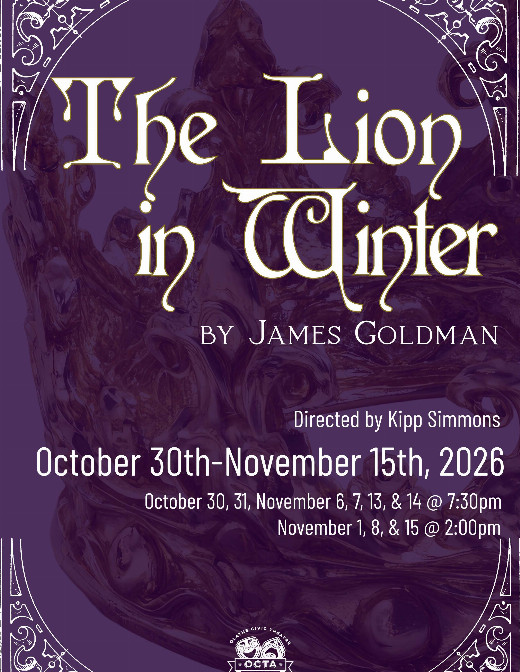
The Lion in Winter Olathe Civic Theatre Assn (OCTA) (10/30-11/15) |
|
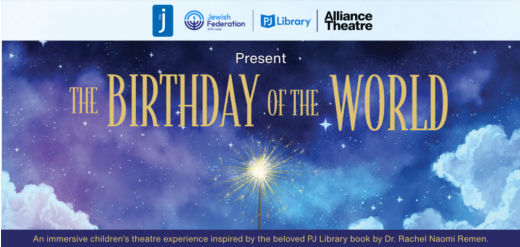
The Birthday of the World Interactive Children’s Theater- October 2, 5pm The J in Creve Coeur (10/02-10/02) |
|
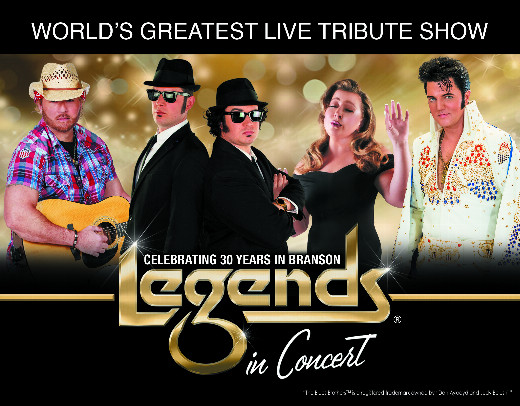
Legends in Concerts' Fall Lineup Pepsi Legends Theater (9/14-10/31) |

|
'Style Thief Fashion Show: Tools Not Rules Tour' Midwest Trust Center at Johnson County Community College (2/20-2/20) |

|
Angels in America — Part 1: Millennium Approaches Metropolitan Ensemble Theatre at the Warwick (10/23-11/01) |
|
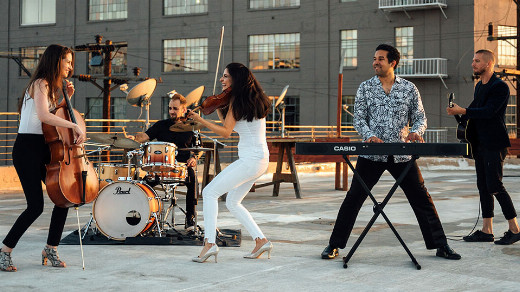
Take3 'Where Bach Meets Rock' Midwest Trust Center at Johnson County Community College (11/21-11/21) |

|
Mutts Gone Nuts - Unleashed Midwest Trust Center at Johnson County Community College (5/08-5/08) |
|
Ryan & Ryan 'Kickin' the Clouds Away' Midwest Trust Center at Johnson County Community College (10/25-10/25) |

Reader Reviews
To post a comment, you must register and login.