


Photos: Teatro Mercadante and Teatro Goldoni Partner on SOUNDTRACK MASCAGNI
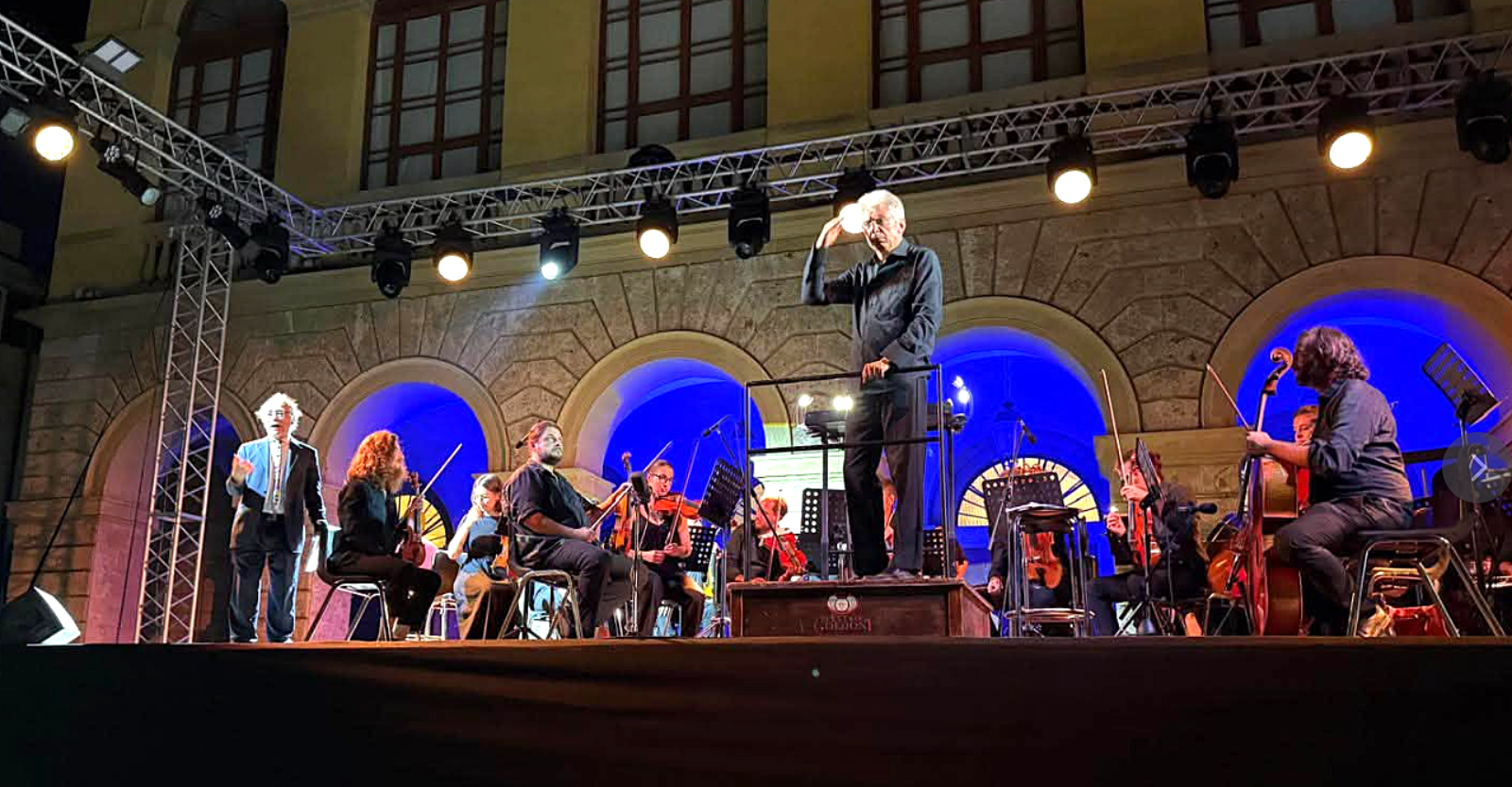
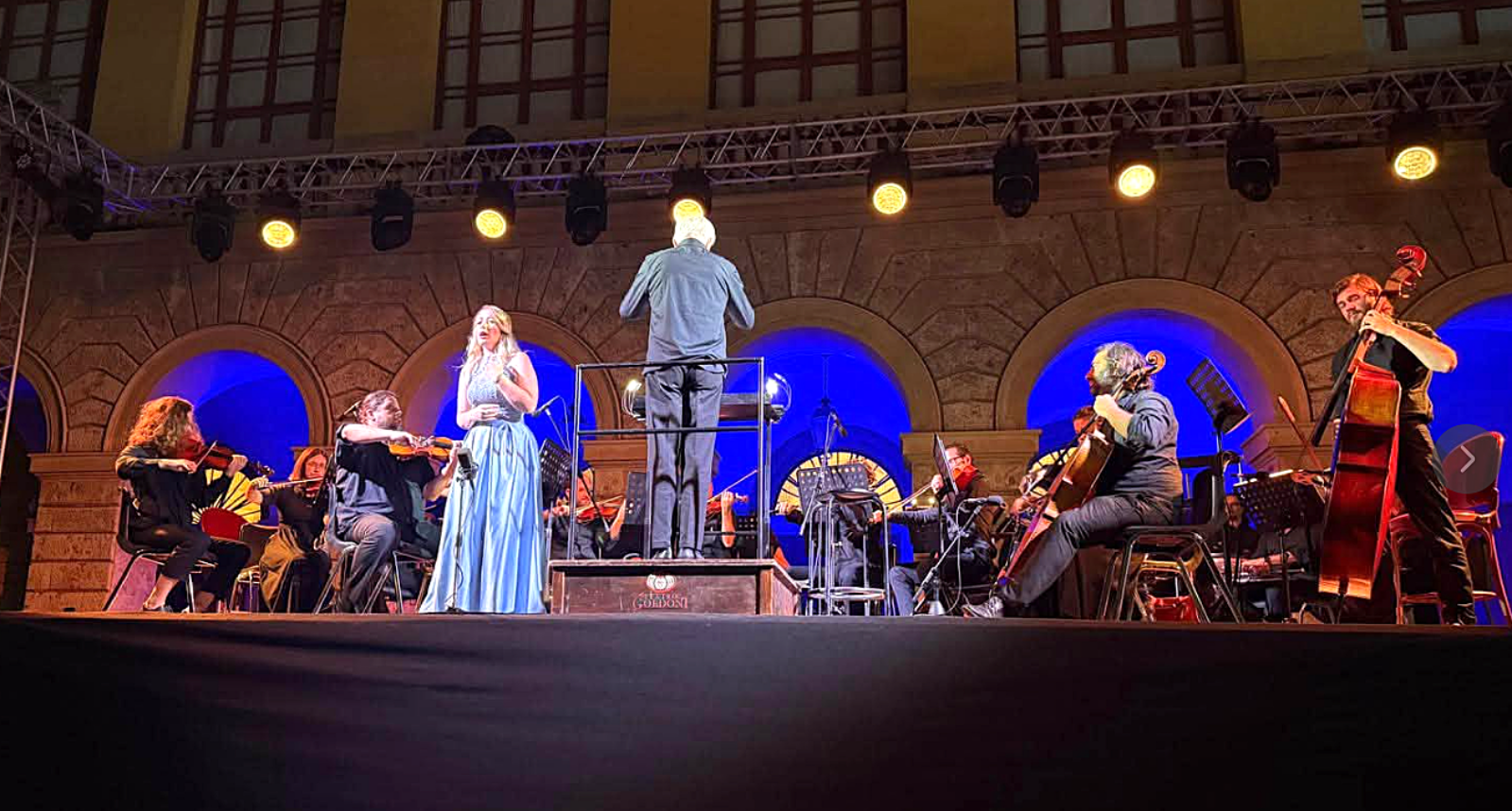
Maurizio Nichetti plays a fictional Mascagni alongside the Fondazione Teatro Goldoni orchestra and Mascagni Academy artists.
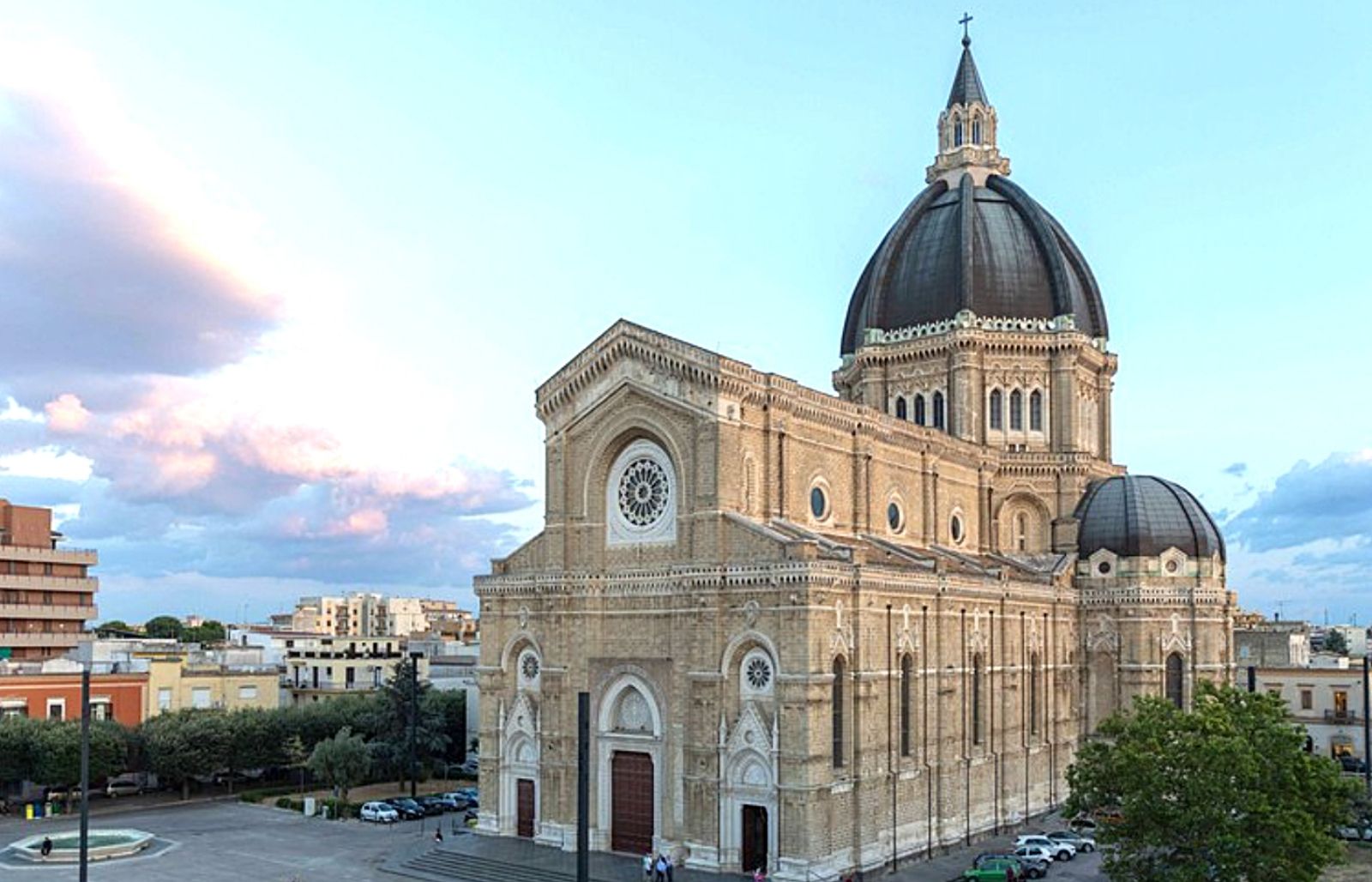
In a landmark cultural agreement that reclaims one of the most overlooked chapters in operatic history, the Teatro Mercadante di Cerignola and the Fondazione Teatro Goldoni of Livorno have formalized a co-production partnership centered on a remarkable and under-celebrated fact: Pietro Mascagni composed "Cavalleria Rusticana" - the founding masterwork of the verismo movement - not in Milan, not in Rome, and not in the Sicilian landscape Verga's story depicts, but in Cerignola, a prosperous agricultural town in the Apulian plain of southern Italy, where the composer lived and worked from December 1886 to 1895.
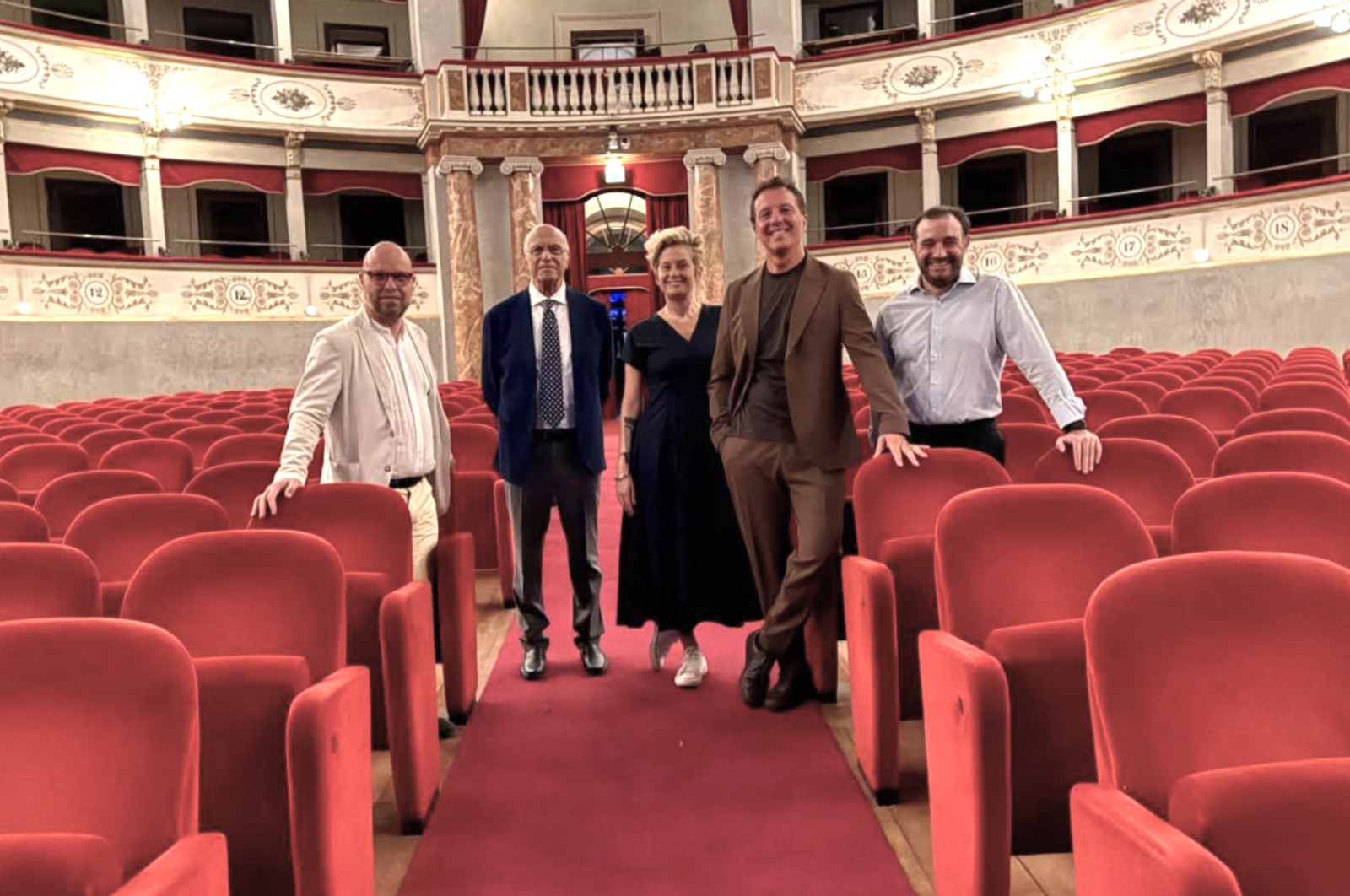
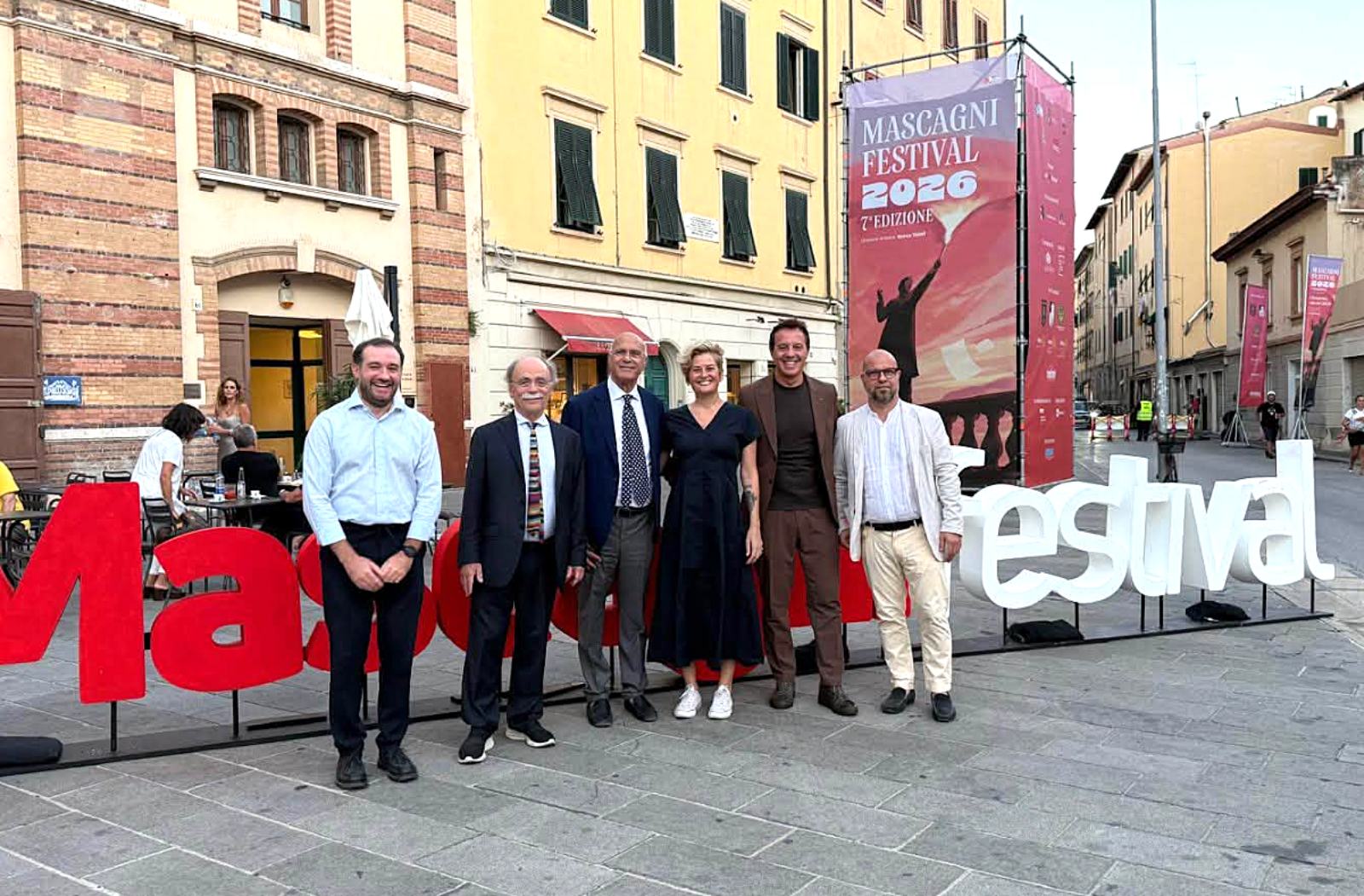
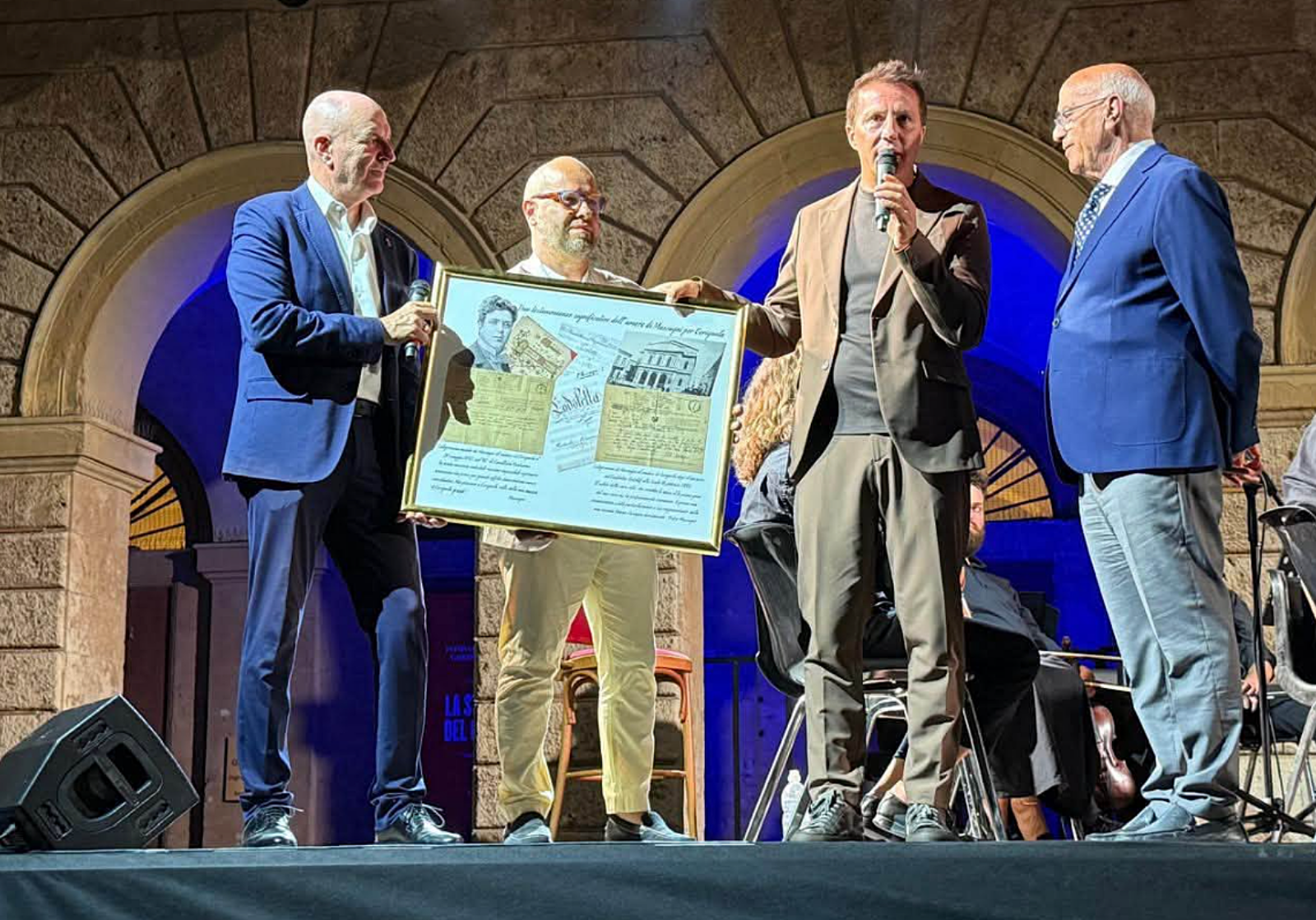
The agreement, signed in spring 2026 by Savino Zaba, artistic director of the Teatro Mercadante, and endorsed by Maria Dibisceglia, Vice Mayor and Culture Commissioner of Cerignola, establishes a framework for artistic exchange, co-production, and reciprocal stagings between the two institutions. Its first concrete expression is Soundtrack Mascagni - a multimedia theatrical production that premieres August 23, 2026, at the prestigious Mascagni Festival in Livorno, before transferring to the Mercadante stage in Cerignola during the 2026-2027 season.
"Livorno gave Mascagni to the world. Cerignola inspired him and kept the deepest part of his soul." - Savino Zaba, Artistic Director, Teatro Mercadante di Cerignola
Soundtrack Mascagni is a theatrical-concert hybrid designed to illuminate the extraordinary, and largely unexplored, relationship between Mascagni's music and the history of world cinema - a connection spanning more than a century of Italian and international cultural life. Acclaimed actor-director Maurizio Nichetti portrays a fictional Mascagni, serving as narrator and guide through the composer's musical universe. The Orchestra of the Fondazione Teatro Goldoni performs alongside the young professional artists of the Mascagni Academy.
The production is conceived against the backdrop of a striking historical paradox: Mascagni's music has been omnipresent in world cinema since the silent era - from Scorsese and Coppola to Visconti and beyond - yet the city where most of it was written has remained almost entirely absent from the international cultural record. Soundtrack Mascagni is as much a corrective as a celebration.
Between December 1886 and 1895, Mascagni composed five operas in Cerignola: Cavalleria Rusticana, L'amico Fritz, I Rantzau, Guglielmo Ratcliff, and Silvano - a full third of his operatic output, achieved over nine years of material hardship and extraordinary creative intensity. He arrived with the Maresca touring company, was offered the directorship of the city's new Società Filarmonica by Mayor Francesco Cannone, and settled - newly married, chronically short of funds - in a modest house on Via Assunta. It was there, in July 1888, that news of the first Concorso Sonzogno reached him with barely two months to the deadline.
Working by night from libretto pages mailed in installments from Livorno by poets Giovanni Targioni-Tozzetti and Guido Menasci, the composer set the drama almost as the pages arrived. He completed the autograph score of Cavalleria Rusticana on May 27, 1889, and posted the manuscript to Milan the following morning. The world premiere at Rome's Teatro Costanzi on May 17, 1890 - attended by Queen Margherita of Italy - was an immediate sensation. The city of Cerignola, where the opera had been written, would wait more than a century for its rightful place in the story.
The autograph score of "Cavalleria Rusticana" was completed at Via Assunta, Cerignola, on May 27, 1889. The envelope bore a Cerignola address. The international literature has never quite caught up with that fact.
English-language reference sources - from Encyclopædia Britannica to major streaming platform biographies - have consistently reduced Mascagni's Cerignola-based decade to a subordinate clause, describing it variously as "years of poverty and obscurity" or noting only that the composer "taught and conducted in Cerignola, Puglia." The Polo Museale di Cerignola, in the Piano San Rocco district, holds the primary archival evidence of those years: original manuscripts, annotated scores, photographs, caricatures, and letters in Mascagni's own hand - materials that have never been systematically made available in English. The Mercadante-Goldoni partnership is the most significant institutional step yet taken toward correcting the record.
The Cerignola-based chapter also encompasses one of the most celebrated episodes in the legal history of opera. When "Cavalleria Rusticana" - based on Giovanni Verga's short story and its spoken dramatic adaptation - became a global sensation in 1890, the great Sicilian novelist discovered that his name did not appear on the playbill for the Rome premiere. Verga subsequently initiated civil proceedings against both Mascagni and publisher Edoardo Sonzogno, seeking a proportionate share of the copyright revenues. The full text of the civil complaint, preserved in the Fondo Eredi Verga, was displayed publicly in 2022 at the Castello Ursino in Catania during centenary celebrations of Verga's death. It remains one of the most instructive documents in the history of intellectual property in the performing arts.
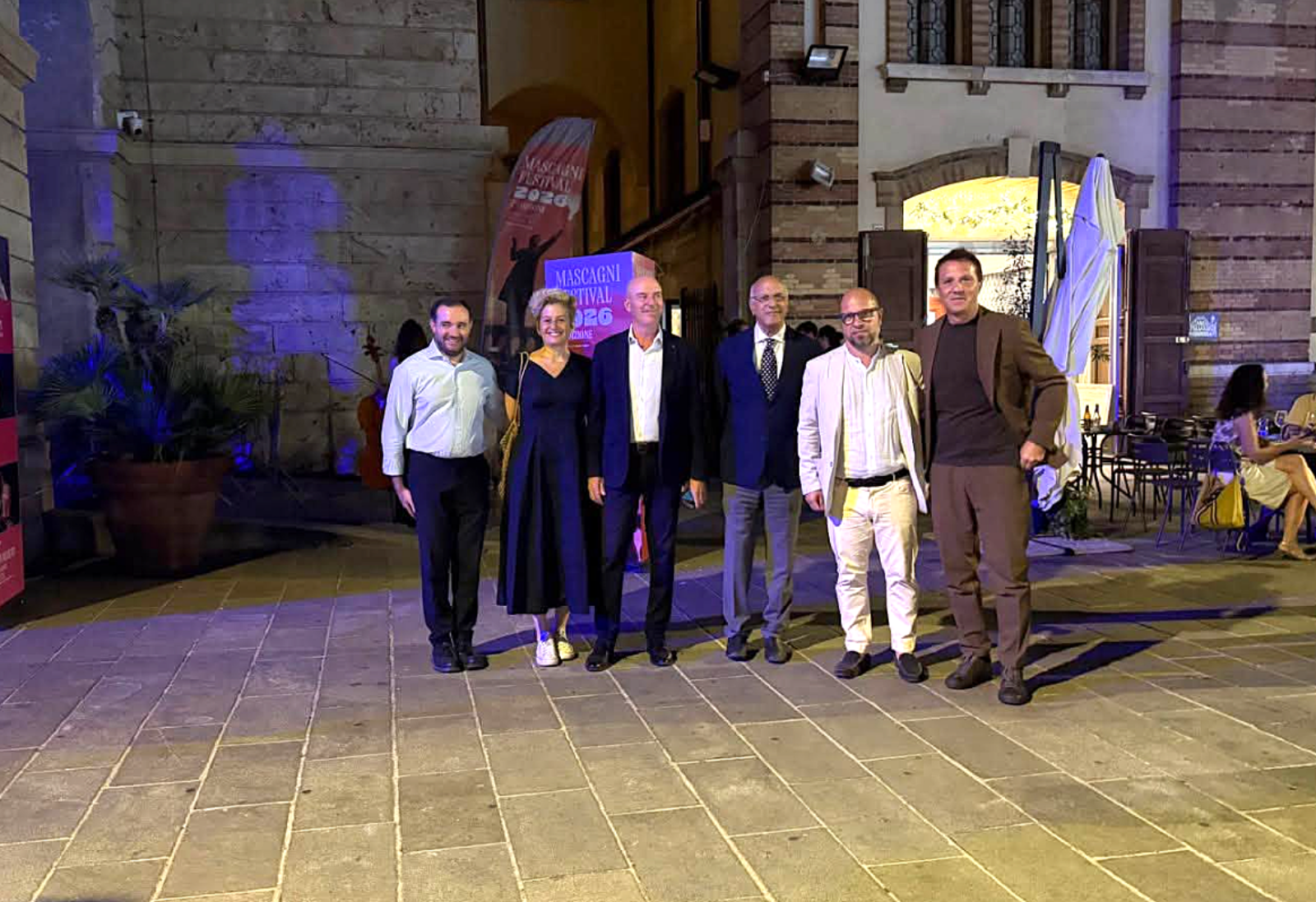
Photo Credit: 2026 Pietro Mascagni Festival, Comune of Cerignola, Teatro Mercadante of Cerignola
Prefer BroadwayWorld in Google Search?
Add us as a preferred source so our stories show up more often in Top Stories and Google’s AI answers — for you.
Ricevi le notizie di Broadway su WhatsApp
Ricevi gli ultimi aggiornamenti, notizie e contenuti esclusivi direttamente nell’app.

Sign up for all the news on the Fall season, discounts & more...
|
CENERENTOLA Il Musical Teatro Clerici (3/07-3/07) |

|
Luca Ravenna - Flamingo Teatro Augusteo (3/09-3/09) |
|
Luca Ravenna - Flamingo Unipol Forum (4/02-4/02) |
|
OSTERIA GIACOBAZZI Gran Teatro GEOX (4/16-4/16) |
|
Enrico Brignano “Bello di Mamma” Indoor Teatro Clerici (10/21-10/21) |
|
ROBERTA BRUZZONE - L’Epoca della Rabbia Gran Teatro GEOX (1/16-1/16) |
|
Dirty Old Town pres: Randi Oline Røde Mølle (11/27-11/27) |
|
MAURIZIO BATTISTA Teatro Clerici (12/12-12/12) |
|
|
CENERENTOLA Il Musical Gran Teatro GEOX (3/06-3/06) |
|
DISNEY MUSICAL WORLD - The European Soundtrack Orchestra Teatro Clerici (12/28-12/28) |
