


Interview: Maltby & Shire Honored in OUR STORY GOES ON at Kaufman Music Center
Richard Maltby, Jr. and David Shire are being honored by the American Songbook Association with a star-studded 10/5 show and gala
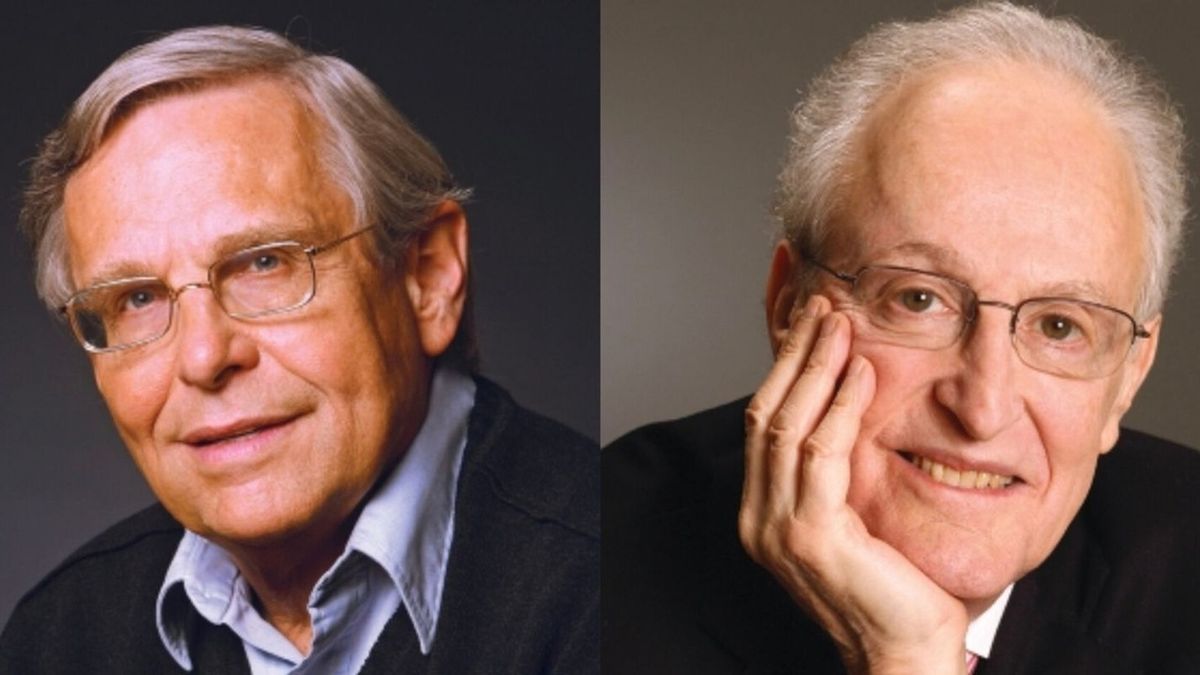
Richard Maltby, Jr. and David Shire have a long, illustrious Broadway and off-Broadway songwriting career. The pair are being honored by the American Songbook Association with a Tuesday October 5, 7:30 pm performance at New York’s Kaufman Music Center. Maltby & Shire: Our Story Goes On is the ASA’s sixth gala and features a star-studded cast of original performers from Maltby and Shire’s career, and more. We spoke with the songwriters about what they’ve been up to lately, the ASA show, and the legacy of the Great American Songbook.
How does it feel to be honored by the American Songbook Association?
Richard Maltby, Jr.: That's a really special deal, because these are people who know the difference and when you work really hard and have really high standards for songs, it's very nice to know there are people out there who know the difference, you know?
Do you have any thoughts about how we can help support carrying on the the legacy of the old American songbook and carry it into the future?
RM: Well, the truth is, you can't revisit the way that it was done. What you can do is invent new forms that still pay attention to the obligations of telling a story to the audience, of being scrupulous in language. And there are a bunch of young writers who are writing completely different from Cole Porter and Rodgers and Hammerstein, who write in a pop vocabulary, but still with the fastidiousness of playwriting. The people who wrote Maybe Happy Endings, the people who wrote The Outsiders, Pasek and Paul, are very, very, very good writers.
How do you feel about how the process of putting a musical on has changed from your experience putting About Time on versus when you guys were first starting out?
RM: Well, I mean, I guess the biggest difference is that things were a lot cheaper back then. What’s hard for a young writers these days is how dauntingly expensive it is to even do a simple show.
David Shire: Our first off-Broadway show 60 years ago only cost $25,000, in comparison with $1 million that it cost [for] About Time. Richard and I raised the $25,000 by doing 25 backers auditions. So that’s what it took in those ancient times to get out a show. [Laughs]
RM: That's the main difference. It was a lot easier to be heard. At the same time, you can't stop talent. Talent will find a way. And if you can't get on in one way, you'll get on in another way. That's just the way it is, and particularly in New York where people have to do things. If you’re a writer, you have to find a way of being heard, and that's the same now as it was when we were just starting out.
As for About Time, [it] was the same sort of thing. The show is speaking to, to an audience in a particularly personal way, and everybody that stopped us at the door when the show was over were thanking us for talking about material that that was so close to their lives.
I would say that David and I are notable for a body of sort of independent songs, not necessarily for fully developed shows, but a body of songs that are unlike anybody else's. They're very personal and they're very emotional. They're very funny, they're very full of life, but they're all sort of based on real life, and they're not like anybody else's. And that's what was great about doing About Time, realizing that there still is an audience hearing that. And secondly, that's what's wonderful about being honored this year by the [American Songbook Association], because that's what we write, the songbook.
When you say independent music, you mean like the sort of songs like in starting here, starting now, where you, like, wrote songs and then combine them together into a revue?
RM: Yeah. Each song stands alone by itself. We are constantly being described as writing songs that are little one act plays. All the information you need to know about the character singing is in the song. It starts with you not knowing who it is, and by the time the song is over, you've had a glimpse of an entire life and you move on, and that is not standard musical theater writing.
DS: Even our Broadway show, Baby, came from real life. My [first] wife and I were going through the [difficult] process of trying to conceive and I was writing with my ex-brother-in-law, Francis Coppola, and I said, what should we write our next musical about? And this was in the day when musicals were big, expensive, lavish productions, mainly. He said why don’t you write about something you know, something small, and something about your life? He said, what's the first thing that comes into your mind when you think of something like that, like the most important event in your life? And I instantly said, watching the birth of our first son. And he snapped his fingers, light bulb went on, and four or five years later, Baby was on Broadway at the Schubert.
What does your day-to-day sort of look like right now? How much time are you spending working on new work, revising your older stuff...?
RM: All of the same. We are looking at productions of About Time that will take place next summer. We are looking at doing new recordings of shows that we've already done, and then we have a new show coming up next fall in New Orleans. And so, you know, you just keep going. [Laughs]
DS: When Richard was asked in a previous interview, what was the secret of the longevity our 70-year collaboration... Well, you say it better than I do.
RM: I said, well, to begin with, we didn't die. [laughs] That is the secret of our longevity. We're still here.
DS: And the longer we are, we’ll just keep writing because that's what we love to do.
Do you do you have any advice or words of comfort to songwriters that are struggling to make it right now?
RM: We have some very good friends who are 20, 24. They're writing two shows. They have a show that was tested at a festival this summer and another one that they're going to be doing over the next year. And the word is the same, really, always: find your own voice. The source of your own voice is your own life. Start to write really personal things because that's the one thing that no one has ever written about. You have perceptions that nobody else has. And that's it. Everybody has to do it. We went through the same thing when we discovered that we had a voice that was different from anybody else's, and we started writing songs that weren't like anybody else's. That's still the goal, and it's still what gives people a thrill when they're sitting in a theater, hearing something that they recognize as true, and maybe that's never been said before.
DS: And that’s what our career-long mentor Stephen Sondheim taught us: write what only you can write. Our work is inspired by him in the same school of musical writing when we talk of songs that have, go over, he criticized them in his own terms, in our own terms, because [he] appreciated our individuality and made his criticism in terms of that. And we've been very grateful to have him looking over our work for so many decades.
RM: As with all things, Steve always said it best and most simply. He said, “anything you do / Let it come from you / Then it will be new.” That's from Sunday in the Park. Right there in three lines and 15 syllables, it's the best advice for any writer. But when we started working in New York, Steve had written Gypsy and West Side Story, but nobody would take him seriously as a composer, and he was in despair, so we would get together and we would share songs we were writing and he’d share songs that he was writing, and we were peers.
Have they told you which songs of yours they're going to be performing at this benefit show, or are you going to be surprised?
RM: We've pretty much been involved in it. The sad thing is that there are a bunch of, “oh, we've got to have that in it” songs that haven't made the cut, just because the right singer didn't come along or something like that. It's probably a more entertaining evening than these shows tend to be. We've got more comedy material in it than usual. I think people are going to have a really good time. We're going to have a good time, I'll tell you that.
DS: And they’re being scrupulous about narrowing the show down to 90 minutes, so it won't be one of those free-for-alls that go on for three hours when you’ve had enough after two hours.
I'm sure it's hard to narrow your music down to under 90 minutes.
RM: It kind of is. Closer Than Ever has a bunch of independent standalone songs, and it's two and a half hours long right there, and we have Starting Here, Starting Now, which is the same, and you can take extra songs from all the book musicals like Big and Baby and you can fill up a four-hour evening if you wanted. Fear not, we won't. [Laughs]
Is there anything else you want to share that we haven't touched on yet?
RM: I guess the one thing that's really terrific and touching is over the course of all this time, we've had a chance to have our work performed by some extraordinary performers, and they were really willing to come back and eager to come back and perform. We have the original cast of Starting Here, Starting Now, no longer young, but unbelievably gifted still. And they have a unique way of doing those songs. The three women who did “I Want It All” from Baby on the Tony Awards, two of the three of them are coming back, and the other from a from a revival, Julia Murney, has joined Liz Calloway and Kathryn Cox, and that's really touching. The entire revival cast of Closer Than Ever. It's just a parade of unbelievable New York performers coming in and doing one song after another.
And your daughter is performing?
Yes. She's doing maybe our most famous comedy songs called “Crossword Puzzle.” She does it really well, so it was really nice. You know, you have to have a little nepotism, you know to make your day go well.
Thanks for taking the time to chat. I hope the show goes well.
RM: I think it will. I think it'll be a treat.
Premium seating for the ASA performance on October 5 is $300. Other seats range from $75 to $200. Tickets are available www.americansongbookassociation.org or www.kaufmanmusiccenter.org.
Sign up for all the news on the Fall season, discounts & more...
|
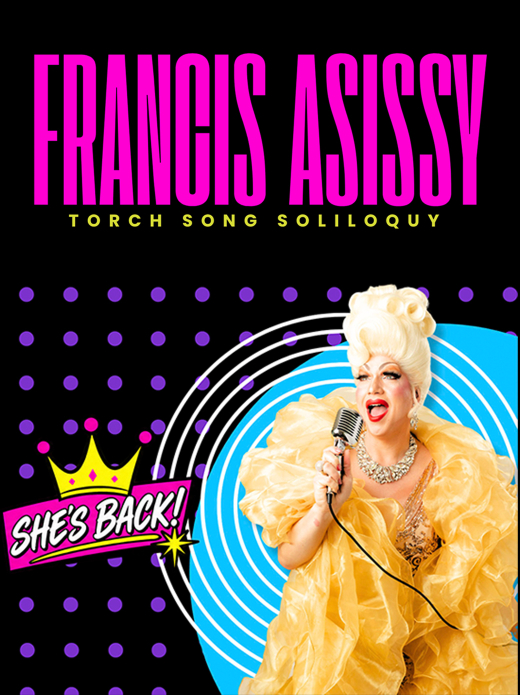
Torch Song Soliloquy Laurie Beechman Theatre (10/07-10/07) |
|
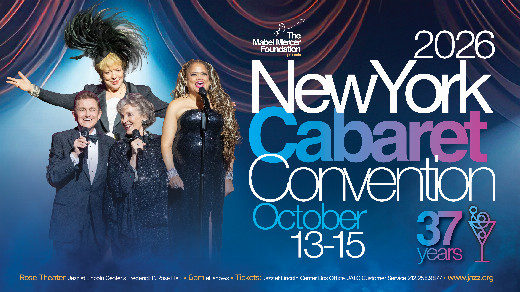
The 37th New York Cabaret Convention Jazz AT Lincoln Center's Rose Theater (10/13-10/15) |
|
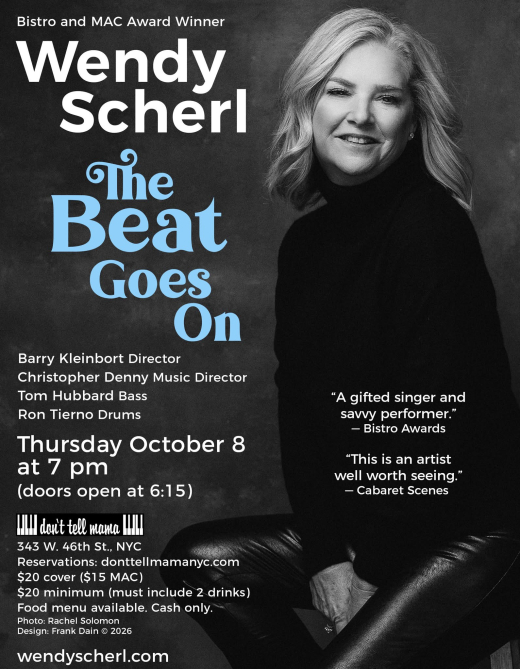
The Beat Goes On Don't Tell Mama (10/08-10/08) |
|
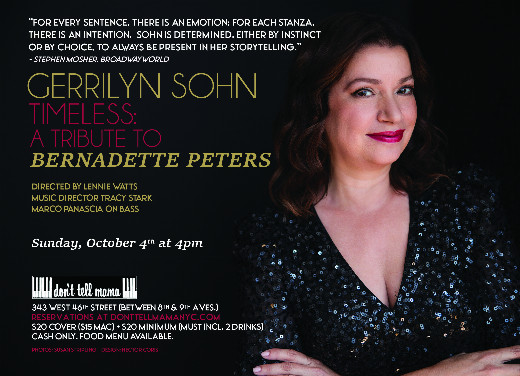
Timeless: A Tribute to Bernadette Peters Don't Tell Mama (10/04-10/04) |
|
AURORA: The Story of Daisy Jones and The Six 54 Below (12/08-12/08) |
|
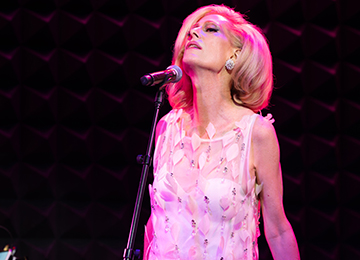
Justin Vivian Bond Joe's Pub (12/11-12/11) |

|
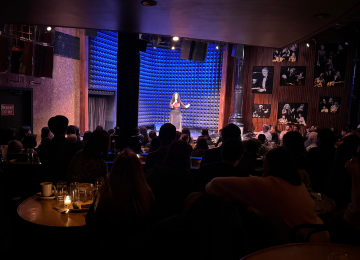
Robbie Rozelle: Despite Popular Demand 54 Below (11/30-11/30) |
|
New York Arab American Comedy Festival Joe's Pub (10/15-10/15) |

|
Trio Fadolín feat. Kinan Azmeh and Inna Barmash Joe's Pub (11/03-11/03) |

|
Patrick Page & Paige Davis - Page & Paige: A Love Story 54 Below (10/22-10/22) |

