


Jonathan Whitney to Release COOCH'S BRIDGE: THE AFRICAN-AMERICAN PRESENCE
The album features vocalists Makeda Hampton, Maci Miller and narrator Traci E. Currie, with music by Whitney.
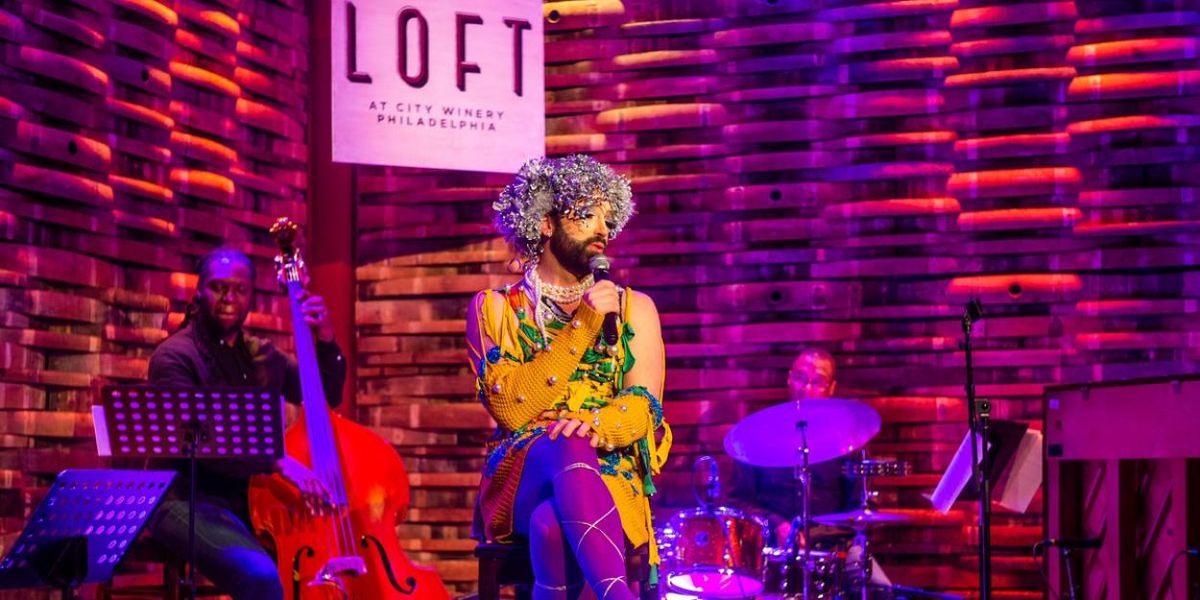
Cooch's Bridge: The African-American Presence, the new release on Flex Records by the Newark-born, Wilmington-based drummer, bandleader, educator and self-described 'Artivist' Jonathan W. Whitney, celebrates the lives and legacies of the enslaved people, freemen and their progeny who lived and worked on, or near, the historic 10-acre estate of Thomas Cooch in northern New Castle County, the site of the Delaware's only battle in the Revolutionary War. The first single, We're Free, was released August 7, 2026 and the full album will be available on September 4, 249 years and one day from the date of the historic battle.
On September 3, 1777, the heroic and outnumbered Continental soldiers were defeated by Hessian troops under the command of the British. Their heroic demise gave George Washington enough time to build defensive posts at the Battle of the Brandywine and eventually win the war. Whitney's work aurally illustrates the complexities and contradictions of a people living free and in bondage in a land fighting to be free.
Whitney's opus was commissioned in 2023 by the Friends of the Cooch's Bridge Historic Site with support from Delaware 250, the Delaware Division of the Arts, and many of its generous founding friends. It premiered 2024 on April 14 at Opera Delaware, and it was performed in Redlands, CA. Cooch's Bridge rings with the rhythms of resilience that highlight the humanity of the Black people who lived and worked on that estate well into the 20th century.
'We humanized them,' Whitney emphatically states. 'They are more than their trauma. They are mothers, fathers, lovers, singers, craftsmen, cooks, grandmothers, aunts, uncles, and so much more. I'm going to force you to see that Black bodies are human.'
The album's selections, all composed by Whitney, feature music, vocals and narration, with a superb core of musicians from Philadelphia and the Delaware Valley. They include Joe Anderson, trumpet and E.V.I.; Jeff Knoettner and Mike Frank, piano and Fender Rhodes; Greg Riley, clarinet, saxophone and flute; Tony Ventura, guitar; and bassist Mike Boone, who also co-produced the recording. A cast of vocalists includes Makeda Hampton, Kandeece Hinmon-Boone, Maci Miller and Jea Street, Jr., with narrator and University of Delaware Poet-in-Residence Traci E. Currie, Ph.D.
Citing Wynton Marsalis' Pulitzer Prize-winning oratorio Blood on the Fields as a seminal influence, Whitney imbues Cooch's Bridge with a powerful potpourri of jazz structures, R&B, Americana, Afro-diasporic rhythms and liturgical vocals, ranging from the opening, Motherland-motored track 'Aiye,' which means 'Earth' in Yoruba, to the straight ahead grooves of 'Descendants.'
This project showcases Whitney's sensitive tonal portraits of several African-Americans associated with Cooch's Bridge. Conga rhythms drive 'Samuel,' a runaway slave from the Cooch estate who was never found. The sound of hard bop sonically signatures 'Jesse,' a two-time runaway who then negotiated his own freedom. Martial melodies propel the triumphant sonic snapshot of Benjamin Harris Martin, an enslaved North Carolina soldier who bravely fought for the Union at Cooch's Bridge and was granted his freedom by his master. 'Ardessia' is a loving and intimate vocal/piano piece featuring Makeda Hampton's operatic voice, in dedication to a beloved caretaker at the Cooch estate, where her room is still intact long after her death in 1971.
The zenith of the recording is 'Say Their Names,' where the congregation of Wilmington's Episcopal Church of Saints Andrew and Matthew hauntingly chants the names of the Black people known to have been enslaved at the estate.
Whitney had full access to the meticulous records at the estate, and he was assisted by the estate's lead researcher, archaeologist Wade Katz and site supervisor Kaitlin Dyke, which enabled him to compose music that brought these unknown African-Americans to life. The idea for this multi-suite project started in 2022, when he toured the estate with a friend who was working on a project there.
Whitney remembered that he played on the Cooch's Bridge Historic Site as a child growing up in Newark, DE. 'I grew up minutes from Cooch's Bridge,' Whitney fondly recalled. 'I lived in Cooch's Bridge Farms, which is a neighborhood built on the battlefield.'
Whitney also spent his early childhood playing the organ and drums to songs on the reel-to-reel recordings by the pop band led by his father, who also played drums. Largely self-taught on percussion, Whitney took piano lessons at the age of nine and was in the band at Glasgow High School. He was exposed to jazz under the mentorship of Vernon James, a Wilmington-based multi-instrumentalist and arranger who worked with Gil Scott-Heron. Whitney earned his BA in Music Education from the University of Delaware in 2000, and a Master of Music Degree in Jazz Studies from the University of the Arts in 2014. Whitney was exposed to several legendary jazz drummers in college, including Elvin Jones and Brian Blade.
Whitney has worked with a wide variety of musicians including Mike Boone, Donald Byrd, Lili Añel, Jea Street and The Chantelles. His debut album, Life's Dimensions, was released in 2020. That same year, he was the recipient of the Delaware Established Artist Fellowship for jazz composition and was awarded the 2026 Delaware Established Artist Fellowship in music composition. Whitney is currently the artist-in-residence at the Episcopal Church of Saints Andrew and Matthew and was a speaker at the 2017 and 2024 Wilmington TEDx events. He collaborated with the choreographer Ashley S.K. Davis on her dance works including Divided We Fall and Ode (owed) to Black Women in 2019 and 2022.
Cooch's Bridge: The African-American Presence is the second suite written by Whitney about the historic estate. Two suites, Cooch's Bridge: The Family and Cooch's Bridge: The Battle, were commissioned in 2023 and 2025. The final suite will focus on the site's Lenape/Native American history and is scheduled for production in 2027.
With his vivid and varied musical gifts, Whitney is an artist who strives to reveal the life-affirming spirit that is central to the survival of Black people throughout the diaspora. 'My last major work was 'Celebration of Black Joy,'' Whitney affirmed. 'Black joy is a thread that's pulled all the way through the Middle Passage from West Africa, all through the Americas. It's never been stolen from us and never will be.'
Prefer BroadwayWorld in Google Search?
Add us as a preferred source so our stories show up more often in Top Stories and Google’s AI answers — for you.
Sign up for all the news on the Fall season, discounts & more...
.jpg?format=auto&width=300)
.png?format=auto&width=365)




