


Student Blog: Learning the Language of my Brain as a Lighting Designer
Finding my way through lighting design and neurodivergence

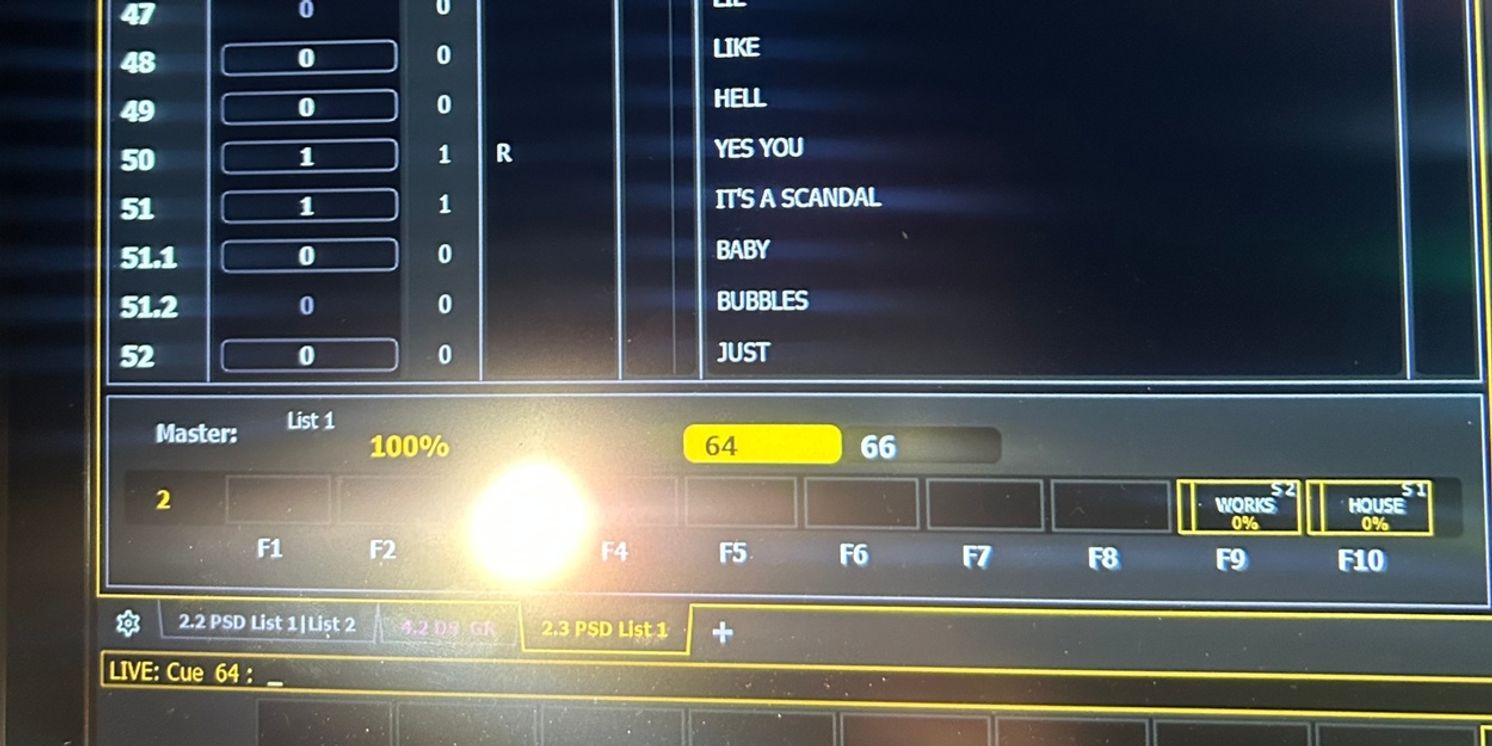
For a long time, I assumed everyone experienced music the way I did—that sound came with color, that certain notes carried specific shades. I didn’t have language for it, it just felt normal, like an unspoken layer of understanding that existed alongside everything else. This is what led me to lighting design- just working off of feeling and noise, filling in the technical gaps later. I didn’t realize how I perceive music and noise wasn’t universal, and I didn’t realize it was a large part of how my brain works because I’m neurodivergent.
I didn’t know I was neurodivergent until recently. To me, the label is less important as much as how I process things. It often manifests for me in a couple of different ways. The lack of routine, unspoken rules, changing schedules. It often feels like living at an intersection of contradiction. In an industry that celebrates creativity but often runs on rigid expectations, navigating design work with autism is something I’m still working on.
For me and many other designers, lighting is a language. I use it as a way to translate thoughts that don’t always fit neatly into words. As someone who is neurodivergent, I often experience ideas as sensations first—patterns, colors, typography, spacing—things I feel intuitively but can struggle to verbalize.
Lighting becomes a form of communication. It lets me express connections my brain makes naturally, even when I can’t fully explain them. Whether it’s a pattern in a play, a piece of music, or the shape of words on a page, my design choices often come from instinct rather than linear reasoning.
This is also where I struggle as a designer. In a field that often expects clear explanations and justification, I don’t always have the language to translate my process back into words. My work makes sense to me in feeling and form before it does in explanation—and bridging that gap can be one of the hardest parts of my process. I sometimes feel like it’s easier for me to write an essay about my lighting than just speak about it in front of my class.
There’s also the structure of the process itself. Or rather—the lack of it. One of my quirks is that I crave concrete schedules, clear expectations, and defined steps. I work best when I know exactly what is happening, when it’s happening, and what is expected of me. Routine and specific details are my best friends. For instance, when I have to take the train to New York, I typically take the train at least two hours before, with two other trains I could take in case one or two of them are cancelled, and then I plot out multiple different subway routes or bus stops I could take depending on what time I get there. Then, I find the other train stations I could get to if all of the trains I need are cancelled, or I miss them.
Theater hardly ever works that way. Rehearsals shift, tech runs late, ideas change in the middle of a cue. What felt settled one day can be completely different the next. An interesting career pick for me, as someone who typically plans my day out by the minute.
However, I think the lack of specific direction actually helps me sometimes. It gives me the ability to create my own rules in design. For instance, I can set a rule for my lighting that all of the light on stage is from indoor sources, or that all of it has to be in a specific color palette. Those rules become my structure when the process itself doesn’t offer one. They give me something concrete to hold onto in a space that is constantly shifting. If everything else is unpredictable, at least the internal logic of my design isn’t. It’s a way of building a system that makes sense to me, even if it’s invisible to everyone else.
I’ve started to realize that this isn’t a limitation—it’s actually part of how I problem-solve. Where others might approach a design from a narrative or conceptual angle first, I often start with pattern and consistency. I look for the internal rhythm of a piece: where things repeat, where they break, where tension builds. Lighting, for me, becomes a way of making that structure visible.
At the same time, I’ve also had to learn to advocate for myself in the room. That sometimes means asking for clarity when expectations aren’t explicit, or requesting more concrete feedback. It can feel uncomfortable, especially in an environment where everyone else seems to just get it without needing those extra steps. But I’ve found that more often than not, those questions don’t slow the process down—they actually make the work clearer for everyone.
Now, I’m trying to approach it differently. Instead of seeing my neurodivergence as something I have to work around, I’m starting to see it as something I can work with. The same instincts that make unstructured environments challenging are also the ones that allow me to notice details, patterns, and relationships that might otherwise go overlooked.
Lighting design is, at its core, about perception—about guiding an audience’s attention, shaping how they experience a moment. In that way, it feels fitting that my own perception of the world—structured, sensory, sometimes nonlinear—plays such a central role in how I approach the work.
I’m still figuring it out. I’m still learning how to translate, how to communicate, how to exist in a process that doesn’t always match the way my brain wants to move. But I think there’s value in that tension.
Videos