When Federal Funding Is Used to Censor: National Queer Theater’s Fight for Artistic Freedom
NQT won its case against the NEA’s “gender ideology” funding ban. Now, as the federal government appeals that decision, the future of artistic freedom is at stake.
For the National Queer Theater, the fight against censorship is not an abstract political debate. It is a fight for artists’ livelihoods, young people’s futures, and the right of queer and transgender people to tell their stories without first seeking the government’s approval.
Founded in 2018 by Artistic Director Adam Odsess-Rubin, National Queer Theater has built a home for queer and transgender artists in New York City while offering free educational programs for LGBTQ+ youth. Its programming includes the Criminal Queerness Festival, which presents work by artists from countries where queer identities and expression are criminalized or censored. The festival received an Obie Theatre Grant as part of the 68th Obie Awards, announced in February 2025.
Now, National Queer Theater is one of four arts organizations fighting to ensure that the federal government cannot decide which artists deserve support based on whether their stories align with the political agenda of the current administration.
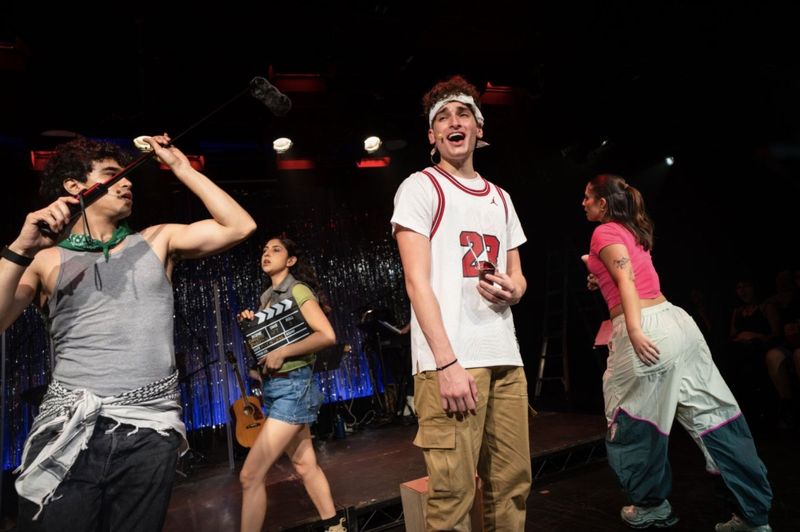
Photo Credit: HanJie Chow
The case began in March 2025, after the National Endowment for the Arts changed its grant requirements in response to President Donald Trump’s Executive Order 14168, titled “Defending Women from Gender Ideology Extremism and Restoring Biological Truth to the Federal Government.”
The executive order, signed on January 20, 2025, directed federal agencies to ensure that federal funds were not used to “promote gender ideology.” On February 6, 2025, the NEA announced a related policy requiring grant applicants to certify their compliance with the order and indicating that projects believed to “promote gender ideology” would be ineligible for funding.
The term was broad enough to place artists, theaters, schools, and other organizations in an impossible position. What constitutes “promotion”? Would presenting a play by a transgender writer qualify? What about hiring a transgender actor for a production unrelated to gender identity? Could a theater or school risk violating the executive order by practicing gender-blind casting or producing a musical featuring drag, such as Kinky Boots? Could an organization lose funding simply because affirming queer and transgender people was part of its mission?
“The government’s definition of “promoting gender ideology” is organizations or individuals promoting the idea that transgender people exist and are valid,” Odsess-Rubin said. “It is basically invalidating the idea that transgender people are real.”
Photi Credit: PBN PHOTO / JAMES BESSETTE
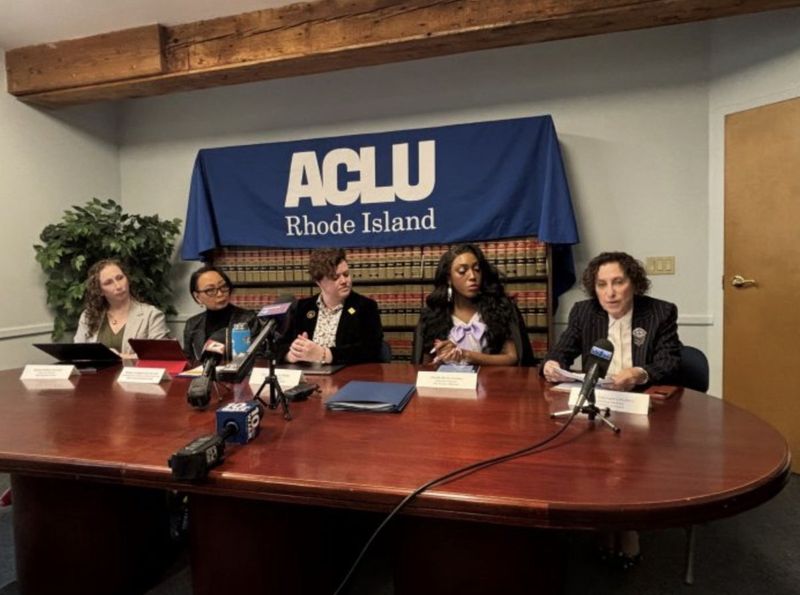
National Queer Theater joined Rhode Island Latino Arts, The Theater Offensive, and Theatre Communications Group in filing Rhode Island Latino Arts v. National Endowment for the Arts.
Represented by the American Civil Liberties Union and the ACLU of Rhode Island, the organizations argued that the policy violated the First Amendment, the Fifth Amendment, the Administrative Procedure Act, and the law governing the NEA.
Shortly after the lawsuit was filed, the NEA removed the certification requirement from its application. But removing the checkbox did not resolve the larger question. The organizations remained concerned that the agency could still disfavor projects it believed promoted what the administration called “gender ideology.”
For National Queer Theater, that uncertainty threatened its entire mission. The organization had previously received three consecutive $20,000 NEA grants for the Criminal Queerness Festival.
“We’re not against the NEA,” Odsess-Rubin explained. “We are against the NEA’s ability to discriminate against queer and trans people under the Trump administration.”
In September 2025, U.S. District Judge William E. Smith ruled in favor of the arts organizations. The court found that the NEA’s policy violated the First Amendment and the Administrative Procedure Act because it discriminated against artistic expression based on viewpoint. The court set aside the policy and prohibited the NEA from applying the restriction to the plaintiffs.
Because of that ruling, the NEA’s “gender ideology” funding ban is not currently in effect. Arts organizations applying for NEA funding do not presently have to certify that their work complies with the ban or consider the restriction when developing their proposals.
That distinction is important.
The federal government appealed the decision in November 2025, and the case remains pending before the United States Court of Appeals for the First Circuit. If the government succeeds in overturning the district court’s ruling, the NEA could reinstate the restriction. For now, however, the district court’s decision remains in place.
The fight is not over a ban that is currently being enforced. It is about protecting the ruling that stopped it and preventing the government from regaining the authority to judge federally supported art according to whether its viewpoint aligns with the administration’s beliefs about gender.
At the center of the appeal is a fundamental question: When the government funds art, does that art become “government speech?”
The Trump administration argues that an NEA grant reflects the government’s own message and that the government may therefore prioritize projects consistent with its policies. The plaintiffs argue that NEA funding exists to support independent artistic expression, not to turn artists into messengers for whichever political administration is currently in power.
“When the NEA gives a grant to an arts organization, it’s for the artists to make whatever art they want,” Odsess-Rubin said. “It should be based, according to the NEA’s own charter, on artistic excellence and merit, and not on the viewpoint of the artists.”
That distinction matters far beyond a single application or grant cycle. NEA funding pays artists, directors, playwrights, actors, stage managers, designers, technicians, and teaching artists. It also supports the nonprofit theaters and community organizations that nurture new work long before it reaches a commercial stage or national audience.
“For every NEA grant for an arts organization, that represents artists’ jobs,” Odsess-Rubin said. “These grants pay artists’ salaries. They pay artist stipends, and they help organizations stay open so they can serve their local communities.”
The effects are not limited to New York or to organizations that focus specifically on LGBTQ+ stories. NEA funding reaches communities across the country, including organizations working with young people, veterans, Indigenous communities, immigrants, rural residents, and people with disabilities.
Some large institutions may be able to reject federal funding rather than accept restrictions that conflict with their values. In 2025, Baltimore Center Stage announced that it was prepared to forgo approximately $30,000 in annual NEA support rather than comply with requirements it believed would compromise its commitment to diversity, equity, inclusion, and artistic freedom. Other organizations may choose not to apply in the first place, a decision that is becoming increasingly common among those unwilling to comply with the administration’s restrictions on DEI or so-called “gender ideology.”
Smaller organizations may not have that same financial freedom.
When a grant pays multiple artists, supports a new play, or keeps an educational program alive, turning down that funding can mean canceling a production, eliminating jobs, or closing a program entirely. This creates a dangerous possibility: Artistic freedom becomes a privilege reserved for institutions wealthy enough to defend it. The choice should never be between keeping the doors open and keeping your values intact.
Photo Credit: HanJie Chow
Odsess-Rubin warns that the greatest damage may not be the work that gets explicitly rejected. It may be the work artists and institutions never propose.
Organizations worried about losing government support may quietly change their seasons before submitting an application. A theater might decide not to produce a queer play, hire a transgender artist, or present a drag performance, even if no government official directly orders it to do so. Emerging writers may begin questioning whether their work is “too queer” or “too trans” to be produced. Some may decide not to write the story at all.
This is the chilling effect of censorship. The government does not have to ban a play if artists and institutions have already learned to silence themselves.
“We lose that as a society because our work is taking fewer risks, and it is less representative of the real America, which is diverse,” Odsess-Rubin said.
Theater allows us to encounter lives we may not otherwise understand. It helps preserve histories that people in power have ignored, distorted, or deliberately erased. When artists begin creating from a place of fear, we do not only lose productions. We lose pieces of our collective memory.
The policy also sends a deeply personal message to queer and transgender young people who are still deciding whether their lives are worthy of becoming art.
“It’s telling specifically trans young people that they don’t matter, that their identity is not valid, that they are not real in who they are,” Odsess-Rubin said.
National Queer Theater’s Staging Pride program works directly against that message. The program supports queer and transgender young people in telling their own stories without censorship. Participants attend Broadway productions, engage with professional theater artists, and develop their voices as storytellers.
At a time when transgender young people are being pushed out of public conversations, classrooms, libraries, healthcare systems, and performance spaces, providing a place where they can speak openly becomes its own form of resistance. It also reminds them that their stories do not require government approval to be real.
Odsess-Rubin believes the larger theater industry, including Broadway, must be louder in defending artistic freedom.
“We are under such an intense assault on our senses from all sides by this administration,” he said. “It is hard to get attention for the NEA right now.”
But the future of American theater depends on artists who have not yet written their first play, found an artistic home, or received the institutional support necessary to develop their work.
“This is not necessarily about the shows that are on right now,” Odsess-Rubin said. “This is about the next Jonathan Larson or the next Michael R. Jackson who is coming up right now and may not get support for their work.”
The history of theater is filled with stories once considered too political, too disruptive, too queer, too Black, or too far outside the mainstream. Those stories did not weaken the American theater. They expanded it. They introduced us to people, histories, and experiences that had been pushed to the margins. They made the American theater more honest.
The fight led by National Queer Theater asks the industry to decide what artistic freedom really means. Does it only belong to artists whose work aligns with the politics of the moment or does not center marginalized communities? Does it only belong to institutions with enough private funding to survive without government support? Or does it belong to every artist brave enough to challenge us to see the country and one another more fully?
For Odsess-Rubin, the answer is clear.
“Our stories matter,” he said. “Theater has always been a safe space for queer and trans artists to share their stories, and it’s important that we keep it that way.”
Sign up for all the news on the Fall season, discounts & more...
.jpg?format=auto&width=300)