


Review: World Premiere E=MC² EINSTEIN THE MUSICAL Often Trades Depth for Silly Songs
at Kiki & David Gindler Performing Arts Center
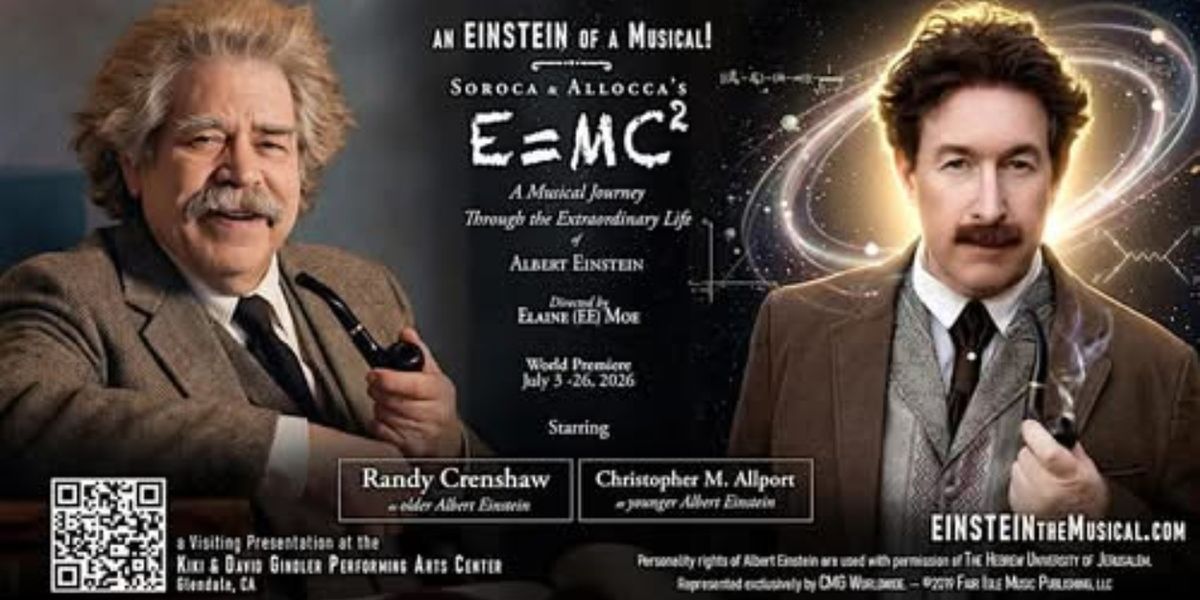
The world premiere production of E=MC² The Einstein Musical offers an interesting journey through the extraordinary life of Albert Einstein, the 20th Century mathematical genius who often said how his life revolved around music and staying curious about everything. But why tell his story as a musical? Einstein himself offered the answer: “I often think in music. I live my daydreams in music. I see my life in terms of music.”
The new musical created by Soroca & Allocca is structured in two acts, covering the years 1896-1955, and has a cast of 16 actors with the older Albert Einstein as narrator. Before I go on about its shortcomings, I want to praise the quality of the large cast for their dedication to bringing so many authentic characters to life onstage while changing costumes, accents and physicality often in the blink of an eye.
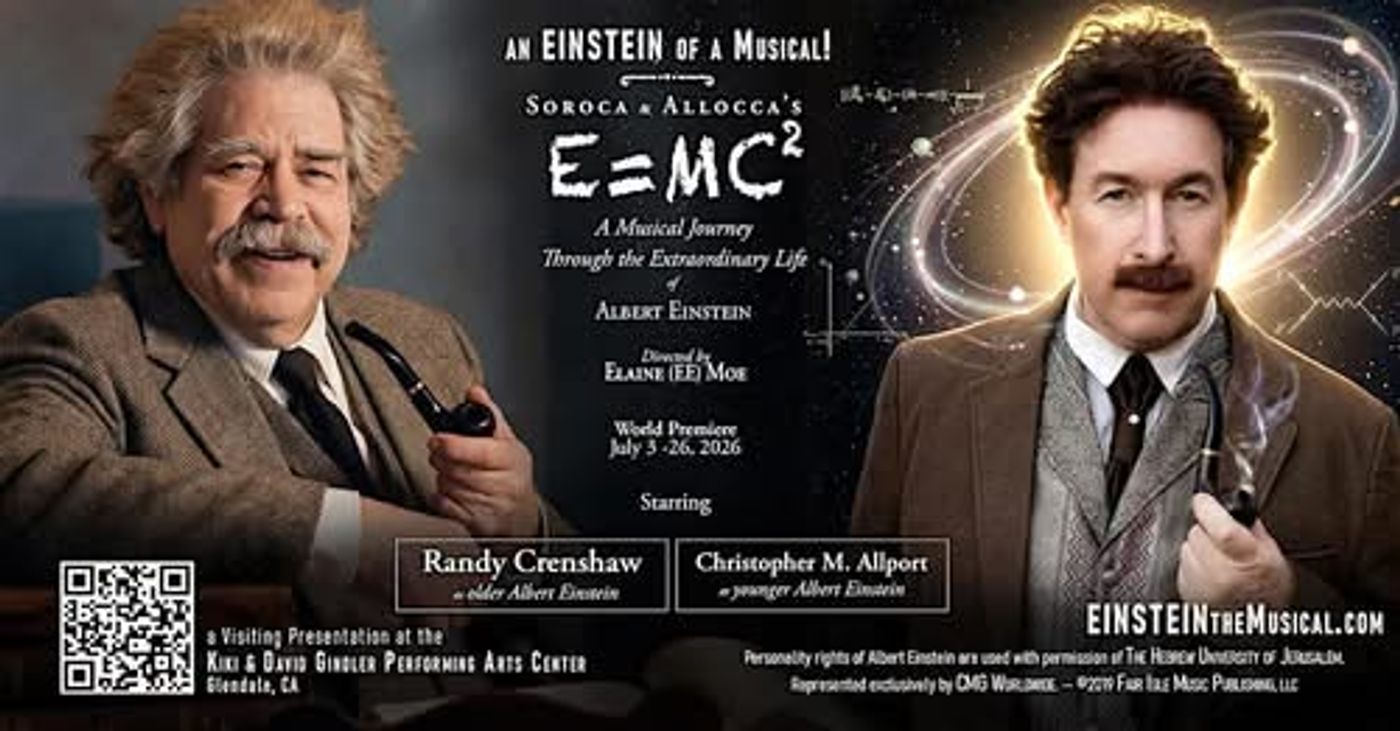
First and foremost, kudos to Randy Crenshaw for his portrayal of the Older Einstein who shares his life’s story from his study at Princeton where he taught the next generation of physicists after escaping the horrors of World War II in Central Europe. From the moment he enters the stage (which he then never leaves) singing “Never Stop Asking Why,” Crenshaw infuses his portrayal with authority and honesty, sharing the elder physicist in his golden years, reliving the experiences and offering a few lessons learned. His life is certainly an interesting story to tell, with many surprises along the way. Just wish there was more backstory about the facts being shared and not 22 songs - with many thrown in for musical theatre entertainment to distract from the serious conversations about science, mathematics, and the world in which he lived.
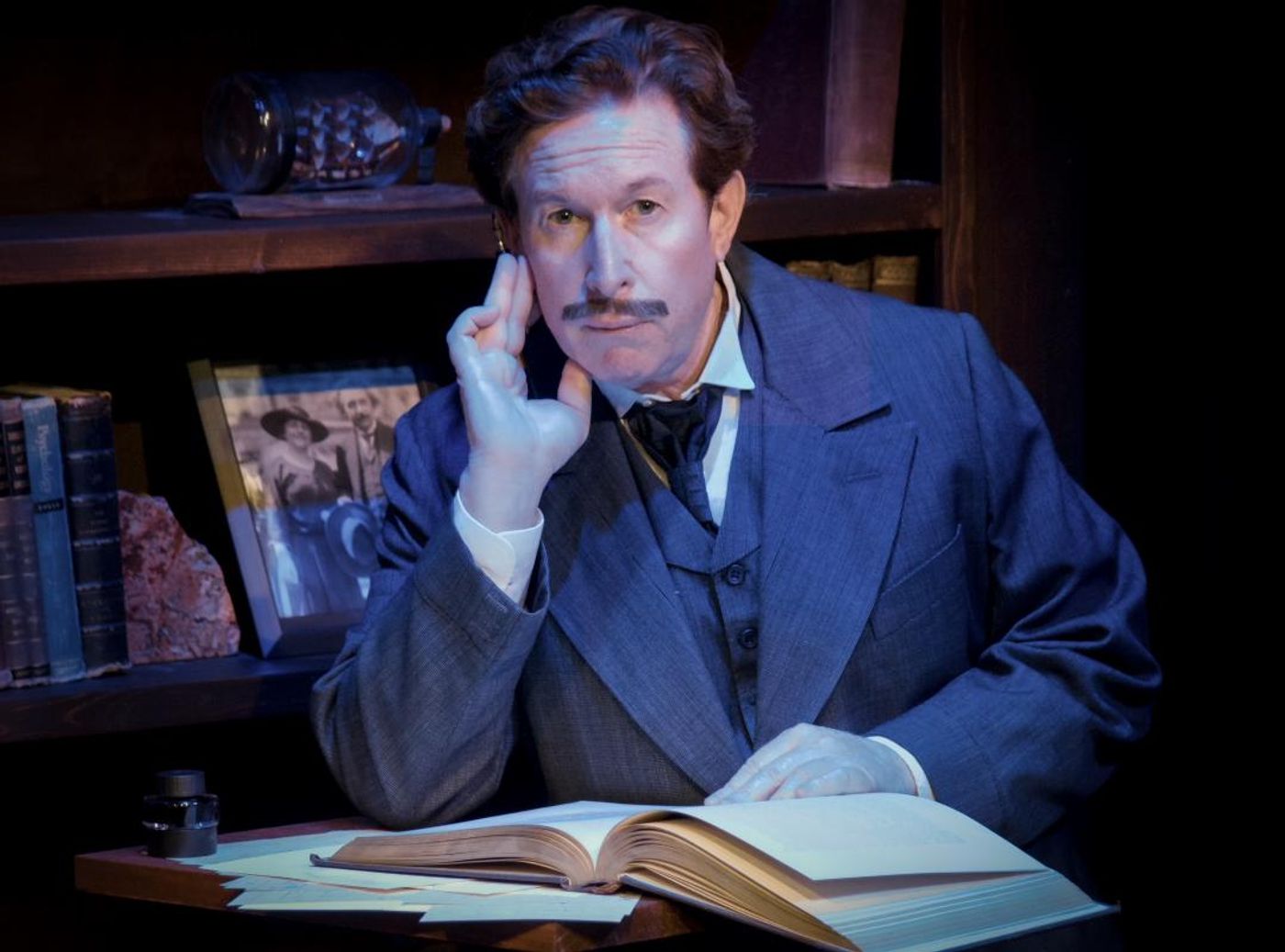
As the Younger Einstein, Christopher M. Allport (pictured) carries the show with his never-ending energy, glowing vocal ability, and charismatic acting skill through many costume changes (designed by Kimberly DeShazo) as the years progress. Allport, who also serves as Associate/Technical Director as well as designer of the production’s Projection Art and Visual Design (along with director Elaine “E.E.” Moe) devotes his heart and soul to creating Einstein as a most interesting fellow, totally devoted to making a name for himself while infusing the world with his seemingly natural knowledge of the universe. His brilliant mind astounded other physicists worldwide, beginning as a university student in Zurich after working in his father’s factory in Milan.
I really enjoyed the heartfelt story told when we first meet his father Hermann (handlebar mustached Jeff Sable), mother Pauline (Susan Soriano), and his younger sister Maya (Jennifer Bennett) whose often comical rendition of “What to do with Albert?” includes several Yiddish words appropriate to the story of a young Jewish man labeled a genius trying to figure out how to make his way in the world - without forgetting the little things along the way, like his suitcase on the boarding platform of his train to Zurich!
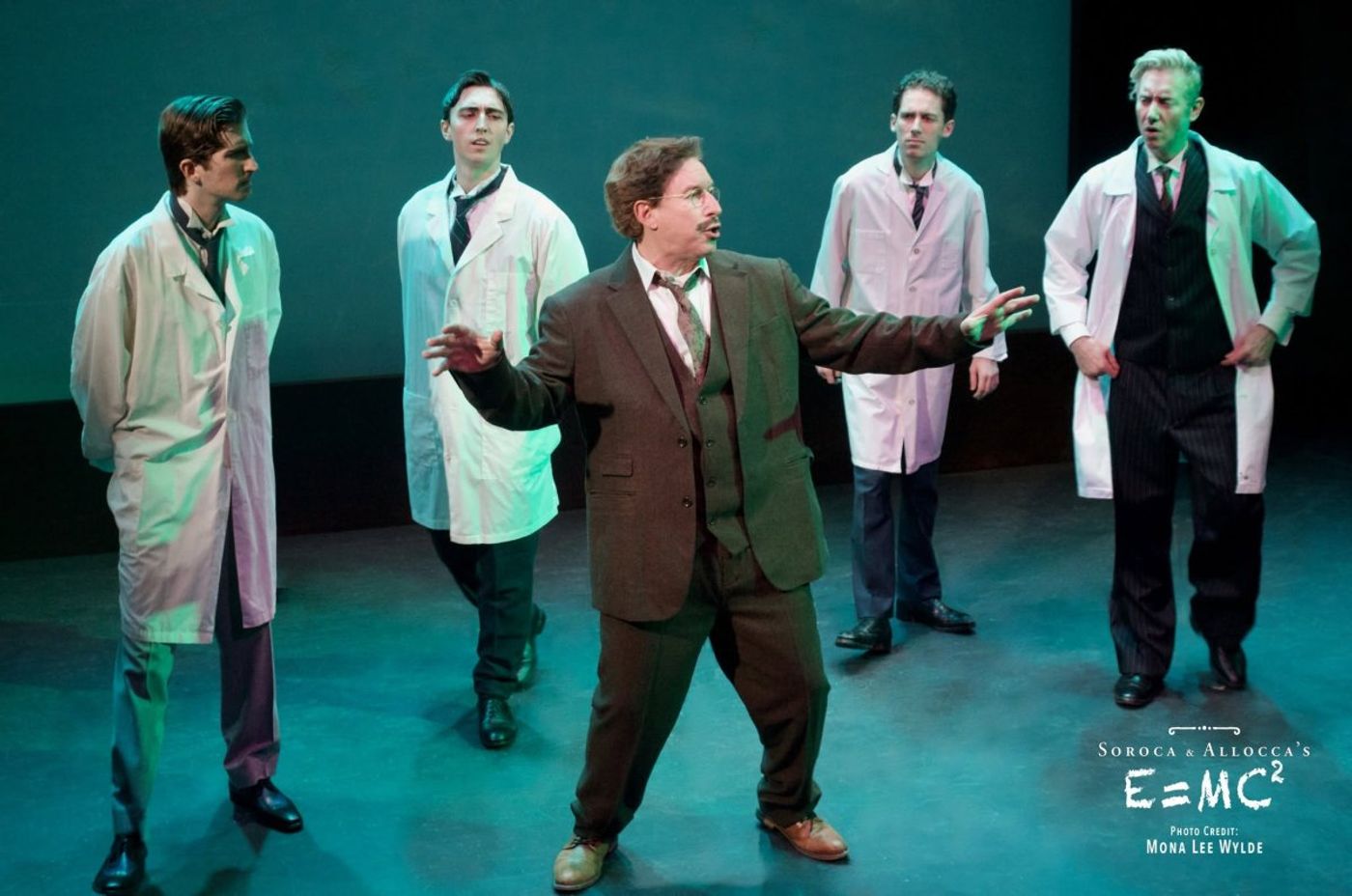
That song is reprised by Einstein’s Zurich University professor (Tom Whalen) and other physics students (Christopher Reilly, Eugene Boyd, Ben Van Diepen (not pictured) and Max Pruett – who later harmonize beautifully as a barbershop quartet singing “Hail Princeton!”), which allows us to see how much others in his field respected Einstein’s intelligence, even though they could barely understand his ability to calculate such equations with seemingly effortless ease. However, I do think the barbershop quartet number does little to advance the story and could easily be left out of the score.
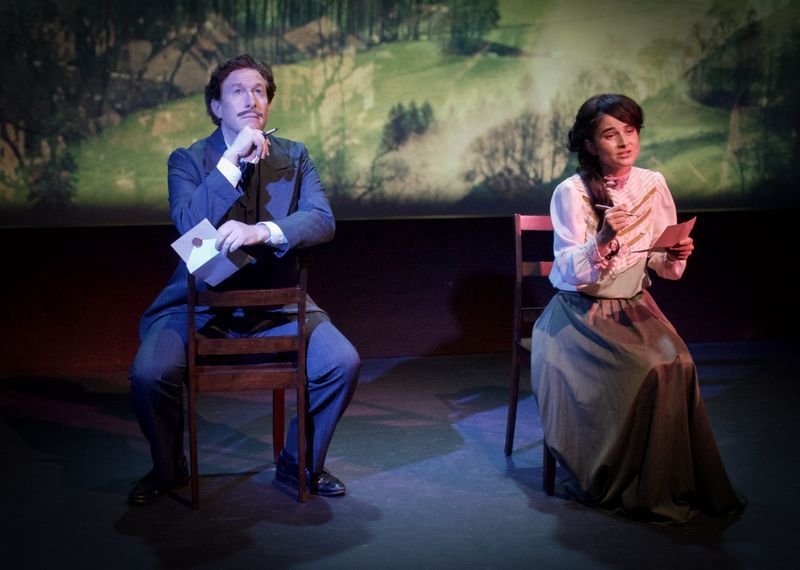
Christopher M. Allport and Mia Michaud (Mileva)
The two Einsteins then take us along through his two marriages, meeting his Serbian-born first wife Mileva at Zurich University where she was the only woman majoring in physics, through their early years, the birth of their two children and later divorce. And all the while, Einstein’s totally dedication to his work led to him winning the Nobel Prize in Physics in 1922 for his discovery of the law of photoelectric effect rather than his theory of relativity.
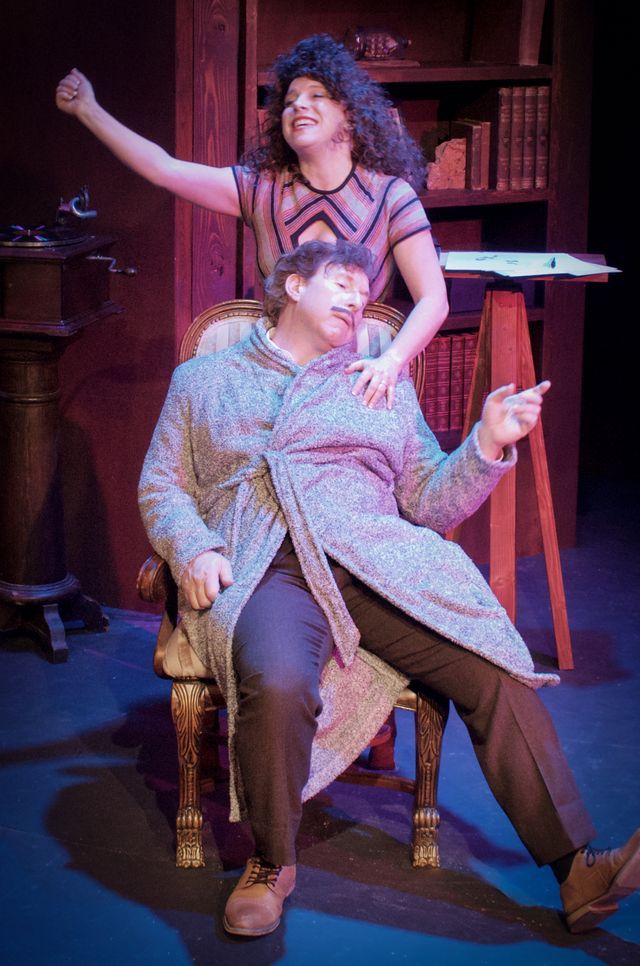
Christopher M. Allport and Kristin Towers Rowles
His second wife, Elsa, appears out-of-the-blue as his loving Nurse after illness plagued Einstein following his divorce. Who she was to him during his youth was later revealed but glossed over as if it was not an interesting detail of his life. Would have liked to have known more about their life growing up together as first cousins to add a more humanizing aspect to their relationship.
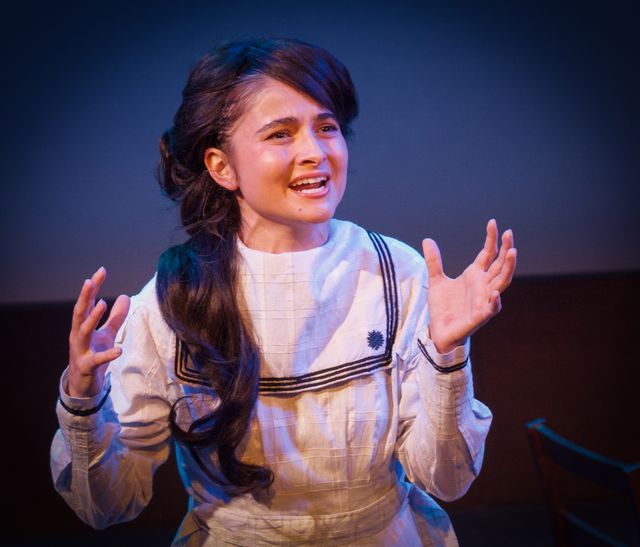
Mia Michaud
Of course, Einstein’s work pulled him away from spending time with his wives, whose laments about their loneliness during “Never Far From my Heart” and “They Call Me Mileva” masterfully sung by Mia Michaud as his first wife and “Second to the Universe” by soaring soprano Kristin Towers Rowles as his second wife Elsa, were the musical’s most truly heartfelt and soul-searching songs. Would that we had been given the same chance to see inside the heart of Einstein to that degree during his ballads, which were often turned into musical comedy ensemble numbers seemingly out of nowhere – as was the sudden appearance of Brigit Comeau as the adult Margot, Elsa’s daughter from her first marriage who Einstein adopted as his own.
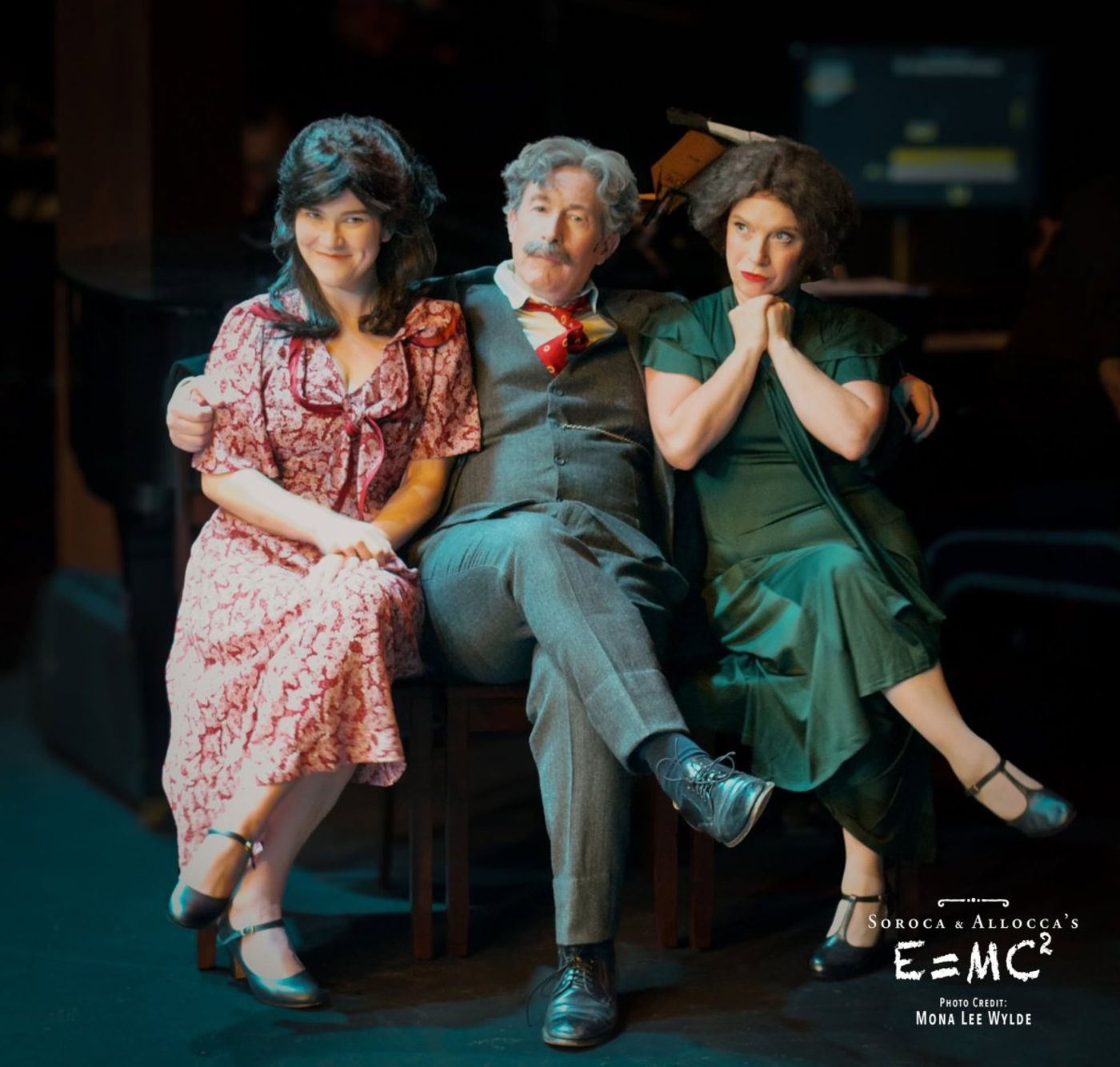
Einstein (Christopher M. Allport) with his second wife Elsa (Kristin Towers Rowles at right) and her daughter Margot (Brigit Comeau)
It would have been very interesting to learn more about Einstein's marriage to Elsa, along with adding dramatizations of his womanizing during both of his marriages which led to the friction and emotional neglect his wives felt, as well as sharing lessons he learned about how important it was to respect the most important women in his life for the amazing individuals they were. And it was so was jarring to just be told by Einstein in a flippant way that "I was so sad when Elsa died," like it was a throwaway moment. How did she die and why were we not allowed to see Einstein grieve for her? And what happened to her daughter Margot after her passing?
Other missing scenes I would have loved to see include a brief, silent walk on by an ensemble member to waddle in as Charlie Chaplin since Einstein spoke about the actor as a great friend of his, rather than just hearing a few lines about their friendship. Same thing when he talks about meeting Winston Churchill. These are two well-known characters and each deserves a moment in the spotlight rather than making us sit through out-of-place songs. In fact, it often seemed as if there was too much “tell” and not enough “show” about the important people and moments in Einstein’s life. And there would be plenty of time for these meaningful scenes to reveal character development and much-needed story if a few of the unnecessary songs and dances were cut.
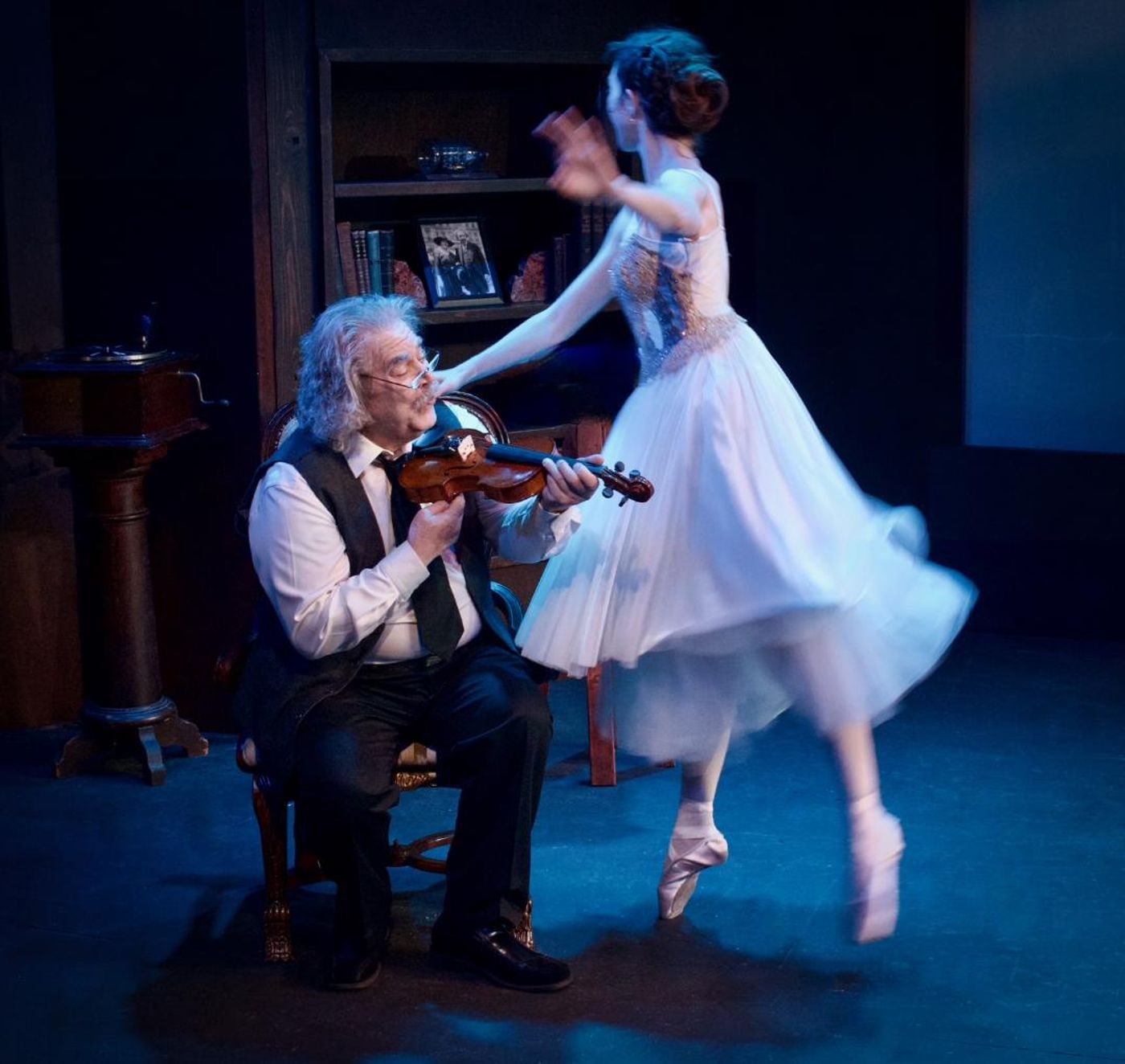
Randy Crenshaw and ballerina Bryn Graham McRee perform "Lina" as a tribute ot his beloved violin.
Perhaps the only exception was the Act 2 opening number “Lina” which the Older Einstein sings about his beloved violin which he kept with him throughout his life. And while Crenshaw never plays it, the orchestra’s remarkable violinist Dr. Xenia Deviatkina-Loh does, along with the orchestra, as lovely and lithe ballerina Bryn Graham McRee dances as Lina in Einstein’s memory. It’s one of the few moments during which Einstein gets to share his love of classical music, until the epilogue’s Prelude in C (for violin) by Johann Sebastian Bach, written as part of his famous Cello Suites which no doubt were some of Einstein’s favorites.
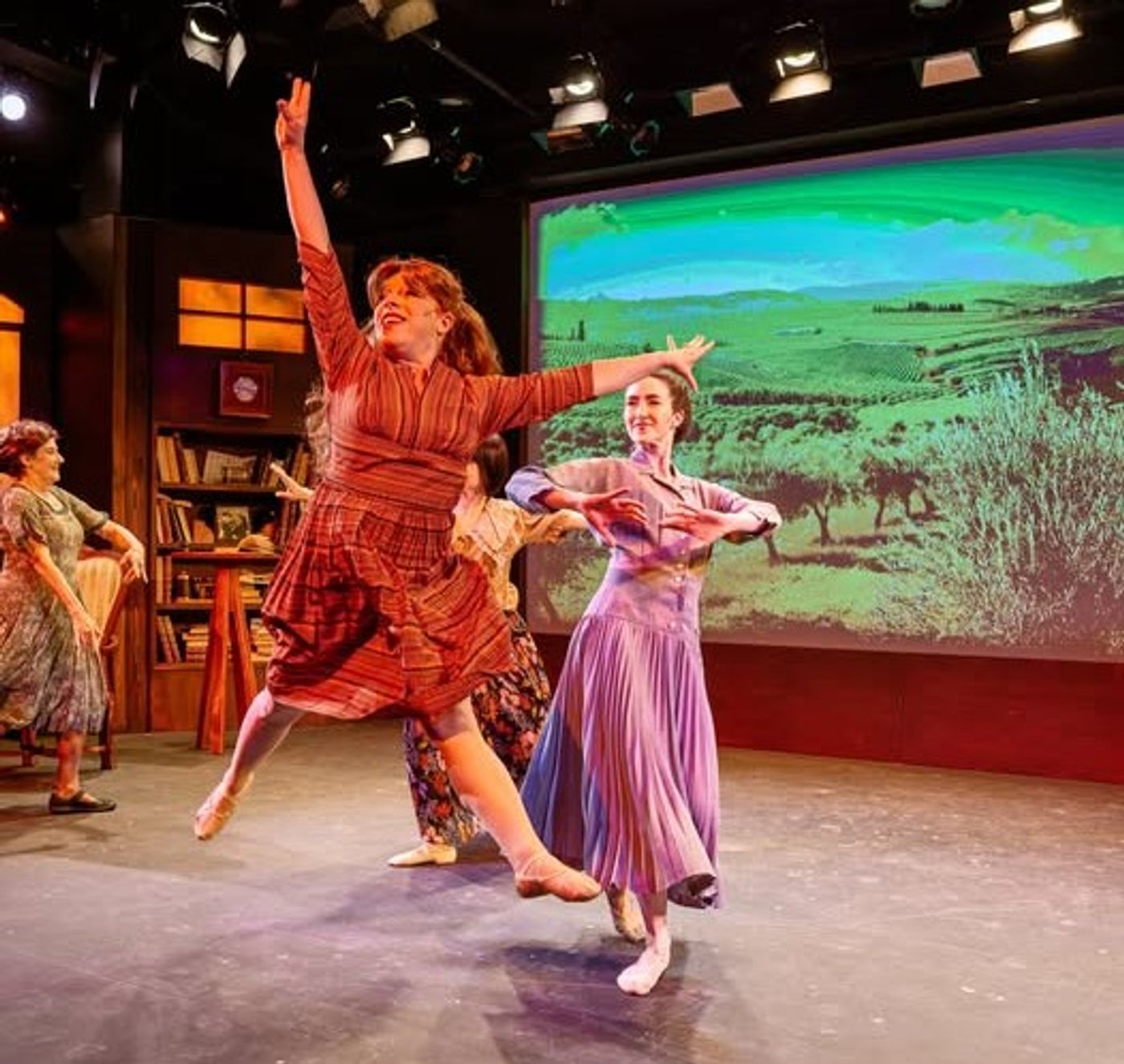
Citizens of the new state of Israel "Rejoice" by dancing in their newly planted fields.
Another number appearing out of nowhere occurred when Einstein shared his devotion to the new nation of Israel in 1948 and his serious discussion was interrupted by the ensemble performing “Rejoice” as kibbutz dwellers planting crops in Israel while dancing in the fields. It was an entertaining touch, but not really needed to forward the story. The scene ended with another unknown fact thrown in, that in 1952 Einstein was asked by Prime Minister David Ben-Gurion to be the new nation’s second President, but turned it down as he did not want to leave the United States.
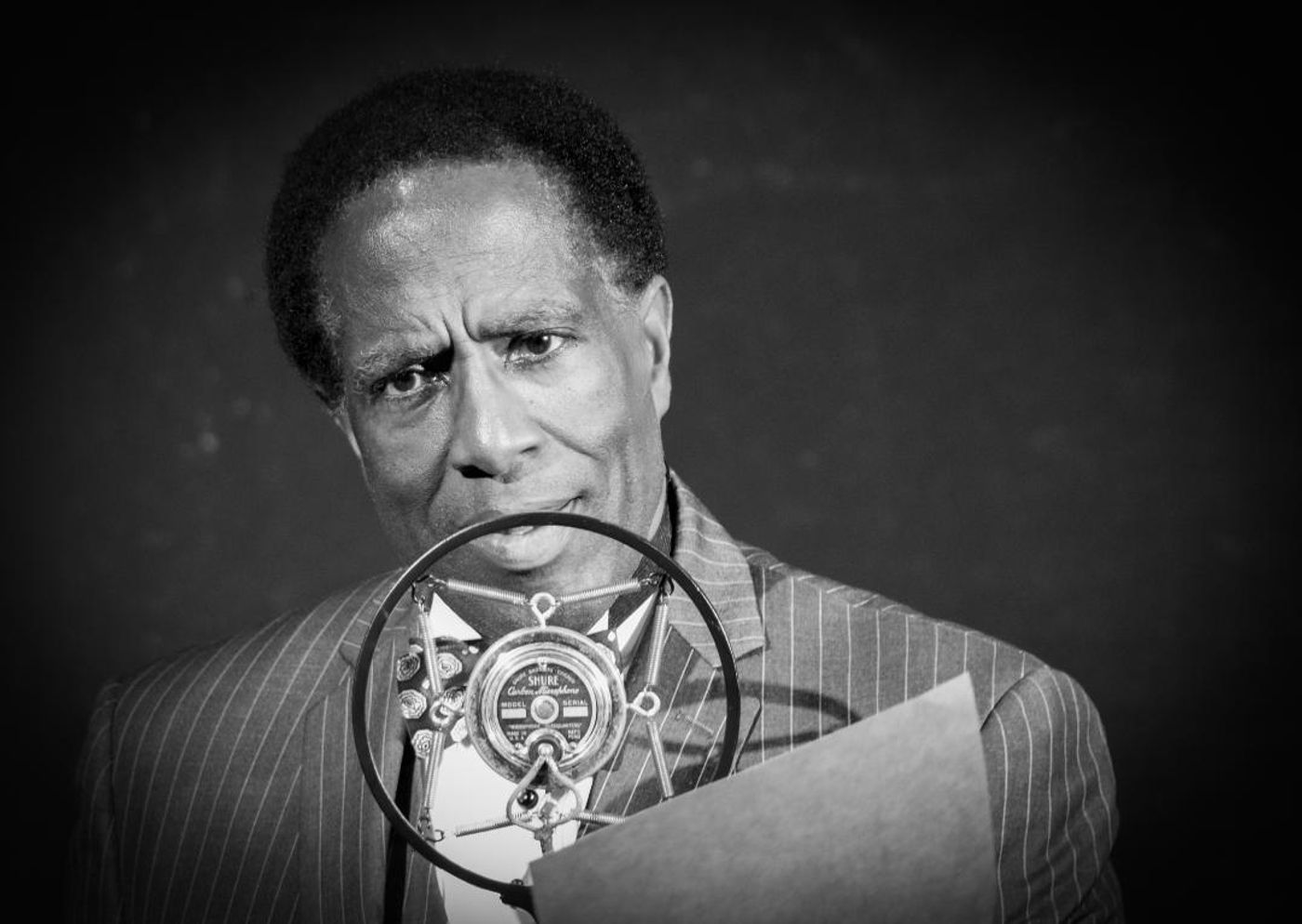
Michal Dawson Connor as Paul Robeson
As a lifelong pacifist and champion of equal rights, Einstein took part in the peace movement both in Europe and the United States. His great admiration for his friend, the like-minded singer Paul Robeson (Michal Dawson Connor) is shared as his booming bass fills the theater during an excerpt of “Strange Fruit” by Lewis Allan as projections of lynchings of black men fill the screen. Then accompanied by the ensemble marching for equal rights, Dawson Connor magnificently performs “Let’s Keep Goin’ ‘til We All Get There!” as a truly heartfelt and meaningful moment during the production.
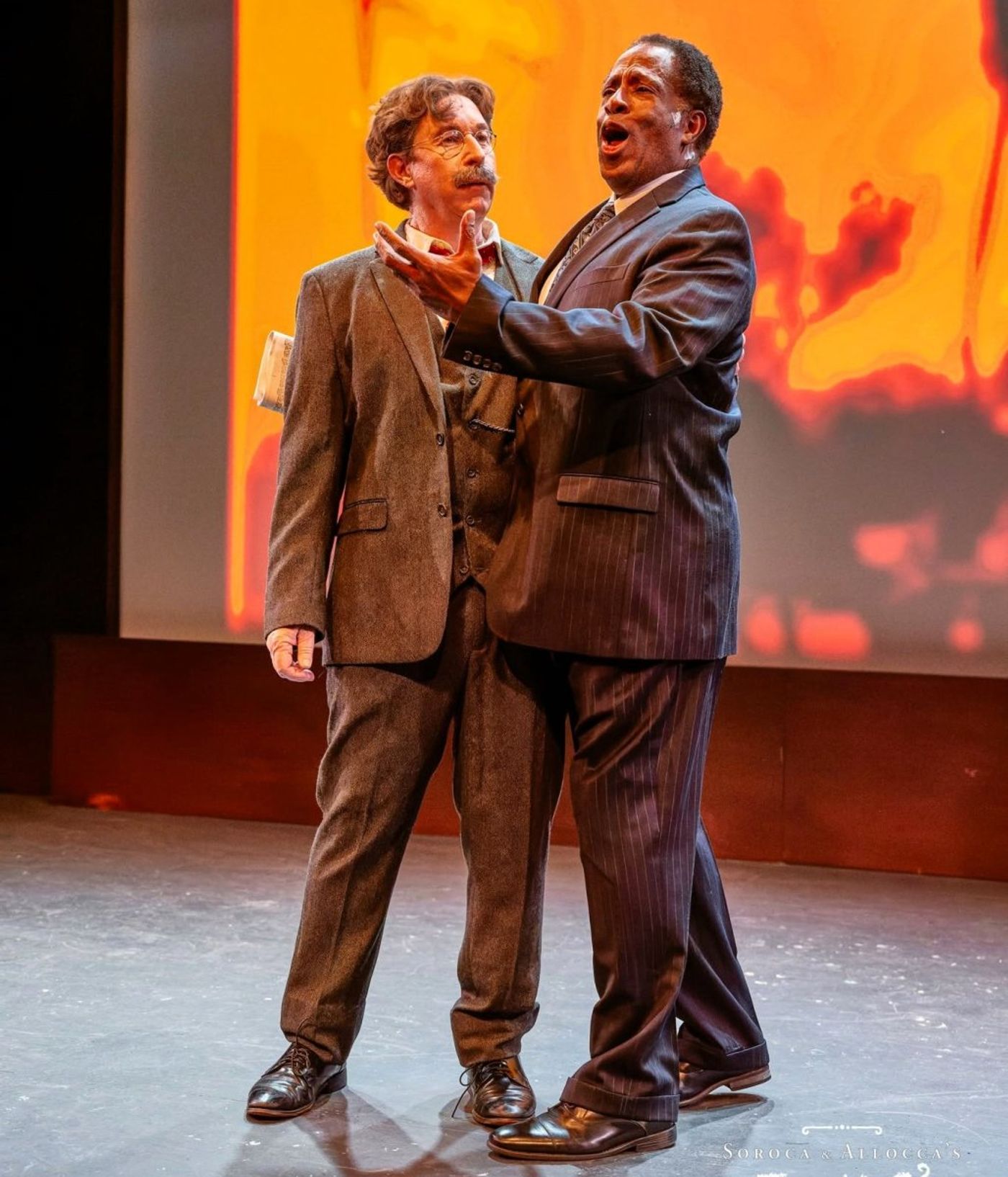
Christopher M. Allport and Michal Dawson Connor perform "Strange Fruit"
Immediately following, Einstein sits back at his desk and asks himself, as so many did, how he felt, as a lifelong pacifist, about developing the atomic bomb, which ended World War II but killed so many innocent people in a matter of minutes. During “If I Only Knew,” he shares how he believes that working on the Manhattan Project allowed him to save “the lives of countless young American men,” although he questions the value of using his immense knowledge of physics for such a destructive purpose which ushered in the atomic age. Projections of an exploding atomic bomb and the devastation in Hiroshima accompany this soul-searching ballad, one of the most serious episodes in the production.
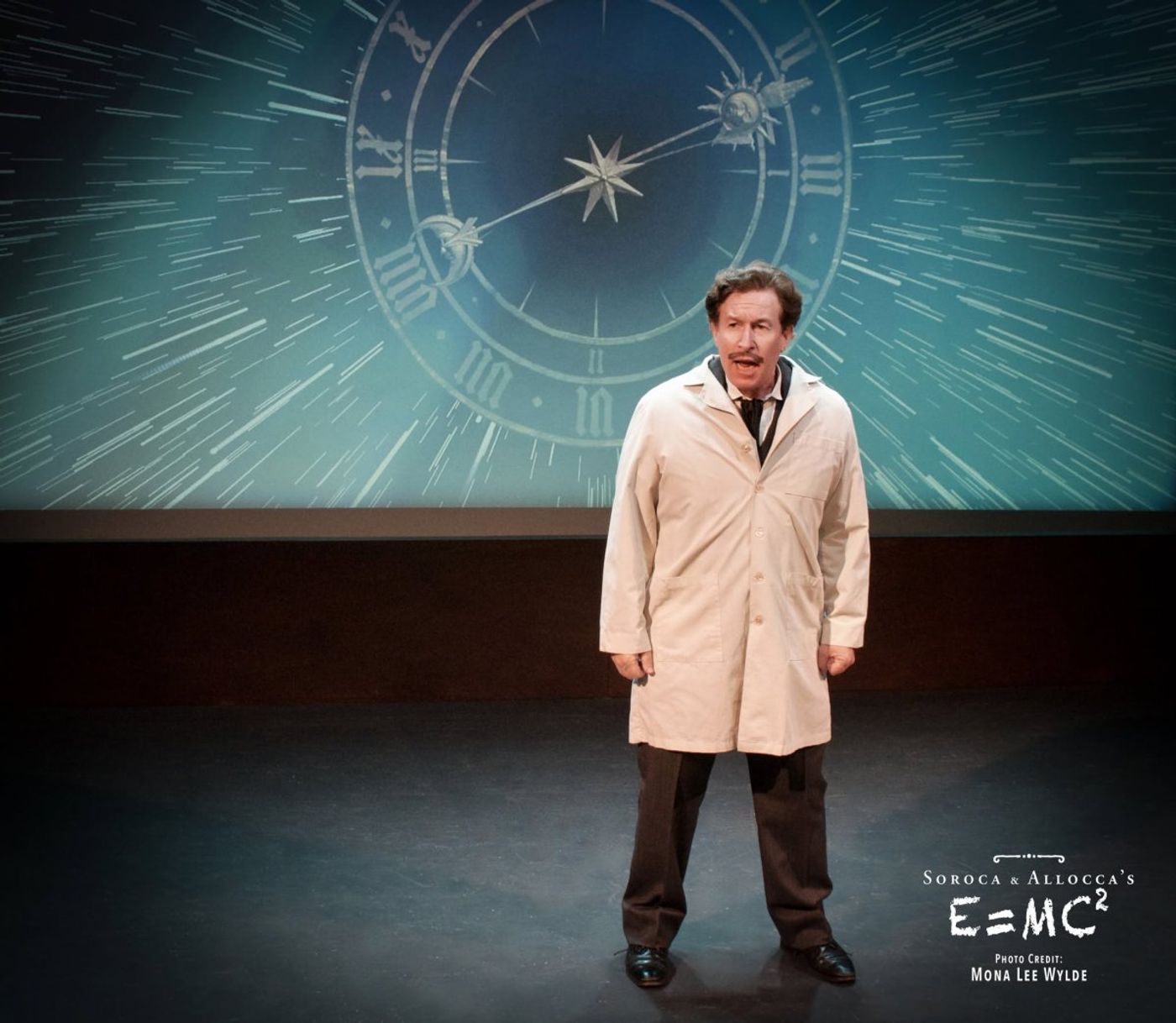
Christopher M. Allport
Director Elaine “E.E.” Moe certainly had her hands full with directing so many scenes in so many locations while knowing how to coordinate them with the 22 songs in the score, although many transitions were way too abrupt. But perhaps that lack of smooth transitions is due the play’s creator, producer, music director and choreographer being Karen Soroca whose main focus seems to be only the musical aspect of E=MC².
That being said, I do commend the instrumental ensemble led by Dr. James Lent on piano and keyboards, along with Eric McCann on acoustic and electric bass, percussionist Mike Deutsch, David Catalan on reeds, and the aforementioned violinist Dr. Xenia Deviatkina-Loh who play almost non-stop during the performance.
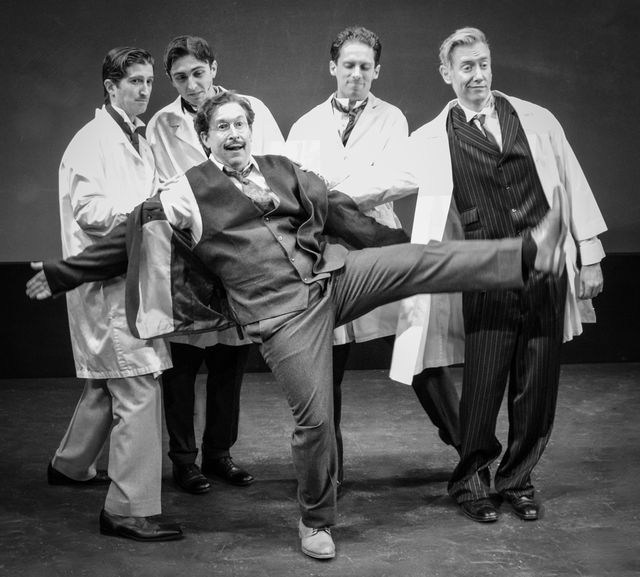
However, with so much interesting history to be explored about a man who was often quoted, and misquoted, in the press, I was hoping to learn more about the iconic physicist as a profoundly complex human being, exile, husband, philosopher and thinker, and not watch him be represented singing silly songs, including flapping his arms like Freddie and the Dreamers when celebrating his discovery of “The Quantum Leap” or his love for his parrot Bibo, sung with Ashley Grubbs dressed in a ridiculous rainbow mohawk headdress with wings to match. Did that song advance the story? Not in the slightest, especially since this musical was not written for children - as this song seems to be.
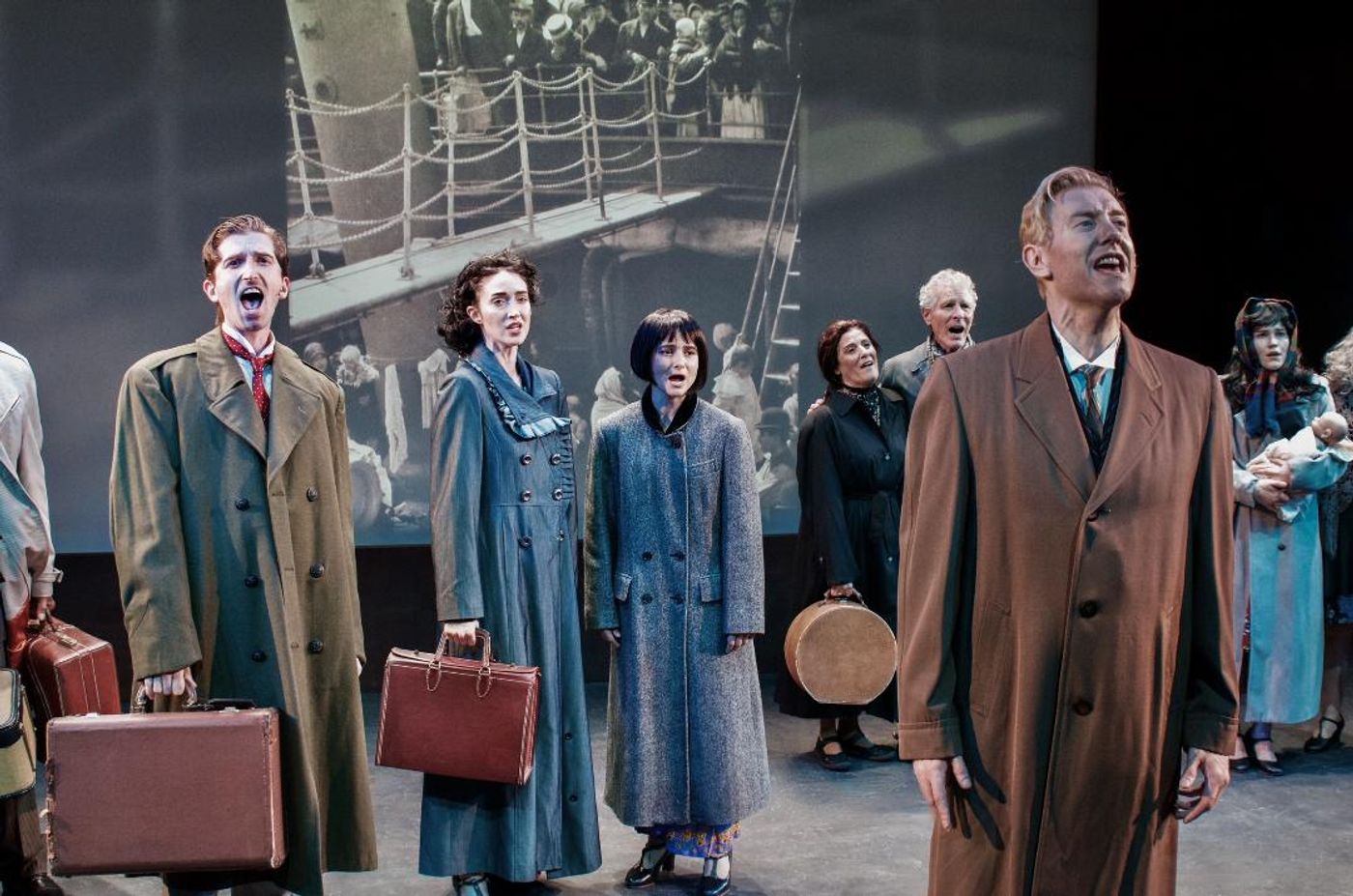
European immigrants leaving for America sing "Auf Wiedersehen" to their homelands.
Perhaps E=MC² The Einstein Musical’s shortcomings are due to its creators Soroca & Allocca’s envisioning their work as a musical theatre comedy rather than a serious educational experience with a few songs to better express the emotional turmoil going on in the hearts and souls of each character. As such, I do hope many of the unnecessary songs will be removed from its next production to keep the serious nature about the sides of Einstein’s life at the forefront of the story.
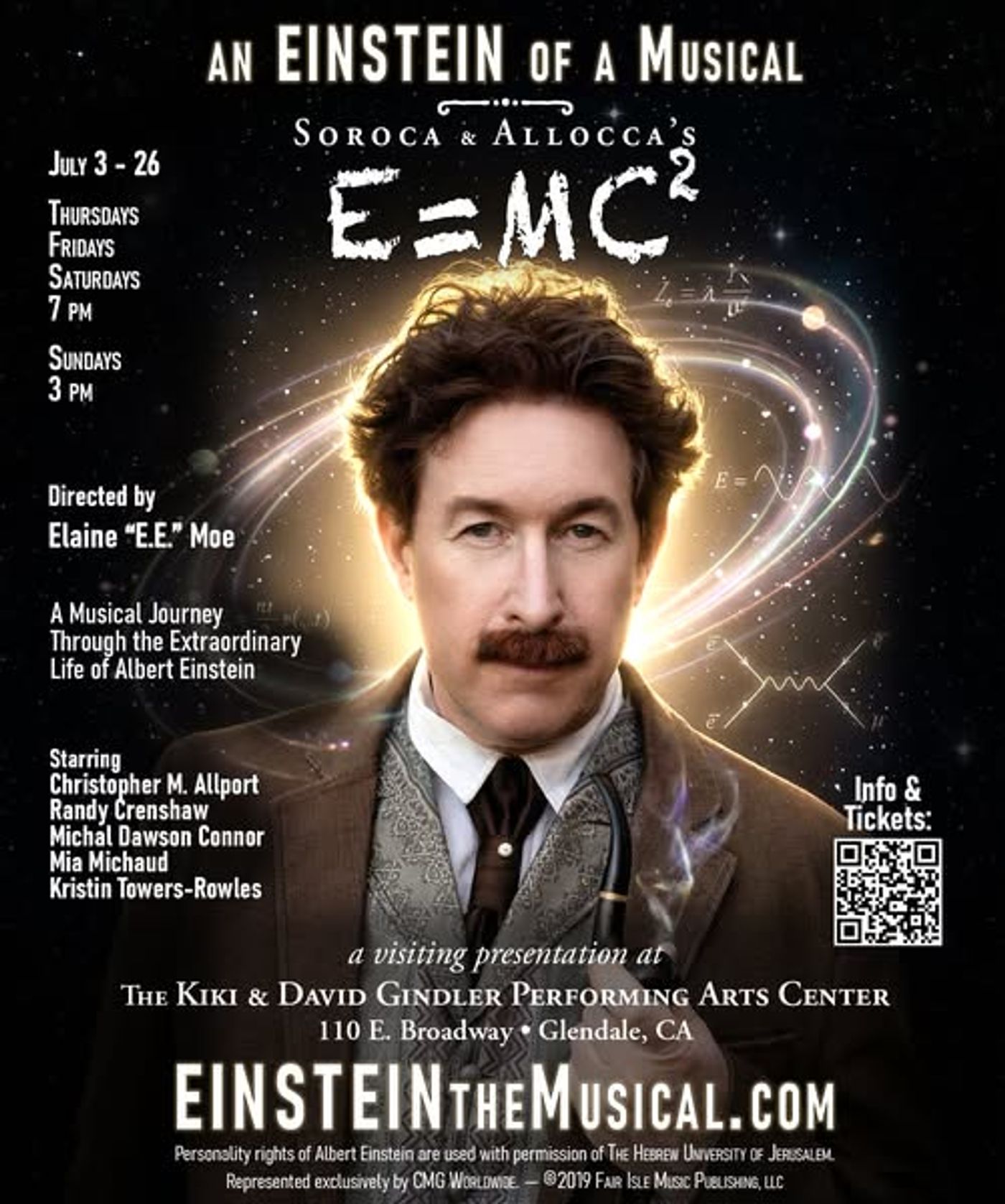
Produced by Karen A. Soroca and James H. Forsell, Ph.D., and a team of dedicated producers from Wise Woman Musical Theatre Group, the world premiere of E=MC² continues as a guest production of The Antaeus Company at The Kiki & David Gindler Performing Arts Center, 110 E. Broadway in Glendale, CA 91205. Performances continue Thursday-Sundays through July 26. Run time is two hours and 30 minutes, including a 15- minute intermission.
Tickets are $30-$45. And with just 80 seats in the theater, performances are selling out. Order yours soon at https://www.eventbrite.com/e/emc-squared-tickets-1975643049544 Parking is validated in the theater lobby for up to 4 hours in the nearby Marketplace Parking Structure at 120 S Artsakh Ave., Glendale, CA 91205.
Photo credit: Mona Lee Wylde
|
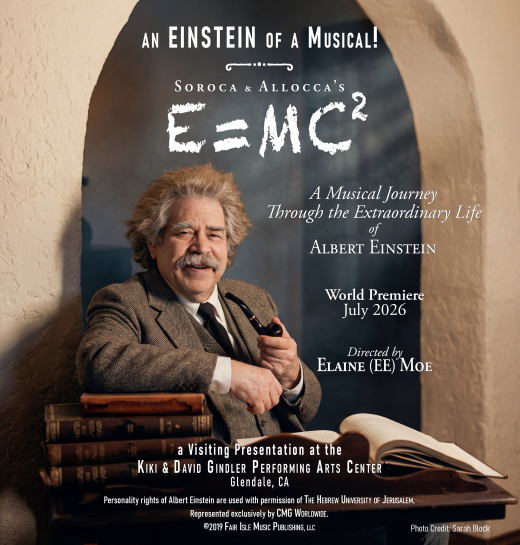
E=MC² Einstein The Musical Kiki & David Gindler Performing Arts Center (7/03-7/26) |
|
Gershwin and the Golden Age Younes and Soraya Nazarian Center for the Performing Arts (The Soraya) (10/11-10/11) |

|
Audra McDonald The Soraya (4/03-4/03) |
|
The Monsters Audrey Skirball Kenis Theater (3/03-4/04) |
|
A Faery Hunt and Their Animal Friends Kindred Spirits Care Farm (11/08-11/08) |
|
NIC & DESI: SONG, DANCE & ROMANCE Coachella Valley Repertory (7/21-7/21) |
|
Shrek the Musical Morgan-Wixson Theatre (6/28-7/26) |

|
SARAH URIARTE BERRY: FOR THE LOVE OF JUDY Coachella Valley Repertory (7/16-7/16) |
|
Angry, Raucous, and Shamelessly Gorgeous Gil Cates Theater (6/10-7/12) PHOTOS VIDEOS |
|
Frankenstein: Resurrection The Nocturne Theatre (9/11-9/30) |