


Review: HANS ZIMMER LIVE – THE NEXT LEVEL in JAPAN
Hans Zimmer Takes Audiences on an Epic Journey Through Film Music
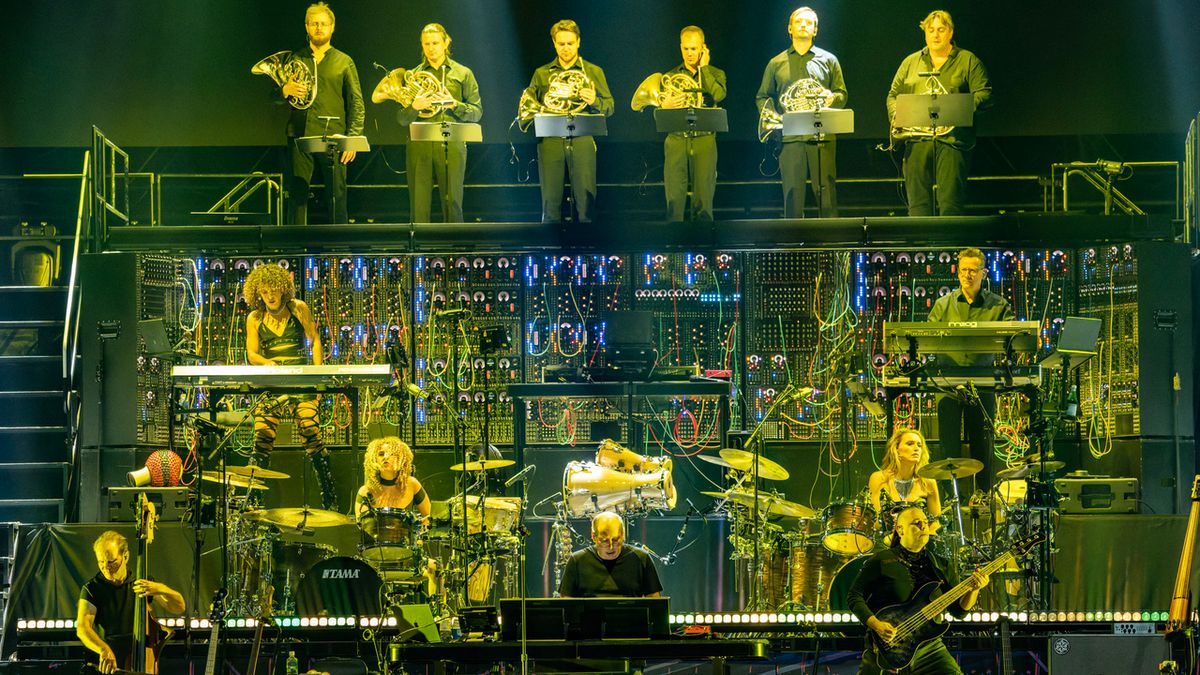
Master film composer Hans Zimmer, renowned for his work on such acclaimed films as Top Gun Maverick and Dune, has returned to Japan with his evolved live production, Hans Zimmer Live – The Next Level.
On September 16, 2026, the Japan performance took place at Pia Arena MM in Yokohama, the tour’s only show in Japan. Following a series of sold-out dates at major arenas across Europe, the tour continues on to cities across Asia. Hans Zimmer was joined by 19 accomplished musicians, with new electronic sounds, dynamic lighting, and elaborate stage production coming together to create a live experience distinct from last year’s first visit to Japan.
Last year’s Japan debut left a strong impression with the sheer scale of Zimmer’s music, performed by a large ensemble and enhanced by dynamic visual production. Those qualities remained at the heart of this year’s show, while The Next Level brought new dimensions to the experience through its evolving sound, lighting, and physicality.

Just before the show began, a thunderous sound reverberated through the arena. Even before a single note was played, anticipation for the world about to unfold was already building. When Zimmer appeared on the screens, the audience erupted in applause and cheers.
The show opened with the quiet yet commanding score of The Dark Knight. As Zimmer played guitar, thunderous drums sent deep vibrations through the arena, while the lighting moved in sync with the music. In an instant, the entire venue seemed to be drawn into the world of the score.
When Zimmer took the microphone and greeted the audience with “Good evening, Japan,” he was met with another wave of cheers. Dune followed, with a singer in a yellow cloak commanding attention with a powerful vocal performance that created an otherworldly sense of tension. Zimmer and the guitarist responded to one another through their playing, moving with the music, while the female drummer drove the rhythm with her entire body.
Zimmer’s introduction of the orchestra as his “family” was another memorable moment. The deep connection between the musicians who have shared the stage for so long could also be felt in the way they performed together.

In Man of Steel, a quiet, creeping introduction built toward an overwhelming chorus. The singer’s soaring high notes cut beautifully through the weight of the arrangement, bringing a sense of brightness to the powerful sound. Japanese cellist Mariko, whose long hair sways dramatically as she plays, once again created one of the visual signatures of Hans Zimmer Live. When a spotlight fell on the guitar, Zimmer turned away from the audience and listened intently to the performance. It was a glimpse of the musician behind the composer and bandleader, someone who simply loves music and the sound itself.
An almost seductive atmosphere took over during Hannibal, with Mariko appearing in a long red dress alongside performers carrying candleholders. As the chorus gradually grew, the entire arena was bathed in deep crimson. In Chevaliers, plaintive violin melodies were accompanied by lighting that fell like rain, gradually opening into something grand and expansive.
Sherlock began like the opening of a mystery, with violin and accordion engaging in a thrilling musical exchange. The accordionist played with his entire body, crouching lower as the sound softened. The physical movement became part of the music, making the tension of the piece even more vivid.
Gladiator brought together grandeur and exhilaration with moments of melancholy. The female chorus, dressed in costumes reminiscent of ancient Rome, added another layer of depth to the piece. Even without the film on screen, the music alone was enough to evoke a story and its characters. It was a powerful reminder of the storytelling ability within Zimmer’s scores.

The second act opened with the ominous sounds of Inception. As the audience itself was illuminated in time with the music, Zimmer played keyboards while the string players appeared in black after changing from their earlier red costumes. The performance gathered speed, culminating in an explosive drum solo. Silence and thunderous sound alternated, while the lighting remained perfectly synchronized with the music.
The intensity gave way to a gentler piece that Zimmer introduced as something he wanted to deliver to a woman he loves. Playing piano himself, he created a serene atmosphere as blue light seemed to make the music float through the space, while white light moved like waves across the stage. For a moment, it felt as though the entire arena were gently rocking on a quiet sea.
A soaring vocal line and violin then began to intertwine, before thunderous drums transformed the music into a powerful vortex. A dancer covered entirely in reflective silver material appeared in the air, creating the dreamlike image of a figure swimming weightlessly through space.
When the instantly recognizable opening of The Lion King rang out, the arena was transformed. The original vocalist who sang “Circle of Life” in the film joined her daughter onstage, while African performers filled the performance with rhythmic singing and dancing accompanied by djembes. As the bright, life-filled music shifted into a more urgent and dangerous passage, the tension became palpable even without the film. This is Hans Zimmer’s music at its most powerful, telling a story through sound alone. The finale expanded into an enormous, sweeping soundscape, creating the sensation of an endless African savanna unfolding before the audience.
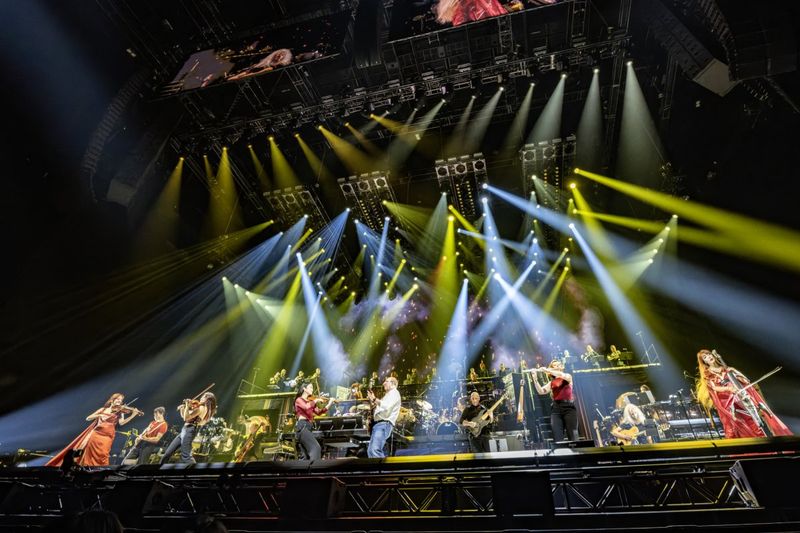
In Pirates of the Caribbean, Mariko returned, her long hair flying as she played the cello with striking physicality. The audience listened intently as the cello and violins came together. A pirate flag eventually appeared and the stage was bathed in blue, transforming the scene into what felt like an endless ocean. The sense of immersion was overwhelming, and the cheers continued even after the music ended.
The final piece was Time. When Zimmer appeared with his piano, the arena fell silent. Piano and violin exchanged delicate melodies before the violin gradually disappeared, leaving only the piano. As the final note faded into silence, Zimmer slowly raised his hand toward the sky.
The moment was met with a huge burst of applause. Curtain calls followed one after another, with the audience rising for a standing ovation. When all the performers gathered at the front of the stage, Zimmer high-fived each of them in turn before sending an air high-five toward the audience.
The music, lighting, stage production, and physical energy of the performers that made such a strong impression during Zimmer’s first Japan tour last year were once again brought together, creating a world uniquely shaped by The Next Level. Music that audiences have heard countless times through the screen suddenly expanded in three dimensions through live performance. The addition of light and physical expression drew the audience even deeper into the worlds of each film.
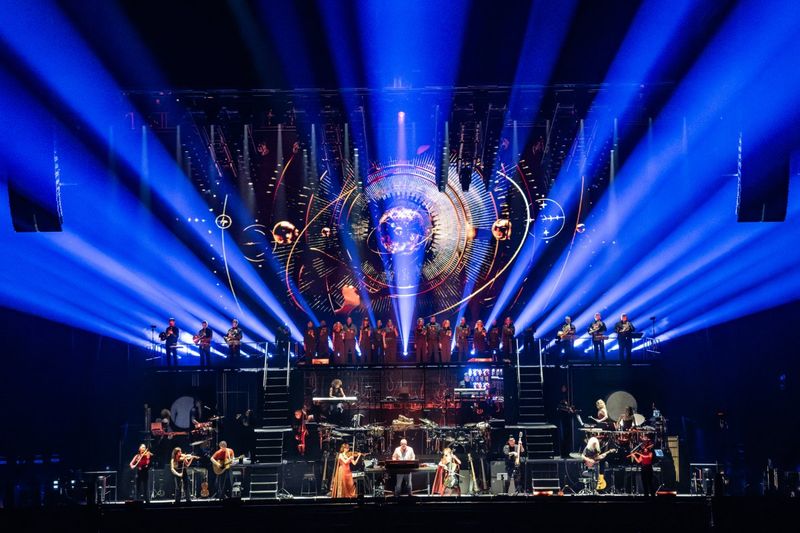
Few live experiences leave you with goosebumps again and again. Hans Zimmer Live – The Next Level went beyond the boundaries of a traditional film music concert, offering an immersive experience in which the music of Hans Zimmer could be felt with the entire body.
Photo Credit :[Masanori Naruse@mnp.hoto]
Sign up for all the news on the Fall season, discounts & more...

Reader Reviews
To post a comment, you must register and login.