North/South Chamber Orchestra to Host Free Spring Concert at St. John's in The Village
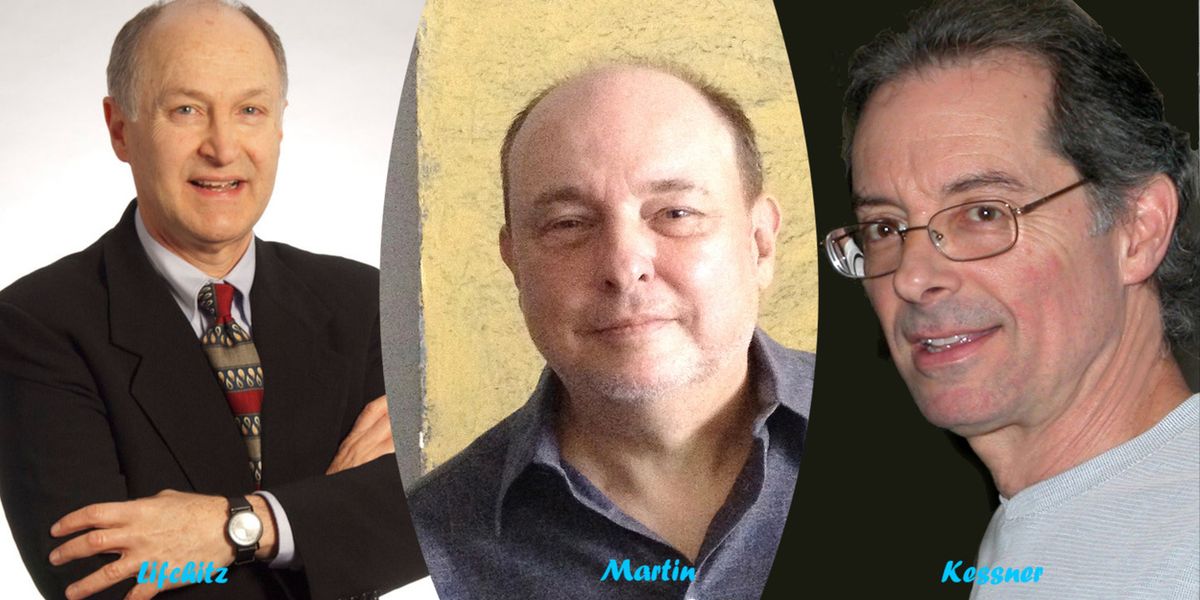
The program features performances of three exceptional works composed specifically for the ensemble by artists Daniel Kessner, Max Lifchitz, and Robert Martin.
The North/South Chamber Orchestra will present a free concert to celebrate the arrival of spring on Tuesday evening, March 24.
The program features performances of three exceptional works composed specifically for the ensemble by artists Daniel Kessner, Max Lifchitz, and Robert Martin. The composers will be present to introduce their pieces and engage with the audience.
The event will take place at the cozy and acoustically impressive St. John's in The Village, located at 218 W 11th St, New York, NY 10014.
The concert will begin at 7 PM and conclude around 8:20 PM. Admission is free-no tickets or registration are required.
For those unable to attend in person, the performance will be livestreamed on YouTube at: https://www.youtube.com/live/VHUDT7IAaAQ?si=auzMj-kuYRizFpRG
ABOUT THE COMPOSERS AND THEIR MUSIC
Daniel Kessner attended the University of California, Los Angeles, before joining the faculty of the Department of Music at California State University, Northridge. There, he taught composition and directed the highly regarded New Music Ensemble. His works have been performed throughout the United States and internationally by notable organizations, including the Los Angeles Philharmonic Orchestra, the Indianapolis Symphony, New York's St. Luke's Chamber Ensemble, the Netherlands Radio Chamber Orchestra, the Utrecht Symphony, and the El Salvador National Symphony. Kessner's creative efforts have earned him prestigious national and international awards, such as the Queen Marie-José International Composition Prize in Geneva, two BMI Awards, and grants from the National Endowment for the Arts and Arts International.
Kessner's Chamber Concerto No. 4, scored for a wind quartet and string quintet, was written to celebrate the 10th anniversary of the North/South Chamber Orchestra. The piece premiered in October 1989 in New York, conducted by the composer himself. This virtuoso showpiece is structured as a single movement and offers individual players outstanding opportunities to showcase their talents as soloists.
Max Lifchitz is a prominent figure in America's musical scene. Born in Mexico City, he has been living in New York since 1966. As a composer, pianist, and conductor, he gained recognition when he won first prize in the 1976 International Gaudeamus Competition for Performers of Twentieth-Century Music, held in the Netherlands. The San Francisco Chronicle described him as "a stunning, ultra-sensitive pianist," while The New York Times commended his "clean, measured, and sensitive performances." Additionally, the American Record Guide noted, "Mr. Lifchitz is as good on the podium as he is behind the piano."
His series of compositions titled Yellow Ribbons celebrates the artistic and personal freedoms that are often taken for granted in the West. Performing Yellow Ribbons No. 42 during this concert is especially poignant given the ongoing conflicts around the world and the political polarization currently experienced both domestically and internationally.
After completing his studies at the Peabody Conservatory of Music, Robert Martin was awarded the Charles Ives Scholarship from the American Academy of Arts and Letters in 1976. With the support of a Fulbright Scholarship, he traveled throughout Eastern Europe and studied composition in Vienna before returning to New York in 1980. Upon his return, Martin shifted his focus to Wall Street, where he advanced to Senior Vice President in investment banking at a prominent firm. He also served as a financial advisor to the City of New York. In 1999, he received the Japan-U.S. Creative Artist Fellowship in music composition, which allowed him to spend several months traveling throughout Asia. His music is published by The Theodore Presser Company.
Martin's They Will Take My Island is a single-movement composition written during the spring of 2009. The title of the work refers to a painting by Arshile Gorky (1904-1948), the Armenian-American artist who played a crucial role in the development of Abstract Expressionism. This piece exemplifies a theme found throughout much of Martin's music: the human response to the faint and fleeting perception of reality, encapsulating the idea that all things eventually fade away. As New York Times music critic Paul Griffiths noted, Martin's interest in Gorky's art isn't necessarily in the subject matter of any specific painting, but rather in the broader concept of what imparts wholeness and presence to an abstract image. The composition offers adventurous listeners a stimulating and moving auditory experience while also providing performers with ample opportunities for technical display.
See more BroadwayWorld in Google
Our stories show up more often in Top Stories and Google’s AI answers.
Breaking Broadway alerts by text
Get the biggest stories sent straight to your phone.

Sign up for all the news on the Fall season, discounts & more...