John Coltrane & Wilbur Harden's THE SAVOY RECORDINGS to Release
The box set brings together three lesser-known 1958 albums featuring hard-bop luminaries Tommy Flanagan, Curtis Fuller, and Art Taylor.
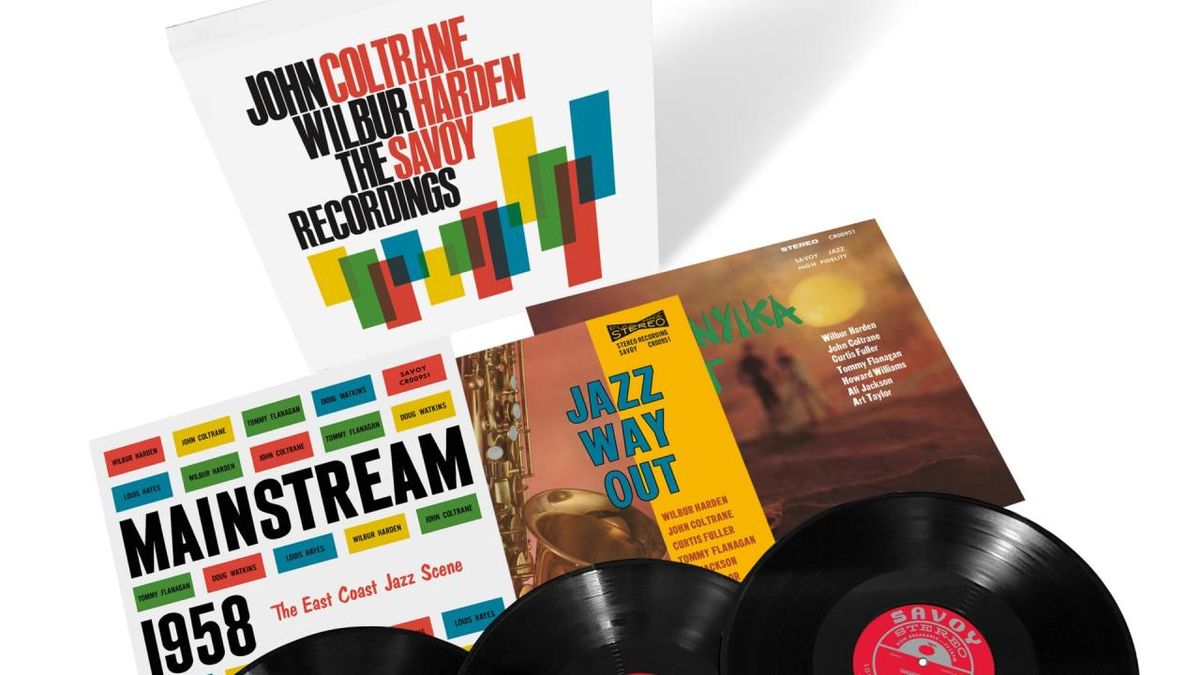
On the eve of jazz titan John Coltrane's 100th birthday (September 23), Craft Recordings announced The Savoy Recordings: an all-new collection bringing together three albums the legendary saxophonist recorded in 1958 with trumpeter and flugelhornist Wilbur Harden.
Born from a highly prolific and pivotal moment in Coltrane's evolution, The Savoy Recordings includes the lesser-known yet revelatory albums Mainstream 1958, Jazz Way Out, and Tanganyika Strut. Available November 13 as a 3-LP set, 3-CD set, and digital edition, the collection captures an artist on the brink of transformation, with 1958 serving as a crucial point of departure for his visionary work ahead. Also a rare showcase for Harden's immense gifts as a composer and player, the trio of albums features hard-bop heavyweights including Tommy Flanagan, Curtis Fuller, Doug Watkins, Louis Hayes, Art Taylor and more.
The 3-LP edition of The Savoy Recordings was cut from original tapes by Kevin Gray at Cohearent Audio and pressed on 180-gram black vinyl at RTI. Each of the three LPs is housed in a Stoughton tip-on jacket, with the collection featuring new liner notes from jazz journalist Syd Schwartz. The 3-CD and digital editions were mastered from the original tapes by Joe Tarantino. The digital release marks the debut of these albums in Hi-Res (192/24 resolution).
One of the most influential figures in modern music, John Coltrane (1926–1967) profoundly redefined the expressive possibilities of jazz over the course of his relatively brief career. After years of supporting luminaries like Dizzy Gillespie and Johnny Hodges, the tenor saxophonist rose to prominence upon joining Miles Davis' quintet in 1955. In 1957, a highly formative apprenticeship with jazz pianist and composer Thelonious Monk further broadened his musical vocabulary; that same year, Coltrane released his self-titled debut album on Prestige Records. Although he would go on to reshape the jazz world with a succession of seminal albums—including Giant Steps (1960) and A Love Supreme (1965)—early 1958 found Coltrane on the cusp of the creative breakthroughs that would define his legacy.
Equally central to the story of The Savoy Recordings is Wilbur Harden (1924–1969), an Alabama-born musician who served as the session leader and composed much of the albums' original material. Before joining forces with Coltrane, he'd honed his inimitable musicality in the dynamic Detroit scene and worked with groundbreaking jazz multi-instrumentalist Yusef Lateef. One of the earliest jazz trumpeters to double on flugelhorn, Harden lent a decidedly lyrical quality to the Savoy sessions—a powerful counterpoint to Coltrane's restless, searching intensity.
Recorded soon after Coltrane completed his six-month stint with Monk, the three albums comprising The Savoy Recordings came to life in the New Jersey living-room studio of renowned engineer Rudy Van Gelder, where Coltrane and Harden convened for three sessions in the first half of 1958. With a publishing dispute sidelining his own compositions, Coltrane approached Harden's material as a proving ground for his increasingly adventurous musical ideas, pushing beyond the conventions of hard bop with a thrilling sense of discovery. 'Within a year he'd become the Trane of legend—leader, composer, and visionary,' writes Schwartz in the Savoy Recordings liner notes. 'But in the spring and summer of 1958, inside that modest living room in Hackensack, he was a man and musician on the rise, chasing sound, striving to stay one note ahead of himself.'
Originally produced by Ozzie Cadena and released via Savoy Records, Mainstream 1958, Jazz Way Out, and Tanganyika Strut collectively chart Coltrane's rapid musical development in real time. The first album recorded and released, Mainstream 1958 emerged from a March session in which Coltrane and Harden joined Tommy Flanagan (piano), Doug Watkins (bass), and Louis Hayes (drums) and cut five of Harden's original compositions: 'Wells Fargo,' 'West 42nd Street,' 'E.F.F.P.H.,' 'Snuffy,' and 'Rhodomagnetics.' The result: an electrifying outing rooted in hard-bop tradition but radically transformed by Coltrane's playing—particularly in richly layered solos that, as Schwartz puts it, 'sometimes build to molten intensity, other times arrive with sudden, almost shocking presence.'
When the musicians met up again that June, the ensemble and its sonic palette had expanded. With Flanagan returning on piano, the sextet featured on the far more exploratory Jazz Way Out included Curtis Fuller on trombone, Ali Jackson on bass, and Art Taylor on drums. Along with Harden's 'Dial Africa' and 'Oomba' (two pieces deeply informed by his work with Lateef and interest in African musical heritage), the three-track set's extended performances include Fuller's 'Gold Coast'—a fourteen-and-a-half-minute piece recorded in one take and graced with a sprawling and sublime solo from Coltrane.
Completing the collection is Tanganyika Strut, drawn from a pair of sessions again featuring Fuller, Jackson, and Taylor, with Flanagan and Howard Williams sharing piano duties. With its tracklist encompassing the twelve-bar blues of 'B.J.,' the African folk rhythms of 'Anedac,' and the noir-tinged balladry of 'Once in a While,' the album takes its title from another piece composed by Fuller: a ten-minute tour-de-force of tightly focused interplay and dazzling effervescence.
Tanganyika Strut ultimately marked Harden's final extended statement as a bandleader. When health issues curtailed his career, he disappeared from the spotlight, eventually passing away at age 44 in New York City. Despite his limited discography, Harden left behind a body of work remarkable in its range and originality—a legacy encapsulated by Schwartz as 'music that could hold both lyricism and ferocity, composition and freedom, elegance and risk.'
Taken together, Mainstream 1958, Jazz Way Out, and Tanganyika Strut document Coltrane at a critical juncture, as the lessons absorbed from Monk and Davis gave way to a fiercely singular and paradigm-shifting vision. Although he died less than a decade after the Savoy sessions, his extraordinary output permanently altered the course of jazz and modern music at large. At his centennial, Coltrane's spiritual depth and unbridled passion for exploration remain a potent source of inspiration, with his influence continuing to transcend generations, genres, and boundaries of all kinds.
Tracklist
Mainstream 1958
Wells Fargo
West 42nd Street
E.F.F.P.H.
Snuffy
Rhodomagnetics
Jazz Way Out
Dial Africa
Oomba
Gold Coast
Tanganyika Strut
Tanganyika Strut
B.J.
Anedac
Once in a While
Sign up for all the news on the Fall season, discounts & more...
.jpg?format=auto&width=300)