


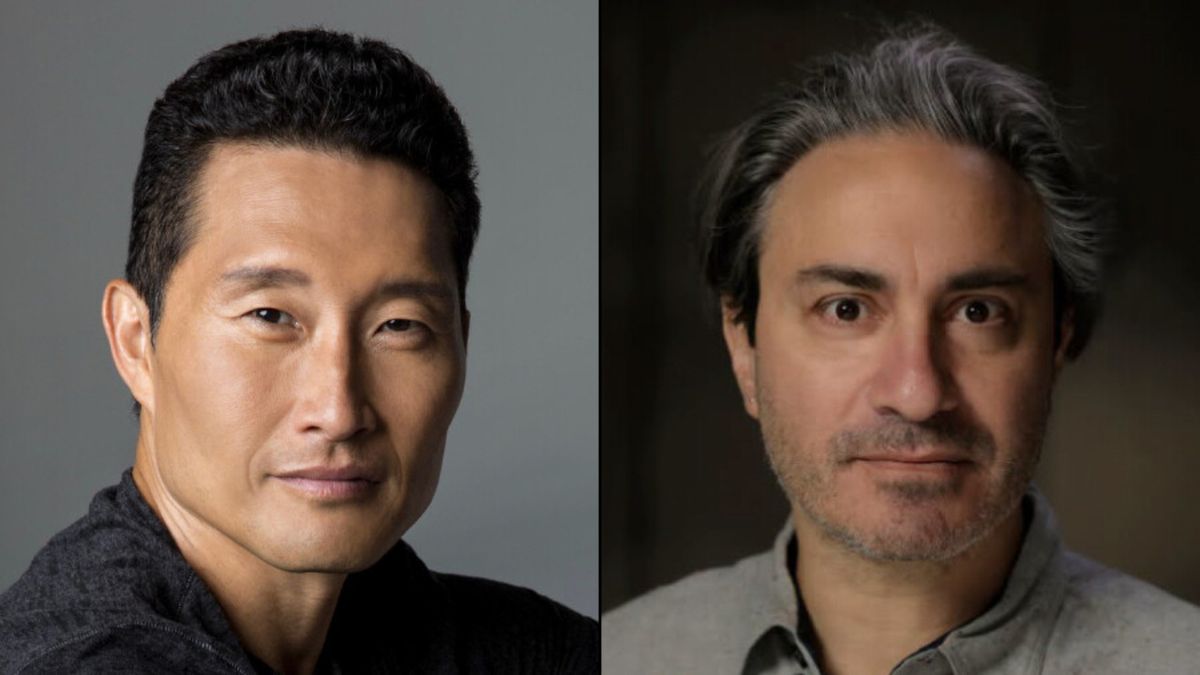
Interview: Daniel Dae Kim and Jeremy Workman on SCHOOL FOR DEFECTORS at VIFF
The executive producer and director discuss the students at Jangdaehyun School and the story behind the documentary
Twenty students attending Jangdaehyun School in Busan, South Korea, are at the centre of School for Defectors, a documentary following teenagers who have escaped North Korea or whose parents have defected. Directed by Jeremy Workman, the film offers a look at the students' everyday lives as they navigate friendships, family relationships, school, and their plans for the future.
School for Defectors screened at the 2026 Vancouver International Film Festival (VIFF) on October 4 at the Lindsay Family Stage on Granville Island. Ahead of the screening, I had the opportunity to speak with director Jeremy Workman and executive producer Daniel Dae Kim on behalf of BroadwayWorld on the red carpet about the documentary. Both also participated in a post-screening Q&A moderated by VIFF Documentary Programmer Ruun Nuur.
For Kim, who was born in Busan before moving to the United States as a child, the documentary carries a personal connection. "I have a soft spot in my heart for Busan, always," he told BroadwayWorld on the red carpet. "And so when I heard that this story was not only about Korea, but also it was a school set in Busan, it made it even more special." During the post-screening Q&A, Kim also recalled playing on the same beaches featured in the documentary when he was younger.
Workman's introduction to Jangdaehyun School came while he was in South Korea promoting his documentary Lily Topples the World. During a visit to Busan, someone from his team suggested screening the film at a school attended by North Korean defectors. Workman knew little about the school at the time, but the visit gave him an opportunity to meet its principal and learn more about the students and their experiences.
During the post-screening Q&A, Workman recalled spending the weekend at the school and speaking with the principal about the challenges North Korean defectors face in South Korea. He was particularly interested in the school's approach to supporting its students, although making a documentary himself wasn't initially part of his plan. "I thought somebody should do a documentary on it, not me," he told the audience.
One of the biggest challenges was gaining the students' trust. Workman explained that many were hesitant to speak with the media because they worried about how their stories would be portrayed. After several conversations with the school, he began considering the possibility of making the film from an outsider's perspective. With the school's support, he eventually raised funding independently and spent approximately 15 months working on the documentary, travelling regularly between the United States and South Korea.
After spending more than a year filming at Jangdaehyun School, Workman found that the students had much in common with teenagers elsewhere in the world. Speaking with BroadwayWorld on the red carpet, he reflected on what surprised him most about getting to know them. "Many of them escaped North Korea themselves or their parents did. And yet they are like teenagers from anywhere in the world," he said. "They're into K-pop. They're into dancing. They're into YouTube. They're into social media."
To get to know the students better, Workman stayed near the school and arrived each morning to spend time with them and their teachers. During the post-screening Q&A, he explained that the production operated with a small Korean crew, some of whom had North Korean backgrounds. The students were also encouraged to handle cameras and review footage throughout filming, allowing them to become more comfortable with the production.
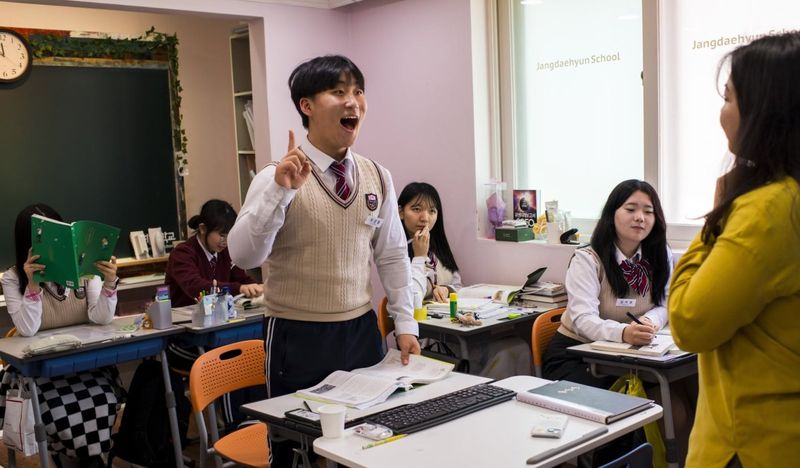
Photo Credit: School for Defectors
Rather than selecting a few students to follow from the beginning, Workman approached the documentary as a story about all 20 teenagers. Although certain students eventually became more prominent in the finished film, he felt that giving everyone the opportunity to participate helped establish trust. "We were like, we're filming everybody… all 20," he explained during the Q&A, adding that the approach helped the students feel their individual stories were worth sharing.
For Kim, School for Defectors also offers international audiences an opportunity to learn about a side of South Korea they might be less familiar with. When asked by BroadwayWorld what the documentary reveals about the country, he acknowledged its political context but emphasized the experiences of the students themselves. "There's some specifics about geopolitics, and I think that some people can learn a little bit about that," he said. "But I also think that the geopolitics is secondary to the human stories of kids trying to fit in, kids trying to adjust to a new culture, and trying to make their own lives."
During the post-screening Q&A, Kim also discussed what convinced him to join the project as an executive producer. He credited Workman's sincerity and commitment to telling the students' stories, acknowledging that North Korea can be a difficult subject to approach through film. By focusing on the experiences of teenagers attending school, Kim felt the documentary could explore these issues through a more personal perspective. "At the end of the day, this film is about how we can all get along with one another and that everyone comes from different circumstances and we all have our different challenges, but how do we move forward together?" he explained.
Kim also drew comparisons between the students' experiences and those of immigrants elsewhere in the world. Although North and South Koreans share a language, differences in accents and backgrounds can make adjusting to life in South Korea difficult for young defectors. He pointed to bullying as one of the challenges some students face when attending schools alongside South Korean classmates, emphasizing the importance of a place like Jangdaehyun School where they can receive support. "There's more that unites us than divides us," he told the audience.
During the post-screening Q&A, Workman shared updates on several of the students featured in School for Defectors, revealing that they had since gone on to college. Among them was a student who had expressed an interest in becoming a doctor during the documentary. Workman also spoke about the school's role in helping the students pursue their ambitions and the progress they had made since filming.
Workman recalled returning to Jangdaehyun School to screen a version of the documentary for the students. Despite having spent more than a year getting to know them, he admitted that watching their reactions was one of the most nerve-racking experiences of the production. He invited each student to share feedback afterward, giving them another opportunity to participate in how their stories were presented.
One student whose involvement changed significantly during production barely spoke during the first three months of filming and initially seemed uncomfortable appearing on camera. Workman explained that as she became more familiar with the crew, she gradually opened up and became one of the documentary's central subjects. She also helped lead a book project in which students documented their North Korean backgrounds and family histories.
During the Q&A, Workman recalled how the book project emerged unexpectedly during an extracurricular class while he was filming. He also shared plans to make the book available to a wider audience as part of the documentary's release, with the aim of supporting Jangdaehyun School.
Looking ahead, Workman hopes to bring School for Defectors to audiences beyond the festival circuit, potentially in 2027. During the Q&A, he discussed the possibility of independently distributing the documentary, similar to the approach taken with his previous film, Secret Mall Apartment. The filmmakers are also working with Liberty in North Korea, an organization supporting North Korean refugees, as an impact partner to help extend the documentary's reach.
For Kim, the Vancouver screening held an additional connection to the documentary, as he revealed that one of the students featured in the film had since moved to Canada. Reflecting on the documentary during his closing remarks, he shared what continues to draw him to stories like School for Defectors. "I'm always looking for reasons to hope," he told the audience. "And this film really scratches that itch for me. I hope it does for you guys too because who couldn't use a little more hope right now?"
Top Photo Credit: VIFF
See more BroadwayWorld in Google
Our stories show up more often in Top Stories and Google’s AI answers.
Breaking Broadway alerts by text
Get the biggest stories sent straight to your phone.
Sign up for all the news on the Fall season, discounts & more...
|
Ballet Vancouver Unveils 2026/27 Inaugural Season Vancouver Playhouse (9/01-5/31) |
|
Songs for a New World Gateway Theatre (11/13-11/14) |

|
Joy Pacific Spirit United Church (5/02-5/02) |

|
The Legend of Sleepy Hollow - A Staged Reading Pivot Theatre (10/31-11/01) |

|
Woking Phoenix Gateway Theatre (3/11-3/20) |

|
Grave Mistakes The Anza Club (10/22-10/22) |

|
Reading Session of New Compositions Pacific Spirit United Church (10/19-10/19) |

|
Disney's Beauty and the Beast Queen Elizabeth Theatre (11/24-11/29) |
|
The Reluctant Princess & Her Extraordinary Band of Pirates Anvil Theatre (3/19-3/21) |
|
DanceHouse announces 2026/27 season, October 2026 through April 2027. DanceHouse (10/01-4/30) |
