How an Episcopal Retreat Became a Buzzy Off-Broadway Venue
House of the Redeemer is currently home to Tru, starring Jesse Tyler Ferguson.
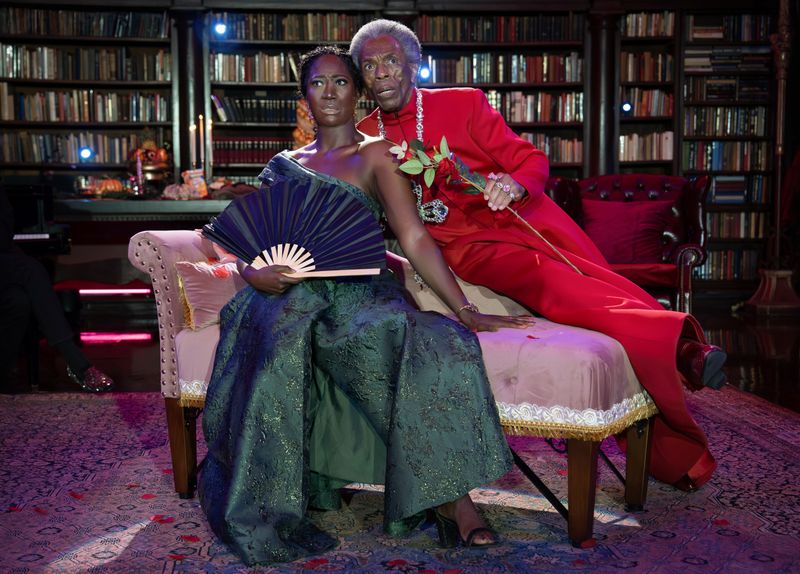
First, it was André De Shields, the Tony Award-winner and theater legend, as Tartuffe. Next came Modern Family star and Tony winner Jesse Tyler Ferguson as Truman Capote.
And both of them close enough to look you right in the eye.
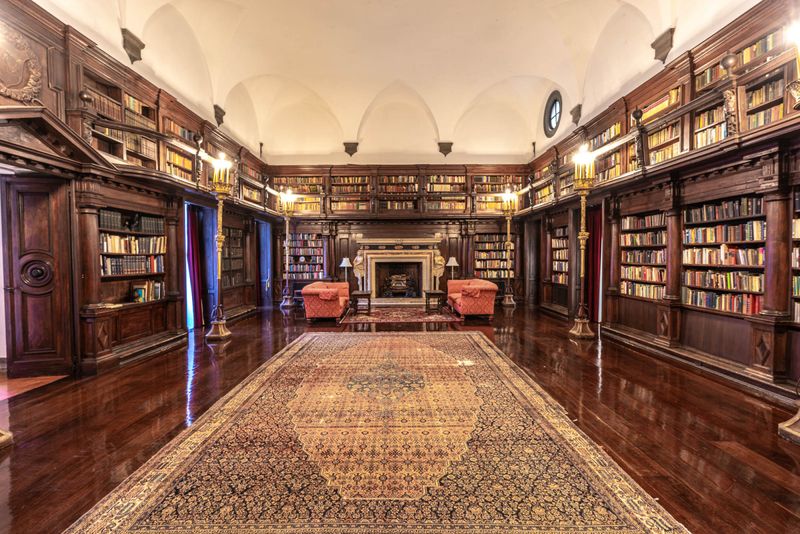
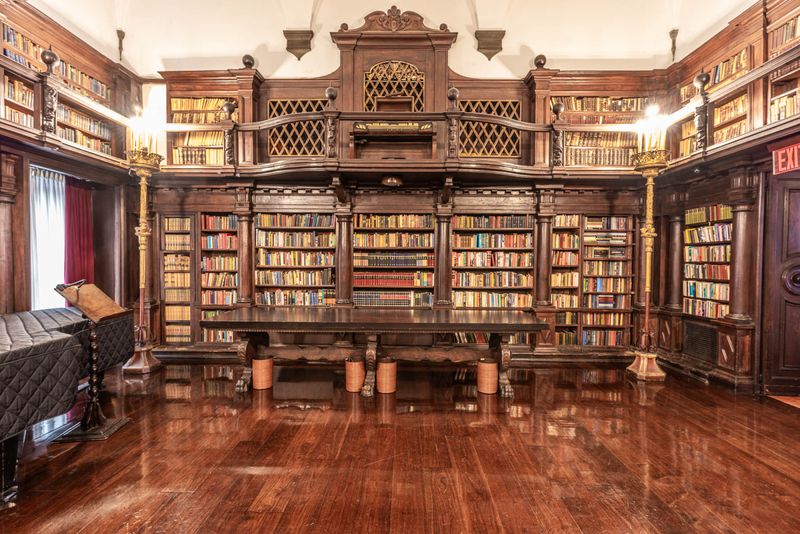
This season, Broadway royalty has taken up residence in the splendid library of an Upper East Side mansion. So how did House of the Redeemer, a retreat house within the Episcopal Archdiocese of New York, become off-Broadway’s hottest new venue?
As it happens, the history of the space has a direct connection with Jay Presson Allen’s 1989 play Tru, a solo work about Capote’s waning final days, which just extended its run at the House through May 10.
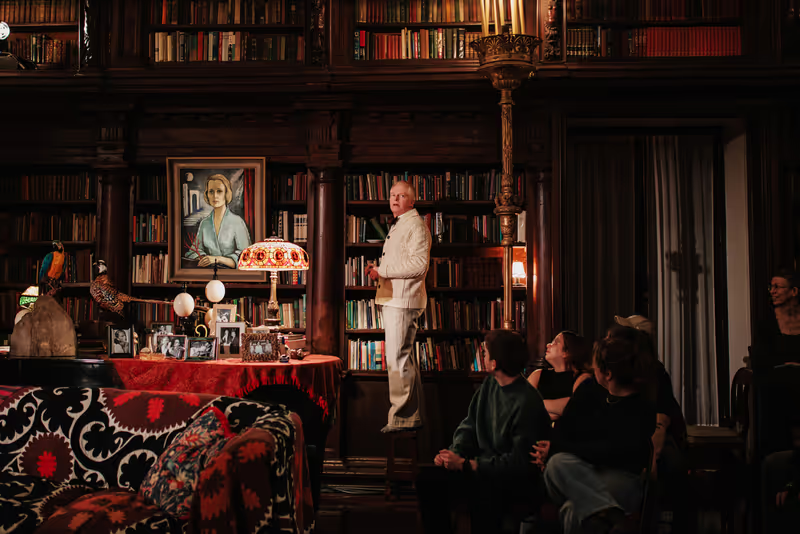
“When I walked into the library of House of the Redeemer, I knew we had found the place we’d been looking for,” said director Rob Ashford (Cat on a Hot Tin Roof, Frozen), who selected the building’s library alongside his star, Ferguson. “In addition to being a beautiful playing space for Tru, the House has a direct historical connection to Capote via one of his circle of society beauties, Gloria Vanderbilt.”
That connection comes through Edith Fabbri, the original owner of the House and the woman responsible for its ultimate preservation.
Edith Fabbri was born Edith Vanderbilt Shepard. Her parents, Elliott Shepard and Margaret Louisa Vanderbilt, passed a considerable fortune down to their daughter.
Edith married Ernesto Fabbri in 1896, and the couple constructed the lavish home at East 95th Street, inspired by Italian Renaissance sources. For the building’s library, now the home of Tru, wood ceilings and panelings from the 1600s were transported to the United States from Italy.
The home’s features include a large dining room (now used as an event space) and reception room on its first floor; a drawing room (now converted into a chapel) on the second floor, along with the library; spacious living quarters on the third floor, where the Fabbri family lived; and more modest bedrooms and bathrooms on the fourth floor, where the family’s servants resided.
Fabbri hosted lavish parties in the house, including a debut for her grandniece in 1937 attended by the Rockefellers, Roosevelts and other leading families of the time. But the era of such sumptuous houses soon began to wane.
“Many of the grand homes built by wealthy families during the Gilded Age were later demolished or sold as New York developed, often replaced by apartment buildings and skyscrapers,” said Natasha Donnelly, executive director of the House of the Redeemer. “As a result, much of that architectural and cultural history was lost.”
So how did Redeemer survive?
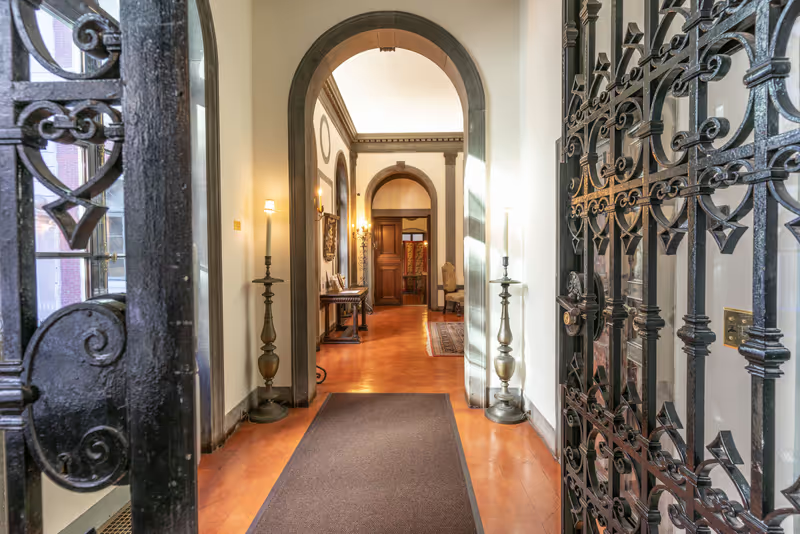
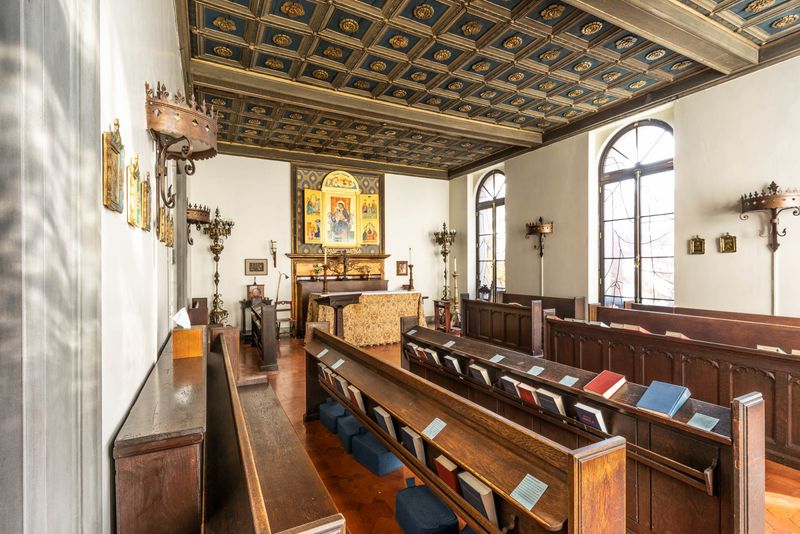
In 1947, Fabbri heard a sermon during Lent. The pastor preached from St. Mark 6:31, a Bible verse where Jesus encourages his disciples to rest: “And he said unto them, Come ye yourselves apart into a desert place, and rest for a while: for there were so many coming and going, and they had no leisure so much as to eat.”
Envisioning the home as a place of quiet and reflection, a haven for rest from the daily mayhem of the outside world—”a place apart”—Fabbri donated the house and much of its contents to the Episcopal church.
“I find it really inspiring that Edith was willing to give that away at the end of her own life, rather than hold onto something,” Donnelly said. “To instead create something for the community that could help other people.”
For many years, the House was operated by the Sisterhood of St. Mary, an order of nuns, who lived and worshiped there full-time. But Fabbri had not left a large endowment, instead requiring the House to become self-sufficient, and repair costs built up.
Following the departure of the nuns in 1982, the stewardship of the Rev. Herbert L. Linley shifted the House’s financial model. Revenue was brought in by renting the space for conferences, receptions and film shoots, including three films by Woody Allen and several scenes in The Godfather, Part III.
Of course, this was not strictly what Fabbri had in mind all those years ago. But the revenue has allowed the House to continue to fulfill its primary mission, operating as a retreat for guests seeking quiet and reflection. These guests are primarily clergy members, but also include non-profit workers in need of low-cost accommodations, or caregivers to a person receiving medical treatment (the House is located just a few blocks away from Mount Sinai’s Upper East Side complex). Priests-in-residence spend two to four weeks in the House, offering morning and evening prayer in the chapel.
The House’s popularity as a space for filming and cultural events has continued to grow in recent years. The Fabbri Chamber Concert Series runs three concerts a year; Mike Wallace’s exit interview upon his departure from CBS was filmed in the library. A scene from the 2006 movie The Good Shepherd, directed by Robert De Niro, was also filmed there.
Still, no one had attempted a fully staged, multi-week theatrical production in the space.
Last year, the director Keaton Wooden approached the House with his concept: an immersive staging of Molière’s Tartuffe, a stinging satire of religious hypocrisy, led by De Shields. The production would be staged in the building’s historic library, with the audience seated on three sides around the action.
The process was not without its complications, Donnelly acknowledged.
Complying with Actors Equity regulations around the number of dressing rooms and bathrooms available required such creative thinking. Luckily, some space had opened up—the House’s former director, who had departed earlier last year, had lived in an apartment on the building’s mezzanine level that was now empty. (Donnelly lives in the neighborhood but not in the building.) That apartment became one of the dressing rooms.
“There was a lot of creative thinking and problem solving to allow the production to grow and have what it needed,” said Donnelly.
For Tru, Ashford had also found a perfect home. Set in the distinguished writer and socialite’s New York apartment, Allen’s play finds Capote shunned by the “Swans,” his circle of high-society women—Gloria Vanderbilt among them—after spilling their secrets in the pages of Esquire.
“There’s a moment in the play where Truman is showing us his apartment, and says, ‘Books, books, evermore books,’” said Ashford. “We had found the perfect setting—and not just because it was teaming with books. The Upper East Side was the home and center of life for Capote’s famous Swans.”
Since Tru has just two cast members—Ferguson and Tony nominee Charlotte d’Amboise, as a ghostly presence of Capote’s lost swan Babe Paley—the lift has been a little easier. And given the story’s connection to the building’s history, Donnelly said the answer to the request to host the show was an obvious “Yes.”
Donnelly is open to hosting future productions at the House, and doesn’t offer any specific limitations.
“We would read the script and make sure that the themes don’t contradict the mission of the House, that there’s nothing too lewd or anything that could be problematic,” she said. “But we are certainly open to different ideas and messages that are culturally resonant.”
One possible challenge, however: The House does not have central air-conditioning, making a summer rental a challenge (though temporary AC units could potentially be used). Donnelly is hoping to put the money raised through these theatrical rentals towards the future installation of central AC.
Today, the House is not exactly what Edith Fabbri envisioned 70 years ago. But for Donnelly, the inclusion of theater in the building’s wealth of offerings feels in keeping with the original mission.
“Theater is an exciting new piece of our efforts to bring people together and create community,” she said.

Sign up for all the news on the Fall season, discounts & more...

|
Powered by

|
.jpg?format=auto&width=300)