
Does Winning 'Best Musical' Mean a Boost in Ticket Sales?
Best Musical winners have an average of a 29% ticket sales increase.
 Click for Tickets!
This has been a tough year for new musicals. Titanique, if the preliminary numbers reported by The Broadway Journal have held up, has yet to have an earning week. Two Strangers (Carry a Cake Across New York) has routinely put up low capacity numbers. Schmigadoon!, though they have shown signs of life at the box office of late, has struggled with capacity and ticket price, leading Johnny Olekinski in the New York Post to quip “[Schmigadoon!’s fans] could be often heard saying “a love letter to Broadway,” which is an ancient Greek phrase meaning ‘closing notice.’”
Overall, according to our Tony Nominations grosses analysis, none of the new musicals this season are in the upper half of the theoretical monthly average across the industry. Last year, there were six new musicals in that upper half, four of which were nominees for Best Musical. Luckily, this weekend’s Tony Awards is set to potentially change all of that! But in an era where even the most viewed Tony Awards are viewed less than they were pre-2020, what effect do they have on the grosses at this point?
Before the pandemic, every Best Musical winner had recouped its initial investment dating back to at least 2002. Since then? Moulin Rouge! recouped it’s investment after receiving over $10 million in tax incentives during the pandemic, but took several years to provide a significant return to its investors. Kimberly Akimbo failed to recoup during its Broadway run, though its national tour did well enough to recoup both the tour and the original Broadway production, The Outsiders recouped after 20 months on Broadway, as well as its national tour, and Maybe Happy Ending is still playing on the main stem working towards its recoupment, although their box office performance has slipped as of late. Previously, shows like The Band’s Visit and Dear Evan Hansen and Hadestown were recouping in under a year. More often than not in the 2010s shows that won Best Musical would recoup in less than a year, usually around 6 months after the awards. That has changed in the years since as costs have skyrocketed and grosses stagnated.
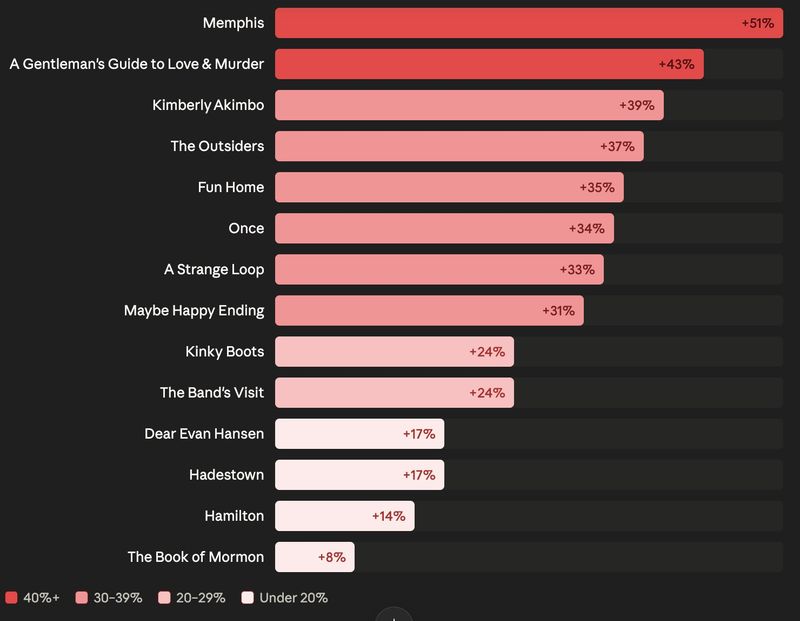
Here are the winners of the Tony Award for Best New Musical since 2010, ordered by percent change in the 6 weeks following the Tony Awards vs the 6 weeks preceding (excluding Moulin Rouge!)
Memphis- 51% increase
A Gentlemans Guide to Love and Murder- 43% increase
Kimberly Akimbo- 39% increase
The Outsiders- 37% increase
Fun Home- 35% increase
Once- 34% increase
A Strange Loop- 33% increase
Maybe Happy Ending- 31% increase
Kinky Boots- 24% increase
The Band’s Visit- 24% increase
Dear Evan Hansen- 17% increase
Hadestown- 17% increase
Hamilton- 14% increase
The Book of Mormon- 8% increase
That’s an average of a 29% increase, with a median increase of 32%. Since the pandemic that bump has increased to an average of a 35% increase for the award recipient, from an average of 27% before.
But some of that is a function of the relative popularity of a show. The Book of Mormon and Hamilton were already huge hits before the Tony Awards came around, their awards only cemented their status as legends in the theatre canon. Other shows, like Dear Evan Hansen and Hadestown, were already putting up very strong grosses, each selling out at over $150 a ticket on average before winning Best Musical, numbers that no best musical nominee since the pandemic has put up. The bigger story about the impact of the award historically had to do with shows like Memphis and A Gentleman’s Guide to Love and Murder, both of which had huge increases following their Tony Award win, which has not been repeated, even with shows like Kimberly Akimbo.
But of course it’s not all about the winners. Other new musicals that are nominated for the Tony but do not win still tend to get a bump of some kind, though they have a much weaker record as far as recoupment goes. And that number has decreased post-pandemic, significantly. Before the pandemic, the press associated with being nominated, and a Tony Performance, was enough that on average there was a 10% increase in grosses for Best Musical nominees that did not win the award. The last four years it’s been a 5% increase. As well, the majority of the time since the pandemic the post Tony bump is less than the grosses from the week of the Tony awards itself. People still care about the Tony Awards and their winners, but as more people prioritize what to see and prioritize events over casting a wide net, the other shows that are showcased on Tony night see less of a positive impact.
There’s a recipriciocity that comes with the Tony Awards and the commercial theatre industry. Sometimes shows need the Tony Awards, and sometimes the Tony Awards are mostly there to validate existing artistic and commercial excellence on Broadway. But that balance has swung, and every musical since the pandemic to win Best Musical has been in the camp of Fun Home and Gentleman’s Guide and Memphis, where they needed to win Best Musical to have a shot at commerical success. The opposite has become increasingly rare, an incredibly unsustainable model, and a pattern that has to change.
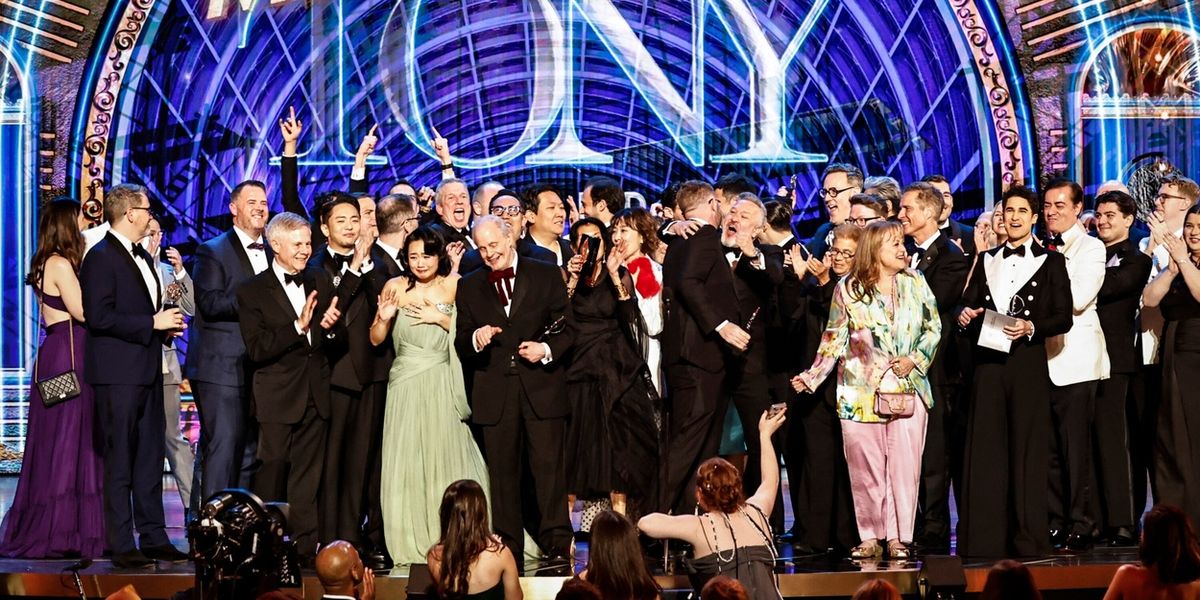
Photo credit: Michele Crowe/CBS ©2025 CBS Broadcasting, Inc
Sign up for all the news on the Fall season, discounts & more...