

Season 2, Episode 5: Behind every summer is a community that keeps Fire Island alive. This episode explores the history of the beloved Pines Pantry through the eyes of its iconic Pantry Girls, alongside the volunteer firefighters of The Pines and Cherry Grove who protect the island from fires, hurricanes, beach erosion, and an uncertain future.
Review: MIDDLEMARCH PARTS 1 & 2, Swan Theatre
George Eliot’s classic novel is brought to the stage by the RSC
By: Debbie Gilpin
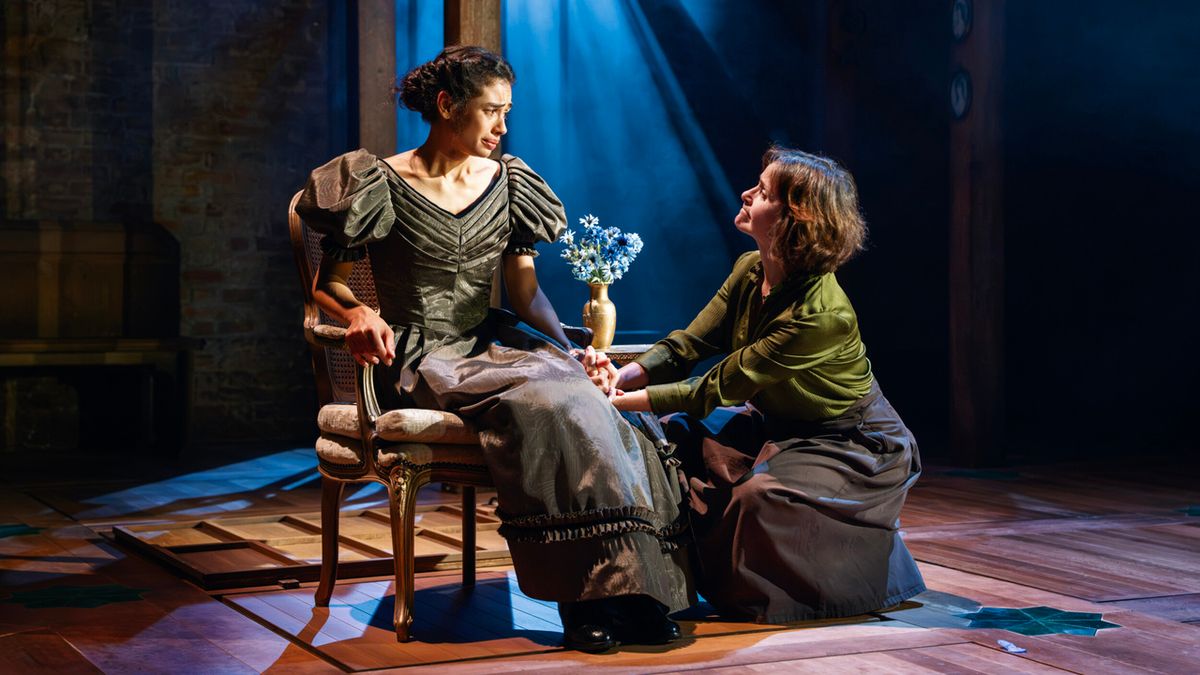

First published as a series of eight individual instalments between December 1871 and December 1872, George Eliot’s seminal work Middlemarch (subtitled A Study of Provincial Life) has now been adapted into a two-part stage play by Nina Raine - its debut production at the RSC’s Swan Theatre is directed by Jeremy Herrin.
Although the novel is broadly about the lives of the population of the fictional Midlands town of Middlemarch (thought to be based on Coventry) between 1829 and 1832, the core focus is on the orphaned Dorothea Brooke. In the manner of the Dashwood sisters in Jane Austen’s Sense and Sensibility, Dorothea and her sister Celia have different personalities; Celia is said to have more “common sense”, whilst Dorothea seeks a purpose and believes that marrying the scholar Mr Casaubon will provide her with a way of making herself useful and fulfilling her role in life. Things don’t pan out as she expected, and the appearance of Mr Casaubon’s cousin Will Ladislaw further complicates matters.
Over the course of the two parts we are also introduced to the likes of siblings Fred and Rosamond Vincy, who are in love with Mary Garth and newcomer Dr Tertius Lydgate, respectively. George Eliot (born Mary Ann Evans) herself guides the narrative, also allowing the characters’ thoughts to be made known when they use her as a sounding board for their next steps. Brief snippets of Eliot’s own life come to the fore as we see how they may have inspired what and why she wrote this novel.
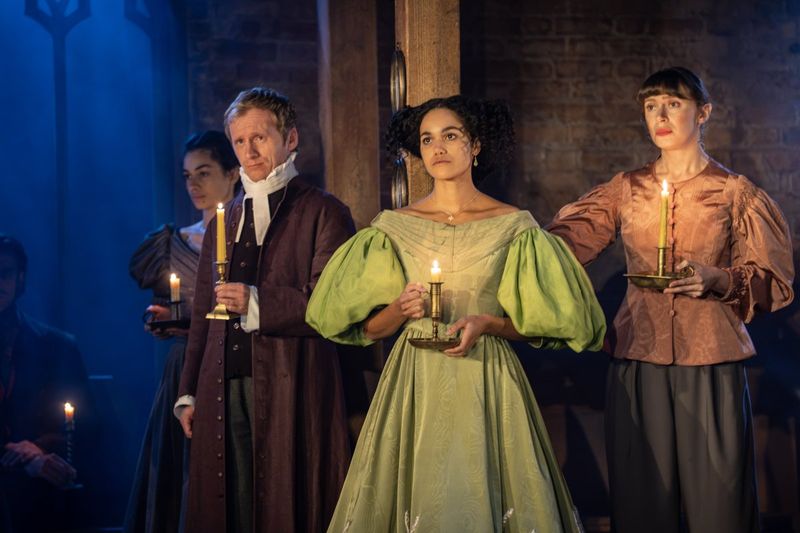
This aspect of the play is excellent; there are several occasions in the book where Eliot’s own thoughts are communicated, so it makes sense for her to be the mouthpiece - and serving in part as the confidante for the characters is a more dynamic and theatrical way of letting their inner voices come to the fore. I’m not completely sold, however, on having the actor playing Eliot (Amanda Root) occasionally then morph into the character of Mrs Cadwallader. She may share some traits with George Eliot (such as her independent female spirit), but there is no consensus to say that the novelist based this character on herself.
Despite the fact that this is yet another non-Shakespearean production at the home of the Royal Shakespeare Company, it’s a worthwhile endeavour to try and highlight further history of the local area and celebrate another Midlands-born writer. Telling this story over 150 years later shows how pertinent its themes still are; people are struggling with debt and finding their place in the world - plus there are plenty out there who are desperate to follow their purpose in life.
Raine’s scripts do an excellent job of stripping down the 900+-page novel and making it relatively straightforward to follow. It’s an ambitious task nonetheless, as it isn’t always easy to keep on top of all of the supporting characters despite the phenomenal efforts of the writer, actors, and director - thanks to brilliant characterisations and Grace Smart’s wonderful costume design, you can at least differentiate between them, even if their names don’t necessarily trip off the tongue with ease. It also helps that there is so much humour in the text; the bleak events really are bleak, but the balance between light and shade is pretty well managed and makes it less of a challenge to navigate.
The company is incredibly versatile (with the assistance of some spectacular wigs), really bringing the town of Middlemarch to life with their performances - although there are a few standouts. Gunnar Cauthery is wonderful as the affable, but conservative Sir James Chettam, as well as the empathetic and kindly Mr Farebrother; Amanda Root is lively and also thoughtful as George Eliot, showing the author both standing her ground and also letting the story flow when it needs to.
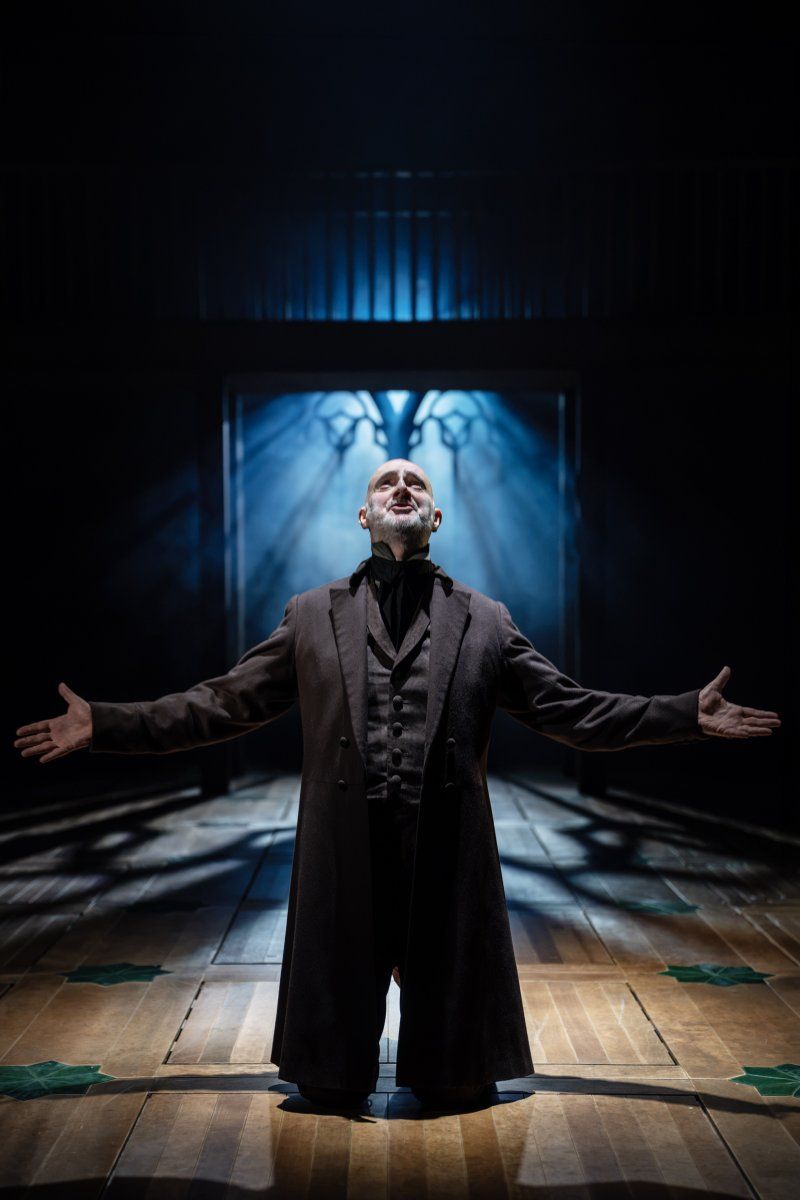
John Hodgkinson has the task of portraying Mr Bulstrode and Borthrop Trumble - two contrasting characters if ever there were, and by taking both to their extremes he makes them all the more memorable. Taking on the task of the central figure of this production, Nia Towle is impressive as Dorothea Brooke; she wears her heart on her sleeve, and instantly makes the viewer root for her - the reaction of the audience at her story’s conclusion tells you just how invested everyone was.
With it being performed in two parts, there is the option to either watch both on the same day or separately. Although it really immerses you in the world, doing both parts on the same day is pretty hardcore and a lot to take in - particularly if you’re in Stratford-upon-Avon just for the day (or with an overnight stay booked in). If you have the time and resources, my personal recommendation would be to take two consecutive evenings so you can sleep on the first part, process it, and then repeat for part two.
This vivid and emotional adaptation is definitely a theatrical highlight of the year so far, and further evidence that bringing more books to the stage is the way forward.
Middlemarch Parts 1 & 2 run at the Swan Theatre until 16 January 2027
Photo credit: Johan Persson
Broadway news in your inbox
Weekly top stories - unsubscribe anytime.
Weekly top stories - unsubscribe anytime.
Popular episode




Tickets From $70

Tickets From $135

Tickets From $58

Tickets From $67
Reader Reviews
To post a comment, you must register and login.