


Review: DRIFTWOOD, Kiln Theatre
Trinidadian actress Martina Laird's debut play has its London premiere
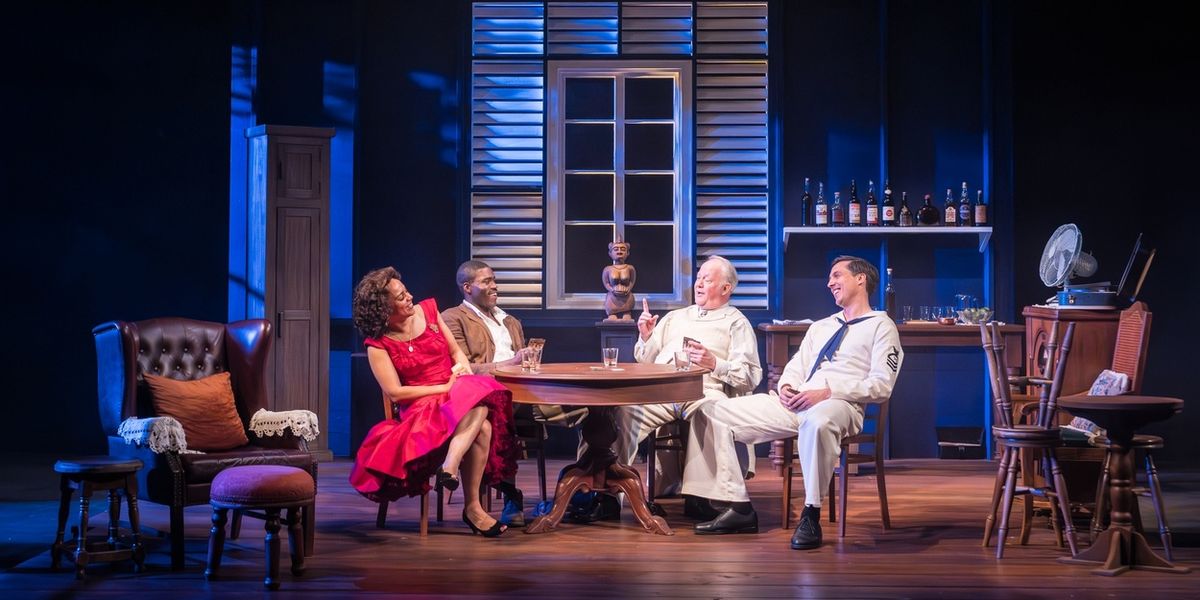
 “It’s like vultures circling a carcass,” one character in Driftwood says of the uneasy situation in Trinidad a few years shy of independence. This is the febrile setting for Casualty actress Martina Laird’s debut play, a portrait of a nation told entirely within the walls of one Port of Spain gentleman’s club, named ALMA.
This is also a family drama, about the well-meaning but poisonous legacies we pass down to one another. ALMA is operated by Pearl (Ellen Thomas), an elderly woman clear-eyed about British and American exploitation and hopeful about the prospect of independence. Far more mercenary about protecting their stake in the business are her two children, and so the stage is set for a generational battle of wills for the direction Trinidad will take.
Pearl’s glamorous biracial daughter Ruby (Cat White, in a performance that never quite conjures the sexual charisma and “nastiness” imagined in the script) covets ALMA for herself, and finds a partner in crime in her long-lost half-brother Diamond (Bridgerton’s Martins Imhangbe). Imhangbe’s performance and Laird’s writing elevate Diamond beyond a simple conman, and uncover a man desperate enough for belonging that he pursues an affair with his own sister.
%20%26%20Martins%20Imhangbe%20(Diamond)%20-%20Driftwood%20(c)%20Marc%20Brenner%20426640.jpg?format=auto&width=800)
Photo credit: Marc Brenner
At the heart of the show is ALMA itself, rendered in a carefully observed hybrid colonial and Trinidadian style by designer Sadeysa Greenaway-Bailey. In a blatant metaphor for Trinidad as a whole, ALMA is owned by a corpulent long-term English expat – Roger Ringrose, oozing superciliousness and casual racism – and is ripe to be used to launder dirty American money, in a racket introduced by gormless sailor Tom (Ziggy Heath) from the new naval base on the other side of the island.
It’s a strong script, and one rife with symbolism: the new batch of rum that makes the white characters choke, the lamp in the club flickering on and off, the idea of driftwood washing up unwanted on a beach. But much of this is lost in Justin Audibert’s overzealous direction. Everyone seems constantly in motion, flitting in and out of doors and doused in a soundtrack relentless enough to be distracting.
When the violent confrontation between Diamond and Tom comes, Audibert coats it in music and stylistic movement, without ever really giving the words on the page space to breathe. A tense game of cards at the start of Act Two stands out, precisely because it finally allows the characters to sit down, and for some of the playful Trinidadian picong style of dialogue to really sing.
Charming though Greenaway-Bailey’s set is, the cavernous midnight blue walls also don’t help the situation, nor does the decision to confine most of the action in the central third of the Kiln’s stage. The actors are dwarfed by negative space that isn't adding much, and certain tableaus don’t feel as visually arresting as they should.
Driftwood might have had its RSC debut earlier this year, but this feels like a play at a somewhat earlier stage in its development. At its best, Laird’s writing is masterful in how it balances the personal with the political, and a new staging help make these themes reach their full potential.
Driftwood plays at the Kiln Theatre until 4 July
Photo credits: Marc Brenner
Sign up for all the news on the Fall season, discounts & more...







Reader Reviews
To post a comment, you must register and login.