Photos: Philharmonia Orchestra to Present Beethoven Cycle at Southbank Centre
Nine conductors will pair each Beethoven symphony with a modern composition chosen to stand the test of time.
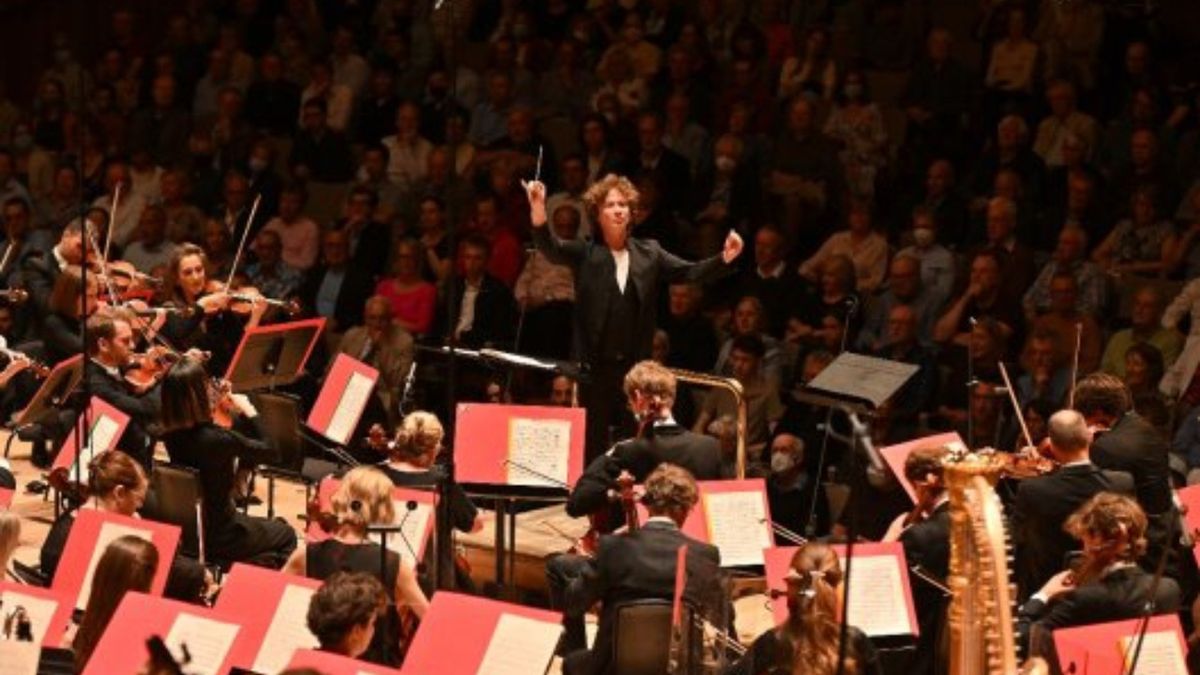
The Philharmonia Orchestra has announced the second half of its 2026/27 London Southbank Centre season, which features a complete cycle of Beethoven's nine symphonies two hundred years after the composer's death. Across nine concerts, nine conductors - Santtu-Matias Rouvali, Andrew Manze, Esa-Pekka Salonen, Pablo Heras-Casado, Thomas Hengelbrock, Ryan Bancroft, Manfred Honeck, Leonidas Kavakos and Marin Alsop - each pair a Beethoven symphony with a contemporary work they believe has the power to stand the test of time.
The season also features internationally acclaimed artists, soloists and conductors, including this season's Featured Artists Sol Gabetta and Nobuyuki Tsujii, plus Piotr Anderszewski, María Dueñas, Alexander Kantorow, Beatrice Rana, Alexander Soddy and Tugan Sokhiev.
Beethoven Symphony Cycle pairings
Beethoven Symphony No 1 & Steve Reich's Desert Music with Santtu-Matias Rouvali
Beethoven Symphony No 2 & Tavener's The Protecting Veil with Andrew Manze
Beethoven Symphony No 3 & Magnus Lindberg's Violin Concerto with Esa-Pekka Salonen
Beethoven Symphony No 4 & Schnittke's Piano Concerto with Pablo Heras-Casado
Beethoven Symphony No 5 & Gubaidalina's Offertorium with Thomas Hengelbrock
Beethoven Symphony No 6 & Tippet's Rose Lake with Ryan Bancroft
Beethoven Symphony No 7 & James MacMillan's Veni, Veni, Emmanuel with Manfred Honeck
Beethoven Symphony No 8 & Shostakovich's Symphony No 15 with Leonidas Kavakos
Beethoven Symphony No 9 & Jennifer Higdon's Blue Cathedral with Marin Alsop
The Beethoven series places his music in a wider conversation about what makes a classic. Each conductor has chosen a work composed within their own lifetime – music they believe could take its place among the works audiences return to again and again. Their choices pose a bigger question: which pieces written in the last 50 years will still be performed, admired and loved 200 years from now?
Across the cycle, Beethoven's symphonies meet Reich, Tavener, Lindberg, Schnittke, Gubaidulina, Tippett, MacMillan, Shostakovich and Higdon. Together, the pairings invite audiences to hear Beethoven afresh and consider which of today's works might become tomorrow's concert hall classics.
This will not be the Philharmonia's first Beethoven cycle of the year. In January, the Orchestra will become the first full symphony orchestra to perform all nine Beethoven symphonies in Mauritius. The performances form part of its third and most ambitious festival on the island, bringing together 75 musicians for ten days of concerts, education and cultural collaboration.
Thorben Dittes, Chief Executive, Philharmonia Orchestra, said: 'Beethoven's symphonies have a particularly special place in the Philharmonia's history. Performing the complete cycle was a regular tradition for the Orchestra in earlier decades, and as Beethoven programming was rather cut short in 2020, returning to all nine symphonies in this anniversary year feels fitting.
But at the same time, we also wanted to look forward and ask a question of artists and audiences alike: What makes a piece of music endure for 200 years and become a concert hall favourite? By asking each conductor to choose a piece written since 1970 to feature alongside a Beethoven symphony, we hope to have created an exciting, multi-faceted musical journey for audiences which explores this question on stage and in our Philharmonia Social programmer – whether you are Beethoven fan or encountering the symphonies for the first time.'
Santtu-Matias Rouvali, Principal Conductor, Philharmonia Orchestra, said, 'I am looking forward to launching our complete Beethoven cycle. I have paired Symphony No. 1 with Steve Reich's Desert Music. Beethoven and Reich share an interest in how simple musical ideas can grow into something of extraordinary scale and energy. Both use rhythm as a fundamental building block: Beethoven develops and transforms short rhythmic motifs, while Reich takes repeated rhythmic patterns and gradually shifts and layers them to create music of huge scale and energy. It will be wonderful to explore these connections with audiences, and to welcome so many exceptional artists to the Philharmonia this spring.'
Broadcaster and writer Tom Service will open each Beethoven concert with a short introduction, giving audiences a clear way into both Beethoven's symphony and the contemporary work alongside it – and the thinking behind each pairing.
Tom Service said, 'This is a wonderful and unique chance to renew the essential energy of these nine symphonies, each of which presents a completely different worldview. It will be thrilling to talk to all of the conductors on stage, to explore why they've chosen the partner pieces they have for each symphony, and to go on a journey together that reclaims the startling modernity of Beethoven's creativity through these visceral connections with the music of our time.'
Audiences can experience the complete Beethoven cycle for just £99, with a guaranteed seat revealed in the week before each performance, so every concert comes with a little surprise. First-time Philharmonia bookers can also access £10 tickets for symphonies Nos. 1, 5 & 7, with a special pre-concert introduction to the music and concert experience.
Detailed Programme Information
The Philharmonia's Principal Conductor, Santtu-Matias Rouvali, launches the Beethoven cycle with Symphony No. 1. It is paired with works by two of the most influential figures in American minimalist music: John Adams' Short Ride in a Fast Machine and Steve Reich's Desert Music (11 February).
Andrew Manze conducts Beethoven's Symphony No 2, alongside John Tavener's The Protecting Veil, performed by Stephen Isserlis, for whom the work was originally written. The programme opens with Elgar's Serenade for Strings (28 February).
Conductor Laureate, Esa-Pekka Salonen, pairs Beethoven's revolutionary 'Eroica' Symphony with Magnus Lindberg's Violin Concerto No. 1, performed by Johan Dalene. Sibelius's Symphony No. 7 completes the programme (4 March).
Pablo Heras-Casado conducts Beethoven's Symphony No 4. It is coupled with Schnittke's dark and turbulent Concerto for Piano and String Orchestra from 1979, performed with soloist Steven Osborne. Prokofiev's Classical Symphony opens the programme (11 March).
Thomas Hengelbrock conducts Beethoven's Symphony No. 5, alongside Sofia Gubuaidulina's Offertorium, her 1980 violin concerto, performed by soloist Daniel Hope. The programme opens with Beethoven's Prometheus Overture (14 March).
Ryan Bancroft conducts Beethoven's 'Pastoral' Symphony No. 6, alongside Tippett's The Rose Lake, his final major orchestral work which was composed between 1991 and 1993 and inspired by a visit to Senegal's Lake Retba. Vaughan Williams' The Lark Ascending completes the programme with violinist Clara-Jumi Kang (18 March).
Principal Conductor Designate Manfred Honeck conducts Beethoven's energetic Symphony No. 7. It is paired with James MacMillan's Veni, Veni Emmanuel, a concerto for percussion and orchestra with Vivi Vassileva as soloist. The programme opens with Arvo Pärt's Cantus in Memoriam Benjamin Britten (8 April).
Leonidas Kavakos conducts Beethoven's Symphony No. 8 alongside Shostakovich's sharply contrasting final symphony, composed between late 1970 and summer 1971. One of this year's Featured Artists, Nobuyuki Tsujii, performs Shostakovich's Piano Concerto No. 1 (11 April).
Principal Guest Conductor Marin Alsop closes the cycle with her Global Ode to Joy project, which reimagines Beethoven's Symphony No. 9 with new choral music and replaces its eponymous verse with a poetically reimagined version of the libretto for the 21st century. The choral celebration also includes Jennifer Higdon's blue cathedral and a choral work by Reena Esmail, whose music brings together Hindustani and Western classical traditions (22 April).
Other Season Highlights
The second half of the London season opens with Piotr Anderszewski performing Mozart's Piano Concerto No.24 with Alexander Soddy, alongside Elgar's Symphony No.1 (7 February). Featured Artist Sol Gabetta performs Dvořák's Cello Concerto with conductor Tugan Sokhiev (25 March), returning later in the season for Haydn's Cello Concerto in C Major (29 May). Star violinist María Dueñas joins Principal Conductor Santtu-Matias Rouvali for Beethoven's Violin Concerto in a programme that also features Unsuk Chin's Subito con forza and Tchaikovsky's Symphony No. 4 (6 May). Principal Guest Conductor Marin Alsop conducts Mahler's uplifting Symphony No. 1, alongside Bartók's Second Piano Concerto with pianist Alexandre Kantarow (12 May).
Rouvali also conducts Stravinsky's Jeu de Cartes, Prokofiev's Piano Concerto No. 3 with Beatrice Rana and Sibelius's Lemminkäinen Suite (1 April). He closes the London season with Orff's Carmina Burana and is joined by soprano Julie Roset, tenor Brett Sprague and baritone Germán Olvera. Pianist Hayato Sumino performs Gershwin's Piano Concerto in F, and the programme opens with Julia Wolfe's Fountain of Youth (3 June).
Philharmonia Debates
Across two free, interactive debates, the Philharmonia explores what it takes for a piece of music to become a concert hall staple. Using Beethoven's symphonies as jumping-off points, the discussions will ask why some works endure while others are quickly forgotten. Why do so few pieces written in the last 50 years seem to have this staying power? What roles do artists, commissioners, orchestras and audiences play? How much comes down to the music itself – and how much to changing fashions and tastes?
About the Philharmonia
Founded in 1945, the Philharmonia Orchestra is one of the world's great orchestras.
Finnish conductor Santtu-Matias Rouvali took up the baton as Principal Conductor in 2021, and Marin Alsop joined him as Principal Guest Conductor in 2023. They follow in illustrious footsteps: Herbert von Karajan, Otto Klemperer, Riccardo Muti, Giuseppe Sinopoli, Christoph von Dohnányi, Vladimir Ashkenazy and Esa-Pekka Salonen are some of the key figures who have shaped the renowned Philharmonia sound over eight decades.
The Orchestra has premiered works by Richard Strauss, Sir Peter Maxwell Davies, Kaija Saariaho, Errollyn Wallen, Laufey and many others, and performs with many of the world's most admired soloists. The Philharmonia thrives on creative collaborations: in the 2026/27 season, pianist Nobuyuki Tsujii and cellist Sol Gabetta are Featured Artists. The Philharmonia's Emerging Artists Programme nurtures and develops the next generation of instrumentalists and composers, with a focus on increasing diversity within the classical music industry.
The Philharmonia is resident at the Southbank Centre in the heart of London, and also holds residencies in Basingstoke, Bedford, Canterbury and Leicester, at Garsington Opera and at the Three Choirs Festival. In each of these residencies, the Orchestra is deeply embedded in the community. Projects with primary and secondary schools, children in foster care, people living with dementia and their carers, young people learning instruments, and adults who face barriers to experiencing the arts, all testify to the many ways music enriches lives.
The Philharmonia tours extensively throughout Europe and has performed in China, Colombia, Japan and the United States. In October 2025 the Orchestra celebrated its 80th birthday with a major US tour culminating in two performances at Carnegie Hall. In 2024, the Philharmonia became the first major international symphony orchestra to perform in Mauritius. The Orchestra returned in February 2026 with a 50-piece orchestra for a Festival featuring concerts of Beethoven's Fifth Symphony.
The Philharmonia is known for embracing innovative technology. The Orchestra's recordings include benchmark LPs, more than 150 film and videogame soundtracks, and streamed performances. The Philharmonia Records label was established in 2023 and has released live recordings of major works by Strauss, Mahler, Stravinsky and Shostakovich, with Santtu at the helm. Its recording of Beethoven's Symphony No. 5 is travelling through interstellar space on board the Voyager spacecraft, and its immersive installations and virtual reality (VR) experiences have introduced many thousands of people to orchestral music.
The Philharmonia is a registered charity. It is supported by Arts Council England and by individuals, businesses, trusts and foundations who make up its family of supporters.
Photo Credit: Mark Allan
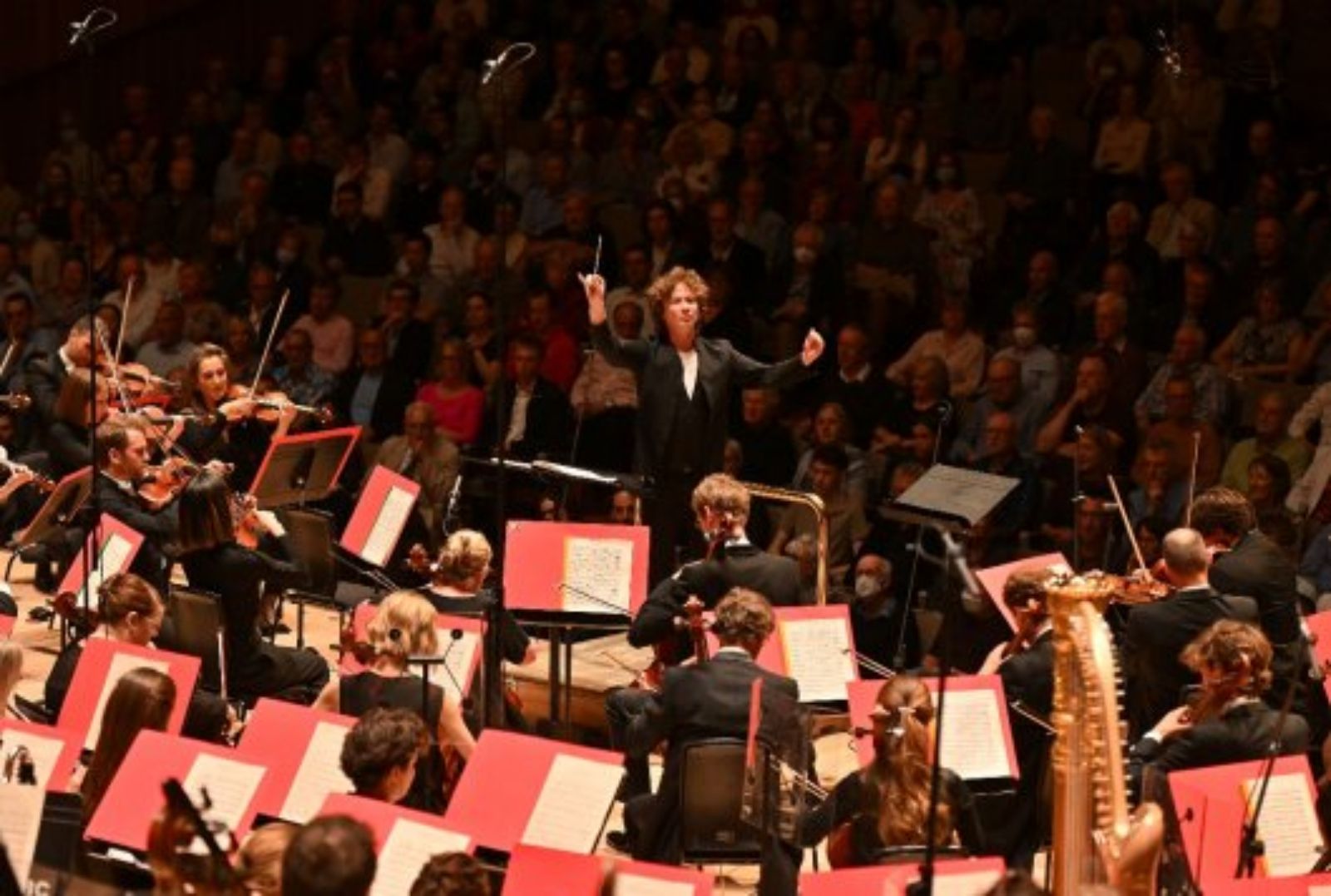
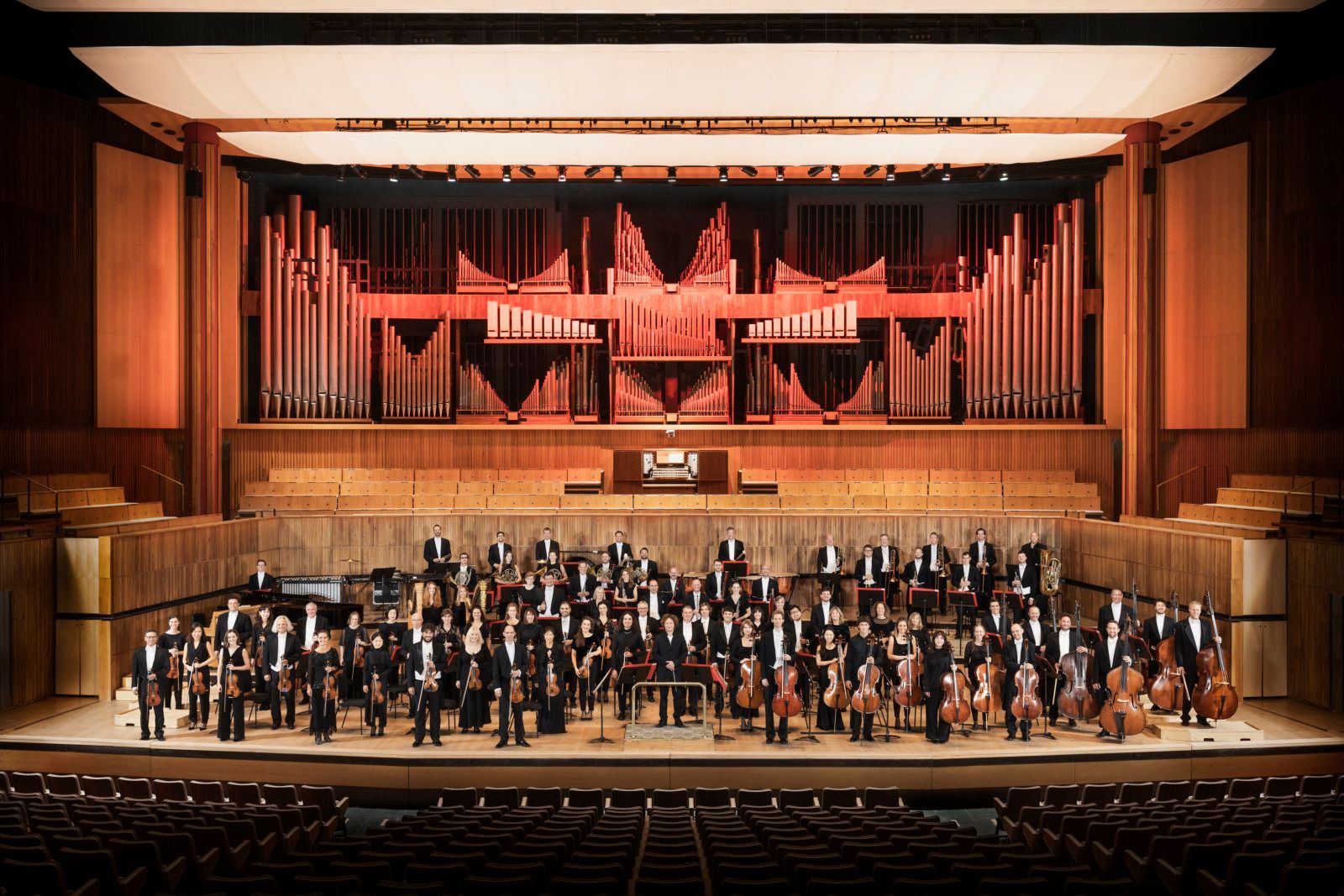
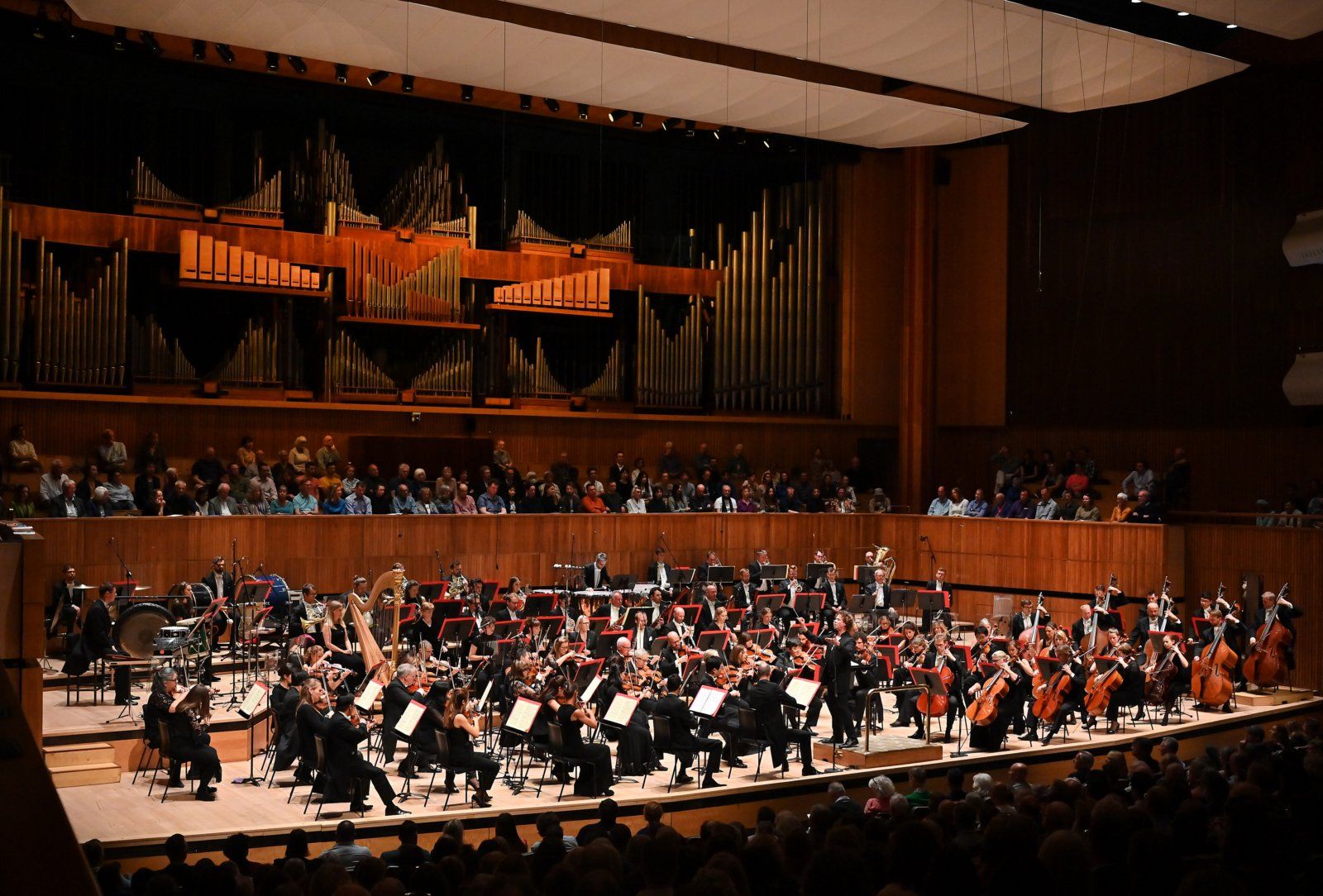
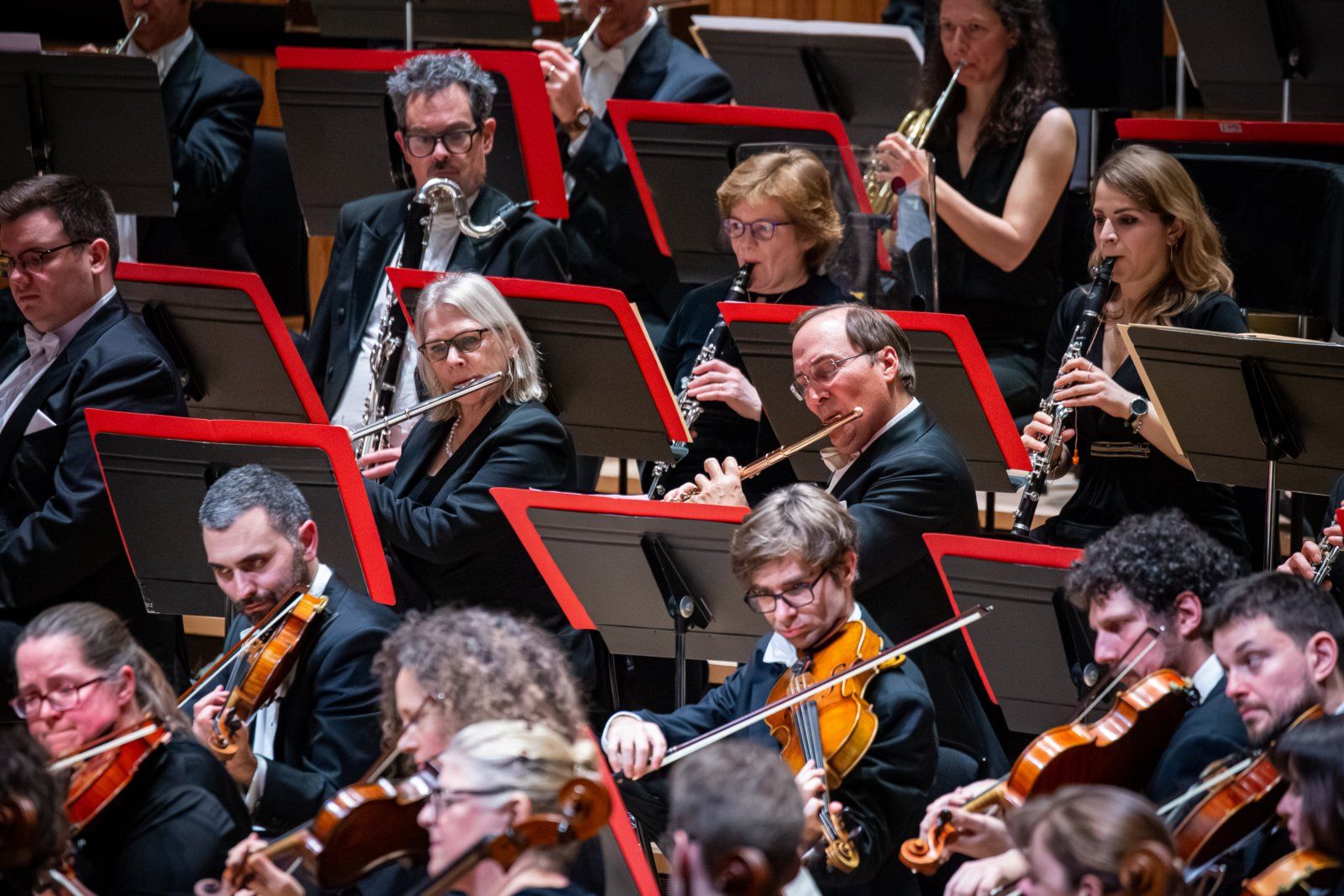
Photo Credit: Mark Allan
Sign up for all the news on the Fall season, discounts & more...