


Review: HADESTOWN: TEEN EDITION at Pulaski Academy High School in Little Rock
Pulaski Academy Theatre takes us on the Road to Hell
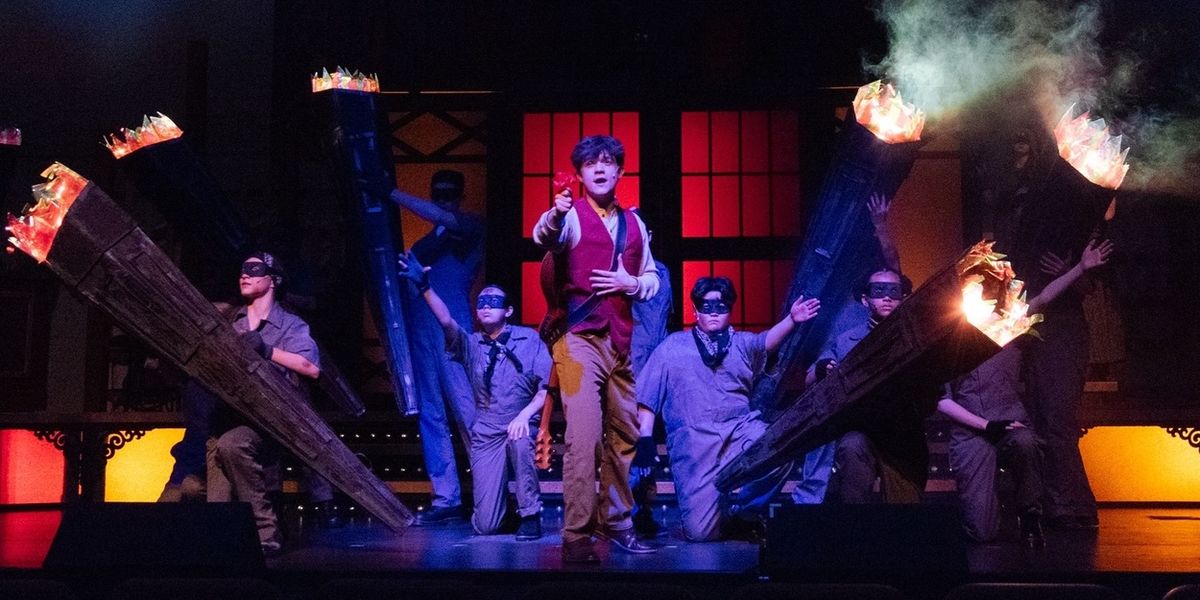
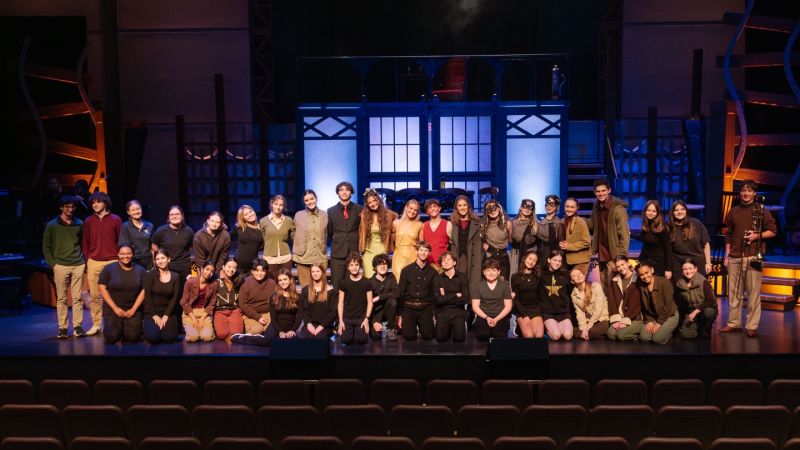
Pulaski Academy once again proves that its theatre program is not merely extracurricular, it is a full-fledged training ground for the next generation of Broadway artists. With their production of Hadestown: Teen Edition, presented under the direction of Sheridan Posey, Musical Director John Willis, and Choreographer Moriah Patterson, the students deliver a haunting and emotionally resonant retelling of Anaïs Mitchell’s folk-opera that feels far beyond “high school theatre.” This is the kind of production that reminds you how transformative arts education can be when guided by passionate professionals who refuse to lower the bar.
Inspired by ancient Greek mythology, Hadestown intertwines the tragic love story of Orpheus and Eurydice with the tumultuous marriage of Hades and Persephone. When hardship drives Eurydice to the industrial underworld ruled by Hades, the idealistic musician Orpheus follows, determined to rescue her with the power of his song. Along the way, the audience witnesses a world divided between warmth and oppression, hope and control. Ultimately, the tale becomes a poignant meditation on love, trust, and whether faith can survive even when the ending is already known.
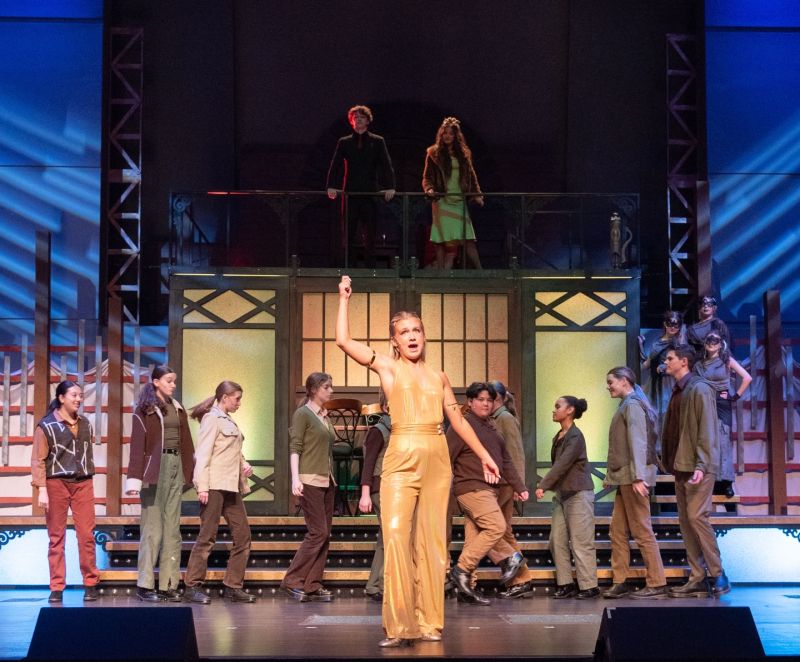
From the moment the lights dim, Sascha Bass as Hermes quite literally shines, stepping onto the stage in a dazzling gold jumpsuit that immediately signals she is our guide through this mythic journey. With a playful wink and effortless charisma, Bass shepherds the audience through the underworld’s story with the confidence of a seasoned performer. She doesn’t just introduce the world of Hadestown, she owns it.
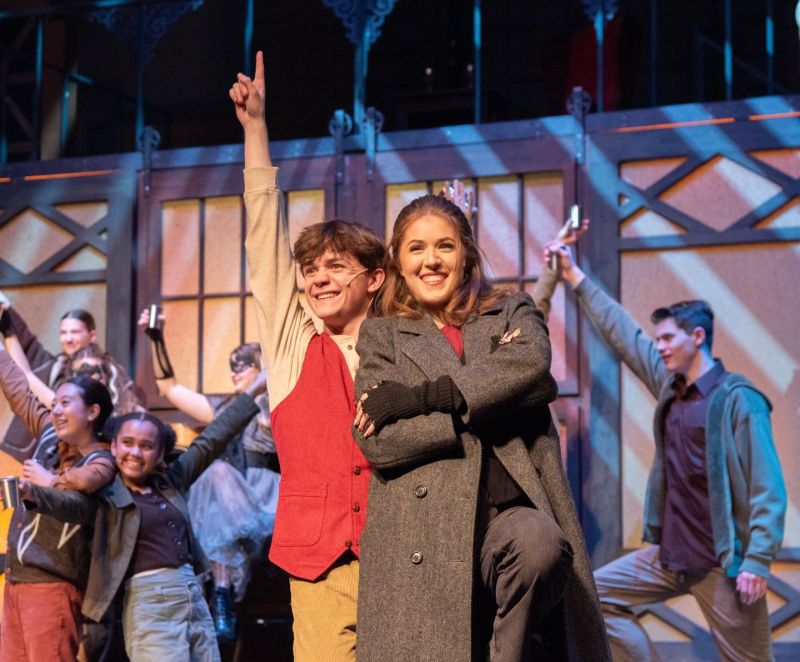
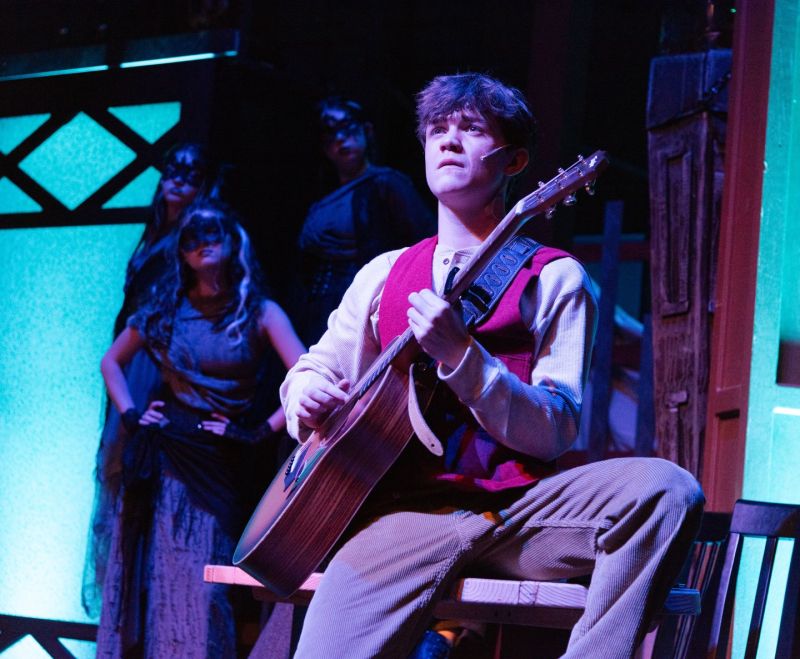
Collin Carlton brings tender vulnerability to Orpheus, leaning fully into the character’s starry-eyed romanticism. His gentle sincerity makes Orpheus’ devotion to Eurydice feel pure rather than naïve, and his guitar work adds an authentic folk quality that enriches the musical’s soundscape. Opposite him, Mallory Lafferty as Eurydice fully embraces the character’s angst, portraying a young woman hardened by circumstance yet still yearning for safety and love. Lafferty’s emotional intensity gives weight to Eurydice’s choices, making her journey into the underworld feel tragically inevitable rather than impulsive. Together, the pair create a believable connection that anchors the show’s central love story in real vulnerability.
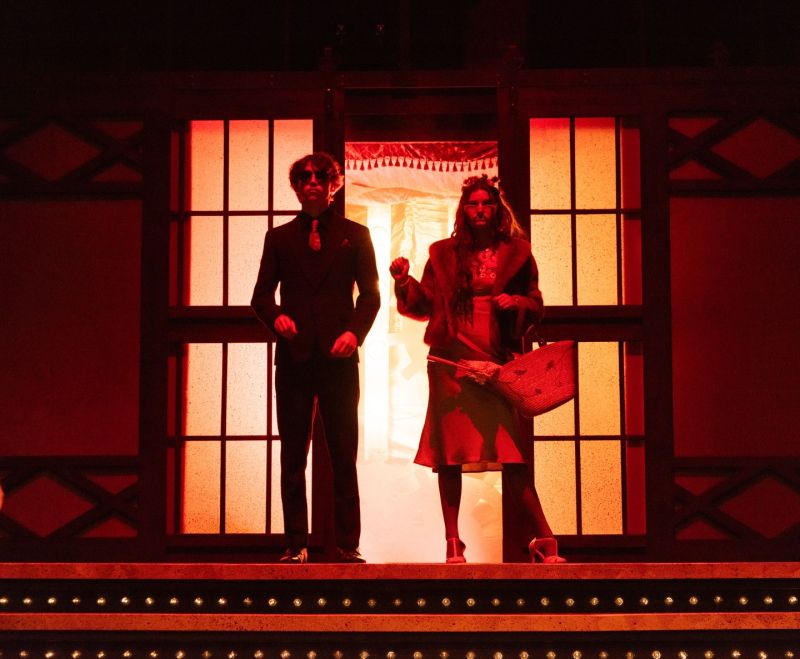
Canyon Humphreys brings a chilling gravity to Hades, portraying the ruler of the underworld as intensely serious, controlled, and emotionally distant, a stark contrast to the youthful passion of the lovers above. His presence commands attention whenever he steps onstage, embodying authority not through bluster but through quiet, unwavering menace. The dynamic between Hades, Eurydice, and Persephone creates a compelling emotional triangle, with Eurydice drawn into his world out of desperation while Persephone wrestles with the strain his hardened rule has placed on their marriage. Berkeley Courtney-Moore is a standout as Persephone, perfectly capturing the character’s party-girl bravado, earthy warmth, and underlying sadness. Her exuberance feels like both rebellion and survival, making the push-and-pull between her and Humphreys’ stoic Hades especially poignant as glimpses of their once-passionate love flicker beneath the tension.
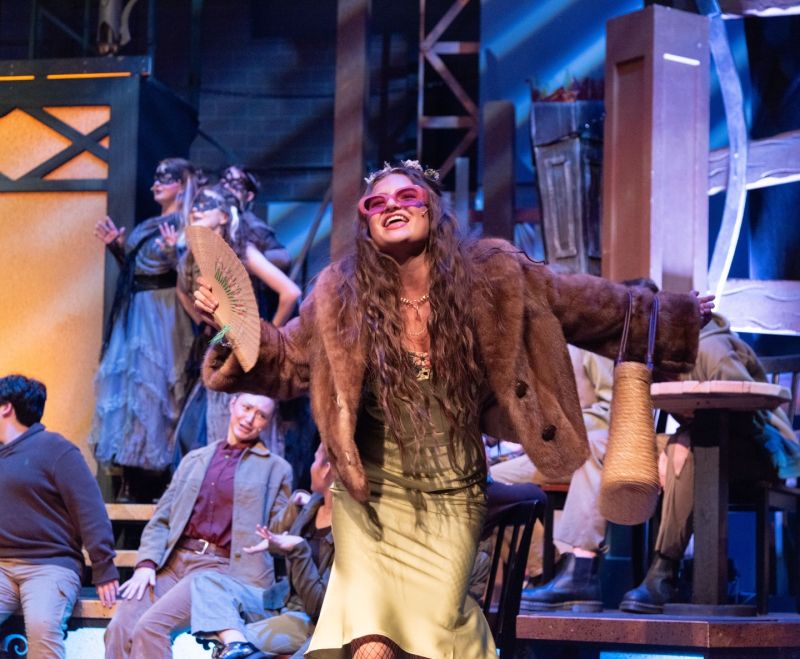
Act I is packed with gritty, pulse-driven musical numbers that establish the show’s industrial folk sound and relentless emotional stakes. The opening anthem “Road to Hell” immediately draws the audience into the storytelling, setting a hypnotic rhythm that never quite loosens its grip, while the irresistibly catchy “Way Down Hadestown” pulses with swagger and danger. Perhaps most surprising is the chilling impact of “Why We Build the Wall,” delivered with an intensity that underscores the show’s darker political and emotional themes without ever feeling heavy-handed. Equally mesmerizing are the Fates — Addison Pierce, Addie Droste, and Darby Haddock — whose tight harmonies and eerie presence weave through the narrative like a living conscience. Their vocal blend is stunningly precise, at times silky and seductive, at others sharp and foreboding, making them one of the production’s most captivating elements.
As always, a live band elevates the entire theatrical experience, and this ensemble had the grooves absolutely locked in while preserving the show’s signature folksy, jazz-infused sound. Under the leadership of Musical Director and Conductor John Willis on keyboard, the musicians created a rich, atmospheric foundation that pulsed through the theatre from first note to final bow. The instrumentation — Emily Copper (Keyboard 2/Accordion), Gabi Eckart (Cello), Matt Stone (Guitar), Logan Smith (Bass), Kim Aguilar (Violin), Marshall Pittman (Drums), Girvan Donagher (Trombone), and Aarav Virmani (Percussion) — blended beautifully, balancing earthy acoustic textures with the driving rhythms that define Hadestown. The result was a soundscape that felt both intimate and expansive, grounding the mythic story in a warm, human heartbeat while still delivering plenty of toe-tapping energy.
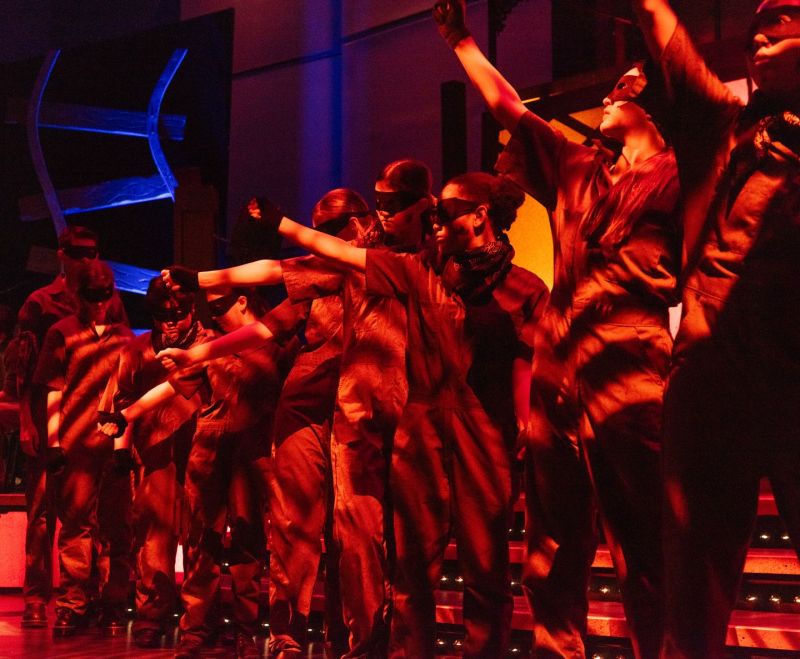
The production as a whole demonstrates why Pulaski Academy keeps putting out Broadway Bound (literally and figuratively) performers. The ensemble moves with precision and purpose, thanks to Patterson’s dynamic choreography, which captures the industrial grind of Hadestown alongside the fluid lyricism of the world above. Willis’ musical direction keeps Mitchell’s intricate score tight and expressive, balancing the show’s folk, jazz, and blues influences while supporting young voices with sensitivity. The result is a sound that feels cohesive and mature without sacrificing the youthful energy of the performers.
Visually, the staging creates a compelling contrast between warmth and oppression, between the hope of the upper world and the mechanized despair below. The workers’ sequences, in particular, are striking, with synchronized movement and layered vocals that create a palpable sense of inevitability. Yet even in its darkest moments, the show never loses sight of the humanity at its core.
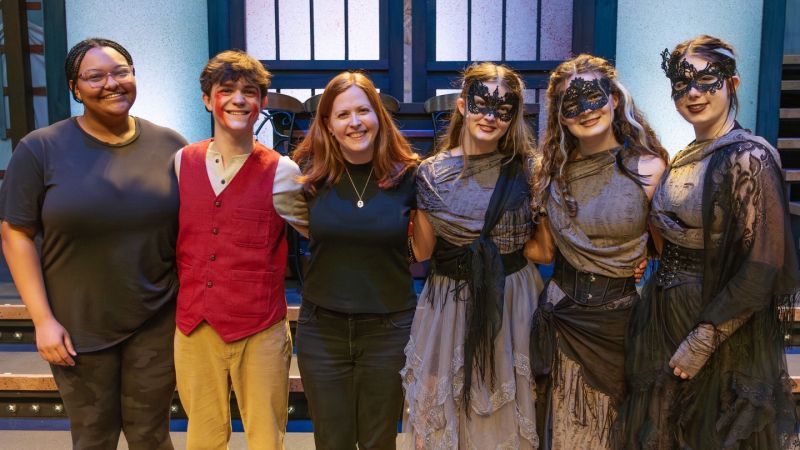
There are several seniors in this production whose presence will undoubtedly be missed, having helped shape the strength and spirit of Pulaski Academy’s theatre program. Yet rather than a bittersweet farewell, their performances feel like a launching pad, a clear sign that they are stepping forward fully prepared for whatever paths lie ahead, whether onstage, behind the scenes, or in entirely new arenas. The confidence, discipline, and artistry they displayed speak volumes about the education they have received here, and I can't wait to see what happens next.
Sign up for all the news on the Fall season, discounts & more...
|
Come From Away: An Immersive Experience Actors Theatre of Little Rock (9/23-10/10) |
|
“Men on Boats” By Jaclyn Backhaus Arkansas State University Theatre Department (4/16-4/25) |
![The Complete Works of William Shakespeare [Revised] (Abridged) [Revised Again] By Adam Long, Daniel Singer, and Jess Winfield in Arkansas](https://cloudimages.broadwayworld.com/regionalshows/ndphoto_6a7a3b5db81ed3.31128678.jpg)
|
The Complete Works of William Shakespeare [Revised] (Abridged) [Revised Again] By Adam Long, Daniel Singer, and Jess Winfield Arkansas State University Theatre Department (10/09-10/18) |
|
“Little Shop of Horrors” Book and Lyrics by Howard Ashman, Music by Alan Menken Arkansas State University Theatre Department (11/13-11/22) |
|
Three Days Grace, I Prevail & The Funeral Portrait Walmart AMP (10/28-10/28) |
|
Wait Until Dark Pocket Community Theatre (10/02-10/11) |
|
Misery Theatre Collective of NWA (10/16-10/18) |
|
Scrooge! The Musical Pocket Community Theatre (12/04-12/13) |
|
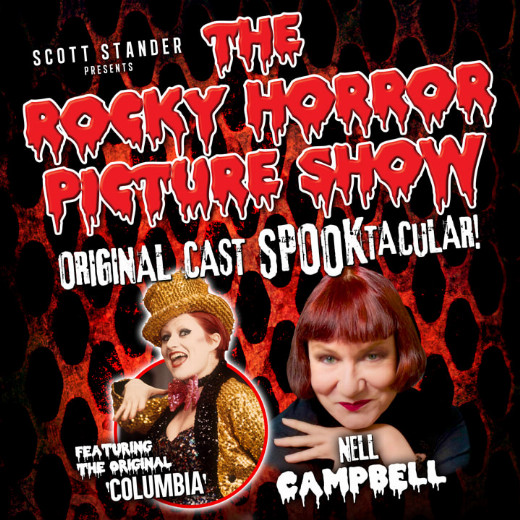
The Rocky Horror Picture Show Spooktacular Tour with Nell Campbell Robinson Center (10/20-10/20) |
|
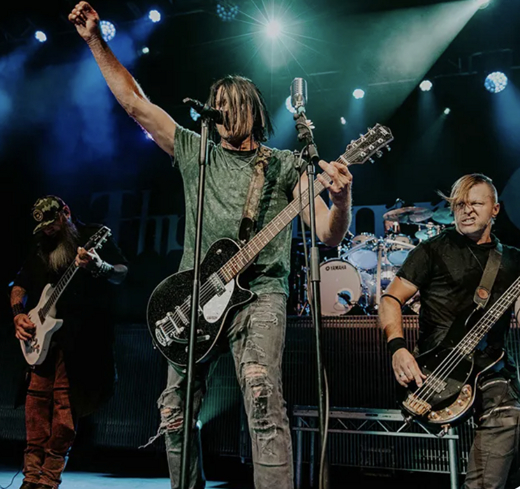
Three Days Grace, I Prevail & The Funeral Portrait at Walmart AMP Walmart AMP (10/28-10/28) |

Reader Reviews
To post a comment, you must register and login.