


Interview: Del Shores, Emerson Collins, Clinton Williams of RECIPE BOX at Austin Rainbow Theatre
Del Shores, Emerson Collins, and Clinton Williams talk Southern grit, chosen family, and the importance of queer voices in theatre.
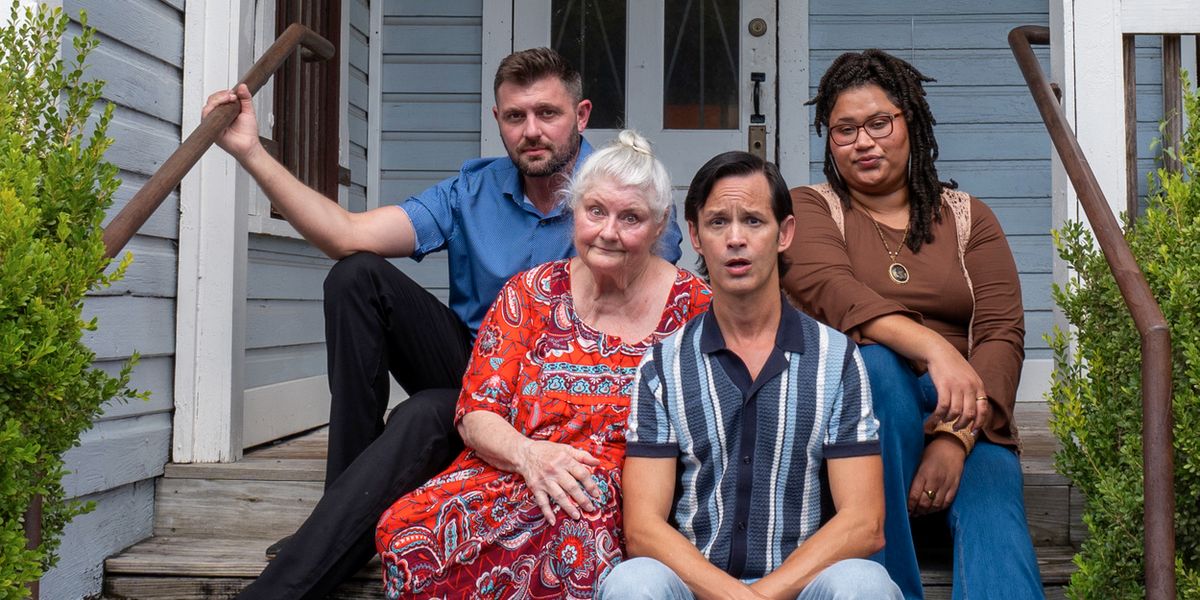
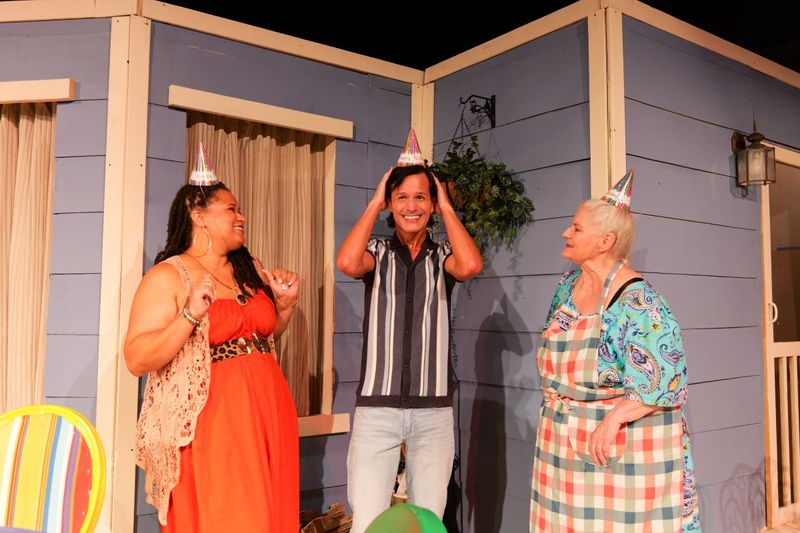
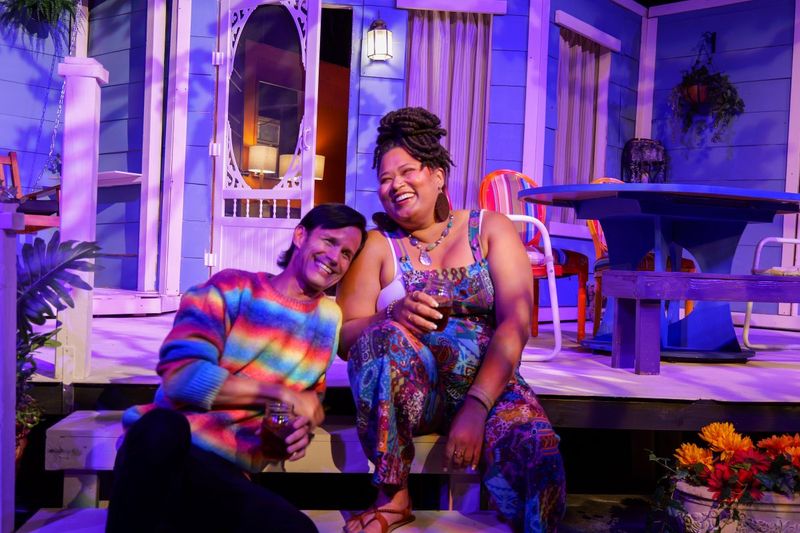
There is a distinct, defiant magic that happens when queer storytelling plants its roots exactly where it is needed most. Austin Rainbow Theatre is presenting the regional premiere of THE RECIPE BOX, the latest work from legendary Southern storyteller Del Shores (SORDID LIVES, SOUTHERN BAPTIST SISSIES). Produced alongside his longtime collaborator Emerson Collins and Austin Rainbow Theatre’s Artistic Director Clinton Williams, the play brings Shores’ trademark blend of hysterical Southern grit and devastating emotional honesty to Austin.
The connection to this creative circle is deeply personal. As a local artist, my own introduction to Shores' universe came decades ago through a local comedy sketch group, The Sons and Daughters of Fred and Ethel. Staging defiant queer art in this city has always carried profound community weight—from my own experiences directing THE LARAMIE PROJECT at City Theatre and proudly framing the subsequent Westboro protest letters, to personal family milestones, like the spiritual journey that led my wife Tammy and me to claim the chosen name of Lorraine. It is in this exact spirit of "queering family" and leading with grace that this milestone production arrived in town.
Shores, Collins, and Williams sat down with BroadwayWorld for a wide-ranging, candid conversation about the origins of the play, the political weight of staging queer art in Texas today, and why sometimes, the people who save us are simply the ones who refuse to leave.
***
WARM WELCOMES
Del Shores: Hello. Hi, Joni!
BWW: Well, hello, my big gay friends!
Shores: Good morning!
BWW: There you go! Well, good morning. Thank you for joining me, Clinton. Hello there. I did not expect your handsome face.
Clinton Williams: Hi, my handsome face is here.
BWW: Great. Well, I’m excited to be with you all. Del, I've loved your work for a long time.
Shores: Oh, thank you. Thank you. I’m having a good ride, I should say. I’m still prolific in a sense. I wake up with ideas, as you can see.
Collins: And the kids are finding the work. I was at a pool party during Pride last weekend, and this sweet little 23-year-old lesbian couple came running up, and they were like, “Are you Emerson?” And I said, “Yes.” And I literally said, “You know me from Bravo?” “No, we love SORDID LIVES.” I was like, “Oh good, the real stuff.” That’s the stuff I’m proud of. I’m so glad. They were little young lesbian fans. I love it!
Shores: We produced a play Off-Broadway last year, and I was on the subway, just holding on, and this young woman was staring at me. She came over and goes, “Are you Del Shores?” And I go, “Yes. How in the hell in New York City do you recognize me?” She goes, "Oh, I follow you on Instagram. My gay friends told me." She knew all of my work.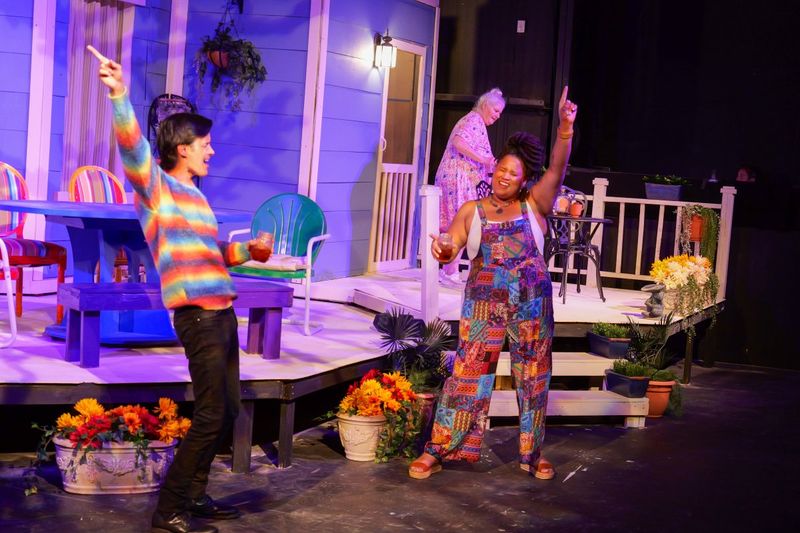
The Origins of THE RECIPE BOX
BWW: So what should we know about this play?
Shores: I wasn’t looking for this play, and I think sometimes those are the ones that surprise me and surprise other folks. My play YELLOW was like that. I really wasn’t looking for that play, and it just was delivered to me with a story. This one was at a dinner party. I teach at Northwestern State University, and I went to a dinner party that was to honor an acquaintance of mine who I’d met the year before—a big SORDID LIVES fan—who had passed away. His husband was having this dinner party.
In the middle of the dinner party, this old woman just emerges out of the back bedroom with an empty mason jar, in a housecoat, with hair that looked like she hadn’t put a brush in it in several days. Everybody knew her except me. Everybody’s like, “Hey, Lou Wanda.” She’s real gruff—I just love an old bitchy Southern woman. She said, “Hey,” and walks in the kitchen. I could see her pour Crown Royal over ice in the mason jar, fill it up to the brim, and start walking back. Someone jokingly said, “What are you mixing that drink with, Lou Wanda?” And she goes, “Ice!” Which is in the play.
Then she pauses for a second. We’re playing Cards Against Humanity, and she looks at what we’re doing and says, “What the hell kind of card game is this?” Of course, she didn’t see a jack or a queen. They said, “It’s called Cards Against Humanity. Would you like to know how it’s played?” She said, “No,” and walks on. I thought, Oh damn, I love this woman. And then I said, “Who the f--- is that?” Frank, the widower, said, “That’s Gary’s mother. She moved in with us six months ago, and now I’m stuck with her.” And the wheels started turning.
THE RECIPE BOX came in a separate piece, where my brother sent me my mom’s recipe box. Lorraine has been off this plane for two decades now, and he had finally gone through a lot of her stuff. I said, “Yes, I want them.” We were trying to find a certain recipe, and my daughter found all these medical secrets in the back of them. It just unlocked the play for me. Then I started writing with this man [Emerson] in my head, because he’s one of my muses. He’s in that Leslie Jordan, Dale Dickey, Ann Walker, Bonnie Bedelia, Caroline Rhea headspace that I have, where I see characters in the mouths of actors. And he delivers such a beautiful performance, as do all of the cast in this wonderful production here at Austin Rainbow Theatre. So there’s your very long answer.
But Emerson is the synopsis queen. Much better at synopsis. Every time we have to do one, I just say “Emerson, they want a synopsis.”
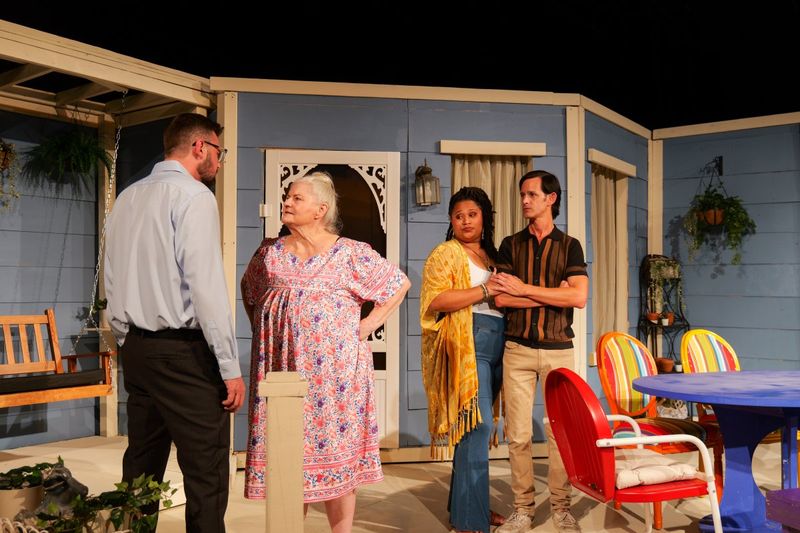
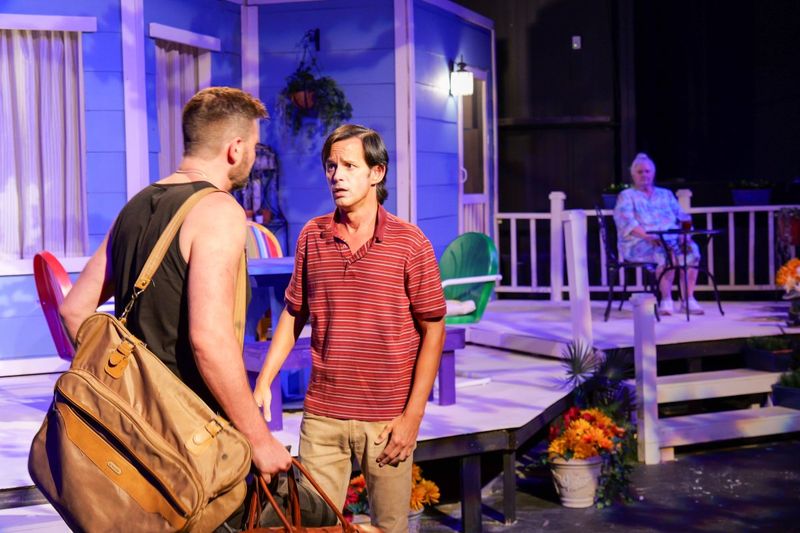
Collins: So it’s ultimately the story of a trauma-filled college professor whose younger husband leaves him for an even younger man while leaving behind the mother who just moved in. His mother-in-law and her son have a tortured relationship, and so these two sort of lost and broken people heal together as their friendship grows. And then there’s the college professor’s best friend, who’s been there through the twenty years of his trauma.
What’s revealed in the story is: What do you do when the trauma you thought you carried is not what you thought it was? That’s the only way to say that without telling too much more of the story. It’s: How do we unlock damage that wasn’t appropriate to our damage? It’s based on a falsehood, basically—or something that we perceived was the truth, and it’s not.
Shores: The truth is revealed. You know, my early work—everybody seems to always go to SORDID LIVES. Truly, when I wrote SORDID LIVES, I had just come out. Coming out to my Southern Baptist family—my dad was a preacher—I thought, I’m going to write a serious subject in the most comedic way. My challenge to myself was to write the funniest play I’d ever written, and I think I succeeded with SORDID LIVES. But after SORDID LIVES came SOUTHERN BAPTIST SISSIES, and people would come to the play and go, “What the f---? I wasn’t expecting to sob.”
As I get older, I think I’ve evolved into a different kind of storytelling. I really love the tone of this play because there are some moments of hysteria. It’s got one of my favorite scenes between Emerson and Chelsea, who plays Una. They’re wildly drunk. That also came out of that dinner party. The one thing that Emerson didn’t mention is Lou Wanda has a little gambling problem and lost her home, and that’s why she had to move in.
Collins: Severe stakes.
Shores: It’s a crazy role, and Cynthia Sanders, who plays Lou Wanda in this production, is so brilliant. At 78 years old, to have memorized probably the hardest dialogue—maybe in the top three—
Williams: Oh my God. She does not stop talking.
Shores: Joni, you know those people who have no transitions in their thoughts, kind of like me? That’s Lou Wanda. She just goes from, “Oh—there was a subject. I just picked up this glasses cleaner. I knew this woman who used to…” And then she just goes into—there’s a lot of detail.
Laughter Through Tears and Choosing Austin
BWW: Your work is a lot of what our friend Dolly, in STEEL MAGNOLIAS, said her favorite emotion is: laughter through tears.
Shores: Yes.
Williams: That’s absolutely what the show is too, by the way.
Shores: Yeah, it is. There are moments where even the characters—you have a moment that I love where you start laughing. You say something that makes you laugh, and the laugh turns into tears in just a breath. Emerson has that ability. A lot of actors fake it. He does not. He takes a moment to get to whatever that pain is he channels.
Collins: It’s also what I’ve always loved best about the breadth of Del’s work. It reflects the way life really is, right? You laugh at a funeral, you cry at a wedding. None of life’s emotions are simple, and it’s so much more honest that way. Sometimes the moments of greatest hilarity are amidst the worst tragedy, and sometimes the most beautiful moments of pain, of remembering someone that’s present—I feel like it reflects our actual life experiences so honestly that way.
BWW: Clinton, tell us, why THE RECIPE BOX and why Austin?
Williams: Well, I took over Austin Rainbow Theatre last August. I’ve been involved since its first season, but I took over for Christopher Preslar last August. Christopher did SORDID LIVES as the first actual production of Austin Rainbow Theatre. I was a huge part of casting Nadine Hughes as Brother Boy. Since then, we’ve gotten connected with the Del Shores Foundation, found out that Del had a new show, and I reached out and said, “Hey, we would love to do it here.” Things worked out, and here we are.
Shores: We’re thrilled. In working with lots of theaters, I’ve had amazing experiences with theaters and artistic directors, and ART is right there in the top tier, tied with a few. It’s been a glorious ride for us with the team that Clinton put together, his leadership, and this theater company. It’s a beautiful group of folks that I’ve found to really love.
Williams: We do have a good solid team for this show. And the company itself is growing. That’s what’s fantastic about what’s happening right now with Del. I feel like we’ve leveled up a little bit. We’ve only been around for four years, and to have the kind of growth that we’ve had in four years is pretty exceptional. I’m very glad that Del and Emerson trusted us enough—me enough—to bring the show here.
The Political Weight of Queer Art
Collins: For us, it fits in. We started the Del Shores Foundation right before the pandemic, and then really got going after the lockdown era, specifically to find and elevate new LGBTQ+ playwrights. We reached out and built a network of LGBTQ+-focused theater companies across the country to be our partners. Clinton reached out immediately as we said, “Del’s got a new play we’re doing.” He said, “I want it. Will you all come here?” Being here in Austin has been really interesting. I’m from Texas originally. I was born in Waco. Del and I both went to Baylor. I grew up in Houston. We were in the Pride Parade last Sunday with Clinton.
BWW: Baylor?
Shores: They don’t claim us.
Collins: We barely claim them. For some reason, we don't make the alumni newsletters. I don't know why. Sidebar—not important—our last movie, A VERY SORDID WEDDING, the sequel to SORDID LIVES, was the first movie about marriage equality after the ruling. Our film booker was booking us in theaters around the country, and he said, “Between Dallas and Austin, I found this little theater in Waco on a Monday.” I was like, “Yes, book it,” just so we could go.
Collins: I booked us on the local morning news at 5:45 in the morning just so I could sit on the Waco morning news and say, “Well, as an openly gay alumnus of Baylor University, I’m very proud to be bringing our movie about marriage equality to the Hippodrome Theater tonight at 7:30.” We got no support from the Baylor Lariat, which I was an editor of, but we sold out the screening weeks in advance. The theater called and said, “Who are you people?” I said, “Oh, honey, every gay and lesbian for a fifty-mile radius is on their way for this tonight.” They drove in. We had the best time.
Collins: But being here and being in the parade on Sunday—we’ve done a lot of Prides, we’ve been in a lot of parades—but rolling past the state Capitol here in Texas, the symbolism of this is really important. I know the queer community in Austin is loud and proud, but being butt up against the biggest bigots in the state, working so hard to take rights from trans people and women and our community, the symbolism here is actually very important. What Clinton and Austin Rainbow Theatre stand for and are doing here are also incredibly important. That’s a big part of why we were like, “Yes, we’re on our way.” What you’re doing really matters, and the stories you’re telling really matter too.
BWW: You want to say more about that, Clinton?
Williams: To be honest with you, I don’t stop and think about it enough. Running a company—especially in its infancy, as we are—I’m just bogged down in the work of it all and trying to make it happen. Every once in a while, I will stop and actually look at the breadth of what we’re doing, and I look at the community that we’re building, and I get a little emotional about it. Because if I had something like this when I was younger, I don't know where I would be in my life. I feel like I would have expanded and grown a lot sooner than I did. I grew up in Northeast Texas, repressed gay, with no access to anything. I think even seeing SORDID LIVES at some point was one of my first exposures to the gay world. So it’s pretty fantastic to now deliver that to a new audience and see the weight of art on our community.
Shores: Sometimes we take for granted that there is this oasis for queer voices and the queer community to come and feel safe in that space. I feel like the team that Clinton put together—this very queer team that I just adore, a lot of young folks—it’s just been—you’re doing such good work. And it’s so very, very important. We’re honored to be a part of it.
Williams: We’re happy to have you.
Shores: And many times people say, “Oh, you’re preaching to the choir.” Well, you know what? Sometimes the choir needs a really good sermon. And a lot of those choir members bring other people into the theater.
Queering Family and Redefining Trauma
BWW: I feel like where we might be headed in the conversation is—the play is about chosen family, but just not the usual version. Your work has always been about queering family, as it were. And this is a chosen family. Rick doesn’t exactly go out and choose these people. They happen to him. So I’m curious about what you guys think the play understands about the people who become our people.
Collins: One of the things I love is sometimes the people you end up with are the people that refuse to leave. Sometimes they’re the people you pick, and sometimes they’re the people who refuse to let you push them away. A lot of queer trauma—how it impacts the people around us—sometimes it’s the people who go, “I don’t care. You can’t make me go. I’m staying.” And I love that, because it ends up a combination of both: the people that you picked, and the people who were strong enough to see what you were going through and to stick by you until you got through it on the other side.
Shores: I’ve written the coming-out story. I’ve written the response to the coming-out story with family. I’ve written the religious trauma. And I really wanted to address where we are right now. Yes, we are at gay divorce. Like you said, chosen family. Sometimes it’s so very important. They actually say that in the play.
Shores: And I love that you can’t get rid of Lou Wanda. The word “stuck” is in the play, and that’s exactly what Frank said to me that night. He said, “I’m stuck with her.” But what I observed the following year—I went back and taught again, and he would just drag her to everything. We’d be at dinner, and there she was. She didn’t say much. She just had those quippy kind of comments. I said, “I love seeing you with her.” And he said, “We bonded over grief.” I just love that. I didn’t want to tell that story exactly. I understand breakups much more than I understand losing a partner to death. So I thought, I can tell that story with a little more conflict.
The Evolution of a Creative Pallete
BWW: I think what you’ve alluded to a little bit is the evolution of your work in relation to our life experiences as part of the LGBTQ+ family. We have a long way to go, but we’ve come a long way too. How does your creative process relate to the evolution of your lives?
Shores: That’s exactly right. I had three plays and one very successful one that became a movie before I came out: DADDY’S DYIN’… WHO’S GOT THE WILL? It was my first big break as my second play. I was 28 years old when it happened. I was married with two little girls—or one on the way, actually—when the movie premiered. So your life informs your work for writers and storytellers.
Shores: For me, I knew when I came out that I was going to have to write about it. I knew when I wrote SORDID LIVES that I would have to come out publicly, which I did with an LA Times article. I knew that it would change my career. I feared that it would change it in a negative way. Someone said something really interesting to me about a very famous actor who’s closeted. They said, “What would happen if so-and-so came out? It would not kill his career. It would change his career.” That’s exactly what happened to me. Of course, I embraced it to the nth degree.
Shores: And I haven’t written just gay-themed plays. I wrote THE TRIALS AND TRIBULATIONS OF A TRAILER TRASH HOUSEWIFE, which became the movie BLUES FOR WILLADEAN. It had a little bit of gay theme in it, but not much. It was more about domestic violence. For me, whatever is happening, whatever I observe, becomes sort of my palette to write. Every now and then I’ll get some—when I wrote TRIALS AND TRIBULATIONS, I had somebody on the GLAAD committee write me an email and say, “You’ve betrayed us.” I’m like, “What? What do you mean I’ve betrayed you?” “Well, we can’t nominate this play,” or whatever. My life sort of dictates—and my observation, keeping my eyes open. And of course, there’s something about the brand and the platform, and my life is very gay. So it will always be a part of my work.
Collins: It’s a big part of what I love about this play. SORDID LIVES is one of the earlier examples of big success with coming-out stories, and for neither of the men in this play, in this relationship, the gay is not the trauma. It’s what they’ve done to each other that is the trauma. They are grown gay men dealing with different, further-along life challenges with each other. Nothing about their gayness is related to the trauma here. That’s where we are evolving to in telling gay and queer stories as well. This is a terrible relationship and trauma story that is set against a relationship between two men. That informs it, but it is not the core of it. And that’s exciting in our storytelling.
BWW: And on that note, Emerson, Rick starts pretty walled off. Was there anything you had to find in this particular play that Del might not have put on the page?
Collins: It’s fun because I have the benefit—we’re twenty years into this working relationship now—of having him write it, and then we did workshop drafts and developed together. We’ve had fun finding Rick’s balance. In fact, in one draft of this play, I was like, “Rick’s sort of perfect.” He had to mess Rick up a bit. So no, it’s just the things we've found together of what he is.
Collins: What’s fascinating on the actor’s side is that he has a perception of his world, and it’s very centered in his authority about it, so to speak. And then when it becomes undone—the humbling that occurs in realizing your own assumptions are incorrect, how you thought you’d been dealing with your world is wrong—and then what does that do to how you see the other people that are in your life? It takes a sort of humility to go, “Oh, you’ve been there while I did this, and I thought it was this, and it wasn’t. You went through that with me, and you stayed here.” How to be gracious—I think there’s something almost aspirational in how you heal with people that you don’t stay with. The gifts that you give each other, if you can really understand that we were both wrong here. I think that’s the thing that’s often hard for us to do.
Collins: At the beginning, his husband is cheating. But that’s not the only fault in this relationship that fell apart. It’s very easy to blame the explosive thing, and it’s a lot harder to acknowledge the sort of insidious abandonment. We do that in life, right? “That person cheated on that person. They’re the bad person.” We often don't see what are the things—and not to justify cheating, but what did we both do that got us to here? He explores that really beautifully: acknowledging, “This doesn’t make that okay, but I know that I also did this.” That’s very grown.
Shores: Chris Skinner, who is playing Joah—I said, “Play him just authentically,” because with the words, the audience is going to think that character is the antagonist of this play. And that is going to be so deceptive. As it unfolds actors many times go, “I want redeemability.” I said, “No. Just play the life circumstances, and the audience can relate.” In the past production, and I think in this one, they will love him and they will feel for him.
Collins: You usually say so beautifully: There ultimately isn’t an antagonist in this play. The antagonist is life.
Shores: That’s right.
BWW: I love this glimpse into your directing style. To be authentic, right? Read the words, speak them loud enough for people to hear, and be real.
Shores: That’s right. So many times I say, “Don’t react. Just listen.” And scratch deeper. I also say, “I don’t care how you get there. I just want you to get there.” So scratch deeper. And when you arrive, you don’t know what’s to come, but you know everything behind you. You know everything that led up to that moment of walking into that scene. I really have the actors build what happened right before. “Why are you late, Chris? Why is Joah late?” We build that together. It works. Most of the time it works.
Collins: It sure does.
Looking Toward the Horizon
BWW: I want to hear from all three of you what you hope people leave with once they’ve seen the show.
Shores: First and foremost, I want them to go into this safe space that Austin Rainbow Theatre has given us all, escape this horrid world for two-plus hours. Just let all that chaos go and enjoy our chaos. I’ve said this about other plays of mine: I want you to come and laugh a lot, and I want you to think. And if you shed a tear or two, I’m good with that.
Collins: Mine is pretty simple. When I look at the great wide world and how awful things are in so many places, mine is a reminder to be gentle with the people you love. The people that you know are doing their best—be gentle where you can. I feel like we’re all so armored against the world. Sometimes we turn it at people that don’t always deserve it. Remember who’s really on your side, who’s really on your team. And when they fail, you give grace there, as opposed to the weapons that we’re ready to employ against the rest of the world. Be gentle. The people you know are doing their best, see that where you can.
Collins: For me, we’re at a weird place in how people view the queer community and society at this point in time, because it feels like we’ve regressed. There’s just so much regression. Everybody on this call understands what I mean when I say that. But there’s so much education to be had in queer art, and more specifically in the show itself. I think that even our strongest allies can still learn something about us as human beings.
Williams: I really think this show is a testament to the fact that, yeah, we’re gay, but we’re human, and we go through the same lived experiences as everybody—as all the straighties do. I think there’s a bit of education that comes with the work that we do, especially within the queer community—even for our own selves. At times, I get bogged down on the gayness of my own relationship, but I forget that it’s a relationship itself. Does that make sense?
Shores: Yes. My TED Talk finale is: Y’all show up to Austin Rainbow Theatre. They are doing important work. Buy your tickets. Make your donations. Some of those theatergoers have money. Support the work they are doing. Don’t take for granted that our stories get told.
BWW: This is perfect. It’s been such a joy to be with you this morning, y’all.
Shores: It’s such a pleasure, and thank you for what you do. We don’t take it for granted. Theater support, particularly at this level of theater, is where the crunch of publicity and awareness has become the hardest nationally everywhere. What you do for them and for these spaces is really important. So thank you. We know that too.
BWW: You’re welcome. I have my pet theaters, and the gay ones are some of them.
Collins: I always say, in all of life, I support everybody gay and then some other people. It’s usually some Black female singers, if I’m going to be honest.
BWW: There you go. Queens in general.
Collins: Queens of every category.
The RECIPE BOX runs September 4th-19th at the Ground Floor Theatre, 979 Springdale Rd #122.
Prefer BroadwayWorld in Google Search?
Add us as a preferred source so our stories show up more often in Top Stories and Google’s AI answers — for you.

Sign up for all the news on the Fall season, discounts & more...

|
All My Sons Patti Strickel Harrision Theatre (9/29-10/04) |

|
Boeing Boeing TexARTS: Theatre & Academy (9/18-10/04) |
|
The Miraculous Journey of Edward Tulane Oscar G. Brockett Theatre (10/08-10/18) |

|
ALL MY SONS by Arthur Miller The Filigree Theatre @ Ground Floor Theatre (10/30-11/14) |

|
The Complete Works of William Shakespeare (Abridged) BASTROP OPERA HOUSE (10/09-10/25) |
|
The Book of Mormon (Non-Equity) Bass Concert Hall (6/08-6/13) |
|
Ken Ludwig's SULLIVAN AND GILBERT Austin Playhouse (10/15-10/18) |

|
Dracula: A Comedy of Terrors Austin Community College Drama Department (10/16-11/01) |
|
Oklahoma! Georgetown Palace Theatre-Springer Stage (10/02-11/01) |

|
Primary Trust Austin Playhouse (9/11-10/04) |
