


Review: Teater Koma's RUMAH SAKIT JIWA: A Surreal, Witty, and Immersive Show
Teater Koma brought RUMAH SAKIT JIWA as their 237th production in Indonesia
Review by Nabila "Hana" Hananti, editing by Rakaputra Paputungan
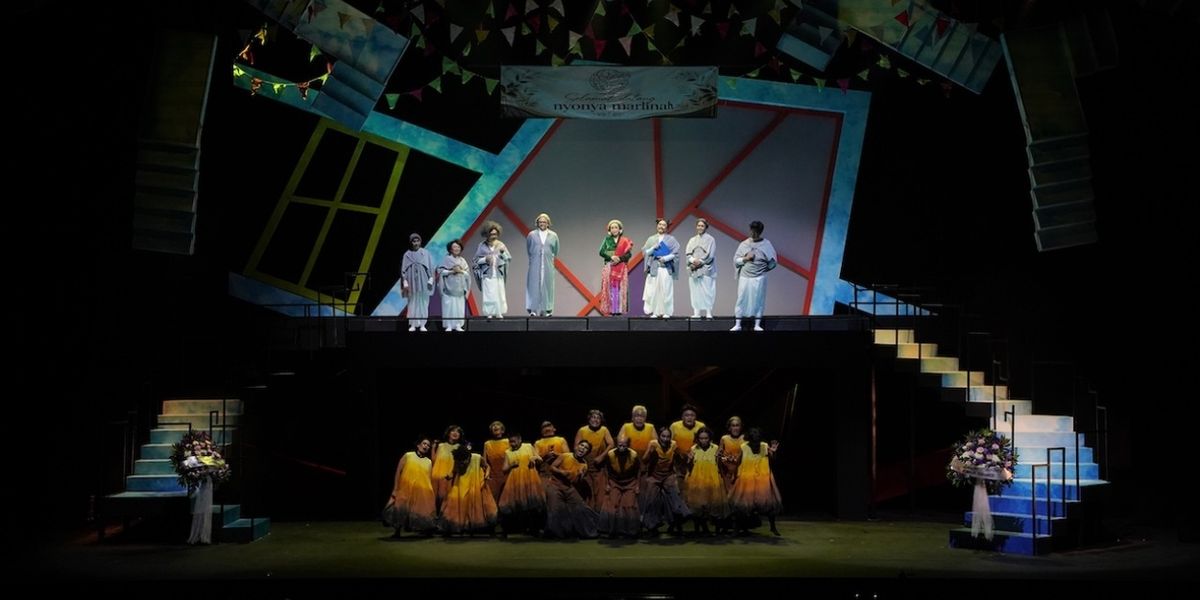
From July 30th to August 2nd 2026, Teater Koma brought the show RUMAH SAKIT JIWA (translation: MENTAL HOSPITAL) onto the stage of Graha Bhakti Budaya. This play was written by the late Nano Riantiarno and was first staged in 1991, returning back to the stage in 2026 as Teater Koma’s 237th production. This play was directed by Rangga Riantiarno with the assistance of Adri Prasetyo. Ratna Riantiarno acted as the show’s producer.
We from Broadway World Indonesia had the opportunity to watch their media preview on the night of July 29th, and here is our review.
RUMAH SAKIT JIWA tells the story of Rogusta, a young doctor with a troubled past who was recently moved to work at a mental hospital that still employed inhumane treatments towards its patient. These treatments involved shock therapy as well as physical restraints. These patients were all treated unlike humans: trained like dogs, with one of the doctors of the hospital even using a whistle in order to control their behaviour. Rogusta openly denounced these methods and the other doctors who used them, notably criticizing his seniors, dr. Murdiwan and dr. Tunggul, and even Professor Sidarita, the director of the mental hospital.
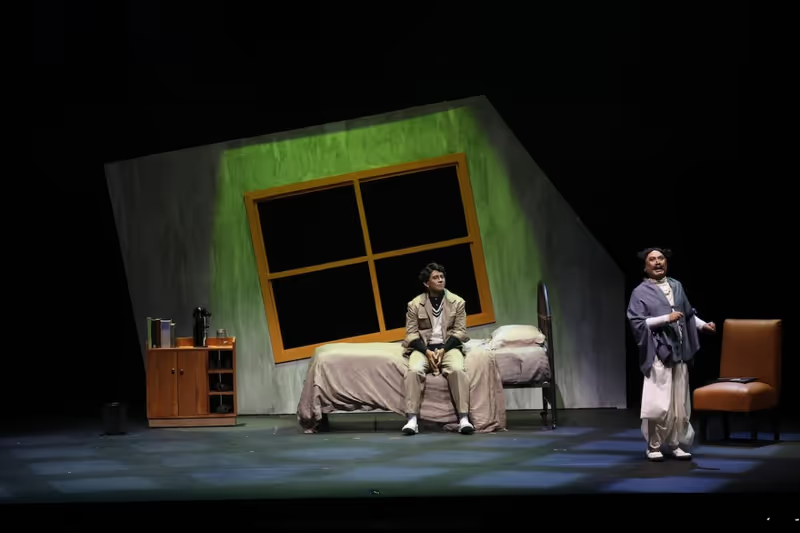
Witnessing these violations of human rights, Rogusta advocated to change the system, even going as far as personally speaking to Madam Marlinah, the president of the foundation that funded the mental hospital. Through this conversation, he was given the opportunity to utilize a different method of curing the patient – namely, focusing more on communicating and accepting each of these patients as a person. He put an emphasis on discussion and communication with the patients, nurturing a feeling of self-acceptance in them. Eventually, these patients began to open up and accept themselves, finally looking as if they had a reason to live. These earned him the favour of the patients, Professor Sidarita, as well as Madam Marlinah, rousing a feeling of envy amongst the hospital’s other doctors.
Eventually, led by dr. Murdiwan and dr. Tunggul, the doctors formed a coalition in order to bring Rogusta down. With the use of drugs and a mute patient, they framed Rogusta and accused him for having sexually assaulted the mute patient. He was wrongly convicted and was put to court, stripping him of his license and publicly humiliating him in front of everyone at the mental hospital. His attempt to defend himself failed, and eventually, he was sentenced to the electric chair. The play ends with Rogusta, standing amongst the patients of the mental hospital, becoming a faceless man.
While the ending was difficult to comprehend, RUMAH SAKIT JIWA was a show that truly immersed the audience. It utilized its large stage and spatially effective lighting in order to bring the audience deep within the story.
As I am familiar with the script before watching Teater Koma’s 2026 iteration of RUMAH SAKIT JIWA, I find it fascinating that the comedy of this script didn’t become a selling point. Nano Riantiarno wrote this script as a comedy—an incredibly witty one, even. However, Rangga Riantiarno directed this play to focus more on the drama. This made the punchline not land quite as hard, emphasizing its tragicomedy side more.
RUMAH SAKIT JIWA was a script about an attempt to erase the differences in people, making the general public as people who only obey, creating a conforming society. It provoked questions about ethics and lack of empathy in this modern age, enforcing the idea even harder with the deep and dark, almost biblical, tone from its atmospheric quality.
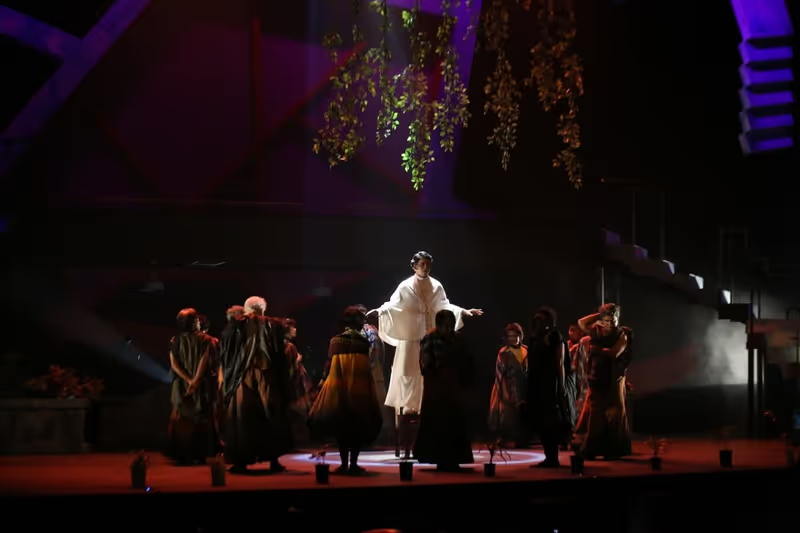
With Rangga Riantiarno’s direction, RUMAH SAKIT JIWA felt like a straight play with humor infused in it, instead of highlighting the built-in humour of comedy scripts. It was a well-made show, but to me, it wasn’t quite an entertaining one. It committed to the storytelling and brought a very direct and straight-to-the-point show, drowning the audience in the emotion without juxtaposing it with jokes or the likes.
This play was also immersed by the music that emphasized the emotions that were felt, leading to a feeling of emptiness by the time the story ends.
Some of the scenes within this play were also written as a musical number. However, said musical numbers were mostly used as comedic breaks instead of purposefully advancing the story or characters. They didn’t contribute to the narrative progression at all, such as the numbers “Tidak Tahu” (“Don’t Know”) and “Hukum Alam” (“The Laws of Nature”). While they were not in themselves a problem, this approach left the songs merely as flairs instead of an integral core of the show.
The cast of RUMAH SAKIT JIWA gave an incredible performance.
Each of the ensemble playing the patients of the mental hospital were strong stage performers. In each of their solo scenes, they controlled the stage very effectively. They were all able to fill up the space that is Graha Bhakti Budaya while also maintaining each of their own distinct personalities. With their incredibly immersive and grounded acting, they showcased how they lived within this mental hospital. Even in the moments when they were background characters, their presence did not simply fade. They existed still in the background without being distracting.
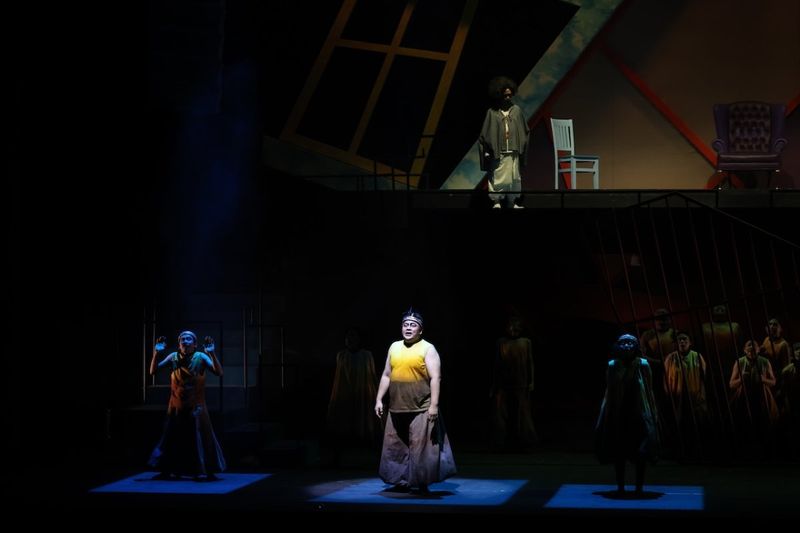
Though there are so many different characters within this show, the director had impeccable control over what would be the focus of each scene. All of the actors had succinct control over themselves and how they interact with others, having a strong form of trust with one another. However, this connection felt too controlled, creating a lack of purposeful chaos amongst the ensemble, especially amongst the patients who are supposed to be deranged.
I have a few qualms about the main character of RUMAH SAKIT JIWA. Rogusta (played by Lutfi Ardiansyah) could have been the most interesting character within the story. However, his self-assuredness with no internal conflict made him come across as a character with no flaw. He was a Gary Stu, and all the things that seemed to be negative about him came from his upbringing by his parents or by his environment, instead of anything that developed within him as a person. He felt too logical and too sensible to exist as a person; Rogusta is a man full of anger, yet the anger seemed to be less-rooted in the soul and instead existing as an obligatory form of anger necessary for his role in the story.
To me, the patients are all much more entertaining and charismatic in comparison to Rogusta himself. Despite being an agent of change within the story, Rogusta drowned within the confines of this mental hospital. Though his ideals were strong, they didn’t feel impactful because his assertiveness lacked a convincing foundation. It didn’t feel as if he had changed anyone, even though everyone within the story seemed to be against him. During the time that Rogusta let the patients do as they will, it truly felt like Rogusta was swallowed by his patients, when instead the control should still have been in his hand as he was the one who gave the patients the freedom to act as they will. The subtleness of his superiority was not expressed.
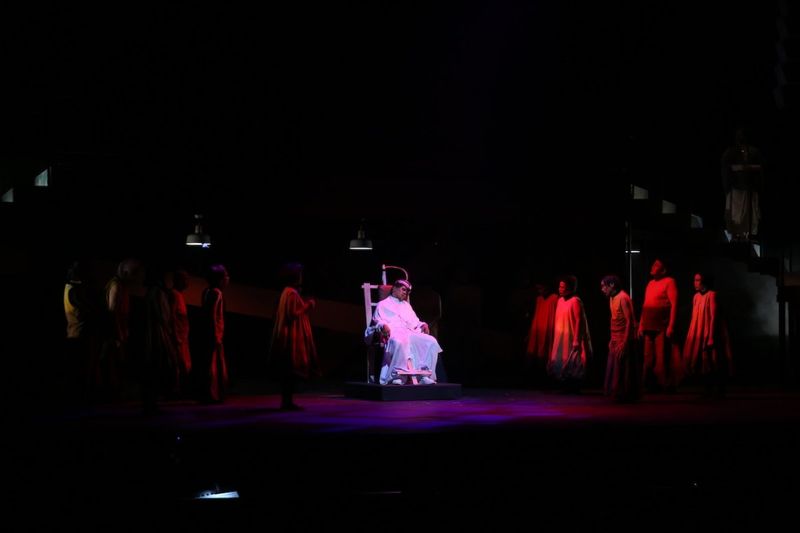
As an added note, one of our writers thinks it’s fascinating how, despite the existence of a light that directly shines the audience’s face and blinding her – even disturbing her somewhat – she liked that the light hit her. It felt like an intentional choice that contributed to the success of RUMAH SAKIT JIWA.
RUMAH SAKIT JIWA 2026 was a show that displayed the energy of Teater Koma, but without the chaos that should have come with the script. Though the focus and the energy of the play was incredibly controlled, it didn’t pick up its pace. Some scenes played out for far too long, making some of the scenes a deeply boring experience. The authenticity of RUMAH SAKIT JIWA was drowned by the amount of control that the director had. It was a surreal show that is sadly still relevant in this modern age. And while personally I wished they embraced the comedic side of the script, nonetheless, it was still an enchanting work.
I am excited to see what Teater Koma plans to bring next.
Sign up for all the news on the Summer season, discounts & more...

Reader Reviews
To post a comment, you must register and login.