


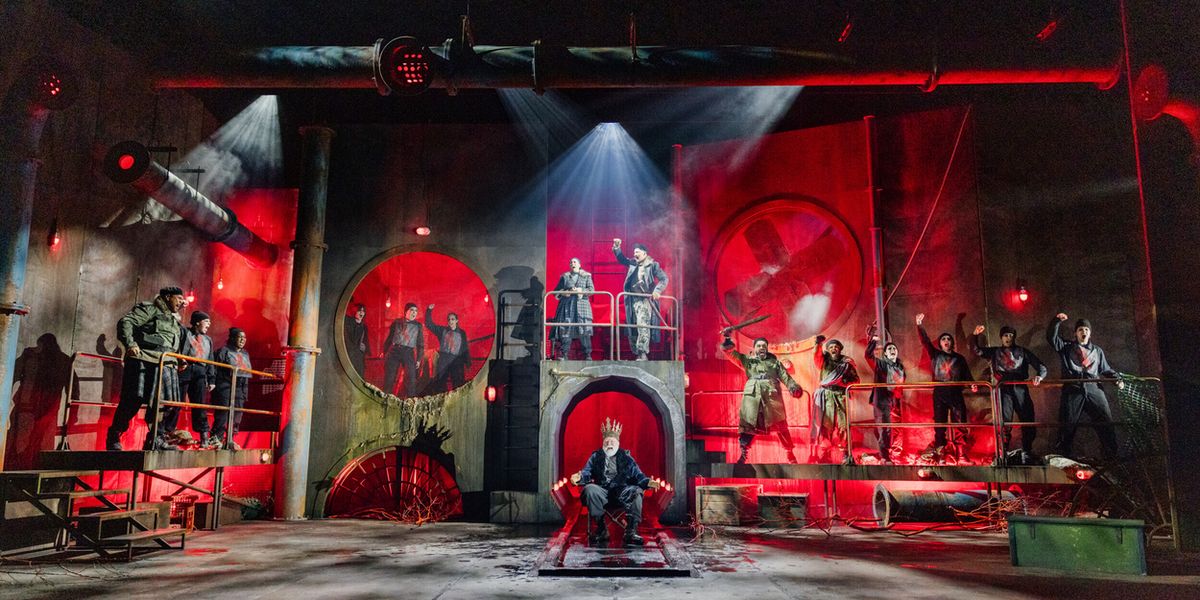
THE ROAD TO MADNESS - “I HAVE LIVED LONG ENOUGH”
From its opening moments, director Benjamin Kilby-Henson’s MACBETH is a brooding, atmospheric crafting of Shakespeare’s tragic study of “vaulting ambition.” English teachers, drama teachers, and Shakespeare devotees will welcome the production’s respect for Shakespeare’s style, skill, narrative clarity, and thematic development. Yet the production is not merely academic. It is urgent, unnerving, and sharply theatrical. Kilby-Henson leads an impressive creative team with a clear, compelling vision and every cast member brings truth and talent to their role.
This production is grounded in Shakespeare’s idea of equivocation: the need to look beneath the surface, weigh the evidence, and recognise the serpent behind the smile. The direction develops the concept, with skilled staging that builds on Shakespeare’s concept. The setting, designed by Dan Williams, is dark, disturbing, and dystopian. It is a broken world of whispering warnings, moral murk, and murderous momentum. Sound (Robin Kelly) and light (Filament Eleven 11- Rachel Marlow and Bradley Gledhill) are especially effective. Dripping water echoes through unseen pipes. Railings and nets loom. Shadows and ladders suggest a war torn, gas-filled terrain we never see.
Inspired touches capture the concept of equivocation. At the revelry, which welcomes King Duncan (Robert Pollock) to their castle, dance steps not only cement the Scottish culture, but tightly focused changes of pace and facial nuance help the audience to see the duplicitous intent of the Macbeths.
At the centre of this interpretation is one of Shakespeare’s most unsettling truths: things are rarely what they seem. MACBETH becomes a study in the dangerous gap between appearance and reality. These witches are children, often seen as innocent, but in this production, they are instruments of deception and manipulation. (Polished and eerie performances from the RAIN cast of Eva Gillespie, Charlie Kawha Grey, Lily Williams). Although children, this works effectively to hover like a dark spell, and although in control of Macbeth’s actions, they do not dominate the stage to control its atmosphere. Macbeth hears prophecy. The audience hears possibility.
Can wickedness be recognised before it acts? Do the witches see Macbeth (Mark Mitchinson) as wicked clearly from the start? Or do they awaken something already buried within him? “Something wicked this way comes.” Their power remains deliberately uncertain. They may foretell the future. They may merely feed a desire already “dark and deep.” Equivocation is superbly and sinisterly captured when Macbeth revisits the witches to ascertain how safe he is, after murdering Banquo. (Jeff Szusterman) The double faced soldiers symbolically capture the idea of “false face”. By the time the witches return at the end, the effect is chilling. Human nature is frail, flawed, and fatally suggestible.
Sara Wiseman gives Lady Macbeth a fierce and finely controlled vocal, emotional and physical intensity. She superbly captures the character’s strength, duplicity, fragility and paranoia without reducing her to a single quality. Every line is truthful, every glance powerful, and even when she is destroyed by her ambition, and her mind is reduced to a loop of recurring and painful disjointed phrases, with hesitations and tonal shifts, we cannot help but sympathize.
Opposite her, Mark Mitchinson presents Macbeth as a man who begins with honour but gives way to ambition "which o'erleaps itself and falls on the other side". His first resistance to murder is clear. So too is his fatal weakness. He cannot withstand Lady Macbeth’s assault on his courage, nor can he resist the crown the witches seem to place before him. Outstanding work from Mark Mitchinson, whose resonant delivery is psychologically truthful, and his direct address to the audience makes Macbeth’s mental collapse vivid.
Every cast member brings out the intention and psychological motives of their character and support the cohesive vision of the director. Credible, emotionally rich, well-projected and physicalised talented (and multi-roled) performances from Jeff Szusterman (Banquo), Alison Bruce (Lennox), Keagan Carr Fransch (Ross), Travis Graham (Malcolm), Marianne Infante Khee Choy (Lady Macduff), Lauie Tofa (Donalbain), Robert Pollock (King Duncan). Of note here is the outstanding performance of Amanda Tito, who embraces a range of comic and sinister roles within the play. Not only does their comic speech (comedic relief) as the Porter carry a depth of skill; it also reinforces the way the castle has become the gates of Hell, with the seemingly silly jokes symbolically capturing the themes of greed, lying and treason. Maaka Pohatu effectively captures the morally strong Macduff, who acts as the righteous avenger determined to restore Scotland to its secure political footing and rid the country of the tyrant.
The production is particularly strong when tracing the changing balance between Macbeth and Lady Macbeth. Two scenes stand out. The first is the brief exchange after Macbeth hires the murderers. The second is the banquet scene, where control visibly slips from Lady Macbeth’s hands. The dead rise to make their murders visible. Skilled direction in this scene combines lighting, sound, makeup and performance to build to the dramatic climax. By now, Macbeth’s fear is very public. His power is becoming perilous. The marriage that once seemed driven by shared ambition begins to buckle under blood, guilt, and suspicion. It is no longer possible to “cover up” the dissolving mental deterioration.
In the final act, the production finds its bleakest power. Lady Macbeth is reduced to a haunting image of guilt. Sleepwalking and tormented, she scrubs at imagined blood that will not disappear. Inspired direction sees us witnessing her loop of guilt, recounting the same phrases over and over again. Macbeth’s view of life has curdled into emptiness. He has stepped too far into bloodshed to return.
Macbeth’s words land with brutal clarity:
“Life’s but a walking shadow, a poor player
That struts and frets his hour upon the stage,
And then is heard no more; it is a tale told
By an idiot, full of sound and fury;
Signifying nothing”
This is a stark, stylish, and compelling MACBETH: a relatable production that draws the audience into Shakespeare’s enduring questions about ambition, guilt, madness, and despair. It powerfully reminds us what can happen when guilt overpowers the mind and one can “sleep no more.” Yet it also affirms the value of moral strength, as Shakespeare’s text suggests, and leaves us alert to the dangers of equivocation: “damned be all those who trust them”.
On at the ASB Waterfront Theatre until 22 August , and with a range of Accessible Theatre performances, this is a show not to be missed.
Sign up for all the news on the Summer season, discounts & more...
|
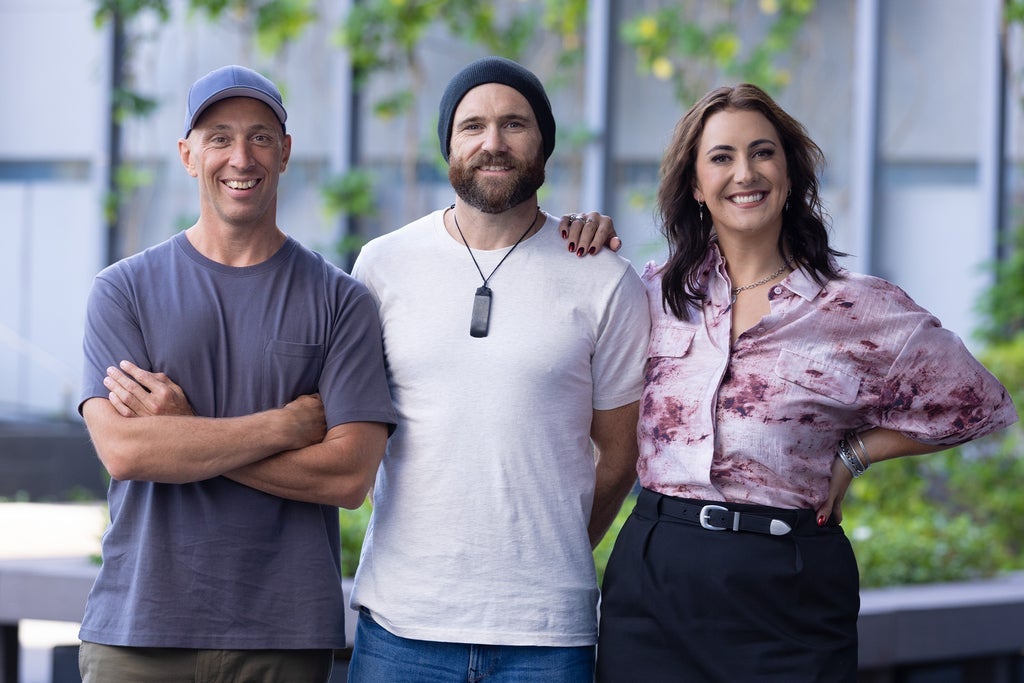
Fletch, Vaughan and Hayley LIVE - The Genuine Friends Tour James Hay Theatre, Town Hall (10/16-10/16) |
|
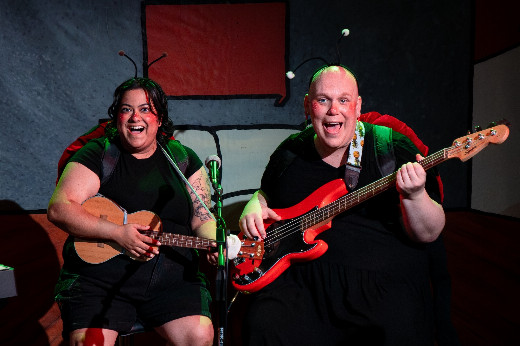
Bug Songs Not Love Songs Little Andromeda (9/18-9/18) |
|
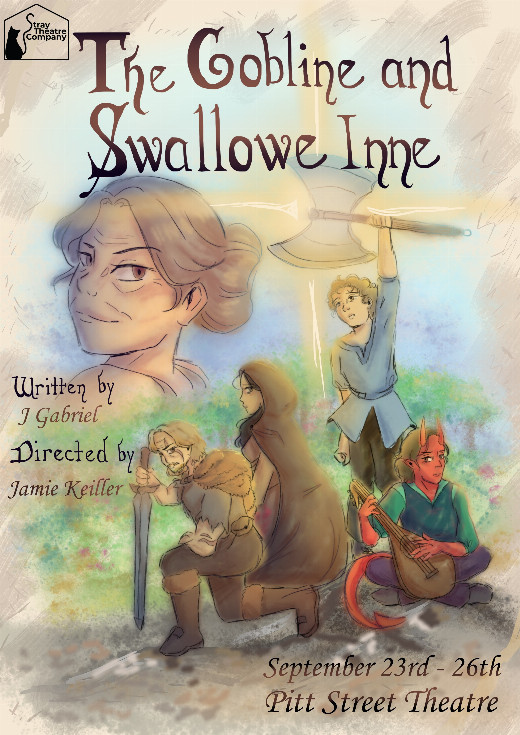
The Gobline and Swallowe Inne Stray Theatre Company (9/23-9/26) |
|
Garithmetic: The Maths Show for Dumb People Basement Theatre (9/22-9/26) |
|
Fletch, Vaughan and Hayley LIVE - The Genuine Friends Tour The Opera House Wellington (10/09-10/09) |
|
Jesus Christ Superstar Civic Theatre (10/21-11/08) |

|
Jersey Boys Isaac Theatre Royal (9/18-10/03) |
|
Jesus Christ Superstar St James Theatre Wellington (11/18-11/28) |
|
Little Shop of Horrors Q Theatre (12/16-12/20) |
|
5 Seconds of Summer Spark Arena (10/24-10/24) |

Reader Reviews
To post a comment, you must register and login.