


Review: DE PROFUNDIS, The Coronet Theatre
The Berliner Ensemble returns to the Coronet.

The literal meaning of the Latin phrase “de profundis” is “out of the depths”. It kicks off one of the penitential psalms, and it’s a regular part of Jewish, Catholic, Lutheran, Anglican, and Protestant liturgies. Today, it’s mostly known as Oscar Wilde’s final, gut-wrenching piece of writing (though it was given its title posthumously). Written while Wilde was serving the last stretch of his sentence in Reading Gaol between January and March 1897, it’s a 50,000-word letter addressed to his estranged lover, Lord Alfred “Bosie” Douglas. It’s a gorgeous, touching reclaiming of the narrative he was crucified for, with Wilde transforming his personal tragedy into art.
The Berliner Ensemble returns to The Coronet Theatre to present a solo show that charts the cruelty of men. Oliver Reese directs Jens Harzer in a bitter, relentless examination of guilt, sexuality, and hedonism in an adaptation of Wilde’s exegesis of suffering, creation, and injustice. Translated into German (offered here with English surtitles), the play is deeply poetic. The language ebbs and flows with sense and feeling as Harzer philosophises on love and carnality, society and propriety, perception and reputation. A splendid pace adds meaning to emotion and sentiment to the text.
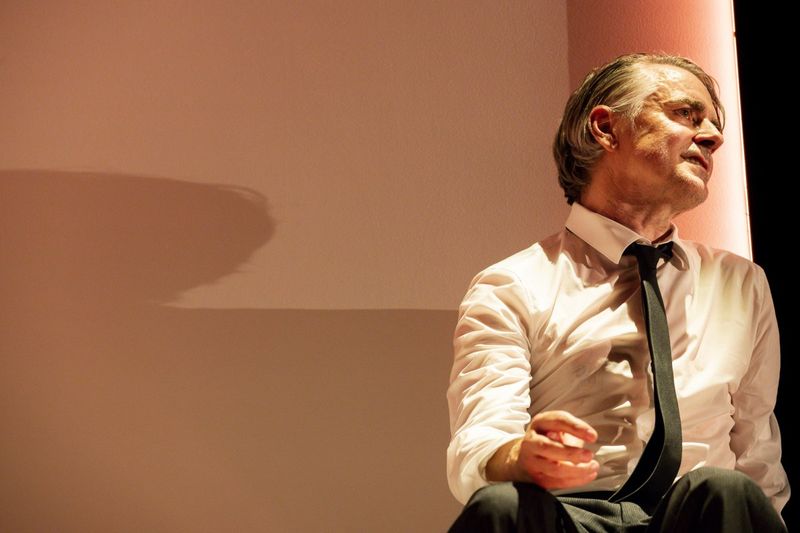
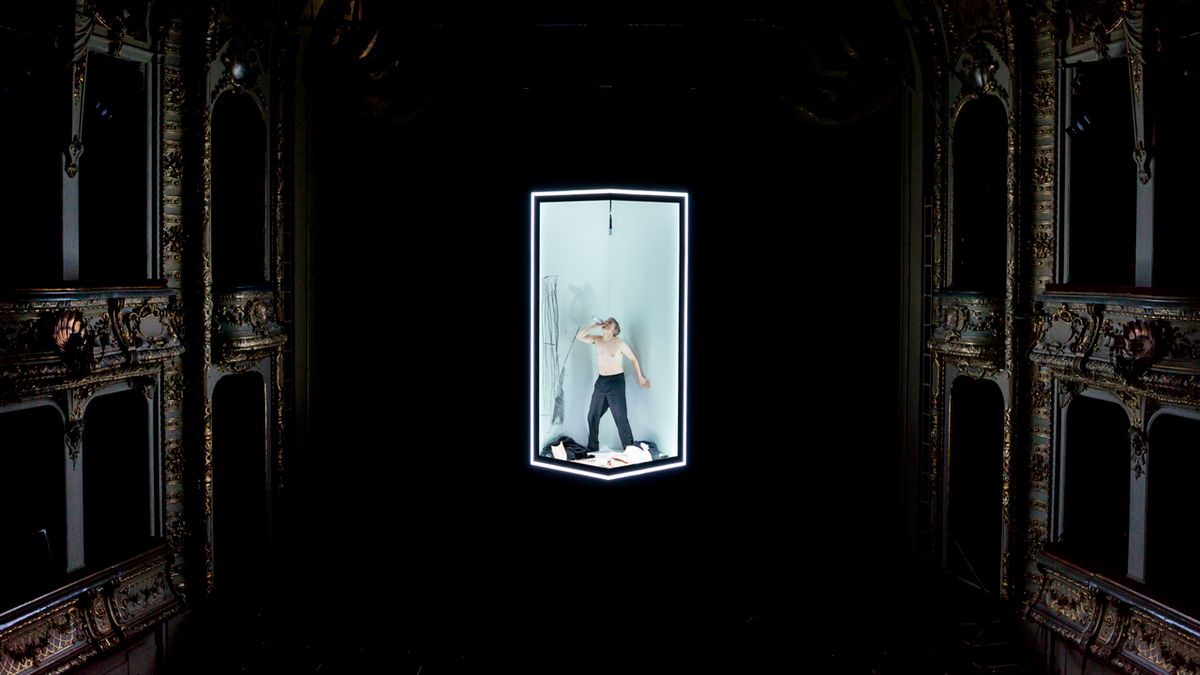
Harzer introduces a dejected, defeated man. The public has broken him, yet he survives. Restricted to a thin, tall box with white walls designed by Hansjörg Hartung, he manages to deliver a surprisingly physical, intense performance in spite of the limitations of the space. The allegorical quality is instantly evident. Reese imbues his production with heartache. Harzer is haunted by his memories, which he wrangles into an exploration of the artistic process, examining what it takes to be the Oscar Wilde. Art becomes all-consuming, unavoidable, unignorable.
His tortured soliloquy maintains a hard-earned composure at the start, but this is only a momentary illusion. This Wilde is anything but suave. His mind and his artistry deplete him, push him into an existentialist spiral. Yet, as he details the horrid treatment he received before he was convicted, he refuses to reject his nature. Harzer grows increasingly agitated as the plot moves, driving his portrayal towards a waspish, manic climax before coming down to a more paced and pensive delivery. Confined in his enclosure with an invisible interlocutor, he is in turn affected and avoidant. Even at its vainest, the project’s a triumph.
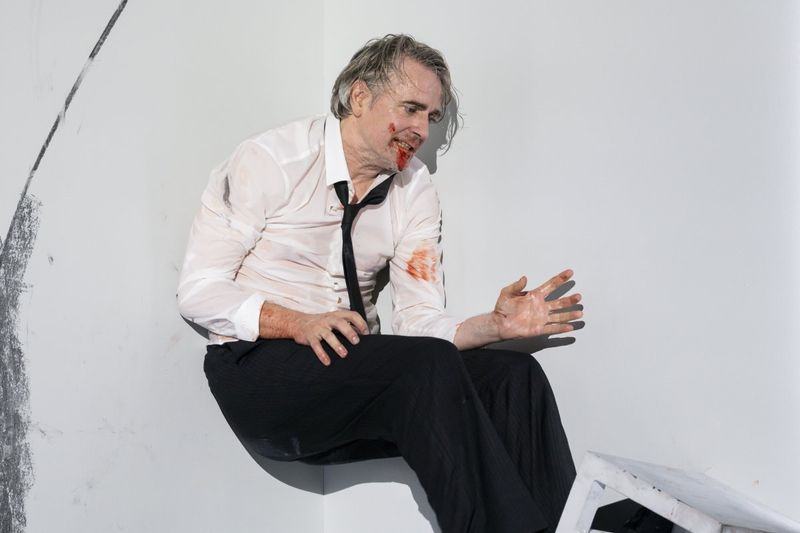
He paints the complexities of Wilde’s interiority beautifully. The rage he feels at Bosie’s neglect is still pervaded by his utter devotion to him. His disgust for society’s hypocrisy holds at its core a profound need to be accepted. The near-obsessive investigation of art is pulled harshly between urgency and contemplation. Isolated on stage, like Wilde was, Harzer’s only companions are a few props, Steffen Heinke’s lighting design, and Jörg Gollasch’s score. These elements tighten the tension, accompanying and enhancing moments of theatrical thrill. The approach to the stagecraft is very European: let this not be a deterrent. You’ll be on the edge of your seat with first-row access to an actor’s career high.
De Profundis runs at the Coronet Theatre until 7 October.
Photography by Jörg Brüggemann
Sign up for all the news on the Fall season, discounts & more...


.png?format=auto&width=365)





Reader Reviews
To post a comment, you must register and login.