


Interview: Musician Fredi Shehadi Talks New ‘BOUT TIME’ Album
Shehadi's brilliant new Jazz/Americana genre-bending album ‘Bout Time’ just dropped on 9/25
Fredi Shehadi is an Emmy award-winning New York–based guitarist, composer, songwriter and recording artist whose career has taken him from the studios of the Brill Building to network television, major-label records and concert stages across North America. Shehadi’s brilliant new Jazz/Americana genre-bending album ‘Bout Time’ just dropped on Friday, Sept 25th.
Shehadi’s music has since been heard internationally across radio, television and film, including Cradle Will Rock, Scary Movie 3, Sex and the City, PBS Great Performances, MTV, ESPN and A&E Biography. His work on Guiding Light earned him an Emmy Award, while a decade writing and producing music for NBC’s The Today Show brought Mobius, Cine Golden Eagle and New York Festivals Awards.
We spoke with Fredi about ‘Bout Time’.
Tell us a little about your new album.
’Bout Time has been a long time coming — which is partly where the title comes from. Some of the compositions go back quite a few years, while others are much more recent, but somehow they all feel like they belong together and represent me as an artist.
It’s an instrumental/vocal record rooted in jazz and blues, but it moves pretty freely through acoustic and electric fingerstyle, Americana and some more cinematic territory.
It’s been over 20 years now since I decided to change my approach to the guitar, put down the picks and exclusively use my fingers. You can hear some of that aesthetic and how it plays out acoustically on songs like “Blackbird,” “Water Music,” and “Sail Away.” The same approach carries over into all of my electric playing, on songs like “Fredi’s Jump,” “Dance of Begur,” “Song for Wes,” and “1952.”
Playing this way has its advantages and its challenges. Sometimes I’ll get to a certain passage and think, “Wow, I could really use a pick here. Maybe I should switch over.” But generally I avoid that kind of thinking and instead ask myself, “How can I find a way to play this using the fingerstyle approach I’ve chosen?” Ultimately, that limitation has actually helped me develop a voice of my own on the instrument.
There’s a lot of improvisation and interaction between the musicians, while melody and groove remain at the center of it.
There’s also this idea of time running through the record — sometimes literally, with meters shifting and structures changing, but also in a more personal sense. I’ve been making music for a long time, and this record feels like the beginning of a new chapter for me rather than a look backward. In that sense, the title ’Bout Time has a little humor in it, but it’s also pretty accurate.
It’s about time!
Can you tell us a little about some of your inspirations behind writing one of your new songs on the album?
Sure. I’ll give you two very different examples.
“Blackbird” obviously shares its title with the Paul McCartney song, and that’s intentional. My piece isn’t a version of his song, but I didn’t want to give it another title because when you hear the track, I think you can hear a connection in spirit.
McCartney’s “Blackbird” is in G major, and I’ve explored the key of G extensively on the guitar over the years. There’s something about the way that key lays out in standard tuning — all those open strings and the different places you can move around the fingerboard. It has a kind of geography to it that I really enjoy. My “Blackbird” grew out of exploring that territory and seeing where I could take it in my own musical language.
I also want to mention “Sail Away,” because that one comes from somewhere much more personal.
The song has a kind of longing and sadness to it — almost like a lullaby — and for me there’s an image of being out on the open sea. My grandmother, Catherine Dunne, was a published songwriter, and one of her songs was called “Old Father Neptune.” She loved being at the Jersey Shore and wrote and talked about sailing and the ocean, so I think some of that found its way into me and, many years later, into “Sail Away.”
She was also responsible for one of my earliest and most vivid musical memories. On February 9, 1964, when I was a very young boy, she woke me up and told me to come downstairs and sit in front of the television. I sat there with her and watched four boys with mop-top haircuts play “I Want to Hold Your Hand” on The Ed Sullivan Show.
It’s surreal to think about now. She was a very special person in my life. She used to take me with her to the music school where she taught, and the students would swarm around me, take off my coat, and play with me while she taught her classes.
So when I think about where “Sail Away” came from, I think there’s a thread running through all of that — my grandmother, the ocean, songwriting, and some of my very first memories of music. I didn’t necessarily sit down and consciously put all of those things into the composition, but looking back, I can hear them in it.
What have you been filling your time with lately?
Wow, I wish I knew! Time flies! [Laughs]
I have a whole bunch of new music that I’m sorting through and deciding how I want to record and arrange. I already have enough material for at least another couple of records — and then, hopefully, many more after that. Part of the challenge is simply keeping track of all this stuff and not letting good ideas slip through the cracks.
I’m working with an assistant in Nashville, and together we’re constantly putting things in motion — music, content, ideas, and the promotional side of what I’m doing.
I also try to play the guitar every day. One thing that’s become particularly important to me is setting aside some time for completely free improvisation — no agenda, no composition I’m working on, no particular destination. Just letting the analytical part of my brain go and seeing where the instrument takes me. I find that incredibly valuable.
And I need to move every day, so I get on my bike and ride whenever I can. I’m Lebanese, so getting some good Middle Eastern food into the week is pretty important too!
Beyond that, I try to keep feeding myself artistically. I listen to new music and look for things that inspire me outside of what I’m working on. Living in New York, I’ll go to museums, Carnegie Hall, or Lincoln Center and hear orchestral and chamber music whenever I can. I get a tremendous amount of inspiration from that.
That’s one of the great things about New York City — there’s always something around the corner that can send you home thinking differently about your own work.
Who or what have you been listening to lately?
Wes Montgomery, The Beatles, Charlie Parker, Rachmaninoff, Bach, Beethoven, Chick Corea, Julian Lage, Tommy Emmanuel, Thelonious Monk, Mozart — to name a few. My listening tends to be all over the place, and I like it that way.
Interestingly, I’ve also been listening to a lot of myself lately — but not the new record. I’ve been going through old archives, trying to pinpoint things I might want to revisit from the last 30-plus years of my work. I have a tremendous amount of audio sitting on hard drives in my studio — compositions, recordings, fragments and ideas that I may have completely forgotten about.
Sometimes I’ll come across something and think, “Who was that guy?” [Laughs] And other times I’ll hear an idea and think, “Wait a minute — there’s something here.” I find it fascinating to revisit something I created years ago with the ears and musical experience I have now. Sometimes an old idea is just an old idea. But sometimes it turns out it was waiting for you to catch up with it.
Do you have any upcoming projects or shows you'd like to tell us about?
I have a few more shows coming up in New York over the next several months, along with a television performance in Allentown, Pennsylvania, in November, and some other things that are beginning to come together.
Beyond that, I’m already looking ahead to the next few recording projects and to releasing some other masters I have ready to go. I have quite a bit of music waiting in the wings, so ’Bout Time really feels more like the beginning of something than the completion of something.
I’m also developing a guitar master class that I’m pretty excited about. It takes a deeper look at harmony and theory as they apply specifically to fingerstyle guitar, but I also want to get into the physical side of how I play — how I actually approach the instrument with my hands, how I solve certain musical problems without a pick, and some of the things I’ve discovered over the years that have helped shape my own voice as a guitarist.
At this point, I’m interested not only in continuing to discover those things for myself, but also in figuring out how to share them with other musicians in a way that might inspire them.
Is there anything else you'd like to add?
I’d like to say that I believe very strongly in collaboration among human beings — particularly when it comes to making music and creating art.
Technology, like any tool, can be enormously useful. I’ve certainly benefited from it. But I also think we have to be careful that the tools don’t begin to replace the very thing they were designed to help.
I grew up in the analog world. I came to New York in the ’80s and lived through the entire transition from analog to digital. I’ve benefited tremendously from that evolution, but I’ve also seen some of its shortcomings. And now, as technology moves even more rapidly into the creative process, I think preserving the human connection becomes increasingly important.
’Bout Time was made organically, with musicians playing together in real time — people listening to one another, reacting to one another, taking chances, making mistakes, finding things we hadn't planned and allowing the music to change in the moment. That kind of collaboration is something I believe in very deeply.
I hope we never lose that — not just in music, but in all of the arts and, really, in society at large. Technology can help us do extraordinary things, but I hope we always remember that technology is the tool. The Human being is the Artist.
And with that said, I’m extremely grateful to the musicians who performed on this record. Everyone came to it with a great spirit and a willingness to explore with an open heart and an open mind. I think you can hear that on ’Bout Time.
So, to everyone who helped make this record what it became — thank you.
Learn more about Fredi Shehadi across the web: Website | Instagram | YouTube | Spotify | Apple Music | Facebook
Sign up for all the news on the Fall season, discounts & more...
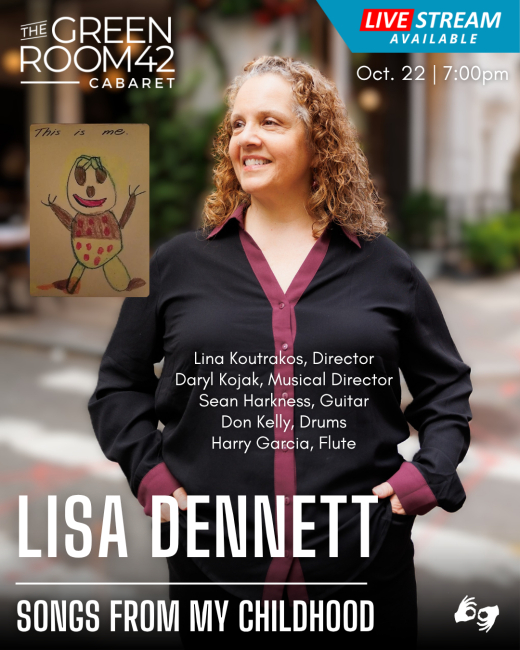
|
Songs From My Childhood The Green Room 42 (10/22-10/22) |

|
Torch Song Soliloquy Laurie Beechman Theatre (10/07-10/07) |
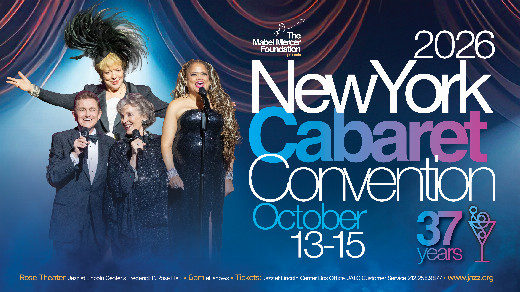
|
The 37th New York Cabaret Convention Jazz AT Lincoln Center's Rose Theater (10/13-10/15) |
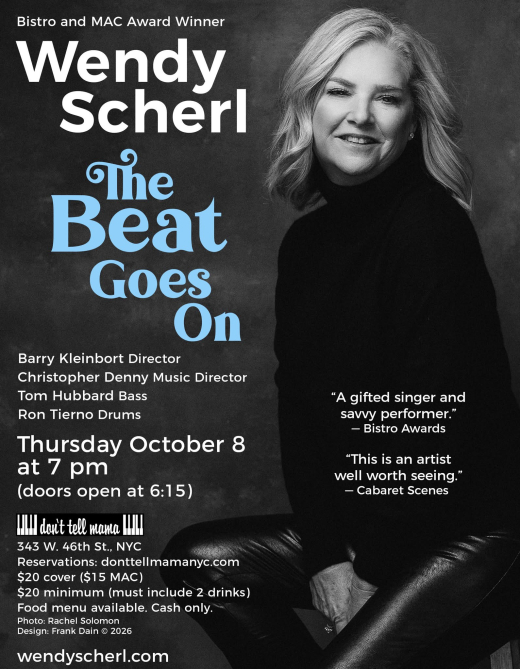
|
The Beat Goes On Don't Tell Mama (10/08-10/08) |
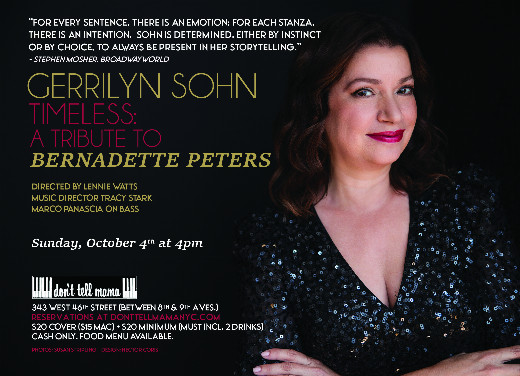
|
Timeless: A Tribute to Bernadette Peters Don't Tell Mama (10/04-10/04) |

|
54 Loves Cast Albums! 3rd Edition 54 Below (10/04-10/04) |
|
New York Arab American Comedy Festival Joe's Pub (10/15-10/15) |

|
Ann Hampton Callaway: Here's To Life 54 Below (11/13-11/13) |
|
The Bowery Boys: Ghost Stories of Old New York Joe's Pub (10/31-10/31) |

|
Sapphira Cristál: Sapphi Don't Sing The Blues 54 Below (10/17-10/17) |

