


Interview: Jenn Colella on Bringing BIG DYKE ENERGY to the Laurie Beecham Theatre
'For me, sharing joy and celebration through song is the best possible way to connect with others'
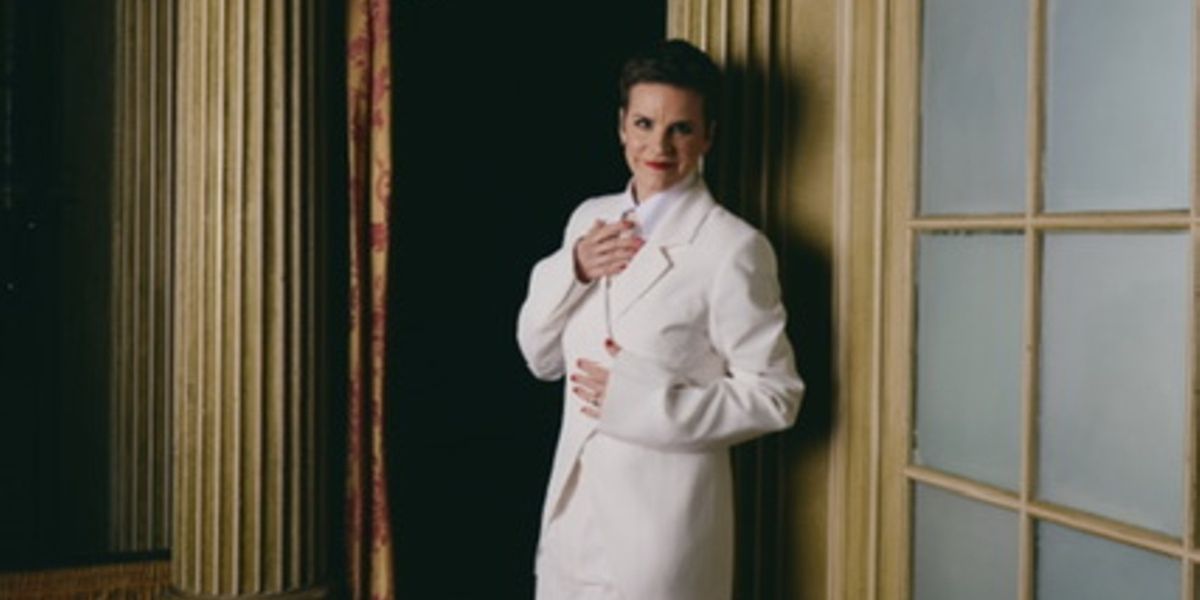
In June, Jenn Colella brings her cabaret show, Big Dyke Energy, to the Laurie Beecham Theatre in New York City. The show is seventy minutes of “music, mischief, and unapologetically queer storytelling,” with Colella telling the tale of how she has grown as a queer woman from the South. We had the chance to speak with Colella about the show, including what made her want to create it, some of her favorite songs to sing, and even why Pride should be celebrated year-round - not just in June.
How did you first get started in the world of theatre?
School choir was my entry into music and theatre. It was the first time that I was a part of something that felt bigger than me. Having the sound of my voice match the vibration of other voices felt really holy to me, and I thought, “Oh, there's something very special here.” So choir was definitely my way in.
And what made you want to create this cabaret show, Big Dyke Energy?
Cabaret is something that I really love! I love singing, I used to do stand-up - it feels like a combination of the two things. And I'm sad that I don't get more time with my fans, so that was a big reason why I wanted to do this. It feels like I'm opening up my heart and my living room to the fans, so that I can spend more time with them.
Can you tell us a bit about Big Dyke Energy and your creative process for it?
Sure! This version of Big Dyke Energy actually feels more intimate and confessional. In past iterations, I've had more concert energy, which I love, but I'm stripping this one down so it's just me and my pianist, Chris Ranney. It's allowed the storytelling to come forward in a much deeper way, and the show itself really becomes about tracing my journey as a queer woman growing up in the South, falling in love with impossible women - aka straight women - wrestling with my faith and identity, finding queer community, and, eventually, finding my wife and becoming a mother. It's still very funny and very gay. There's plenty of dykey swagger, but this version allows for more vulnerability and nuance. It feels less like a concert and more like inviting the audience into my living room late at night, and saying, “Okay, let me tell you what really happened.”
What is it like to be putting your emotions and vulnerability on stage as yourself versus a character in a show?
It's very vulnerable, but it feels necessary. People like to see me in shows and see me put on a character, but I really try to stay as open as possible with my audiences, so that they get a piece of me. There's something powerful right now about amplifying queer stories in an honest, human, joyful way, especially in an intimate room like the Beechman, where you can really feel the audience breathing with you.
You mentioned in the show's description that “Pride is year-round.” What made you choose to say that?
Right now, amplifying queer stories is super important throughout the year. Our voices are quite literally under attack, so I want to make sure that we are heard and that it's not just about struggle, but there's also joy and celebration. For me, sharing joy and celebration through song is the best possible way to connect with others.
How do you go about choosing songs for a cabaret like Big Dyke Energy?
That part is tricky, because I know a lot of times fans don't just want pop songs - I gotta throw some musical theatre songs in there - but I also have to trust my own story and the songs that have shaped who I am, the songs that were prevalent when I was going through these things as a little baby dyke. So I've got to have some Melissa Etheridge, I have to have some of the old school songs that mean something to me. I just have to trust that the songs that moved me and are part of my story are going to be the right songs for this.
Will you be putting in songs from your musical theatre career over the past few years, like Come From Away and Suffs?
Every once in a while, you've got to! It's hard to do a whole show without any musical theatre songs. And then sometimes, I will choose musical theatre songs from shows that I've not been in, but just shows that I really love, and songs that have actually helped me grow into the older, wiser lesbian that I am now.
What is it like to be bringing this representation to the queer community, especially in a time when voices are being silenced?
I'm so grateful that I have this opportunity! I didn't realize that following my dream of being on stage and being an actor would also mean that I was somebody others would look up to because of my identity. I did not factor that part in, and I'm just so honored. It feels like a privilege that part of my choosing to be out is helping someone else feel like they can be out, or that they are okay. I could cry just thinking about it. It really feels like a privilege that me being a gay woman is part of this torch that I carry, not just my big brassy belty voice, but also the way that I love and how I love is affecting others, that that feels like a responsibility and one that I don't take lightly.
There was recently the PBS showing of Suffs, where there was queer representation with you playing Carrie Chapman Catt. What was it like playing that character?
I was so happy when Leigh [Silverman] and Shaina [Taub] made sure that the audience knew that Carrie and Mollie [Mary Garrett Hay] were actually together. They're buried next to each other in the Bronx, and all the research that we did is like, “Of course they were partners!” We could have shied away from it, but they leaned into it, because it is an important part of our moving forward - realising that gay people have always been around, that we've always been a part of history, and showing it in this way, it's just this beautiful love story. It doesn't have to be the centre. It's not about that. It's reminding people, “Look, gay people are everywhere, and we've been around for a long time.” It's really important to remind folks who might be afraid for whatever reason that we've been around for a long time, and we've helped move the world forward.
You’ve said Big Dyke Energy is going to be a mix of comedy and confessions. How do you balance the comedic versus the serious aspects of queer life in the show?
I like to feel the energy of the room. Sometimes I can feel they really want to laugh, so I'll lean more into the joking aspect. But I also know that, for people to feel like they are getting to know a piece of me, I have to open up. I'm going to have to be vulnerable. I'm going to have to share stories that feel scary to tell, but I want to do that because I want people to know me, and I want people to know that I'm grateful that they want to know me. It's a privilege to stand on stage with a mic and say, “Listen to me.” So, if I'm doing that, I want to give them something of substance. I want to share something that really is personal and vulnerable, so that they know that I am deeply grateful for their time and energy. They could be anywhere else that night. I'm always so thrilled when people show up, and everybody's there with such good vibes and ready to hang out. You guys left your house, you got out of your PJs for me. You could be anywhere else in the city, and you're here spending this night with me - it feels like a privilege. The comedy is something that I can't help but share, but the vulnerability is something that I have a responsibility to share.
With that vulnerability, how do you ensure that you are keeping your emotional and mental health well while being vulnerable on stage?
That's part of the craft itself. I teach at Pace University and Columbia University, and I talk to my students a lot about that. Part of what we do when we're going into character work is putting ourselves into the character - that's one of the modalities of acting. But the best kind is when you can meld the two together. So, my Stage Presence, who I am up there, and what I choose to share, I have to be really mindful about calibrating how I share it, where my heart is in that moment, where my head is in that moment. It's my job to make sure that I've meditated, that I'm centred, because if I come in there frazzled and then try to share too much of myself, then I'm giving too much of myself away, and that's not serving the audience. I have learned over the years how to calibrate that and make sure that I'm taking care of myself, sharing what feels appropriate, and making sure that everyone's taken care.
What was it like seeing the audience reactions when you first performed Big Dyke Energy?
I'm just so thrilled! I thought it was just going to be a room full of lesbians. There were a lot of lesbians, for sure, but there were also straight people, gay men, and families with kids. I love that my audiences are all ages, all colors, all shapes, all sizes. It's the best. It's this multi-generational event. But every time I prepare this, I feel like I'm preparing it for a room full of lesbians. Sometimes, I'm like, "Oh my god, there are kids over there!” But it becomes this celebration, and it's a reminder that we're all family. This isn't just a gay story. It's a story about a little girl growing up in South Carolina and making her way to New York. The gay part is a big part of that, but you don't have to be gay to be able to connect with what the story is.
I think the parents had the warning from the title, right?
Yeah! My wife brought her sister's kid, our nephew, and he was nine at the time. It was his first New York show, and we told him what the name of it was. I started speaking, and my wife, Mo, leaned over to him and said, “If you have any questions, you can ask me,” but he just loved it! He liked that you could eat, and he just had a blast. He was like, “This is great!”
Do you have any favorite song to perform in the show?
I start the whole thing with “Come to My Window,” because Melissa Etheridge feels like an invitation. It feels like an anthem, and I'm like, “Let's go! Let's start.” There's some Ani DeFranco - I really like doing that. I recently started doing the k.d. lang version of “Hallelujah,” which is a cool exploration of how my faith was shaken, and me trying to find spirituality as a gay woman. So those three are definitely highlights for me!
And I'm assuming you'll definitely be fun with having it during Pride month, especially in New York!
That'll be extraordinarily important to me, so that we can just celebrate, sit a little taller, feel like this is our time to shine, and remind each other that there are lots of us out here and that we have so many straight allies as well. We're not in this alone. All of these families and straight folks that show up, they're there because they want to let us know that they're in this fight with us.
What do you hope audiences take away from Big Dyke Energy?
I hope audiences will take away the feeling of connection, that we are all in this together. It doesn't matter who you love, but rather how you love. Are you a good person? Each time you love and get your heart broken, are you evolving into the best person that you could possibly be? Having an opportunity to take a look at that, how we treat ourselves, how we treat each other, how kindness is the religion that we should all be a part of - that feels like the most important takeaway for me.
And finally, how would you describe Big Dyke Energy in one word?
Juicy!
Learn more about Jenn at www.jenncolella.com
Big Dyke Energy runs at the Laurie Beecham Theatre on June 8 and 9. Tickets are available here.
Photo Credit: Jenny Anderson
|
The Jackie Mason Musical-A Comedy Actors Temple Theatre (7/25-7/26) |

|
Broadway’s Next Hit Musical, feat A.J. Shively & The Best Improvisers in NYC! 54 Below (7/20-7/20) |

|
Broadway Originals, feat. Stephanie D'Abruzzo, David Sabella, & more! 54 Below (7/17-7/17) |

|
Paulo Szot 54 Below (7/22-7/22) |

|
Linda Eder 54 Below (9/23-9/23) |
|
Something To Be Proud of: Act 2 54 Below (10/07-10/07) |
|
You’re Like, Really Pretty: Broadway’s Best Makeovers, Glow-ups and Transformations 54 Below (10/20-10/20) |

|
Brent Comer 54 Below (9/26-9/26) |
|
New Musical! A Million Moments on the Mackinac Bridge by Hudson Orfe 54 Below (10/13-10/13) |
|
Lucas Beltran: Fabulous Places! 54 Below (9/02-9/02) |