HAAS BROTHERS: UNCANNY VALLEY To Open At Museum Of Arts And Design
Exhibition of works by Nikolai and Simon Haas will debut in New York as part of national tour.
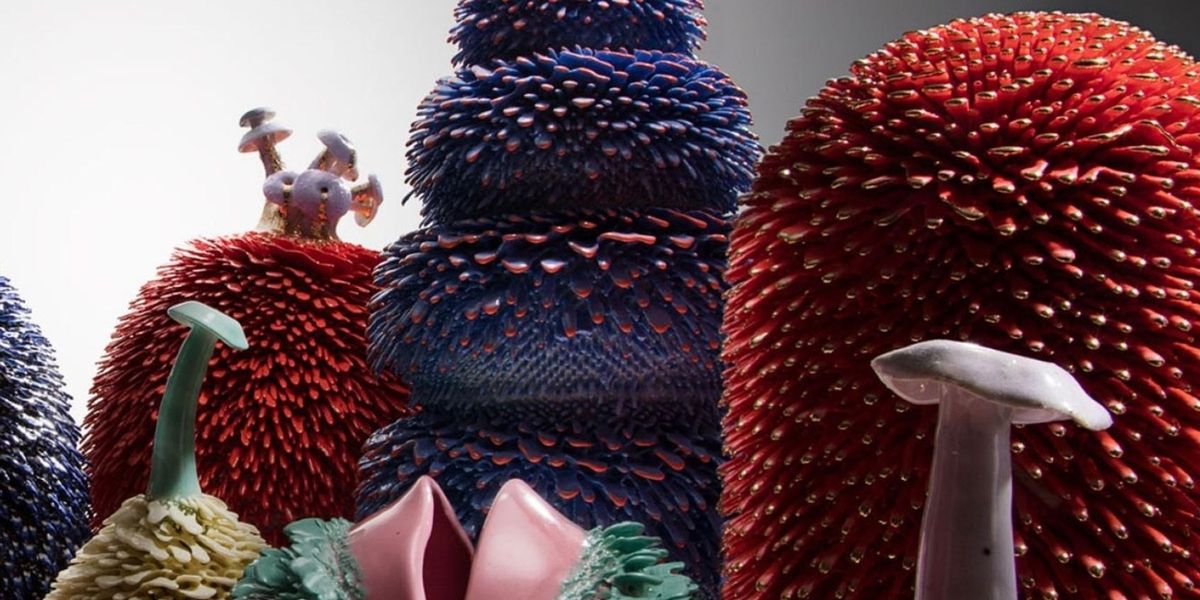
This spring, the Museum of Arts and Design (MAD) will present Haas Brothers: Uncanny Valley, a wildly imaginative mid-career survey that plunges visitors into the exuberant, uncanny worlds of twin artists Nikolai and Simon Haas.
Opening April 11, the exhibition makes its New York debut as part of a nationally touring exhibition organized by Cranbrook Art Museum and brings together approximately 85 works that challenge conventional distinctions between art, design, craft, and digital innovation.
Through fantastical hybrid creatures, algorithmically generated landscapes, and meticulously hand-built ceramics, Uncanny Valley reveals the Haas Brothers' singular ability to fuse cutting-edge technology with deeply tactile, human-centered making. At MAD, the exhibition comes into sharp focus as a bold exploration of how contemporary craft can shape new emotional, narrative, and material possibilities—an approach that resonates powerfully with MAD's mission to explore the future of craft and its cultural impact.
Spanning more than fifteen years of collaborative practice, Uncanny Valley offers a richly immersive survey of the Haas Brothers' genre-blurring work across art, design, craft, and technology. Founded in Los Angeles in 2010, the Haas Brothers studio is celebrated for its surreal hybrid creatures, imaginative environments, and exuberant material experimentation.
“The Haas Brothers embody everything MAD stands for: fearless experimentation, material mastery, and an expansive vision of what craft can be today,” said Tim Rodgers, Nanette L. Laitman Director, Museum of Arts and Design. “Uncanny Valley invites our audiences into worlds that are at once playful and profound, where digital processes and handwork coexist, and where imagination becomes a powerful tool for rethinking how objects are made, experienced, and valued.”
“The Haas Brothers refuse the traditional hierarchies that separate art, design, craft, and technology,” said Elissa Auther, the MAD's Deputy Director of Curatorial Affairs and Wiliam and Mildred Lasdon Chief Curator. “In Uncanny Valley, visitors encounter objects and environments that feel simultaneously ancient and futuristic—deeply human, yet strangely other. It is a body of work that speaks to the emotional and narrative power of making in the 21st century.”
Through a series of dynamic vignettes, Uncanny Valley invites visitors into alternate realities shaped by what the artists describes as “problem-solving fantasies,” a process that combines meticulous handcraft, digital technologies, and playful narrative world-building. Essentially self-taught, the Haas Brothers defy conventional categorization, seamlessly blending mediums and methods with curiosity, humor, and technical rigor.
The exhibition includes major sculptural works and key series that trace the evolution of the artists' practice. Highlights include the Haas Brothers' iconic Beasts, zoomorphic sculptures brimming with personality and cultural commentary. Also on view are the Endless Paintings, algorithmically generated landscapes inspired by early computer graphics, and Emergent Sculptures, which explore self-generating forms through digital code.
Collaboration is central to the Haas Brothers' practice and is a recurring theme throughout the exhibition. Their Freaks series, developed in partnership with MonkeyBiz, a collective of beadwork artisans in Cape Town, South Africa, and later expanded through collaborations with women in Lost Hills, California, exemplifies the artists' commitment to equitable, community-driven creative processes. These works underscore the Haas Brothers' belief in making as a collective and socially engaged endeavor.
Haas Brothers: Uncanny Valley is accompanied by a major 256-page monograph published by Phaidon's Monacelli Press, featuring essays, interviews, and extensive archival material that provides deeper insight into the artists' imaginative universe. The catalogue, along with a selection of exclusive merchandise, will be available for purchase from The Store at MAD.
The Museum of Arts and Design presentation of Haas Brothers: Uncanny Valley is part of a national tour that includes the Blanton Museum of Art (Austin, TX) and The Mint Museum (Charlotte, NC), following its debut at Cranbrook Art Museum (Bloomfield Hills, MI) last fall.
EXHIBITION CREDITS
Haas Brothers: Uncanny Vallery is organized by Cranbrook Art Museum, Bloomfield Hills, Michigan, and curated by Laura Mott, Chief Curator, with support by Katy Kim, Curatorial Fellow.
Haas Brothers: Uncanny Vallery is made possible by the New York State Council on the Arts with the support of the Office of the Governor and the New York State Legislature, and is supported, in part, by public funds from the New York City Department of Cultural Affairs in partnership with the City Council.
Additional support has been generously provided by Sarah Arison and Suzi Cordish.
ABOUT THE ARTISTS
Twin brothers Nikolai and Simon Haas work collaboratively across sculpture, ceramics, furniture, installation, and digital media. Their practice explores themes of transformation, hybridity, and the emotional resonance of objects, often balancing humor with darker psychological undertones. The Haas Brothers have presented their work throughout the United States and internationally, including solo exhibitions at the Nasher Sculpture Center in Dallas, TX; the Katonah Museum of Art in Katonah, NY; the Bass Museum of Art in Miami, FL; and the Savannah College of Art and Design Museum of Art in Savannah, GA, and have been featured in numerous group exhibitions. In 2019, the brothers received the YoungArts Foundation Arison Award. Their work is held in the permanent collections of the Rhode Island School of Design Museum of Art in Providence, RI; the Cooper Hewitt, Smithsonian Design Museum in New York, NY; and The Metropolitan Museum of Art in New York, NY.
ABOUT THE MUSEUM OF ARTS AND DESIGN
The Museum of Arts and Design (MAD) champions contemporary makers across creative fields and presents the work of artists, designers, and artisans who apply the highest level of ingenuity and skill. Since the Museum's founding in 1956 by philanthropist and visionary Aileen Osborn Webb, MAD has celebrated all facets of making and the creative processes by which materials are transformed, from traditional techniques to cutting-edge technologies. Today, the Museum's curatorial program builds upon a rich history of exhibitions that emphasize a cross-disciplinary approach to art and design and reveals the workmanship behind the objects and environments that shape our everyday lives. MAD provides an international platform for practitioners who are influencing the direction of cultural production and driving twenty-first century innovation and fosters a participatory setting for visitors to have direct encounters with skilled making and compelling works of art and design. For more information, visit madmuseum.org.
Prefer BroadwayWorld in Google Search?
Add us as a preferred source so our stories show up more often in Top Stories and Google’s AI answers — for you.
Sign up for all the news on the Fall season, discounts & more...
.jpg?format=auto&width=300)