Interview: 'Forget The Small Talk': Sara Barron In Celebration Of Her 25 Years With THE MOTH
Sara Barron on telling stories with purpose
For almost 25 years, Sara Barron has witnessed what happens at The Moth when people step beyond the safety of everyday conversation and dare to tell the truth. Long before she became an established comedian, Barron discovered The Moth in New York in 2002, initially drawn to its unique approach to live storytelling. Since then, she has returned to the organisation time and again, finding something in its intimate, unscripted stories which continues to fascinate her.
Barron brings nearly a quarter of a century of experience to the stage, alongside her sharp comedic instincts and an instinctive understanding of what makes a story resonate. The tales can be transformative, challenging stereotypes, exposing vulnerability. Barron has seen firsthand how a single personal experience can change the way an audience thinks about the world.
In celebration of her work with The Moth, Barron talks to BroadwayWorld about overcoming the fear of performing, why true stories can feel more liberating than comedy, the courage of non professional storytellers and why, when it comes to telling a great story, the most important words have to come from truth.
Can you tell us about your background as a comedian and a host of The Moth?
When I graduated college, I knew I wanted to try stand up which I did for 6 months whilst I was living in New York, and it was terrifying. I was talking to a friend who advised that I look into The Moth in 2002. The Moth was a great fit for me. I started telling stories with them back then and then segued back into writing, only returning to Comedy in my 30’s. I've been working with The Moth for nearly 25 years.
What is it about live, true storytelling which continues to fascinate you, both as a performer and as a host?
What I like about The Moth is that doesn’t focus on just professional performers. There are professional performers occasionally and that is wonderful. However, the nature of storytelling in front of live audiences can feel so terrifying for the performers. A common fear list is often a fear of heights, a fear of flying or a fear of public speaking. Performing often terrifies people to their core. So, watching people decide they're going to manage their fears, do it anyway and share a little bit of their experience. It is visceral. We learn a little bit of someone else's world. There is an unbelievable bravery for the person who's doing it. I feel the audience connect, where everything is immediately understood. They know the storyteller doesn't do this for a living. So, the audience are watching, with a generosity of spirit that I think it's unique to Moth audiences.
The Moth asks people to share very personal experiences in front of a room full of strangers. What do you think makes someone decide, “This is a story I need to tell”?
For me, I want to perform, which isn’t necessarily everyone’s impulse. I used to teach writing classes, and I would have a debate with other writing teachers and ask how many students they’d meet with absolutely no talent as a writer. And this one teacher was, like, here’s the thing, if people want to write, then they are happier writing. So, it's not about the quality of the output. It's just about the fact that if people want to tell their story, then they should. I think it makes people feel glad, or get out their feelings.
During the curated shows that The Moth do, if you've got a good story, there are Moth professionals behind the scenes to help them whip it into shape. There was a woman who told a story a few years ago about keeping up with the Joneses. She lived a life in a fancy neighbourhood, but her life was falling apart and the family finances were falling apart. She told the story in front of 1,500 people, about all this shame that she felt, and there was nothing about it that felt self-indulgent at all. In fact, it felt really generous to be so candid. I took a huge amount from it. I remember feeling like peoples experiences were being validated. It can be about feeling seen by other people. That's what's at the heart The Moth. It resonates.
What makes a great Moth story? Is it the story itself, the storyteller’s delivery, or something more difficult to define?
I watched one amazing story that was incredible. You'd have to be so charismaless to ruin that. Stories are enhanced by a good performance, but you don't need to have performance skills. But similarly, if there's just something magnetic about you on stage, then you can tell a story about anything. My favourite stories are those that really resonates for you, that you've never quite been able to articulate yourself, or admit to yourself.
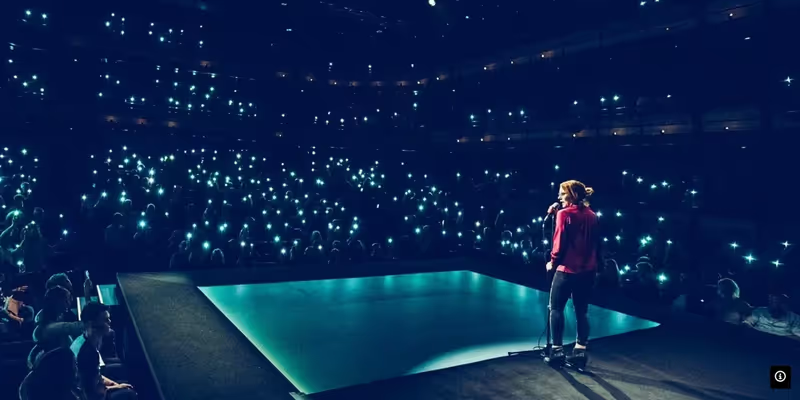
The Moth brings together varied storytellers. What do you look for as a host when you first meet the people who are going to step onto the stage?
I have no involvement in casting. Sometimes performers are so nervous that there's a risk that they're not going to enjoy it, and then it's going to be over, and then they're going to feel they wished they could do it again without dreading it. I'm there to help them understand how unafraid they should be. I like to say to the audience, with the storyteller’s consent, ‘look our next storyteller is very scared to do this. I have been promising them about how incredibly supportive and amazing you're gonna be. Think about getting up in front of a 1000 people. Does that sound unterrifying to you? No, are we ready to do everything that we can do to be welcoming? Yes!’ So that they can go into it with at least as much excitement as dread. That's the work, hoping they get to a place of excitement.
Can you recommend a story for us which you witnessed during a Moth show?
I hosted a live London Moth show back in May 2026. A woman (Priscilla Leigh) spoke about late virginity. It was so well delivered, stereotyped busting. I thought she was amazing, her story was fascinating. She was funny, it was moving, it was unexpected. It made me think about people differently. I think it was important for everyone to hear. It was educating and normalised older virginity as a non-issue. It was brilliant and very empowering as well.
If you could persuade everyone post a Moth show to leave the experience believing one thing about storytelling, what would you want it to be?
Sara Barron: This is not my idea, but it's a thing I've heard about storytelling and joke writing; the advice is to be very mindful of the words “and then”. So, you don't want, “and then”, to be part of your story. You want “because, or and therefore”, A great story has nothing in it that you could lose and still have the story work. So, have you driven the story forward, have we fleshed the character out more? You get rid of everything that isn't that. A horrible story has no knowledge of which parts are exceptionally boring. The reason we love the moth is we cut the small talk. I love Britain. I'll die here, but my God, some of the avoidance of big talk for small talk is tough. That's my taste. I'd rather someone leave being like, she was a lot, than talking to them about what they did at their Easter holidays. No small talk.
Apply to tell your story at The Moth here: Tell Your Story | The Moth
Sign up for all the news on the Fall season, discounts & more...