


Interview: Playwright Gustavo Ott On the World Premiere of GARBO: THE ACTOR WHO SAVED THE WORLD at GALA Hispanic Theatre
GALA's Artistic Director discusses launching the company's 51st season with his true-story thriller about Juan Pujol.
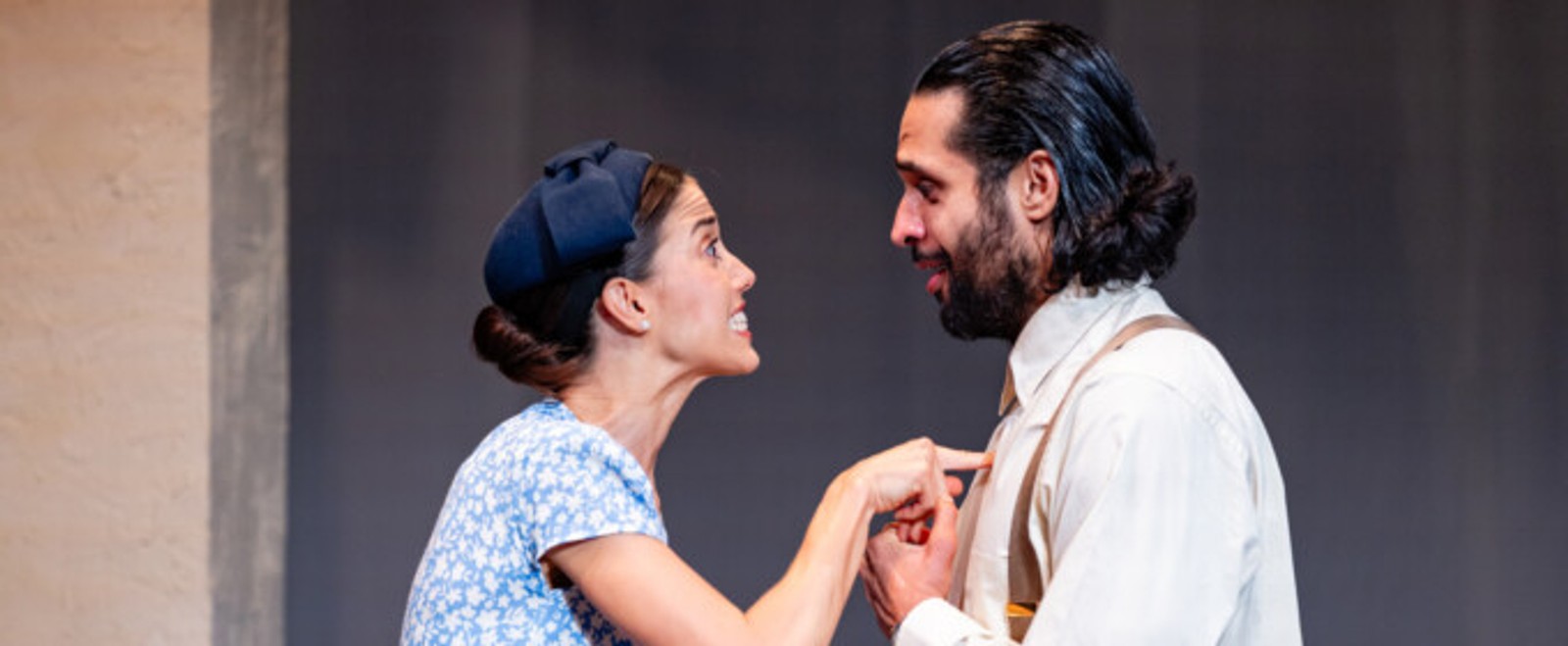
GALA Hispanic Theatre launches its 51st season, The Start of a New Beginning, with the world premiere of GARBO: THE ACTOR WHO SAVED THE WORLD, a thriller spiked with humor based on one of World War II's most extraordinary little-told stories. Penned by GALA's Artistic Director Gustavo Ott with original music by Koki Lortkipanidze, directed by Cuban director Carlos Celdrán, and translated by Heather McKay, the production runs September 3 through September 27, 2026 at GALA in Columbia Heights. Performances are in Spanish with English surtitles.
The play brings to the stage the story of Juan Pujol, a frustrated theatre artist from Catalonia who became one of history's most brilliant double agents. Driven by his instinct for performance and storytelling, Pujol created an elaborate web of deception that helped mislead the Nazi regime and paved the way to Allied victory in the Battle of Normandy. GARBO traces his journey from his early dreams of joining Federico García Lorca's legendary theatre troupe to his role in one of the war's most daring espionage operations.
Ott is a playwright, fiction writer, translator, and journalist who has written more than 50 plays produced all over the world and translated into 15 languages. GALA has produced more than 10 of his works over the years. BroadwayWorld spoke with Ott about the decades-long journey to tell Pujol's story, the metatheatrical form of the play, and why a WWII tale of deception feels urgent in an age of disinformation.
What first drew you to Juan Pujol's story, and why did you feel it needed to be told on stage?
When his granddaughter told us the story of Juan in the 1980s, it seemed completely implausible to me. No one had ever heard of GARBO or the possibility that he might have been Venezuelan. I was very young, yet I sensed there was a story there. It featured a Hispanic-Venezuelan hero, something rare, perhaps even a bold gamble. For us, heroes came from the U.S. or European classical cultures; we were left with only anti-heroes, if anything. But at the time, I couldn't write his story; I lacked the tools and the necessary craft. It was only years later, once I became a serious writer, or at least believed myself to be one (which, in these matters, amounts to the same thing), that I found a way to tell the life story of this fascinating figure.
As GALA opens its 51st season with this world premiere, why did it feel like the right moment to tell this particular story?
We wanted to talk first about the effects not only of current militaristic ideas and oppression, but also the possibility of the end of freedom. I believe that these anti-democratic ideas that circulate throughout the world today are based on a common variable: preventing people from achieving their vocation. GARBO leads me to talk about the extraordinary obstacles that the vocation faces today. That is the contemporary echo of the show: the idea that rarely, and few people, can fulfill their vocation. The idea that imagination is the last area of freedom, and theater as a vehicle of that imagination. Theater runs through this piece from start to finish.
How did you first come across this true story, and what surprised you most in your research?
I was surprised by how little was known about Juan at the beginning of his life and after the war, his Venezuelan era. All the information that existed was about his double spy time. His memoirs in English, written with Nigel West, tell us the story of the anonymous hero. But I was able to find information about what few people knew: his passions, his true vocation that he was never able to fulfill, his love for theater and cinema, his charm for Caracas; that is, his interior landscape, as powerful as the exterior one that we end up knowing in his biographies as the double spy who saved the world.
The play traces Pujol's journey from wanting to join Lorca's theatre troupe to becoming a spy. How did you approach blending his theatrical dreams with his espionage work dramatically?
I like to think that the play draws a parallel between his life, and his passion for the theater, with so many theater people who, like me, view our devotion to the stage as a journey filled with "sound and fury," yet also marked by disappointments, rejections, and moments of unfathomable defeat. In the theater, despite the faith that drives us, there are more moments of failure than glory. We have walked away from it as often as we have returned to it. Perhaps that is why we lose our passions: so we can rediscover them. I like to think that Juan rediscovered the theater through his work as a double agent, through his passion for creating characters. For instance, the play presents a whole theory on character creation, one that, incidentally, I apply point for point.
You describe this as a "metatheatrical adventure." What does that mean for how audiences will experience the story?
It is metatheatrical because it incorporates theater itself into the story. The spectator hears the story and gets to know the characters, yet simultaneously learns the secrets behind the creation of characters and situations. Deception as an accurate version of reality. Reality has always seemed tenuous, fragile, and full of deceptions to me. Fiction, for me, is solid; it speaks only of truths, whether physical, psychological, or even parapsychological, as in HAMLET. I have more faith in my ability to touch fiction than reality. Reality confuses me. Fiction clarifies; it strengthens the muscle of lucidity.
The show draws parallels to disinformation and propaganda today. How intentional was it to connect this WWII story to our current moment?
Yes, but at the same time, I believe GARBO's story speaks to the possibility of countering disinformation, planned and executed in laboratories, with a form of disinformation of one's own: imagined, personal, and limitless. Combating propaganda with imagination has always been my last, and only, resort.
What do you hope audiences take away about the power of storytelling and imagination as tools of resistance?
Once, while García Márquez was crossing the street, a bicycle was about to run him over. A priest saw him and shouted, "Watch out!" Márquez managed to dodge the bicycle, and the priest said to him, "Do you see now the power of the word?" We are told that we are living in an Age of Discovery, spanning everything from robotics and physics to artificial intelligence, the cosmos, and medicine, and I believe we are also in an era of discovering the true nature of power. Of its darkest side, which appears to be its true essence. To resist it: words. I believe that, in both literature and theater, we are moving toward a pre-poetic period. Our commentary is necessarily impassioned, and the spectator constitutes the other half of the content. Beauty lies not only in relevance but in complexity. The surprise of boldness. We imagine through words, as Wittgenstein held: "what cannot be described in language does not exist."
Why should audiences make a point of coming to see this production, and what do you want them to feel as they leave the theatre?
Throughout the show, GARBO constantly speaks of the spectator. For him, being a theater spectator means living, just as the actor does, the lives that others have lived. It means elevating the idea of being "The Other." And that is precisely what GARBO was: a passionate spectator of cinema and theater. That is how he saved the world. The audience serves as a metaphor for "The Other," that figure who is not me, yet who complements me. The presence of the audience in this play gives meaning to GARBO's journey. We aim to touch and move the audience, not only with our story but with the very idea that they are there in the theater, inhabiting the physical homeland of an imagined one in an incredible true story.
GARBO: THE ACTOR WHO SAVED THE WORLD runs September 3 through September 27, 2026 at GALA Hispanic Theatre, 3333 14th Street NW, Washington, DC. Performances are in Spanish with English surtitles, Thursdays through Saturdays at 8 pm and Sundays at 2 pm. For tickets and information, visit www.galatheatre.org or call (202) 234-7174.
Prefer BroadwayWorld in Google Search?
Add us as a preferred source so our stories show up more often in Top Stories and Google’s AI answers — for you.
Sign up for all the news on the Fall season, discounts & more...

|
Brian Henson's Puppet Up! Lincoln Theatre (9/30-9/30) |
|
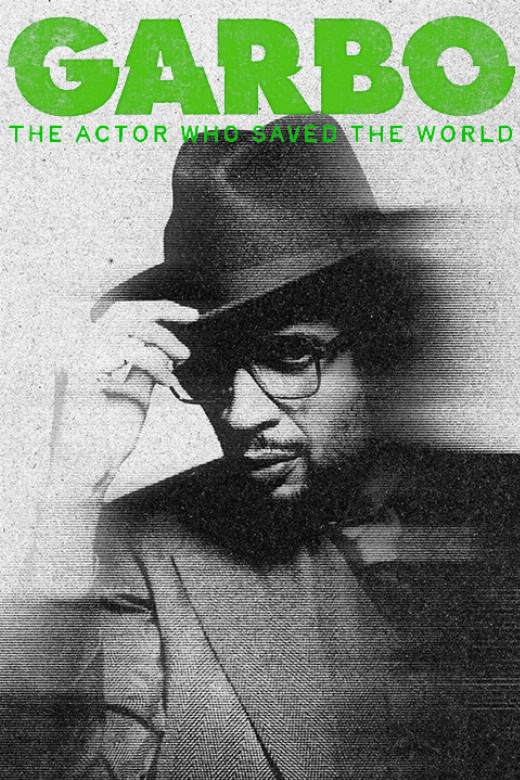
GARBO: EL ACTOR QUE SAVÓ AL MUNDO (Garbo: The Actor Who Saved The World) GALA Hispanic Theatre (9/03-9/27) |

|
Mr. Burns: A Post-Electric Play Clarice Smith Performing Arts Center (10/09-10/18) |

|
Special Event: ARTS By George!: Jeff Goldblum and the Mildred Snitzer Orchestra Center for the Arts (10/03-10/03) |

|
The Second-Best School Shooting NextStop Theatre (9/17-10/11) |

|
Coming to America: An Immigrant Cabaret ExPats Theatre (9/30-10/18) |

|
Some Like It Hot Bernard Family Theatre, Olney Theatre Center (9/18-11/08) |
|
Stonewall's Bust The Writers Center (10/09-10/25) |
|
"Treasure Island Reimagined: Jane Hawkins and the Pirate's Gold" The Alden Theatre (10/13-10/13) |

|
Moxie Events presents "The Fleetwood Mac Experience" F. Scott Fitzgerald Theatre (10/23-10/23) |
