


Review: 'MY LORD, WHAT A NIGHT' at Penguin Rep
What did our critic think of 'MY LORD, WHAT A NIGHT' at Penguin Rep?
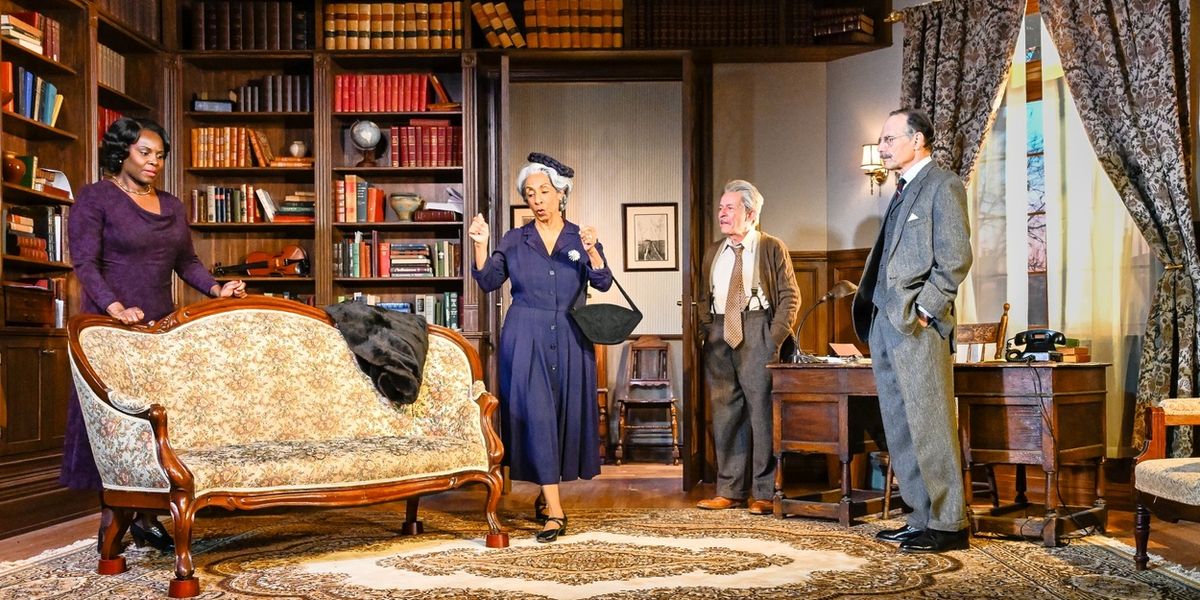
At a moment in American life when conversations about race, exclusion, immigration, and human dignity once again dominate the national discourse, Penguin Rep Theatre could scarcely have chosen a more resonant production than "My Lord, What an Evening." Yet what makes Deborah Brevoort’s warmly crafted play so effective is not merely its relevance, but its refusal to lecture. Instead, it invites audiences into an intimate gathering of brilliant minds and complicated souls, allowing history to breathe not as abstraction, but as deeply human experience.
Set against the backdrop of segregation-era America, the play imagines — and dramatizes — the friendship between legendary contralto Marian Anderson and physicist Albert Einstein, who famously offered Anderson hospitality at his home after she was denied lodging because of her race at the Nassau Inn in Princeton, New Jersey in 1937. What begins as an act of kindness evolves into a meditation on activism, artistry, morality, and the many different ways people attempt to change the world. Under Joe Brancato’s deft direction, the material lands with considerable emotional force.
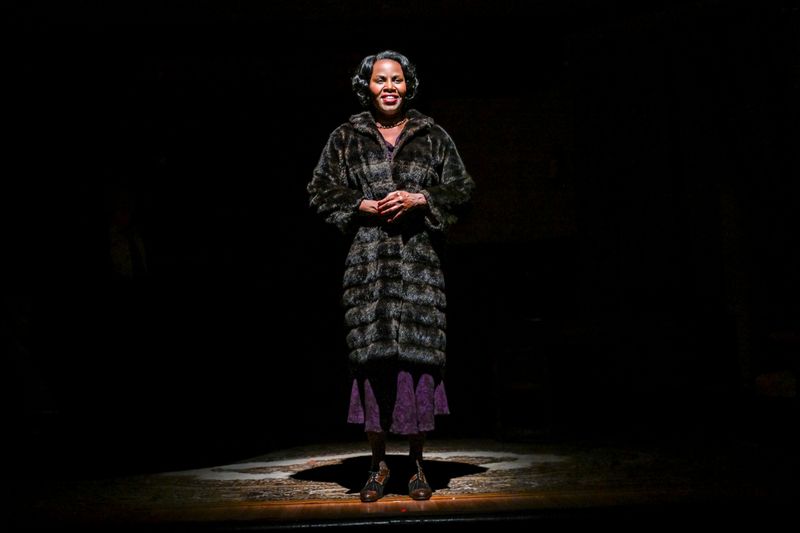
As Marian Anderson, Shirine Babb gives a performance of remarkable poise and quiet authority. Babb wisely avoids turning Anderson into a saintly symbol. Instead, she presents a woman constantly negotiating the burdens placed upon her — expected to represent an entire people while remaining gracious enough not to threaten white sensibilities. Her restraint becomes the performance’s greatest strength. When flashes of anger or exhaustion finally emerge, they feel earned and deeply moving.
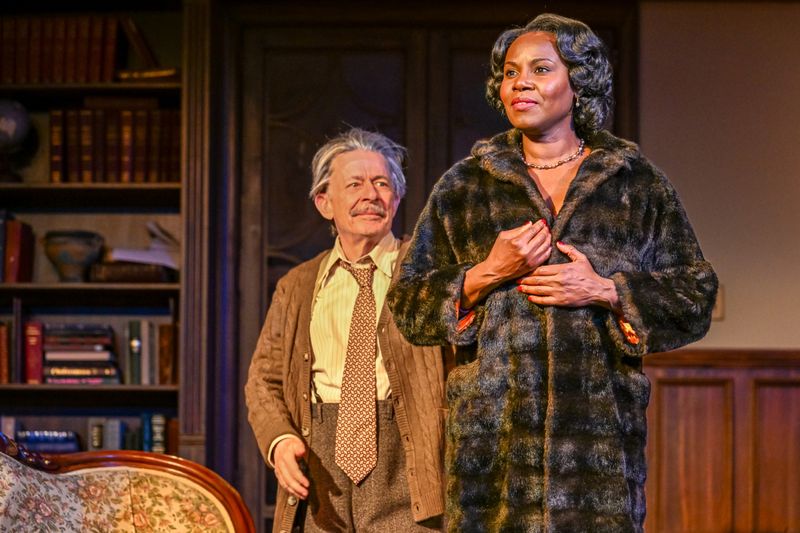
Opposite her, John Leonard Pielmeier’s Einstein is delightfully rumpled, funny, absent-minded, and unexpectedly touching. Pielmeier resists the temptation to play Einstein merely as an icon of genius. His Einstein is warm, impulsive, and emotionally accessible — a man whose moral clarity appears inseparable from his outsider status as both immigrant and Jew. The chemistry between Babb and Pielmeier forms the heart of the evening, and their scenes together possess an easy, lived-in charm.
Nora Cole delivers particularly fine work as civil rights pioneer Mary Church Terrell, embodying both intellectual rigor and simmering frustration. Terrell represents a more confrontational approach to justice than Anderson’s quieter diplomacy, and Cole brings a welcome steeliness to the role without sacrificing warmth. Sam Guncler’s Abraham Flexner, meanwhile, provides much of the production’s nervous energy and ideological tension. His portrayal captures the contradictions of progressive intellectuals who champion reform while remaining tethered to the limitations of their own privilege.
Brevoort’s script occasionally leans into familiar historical-drama conventions. Certain exchanges telegraph their emotional destination well before arriving there, and some debates feel shaped a bit too neatly. But a tinge of predictability proves a minor complaint when the journey itself is this pleasurable.
The production succeeds because it never loses sight of entertainment. The dialogue sparkles with intelligence and humor, and the pacing remains brisk throughout. More importantly, the play understands that history becomes most powerful when filtered through personal relationships rather than textbook rhetoric. These towering figures emerge not as monuments, but as vulnerable, funny, stubborn, frightened, and hopeful human beings.
The intimacy of Penguin Rep’s space only heightens the effect. Audiences feel less like passive observers than invited guests eavesdropping on extraordinary conversations around a dinner table. In an age increasingly dominated by division and noise, there is something profoundly moving about a play centered on listening — truly listening — to one another.
That timeliness hangs over the production from beginning to end. Questions about who belongs, who is heard, and what moral responsibility individuals bear toward injustice resonate now more urgently than ever. Yet “My Lord, What an Evening” avoids cynicism. It argues, gently but firmly, that human connection itself can be transformative.
And in today’s climate, that message may be exactly what audiences need to hear.
Photos by: Dorice Arden Madronero



Sign up for all the news on the Fall season, discounts & more...

|
The Last Five Years Arc Stages (9/25-9/25) |

|
Chris Vitarello Power Trio "The Grateful Dead" set Jazz On Main (10/02-10/02) |
|
THE ANDERSON BROTHERS PLAY RICHARD RODGERS Jazz On Main (10/10-10/10) |

|
Sunday Brunch with Jon Cobert Jazz On Main (11/01-11/01) |

|
Eugenie Jones Jazz On Main (10/24-10/24) |
|
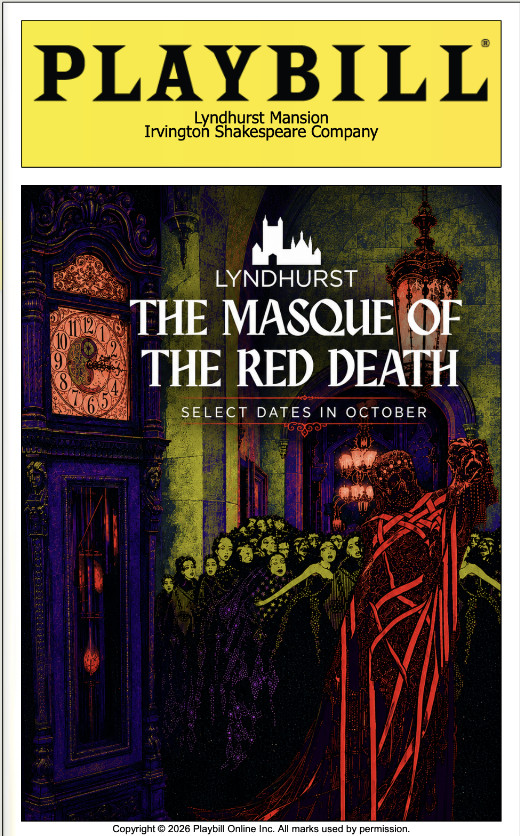
Masque of the Red Death Lyndhurst-Theater-36 (10/15-10/30) |

|
Quintin Harris Trio Jazz On Main (10/01-10/01) |

|
WCT Presents Verses & Vignettes on Friday, September 25 Westchester Collaborative Theater (9/25-9/25) |

|
The Real Thing Katonah Classic Stage (10/22-11/01) |

|
Green Day’s American Idiot Theatre on Main Street, Inc. (11/07-11/08) |

Reader Reviews
To post a comment, you must register and login.