


Interview: Richard Gibson at Valley Opera
Richard showed me the purpose for Valley Opera and the mission they strive to accomplish daily.
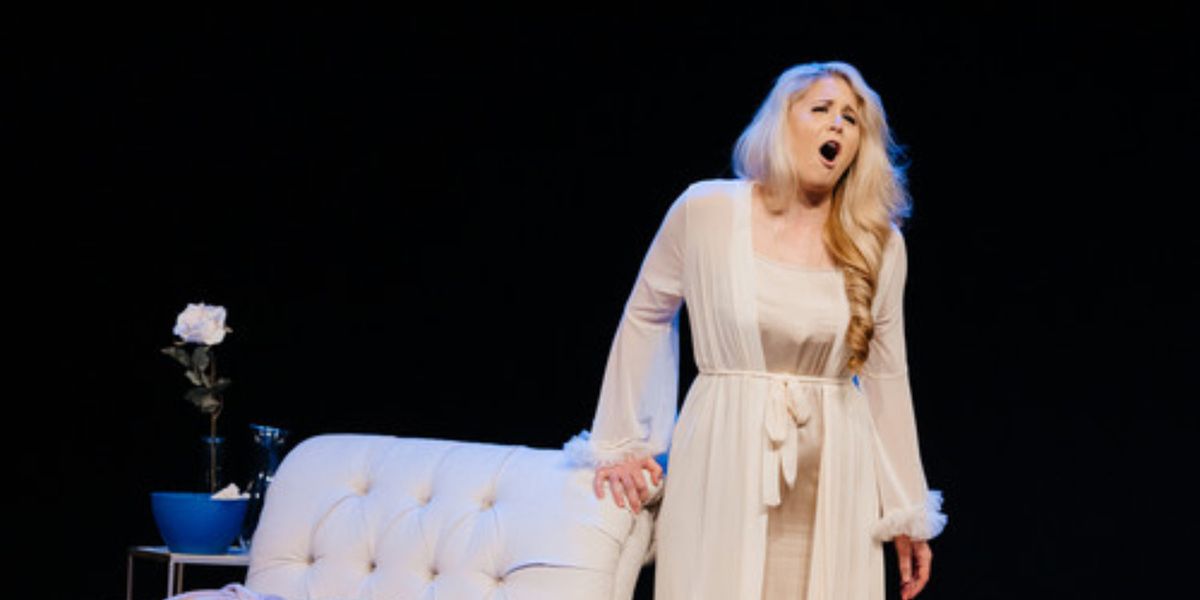
I had the privilege to chat with Richard Gibson, who leads Valley Opera as the Founder, President, and General Director. Richard led me through the history and exciting journey of Valley Opera to where they are now as an organization. He gave me a bird's eye view of the fantastic projects that the company is preparing for their upcoming season. Most importantly, Richard showed me the purpose for Valley Opera and the mission they strive to accomplish daily. Read our conversation below. Photos: Azula Raun. Website: valleyopera.org
Zach: How did Valley Opera start? What is the background and what is the story of the company?
Richard: The short story is that Valley Opera grew out of three needs: more opera performances in the Valley, more performance opportunities for the extraordinary talent here, and a desire to help redefine the narrative of life after COVID.
The longer story is a collection of the right events happening at the right time. Back in 2014, I had the distinct honor of singing “God Bless America” during Game 2 of the World Series. The attention from that performance eventually gave me the opportunity to organize a 240-member choir to commemorate the 100th anniversary of the World War I Christmas Truce. We partnered with the Lyric Opera of Kansas City, the National WWI Museum and Memorial, and the Kansas City VA Hospital. A huge thank-you and shoutout to Linda Brand for helping make that happen.
That experience showed me what could happen when music, community, and purpose came together. It also made me wonder whether I could—and should—do more with my own operatic career.
My wife, Emily, who was my girlfriend at the time, and I eventually moved to Las Vegas to follow a voice teacher, Dr. Stephanie Weiss. Eight months later, Stephanie accepted a position at Arizona State University and asked whether we wanted to move to the Phoenix area. Las Vegas and I didn’t really get along too well, so I couldn’t say yes fast enough.
Shortly after arriving in the Valley, I started working at Café Monarch in Old Town Scottsdale. It became a dream job and a very important part of our lives. Emily and I eventually got married there.
Then COVID happened.
During that period, I watched enormously talented culinary artists uproot their lives and come to Arizona so they could continue pursuing their craft. Their dedication was like an alarm clock going off in my soul, and I couldn’t hit the snooze button anymore. I realized I had gotten comfortable. I had a job I loved, but somewhere along the way I had stopped sharing an important part of who I was.
At the same time, opera organizations were struggling and performances were disappearing. That familiar declaration that “opera is dying” seemed to be everywhere. I couldn’t accept that. I still can’t.
I know personally what opera can do for someone during a time of need. I don’t believe the art form itself is dying. But I do believe some of the traditional ways we present it, grow it, and invite new audiences into it are no longer enough. Maybe it’s the Marine in me. Maybe I’m stubborn. Maybe I’m too idealistic. But I’ve never been very good at sitting on the sidelines.
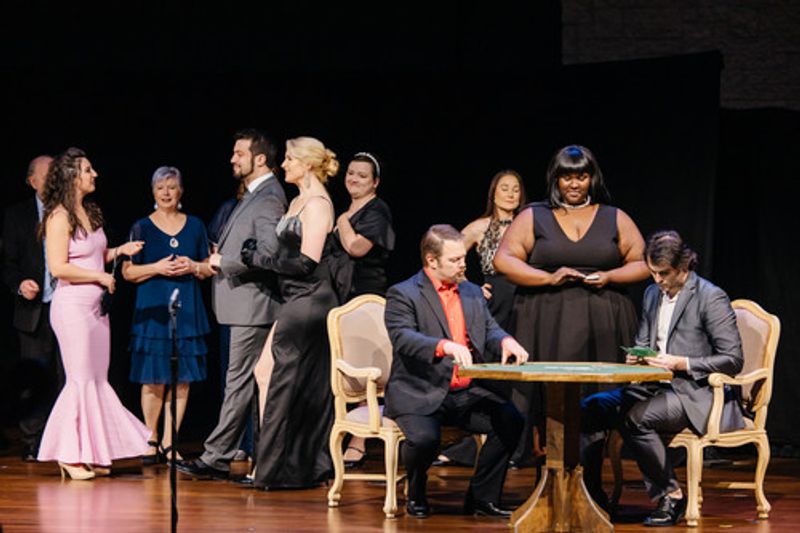
There was one more piece. When Emily and I lived in Kansas City, aspiring opera singers and emerging professionals had numerous opportunities to perform and develop their craft. When we came to the Valley, we found extraordinary talent, but far fewer opportunities for emerging operatic professionals to consistently get onstage in front of an audience.
And singers need that. At some point, you have to get onstage. You have to learn how to communicate with an audience, work inside a production, recover when something goes wrong, and perfect your craft by actually doing it.
So, there I was: feeling that I had neglected my own art, watching COVID devastate the performing arts, seeing talented local singers who needed opportunities, and remembering what I had learned about bringing artists, institutions, and communities together.
Add my stubbornness, my desire to serve, my gratitude for what opera has given me, Emily’s relationships through ASU and the arts community, and the relationships I had built throughout the Valley...
And what you get is an opera company.
We began as Chandler Opera Company. After three years of growth, it became clear that the name no longer represented the community we were serving or the future we were building. We wanted to serve the entire Valley, so we made the difficult decision to rebrand as Valley Opera.
The name has changed and the company has grown, but the purpose hasn’t: create meaningful opera experiences, give exceptional artists opportunities to perfect their craft, and help make sure opera has somewhere to go next.
Zach: What is the end goal? Where is Valley Opera headed in the future?
Richard: Well... I suppose the ultimate end goal is for Valley Opera to become such an integral part of the community that our future as an arts organization is secure.
Right now, we’re still building. We’re growing, learning, and working toward something sustainable. But our mission—what is etched upon our souls—is to enrich our community through accessible, affordable, world-class opera. That’s our mission, and we live by it.
Personally, I want to leave a positive impact on the world. Opera did so much for me that I feel driven to share it with everyone I can.
Live theatre can reach something inside us that is difficult to explain. It can give us joy, comfort us, make us laugh, help us grieve, or allow us to understand ourselves a little differently. I want more people in our community to have that experience.
We’re incredibly grateful for the people who already love opera, but part of our responsibility is also creating the next person who loves it. If we continue doing that—and if the community continues to love and support what we’re doing—we can build the stability necessary to expand our outreach.
Our veterans outreach is already very important to us. Through our Veterans Day concerts, we have raised more than $11,000 for homeless veterans in the Valley.
We’re also developing ideas for children’s outreach. I’m going to keep those top-secret for now, but if we can pull them off, I think we have an opportunity to do something genuinely exciting.
Foster care is another area we care deeply about. We want to work with organizations already doing that work and learn how opera and the arts can best serve children, foster parents, and adoptive families.
Ultimately, the end goal isn’t simply to produce opera. It’s to become a lasting part of the Valley—to bring people together, create opportunities for artists, enrich lives, and serve our community.
Zach: What are some of your favorite productions with Valley Opera?
Richard: Our Veterans Day concerts hold a special place in my heart, but that seems like a little too easy of an answer.
I would have to say our very first show, La bohème, is at the top of the list simply because it was our first show. We had never done this before. We had no idea if we were going to succeed. We just had this confidence that we were going to build something special.
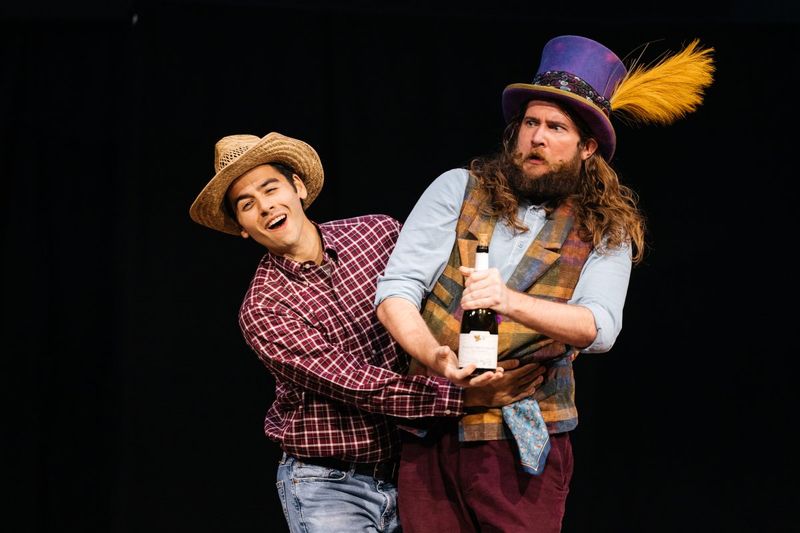
There were exactly 300 chairs in the room. We filled every one of them, and then people stood along the back wall for the entire opera. And no one left during intermission! That was an incredible start. It showed us that there really was an appetite for what we were building.
Other than that, our “Ladies Night” concert is definitely at the top of the list. Although, admittedly, the marketing name may have been questionable. I’m learning!
The first act was a chronological journey through music by great female composers
throughout history. The second act was a full production of Puccini’s Suor Angelica, whose singing roles are entirely female.
What I loved was that we could tell a story about women in classical music, introduce audiences to music they may not hear very often, showcase the incredible female talent we have right here in the Valley, and then finish the evening with Puccini. That is the kind of programming I want Valley Opera to be known for.
And I’m especially proud of my wife, Emily, who is also our Vice President. The amount of work she put into that production was mind-boggling. But that’s just what she does.
Zach: Tell me about the upcoming season. What is on the horizon for Valley Opera?
Richard: Our upcoming season is adventurous.
We begin with our annual Veterans Day concert on November 15. It’s the one concert we offer completely free every year, with a mission to raise money for veterans in need here in the Valley.
As a veteran myself, this concert has a uniquely special place in my heart. We’re joined by a community chorus of around 50 singers, and I always try to have a Marine color guard or a local Scouting America group involved. There are choral arrangements, solos, patriotic music, and—most importantly—a mission to serve our community.
On February 12th and 14th, 2027, we have our annual musical theatre concert. This year’s theme is Love on Broadway. We enjoy doing something romantic around Valentine’s Day, and it also gives us another opportunity to showcase the wonderful range of talent that lives here in the Valley.
Then, on April 16th and 18th, 2027, we have our full opera: Mozart’s Don Giovanni. Fully staged, with chamber orchestra and supertitles, this is probably the fullest expression of what we do as an opera company. Don Giovanni is my personal favorite Mozart opera, and we’re excited to present an updated take on it for our audience.
Fear not! This Giovanni will bring as much comedy as possible. As is my way.
Then, to close out the season in October of 2027, we have one of the most ambitious
projects we’ve ever attempted: Opera at the Movies. The idea is to create original silent films depicting the stories and situations happening within the arias and songs being performed live. So, while the audience hears these incredible singers, they’ll also watch the story unfold visually on screen.
It is going to be more work than any concert we’ve produced so far—which apparently means we thought it was a good idea. But that’s the point. We want to keep finding new ways to invite audiences into opera while still honoring the incredible music at the center of it all.
Zach: What is your personal journey as an artist? What is your story?
Richard: A road less traveled is probably the best way to describe it.
I sang a ton in high school and performed in musicals, but then I joined the Marine Corps and ultimately served with 3rd Battalion, 5th Marines during the invasion of Iraq in 2003.
At the time, I actually wanted to become a chiropractor like my dad and my brothers. Opera wasn’t the plan. But after my first experience with combat, sleeping became a difficult thing. I remember lying there trying to find my “happy place,” thinking back through the happiest moments of my life. And it wasn’t chiropractic. It was performing onstage.
Then my mind went back even further, to my dad teaching me about opera. We would sit for hours listening to the great singers, comparing different voices performing the same aria. Eventually, it always came back to “Nessun dorma” from Puccini’s Turandot. We’d inevitably end up listening to Luciano Pavarotti and Jussi Björling having a sing-off.
And that is what my mind went to while I was sitting in a fighting hole in Iraq trying to fall asleep after my first experience with combat.
The irony is not lost on me that I was thinking about a song whose title means “None shall sleep” while desperately trying to fall asleep. But it stuck with me. I decided right there that if I made it out of Iraq alive, I was going to pursue a career in opera. I always had a loud voice. Might as well sing opera.
When I returned from Iraq, I saved up and flew to South Africa to study with my dad’s former voice teacher, Llewellen Hansen. I stayed for six months, having two or three lessons every week. After that, I studied at the University of Missouri–Kansas City with Dr. Gustavo Halley. Within two years, I was singing professionally in the chorus of the Lyric Opera of Kansas City.
And I had an absolute blast there. I also became fascinated with everything happening around the singers: the stage, crew, costumes, makeup, props, stage management, conducting, directing, rehearsals. If there was something happening inside that opera house, I wanted to understand how it worked.
Looking back, I had no idea how important that curiosity would become.
I spent eight seasons with Lyric Opera of Kansas City while also pursuing work as a solo artist. Then, in 2014, I was given the opportunity to sing “God Bless America” during Game 2 of the World Series.
The attention from that performance helped me organize the Voices Honoring Veterans Chorus with the Lyric Opera of Kansas City, the National WWI Museum and Memorial, and the Kansas City VA Hospital. Eventually, 240 people came together to sing “Silent Night” while honoring the soldiers involved in the famous World War I Christmas Truce. Talk about a transformative experience.
That was when I began to understand that maybe my journey as an artist wasn’t going to be only about standing onstage and singing. I discovered that I could bring people together. I could build something around music. I could use an art form that had given me so much to create opportunities and experiences for other people.
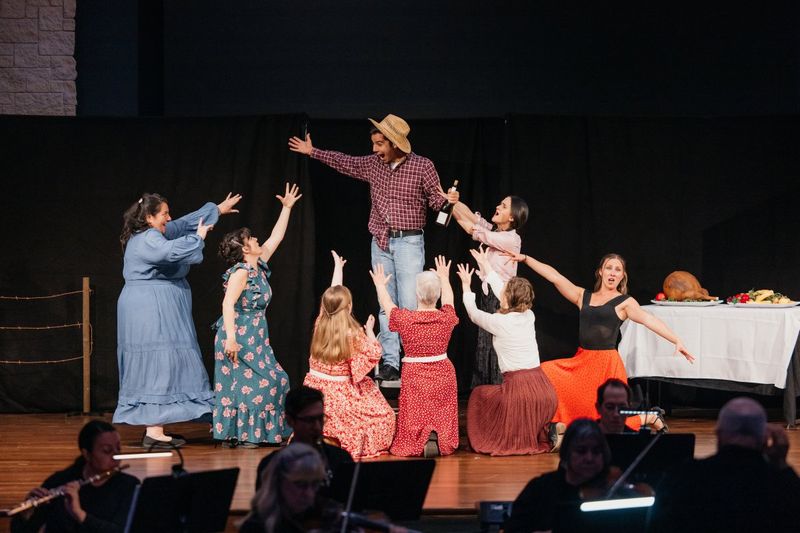
I still love performing. I always will. But somewhere along that road, I realized that being an artist, for me, also means creating opportunities for other artists, building audiences, and helping make sure this extraordinary art form has somewhere to go next.
And, well... that explains a lot about how I ended up where I am today.
Zach: What does Valley Opera bring to the Valley that makes it unique?
Richard: That’s the name of the game, isn’t it? You have to be different.
In short, we produce opera at an elevated level, intentionally design the experience with the first-time operagoer in mind, and work incredibly hard to keep it affordable. But I think what really makes Valley Opera different is our viewpoint.
I didn’t go straight from high school into a conservatory and spend my entire life surrounded by people who already understood opera. I joined the Marine Corps, served overseas, and spent a lot of my life around people who weren’t particularly interested in theatre, let alone opera.
My years in fine-dining hospitality also changed the way I think about an audience. Working at Café Monarch taught me that the product can be extraordinary, but the entire guest experience still matters. Opera is no different.
When we produce something, I’m always thinking about the person walking into an opera for the first time. Do they know what’s happening? Do they feel welcome? Are we giving them a way into the story? Are they entertained? Can they afford to come back? And are we still giving them the level of singing, musicianship, and theatrical quality that this art form deserves?
I don’t believe accessibility and artistic excellence are enemies. We don’t need to make opera less sophisticated in order to make it approachable. Maybe the goal is to make sophistication less intimidating.
Before I started Valley Opera, I called Evan Luskin, who spent decades helping lead and grow the Lyric Opera of Kansas City and is someone for whom I have tremendous respect. I asked him what it takes for an opera company to succeed. His advice was wonderfully simple: “Whatever you do, be different.” Well... if I’m anything, I’m different.
Emily brings the balance and expertise to the company. She is our Vice President, my teammate, and someone with an enormous depth of knowledge about opera. Her skills are integral to the success of the company and the quality of our productions. Then we surround ourselves with extraordinary singers, musicians, directors, technicians, and artists.
My job is often to get the right people into the room, give them an opportunity, and then get out of the way enough for them to do what they do best.
That includes local artists. Of all the singers and performers Valley Opera has hired since we began, only three have had no prior connection to the Valley. Everyone else has lived here, studied here, worked here, or had some meaningful connection to this community.
Artists need stage time—roles, audiences, opportunities to succeed, fail, adjust, grow, and come back stronger. I’m incredibly proud that Valley Opera can be one more place where that happens.
For our audiences, we remove unnecessary formality wherever we can. We explain things when explanation helps. We guide people into the art form rather than assuming they already know the rules. We bring in as much comedy as the piece will allow—sometimes probably as much as I can get away with. And we never forget that somebody bought a ticket because they wanted to have a great experience.
Ok. Yeah. Sure. Fine. I’m probably going to teach you a little about opera along the way. But hopefully you won’t realize I’m doing it.
People who already love opera can come and hear great music. But someone who has never seen an opera before can sit right beside them and never feel as though the evening wasn’t created for them too. We don’t only want to serve opera lovers. We want to create the next one.
We also have a wonderful relationship with Arizona Opera and have collaborated with them on a number of occasions. Joe Specter helped establish that relationship, Brian DeMaris has continued it, and we are proud of it. We believe a rising tide lifts all boats. More opera from one organization doesn’t have to mean less opera for another.
If more people in the Valley are seeing opera, more artists are getting opportunities, and more people are discovering that this art form belongs to them too, then all of us benefit. Valley Opera wants to make extraordinary opera feel like it belongs to everyone.
Zach: Tell me about the implementation of musical theatre into your programming.
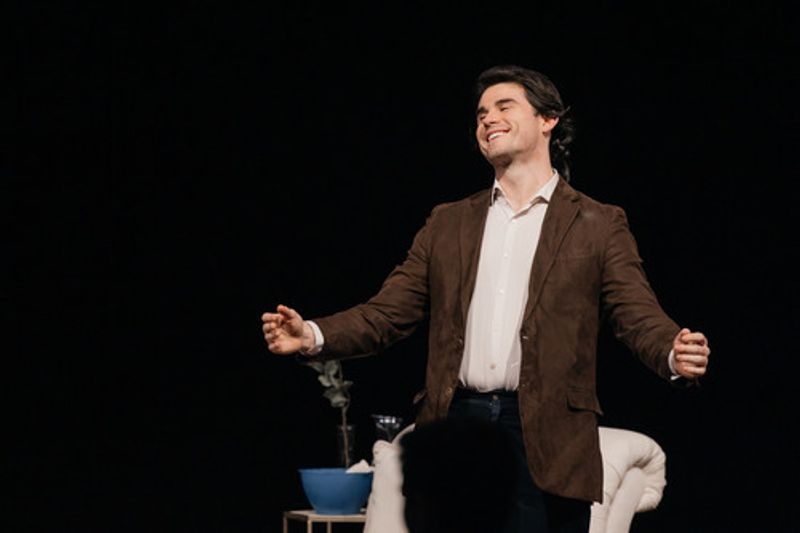
Richard: It’s a no-brainer for us. We love it. The audience loves it. And it gives us another opportunity to showcase the incredible talent we have here in the Valley.
Musical theatre gives me an opportunity to show off—I mean, showcase—another group of artists who absolutely deserve to be shown off.
I’m not the kind of person who thinks every musical theatre role needs to be sung by an opera singer just because we happen to be an opera company. Musical theatre has its own artists, style, and skill set, and the musical theatre community here in the Valley is incredibly strong.
I want Valley Opera to be another place where those performers can work, perform, and share what they do with audiences who might not know them yet. So, musical theatre people reading this: please get in touch with us. I want to know who you are.
Another thing I love about musical theatre is the variety. There is SO much great music out there. And I don’t mean to step on anybody’s toes, but the big shows don’t have all the good music.
There is beautiful, funny, strange, moving, clever, and just plain fun music scattered throughout the musical theatre solar system.
And please know: I do not fancy myself a musical theatre expert. I am not. But I love it. I respect it. And I know how to put on a good concert.
It also gives us another doorway into Valley Opera. Someone may come because they love Broadway and have never had any interest in opera.
Great. Come for Broadway. Have a fantastic night. Meet our singers. Get comfortable with who we are.
And maybe the next time we’re doing Mozart or Puccini, you’ll think, “You know what? I liked those people. Let’s give this opera thing a shot.”
That’s a win.
Musical theatre lets us serve more artists, reach more people, give our audiences more variety, and have a ridiculous amount of fun doing it. And yes... we’re paying for the rights anyway. Might as well put on a heck of a show.
Zach: What are some of your favorite memories from Valley Opera?
Richard: I mean, how do I even begin? There are so many.
Some of my favorite memories aren’t even performances. They’re the phone calls. There have been so many times when we’ve called an artist to offer them a role or a place in a concert and you can hear in their voice that you just made their day. Those moments make a tremendous amount of the hard work worth it.
But if I had to choose one memory above all the others, it would probably come from our “Ladies Night” concert and our production of Suor Angelica.
At the end of the opera, the spirit of Angelica’s young son appears to her. Earlier, we learn that he has died. Not in real life! In the opera.
Angelica, overcome with grief, poisons herself, realizes what she has done, and cries out to God for forgiveness. Then her son appears. It is one of those gut-wrenching, tears-falling moments Puccini knew how to create better than almost anyone.
The young boy who played Angelica’s son convinced a few of his school friends to come see the opera. We didn’t turn it into a children’s version. We didn’t change the language or rebuild the production around them.
We trusted the opera.
The next day, someone showed me a photograph of one of those boys sitting in the audience. He was completely captivated. I mean, this young man was ALL IN on what was happening on that stage.
That photograph is one of the most precious things to come out of my experience running an opera company. Because there it was: a young person who probably walked into that room having no idea whether opera was for him was completely absorbed in Puccini.
And please don’t misunderstand me. I didn’t do that. I helped provide the groundwork for it to happen. But the singers, orchestra, director, musicians, production team, and everyone who put their talent into that performance did it. All of those people came together, and for at least one moment, opera reached that kid.
When I talk about wanting Valley Opera to make this art form accessible to people who have never experienced it before...
That’s what I mean.
Zach: Anything else you’d like to share?
Richard: I think the last thing I would want people to understand is that we don’t view Valley Opera as existing on an island.
For whatever reason, we artists have a tendency to divide ourselves into camps. Opera versus Broadway. Theatre versus film. Classical music versus popular music. Everybody defending why what we do is harder, more important, more sophisticated, more popular, or more deserving of attention.
I don’t think that serves anybody.
My father taught me an idea when I was young that has always stuck with me. Think about a flower. The roots can’t do the job of the stem. The stem can’t do the job of the leaves. Each part has something it is uniquely equipped to do, but none of them can produce the flower alone. Man, I love that.
Opera may be the greatest example of that idea I know. Think about what it takes to create one performance: singers, musicians, chorus, supers, stage managers, stage crew, costumes, props, scenery, lighting, marketing... And the, and the, and the.
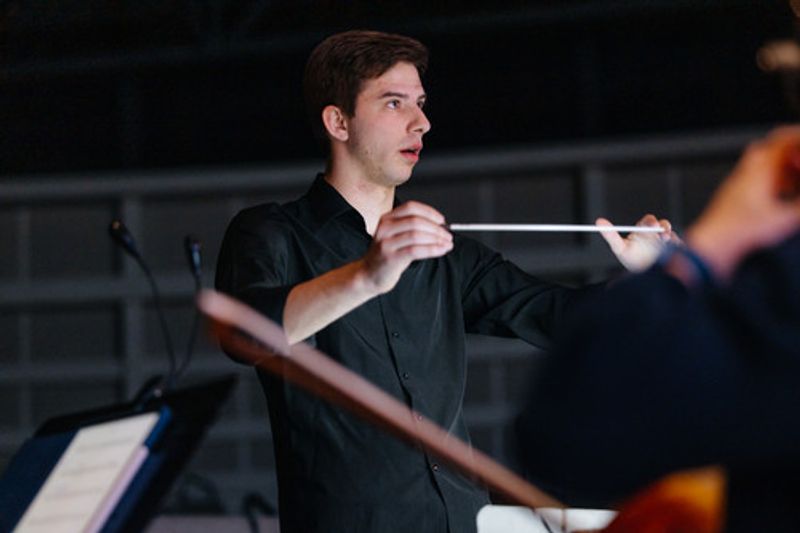
Then somehow you put all these people together, give a conductor a stick, 64 musicians, eight soloists, a 24-person chorus—I can dream, OK!?—and everybody agrees to work toward the same thing. And when a team is focused on the same mission, all dedicated to the same outcome, giving everything they’ve got, something extraordinary can happen.
That is what I want for the arts in the Valley too.
I don’t want Valley Opera to succeed because another opera company, theatre company, symphony, ballet, film, or musical theatre organization doesn’t. I want us all to succeed.
I want us buying tickets to each other’s shows. I want artists moving between organizations. I want audiences who discover us to discover somebody else because of us, and vice versa.
Because if we’re all fighting over the same piece of the pie, we’re thinking too small. Let’s make the pie bigger.
I would love to see the Valley become known nationally as a place where live performance flourishes—where extraordinary artists want to live, audiences are adventurous, organizations collaborate, and the arts become an integral part of what defines this community.
Valley Opera has its part to play in that.
We’re going to keep doing our thing. We’re going to be different. We’re going to make opera approachable, affordable, entertaining, and artistically excellent. We’re going to create opportunities for artists and try some things that might sound a little crazy.
And we’re going to cheer for everybody else too. Because ultimately, I don’t just want Valley Opera to win. I want the Valley to win.
Sign up for all the news on the Fall season, discounts & more...
|
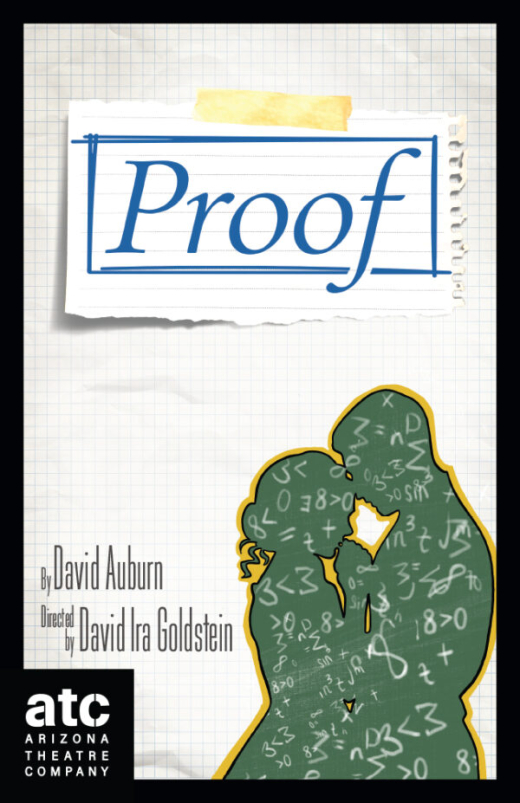
Proof Temple of Music and Art (9/27-10/17) |
|
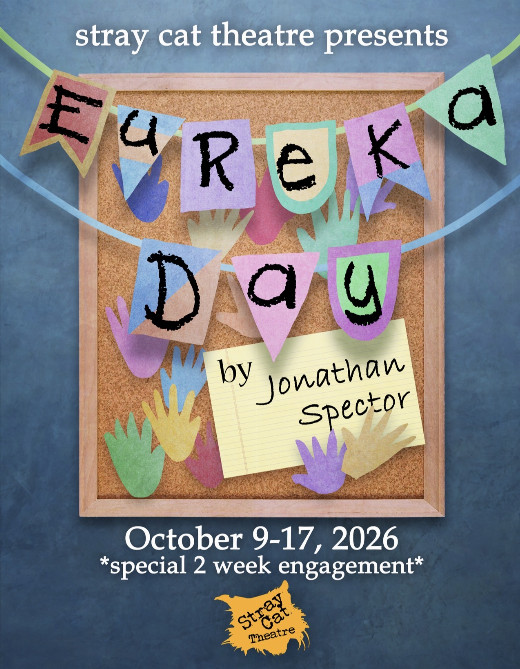
EUREKA DAY Stray Cat Theatre (10/09-10/17) |
|
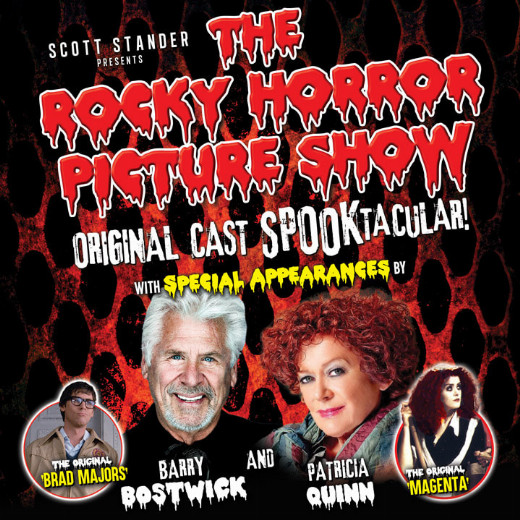
Rocky Horror Picture Show Original Cast Spooktacular Tour with Barry Bostwick and Patricia Quinn ASU Gammage Theatre (10/09-10/09) |
|
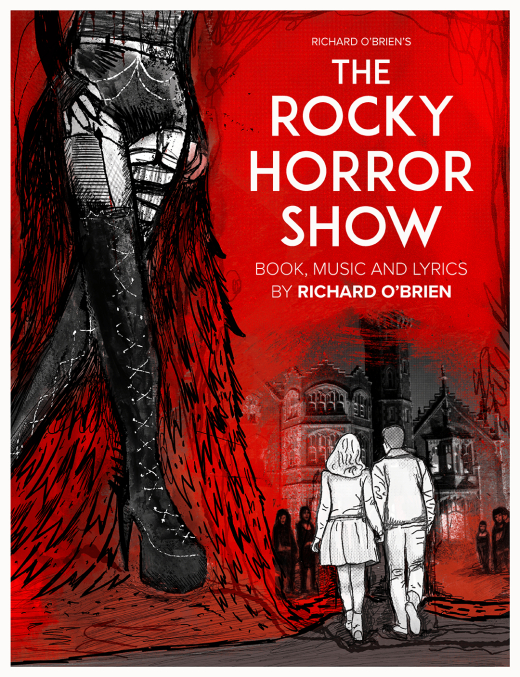
The Rocky Horror Show Marroney Theatre (10/11-10/25) |
|
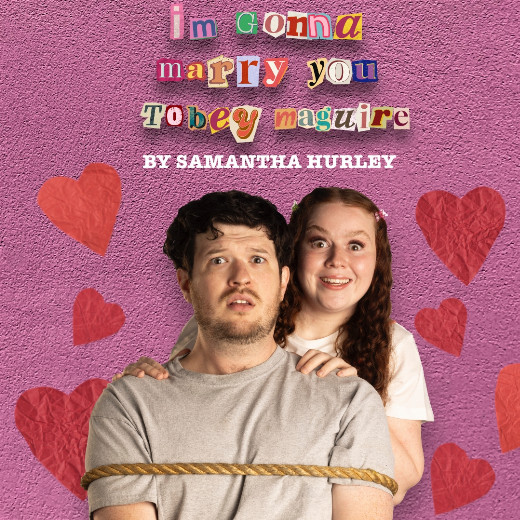
I'm Gonna Marry You Tobey Maguire The Scoundrel and Scamp Theatre (9/24-10/11) |

|
Bright Star Hale Centre Theatre Arizona (7/09-8/14) |

|
Stop Kiss Tornabene Theatre (10/15-12/06) |
|
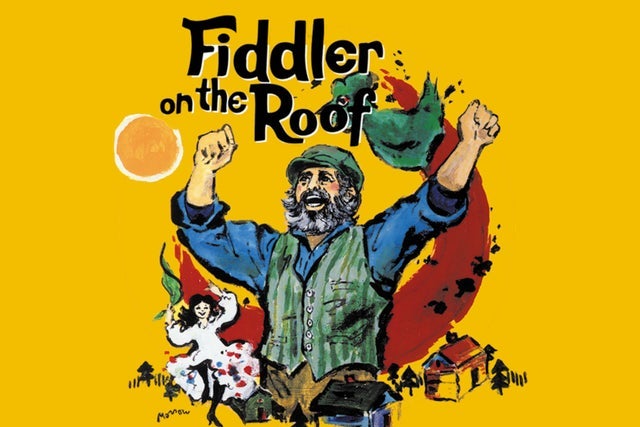
Fiddler on the Roof Chandler Center for the Arts (3/12-3/14) |
|
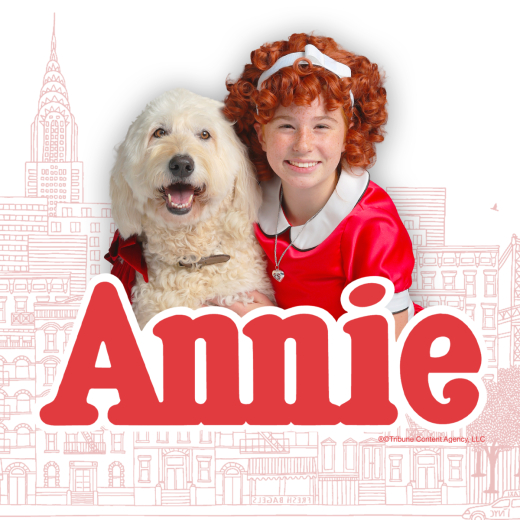
Annie Hale Centre Theatre Arizona (10/09-11/21) |
|
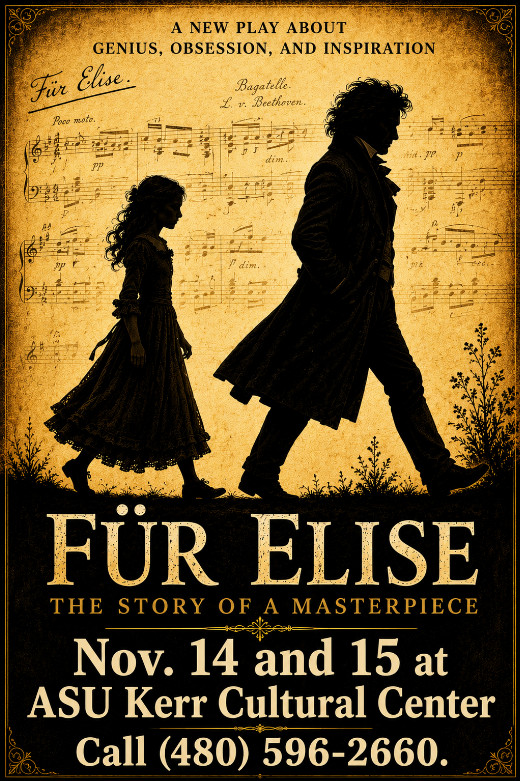
"Fur Elise: The Story of a Masterpiece" ASU Kerr Cultural Center (11/14-11/15) |
