


Review: A Playful Story of Grief in KAKEK DAN PERAHU KUNING
On March 14, the performing arts community WAKTUNYA MAIN put on a production of KAKEK DAN PERAHU KUNING (“The Old Man and the Yellow Boat”) at Galeri Indonesia Kaya.
Review by Rakaputra Paputungan.
On March 14, the performing arts community WAKTUNYA MAIN put on a production of KAKEK DAN PERAHU KUNING (“The Old Man and the Yellow Boat”) at Galeri Indonesia Kaya. This production is a rerun, following the show’s debut at Festival Musikal Indonesia 2025.
The creative minds behind KAKEK DAN PERAHU KUNING were Kidung Larasati as scriptwriter and art director alongside Rikat Parikesit as director and Music Composer. The show originally started as a puppet musical back in 2023 and had gone through multiple revisions.
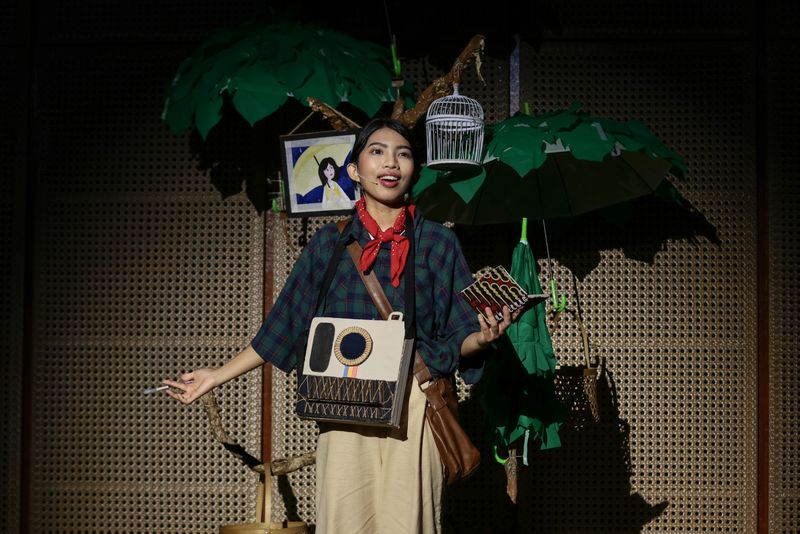
The show opens with a journalist, Juni (Kidung Larasati), who’s reporting on a tourism hot spot called Pulau Kenangan (“Island of Memories”). As she tries to get a boat ticket to the island, she uncovers the tale behind the island.
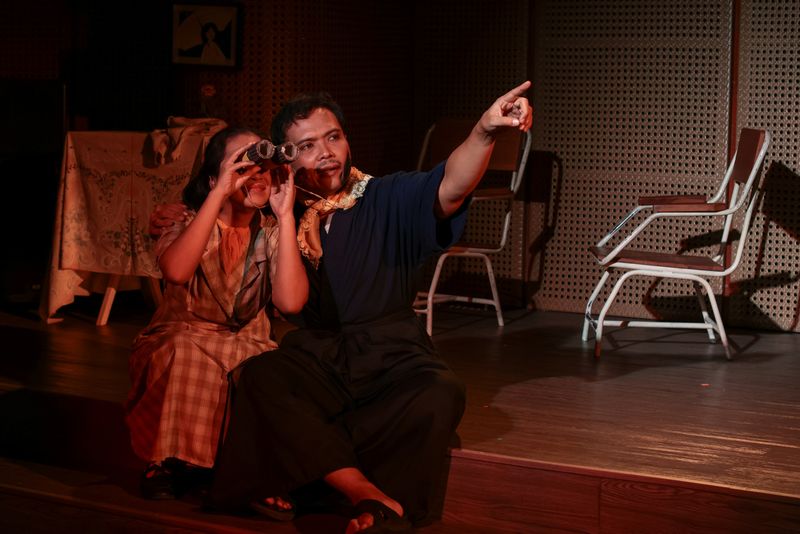
Once upon a time, lived a young boatmaker called Domi (Erik Lasmono). One day, he found an injured bird in the rain. He picked the bird up, intending to nurse it. Seeing Domi drenched from the rain, Misel (Putri Dewi) shielded him from the downpour using her umbrella. This fateful meeting soon blossoms into a romance that leads to their marriage.
Many years later, the couple has grown old. Although Domi is still enthusiastic for his work at the shipyard, his old age gets in the way; he is dismissed from work, leaving him lost. Not long after, Misel falls sick and passes away, leaving Domi alone with Sisi, the bird they adopted all those years ago.
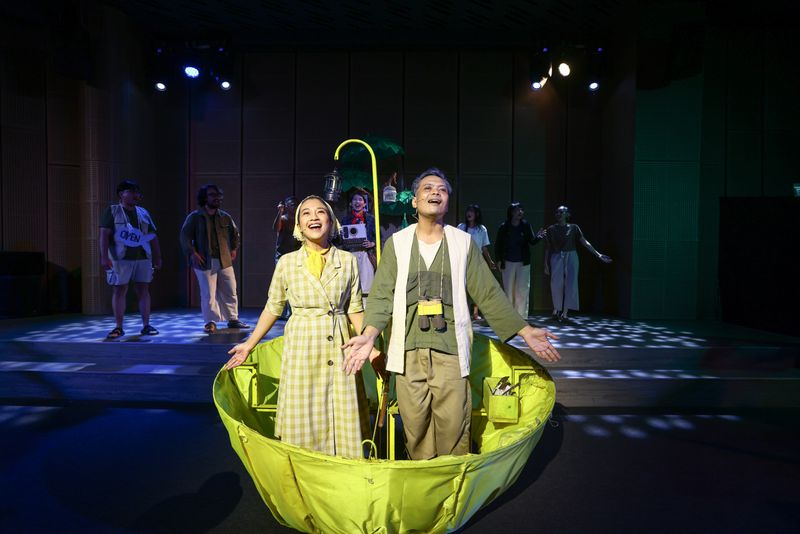
But the series of unfortunate events doesn’t cease. Domi wakes up one day to find that Sisi has escaped from its cage. Determined to get the bird back, he sets off on a yellow boat – the boat that he started building years ago, meant for him and Misel.
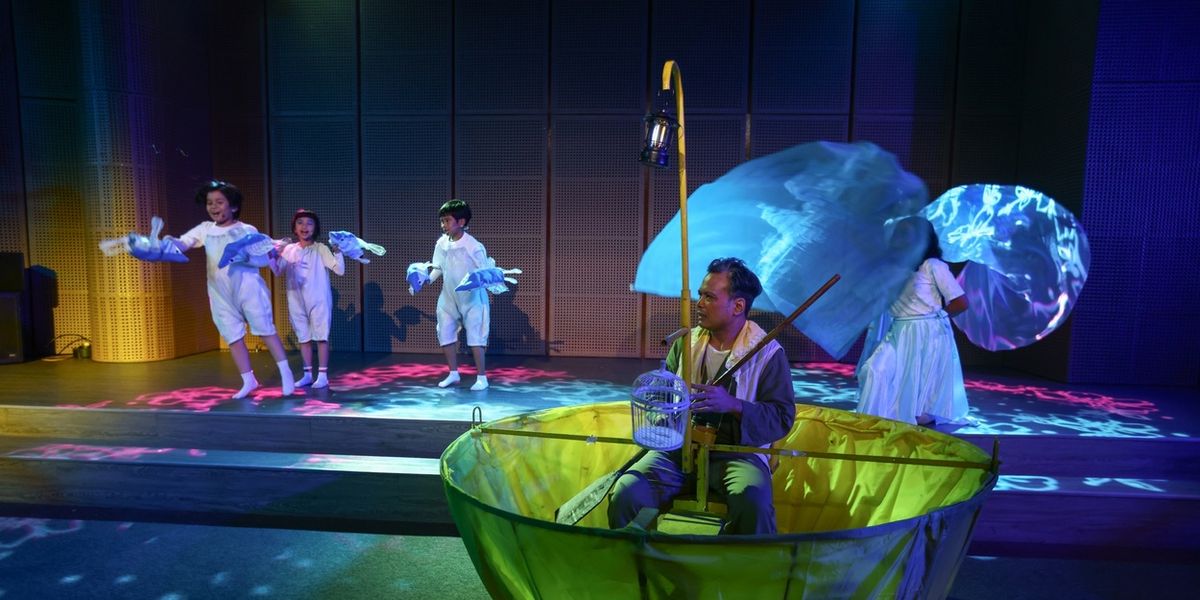
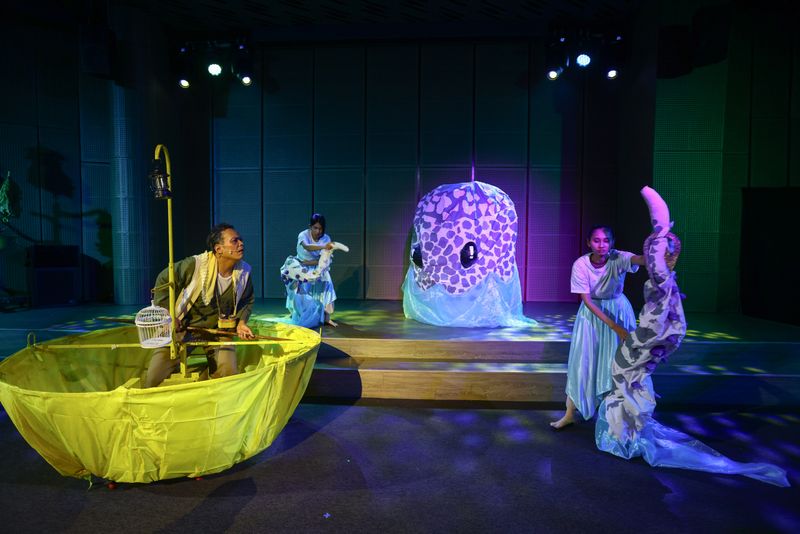
As the old man journeys through the ocean, he comes across many wonders, including a school of fish (played by a gaggle of adorable child actors) and a giant octopus. The octopus looks menacing at first, but Domi finds out that it’s only hurting because a hook is stuck in one of its tentacles. After Domi takes out the hook and dresses the wound using a yellow scarf – originally Misel’s – the octopus notices that Domi, too, looks sad. The octopus wonders if Domi is also hurting from a wound somewhere hidden.
Domi continues on his journey, finally arriving at an island full of birds. He finds Sisi perching on a tree, living happily with a partner. Domi looks at them and decides to let Sisi go, knowing the bird has found its own happiness. But he leaves two mementos at the tree: a portrait of Misel and Sisi’s open cage, for Sisi to remember him by. He also makes one promise: to visit the island whenever he misses Sisi.
We then go back to the present day. Juni is about to finish her report on the origin of the Island of Memories. To top it off, she remarks that nowadays, people come to the island to leave items of importance to honor their memories. The ensemble then comes out to sing a heartfelt song about letting go.
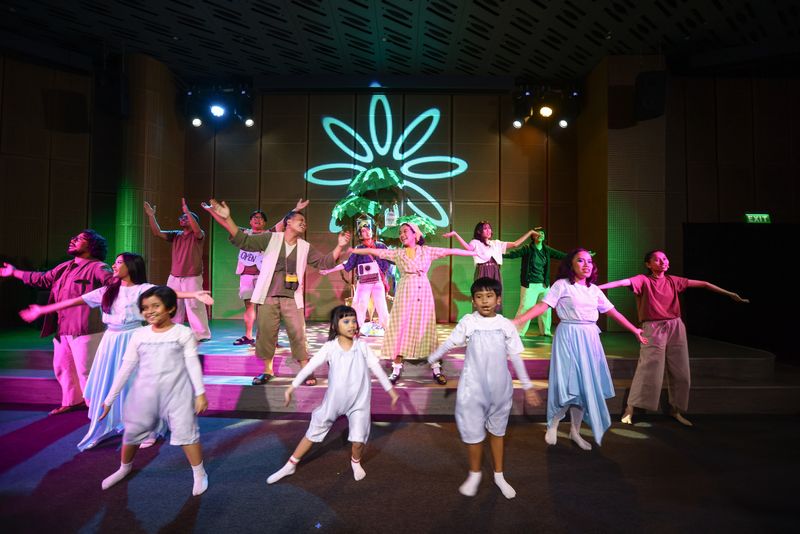
Compared to the FMI version, the story remains mostly unchanged. It is a moving story about loss, grief, and moving on, but wrapped in a whimsical tale of adventure. This approach makes the story’s themes easily digestible for an audience of all ages, including children. Hence, KAKEK AND PERAHU KUNING is a uniquely important story; many theatrical works tackle those themes, but very few, if any, are geared towards a younger audience.
And while the show largely accomplishes this masterfully, there are still a few moments that could be improved further, especially considering its brisk runtime. First, the comedic part with Domi’s coworkers at the shipyard – while entertaining with timely jokes about the national free lunch program – runs bit too long and feels too detached from the main story. Secondly, we mostly only heard about Domi and Misel’s life together through narration. Because this relationship forms the crux of the show, seeing more of their marriage would make for a greater payoff by the end.

Erik Lasmono played Domi with a pervading sense of gentleness and innocence, shaping the character into a befitting audience’s surrogate from which we observe the story’s whimsical, fantastical adventures. That being said, the subdued characterization can feel low energy to the vivacity of the other characters. While this approach is likely intentional, it makes some of Domi’s solo scenes feel tonally detached.
Putri Dewi’s loving and nurturing Misel made for a great pair with the meek Domi. It was easy to see how she was the light in Domi’s life. The couple had great chemistry, which made her loss all the more tragic. The rest of the cast also played their roles commendably; particularly the lovable and goofy giant octopus and the very excitable school of fish.
KAKEK DAN PERAHU KUNING’s music brings a storybook, dreamlike feel. The songs can feel like they come from – appropriately enough – a child’s album. While the melodies are simple, the lyrics are thoughtfully written. This is particularly apparent in the final song, which talks about how letting go can set you free. The usage of simple metaphors to deliver the song’s message makes it more accessible for a wide audience.
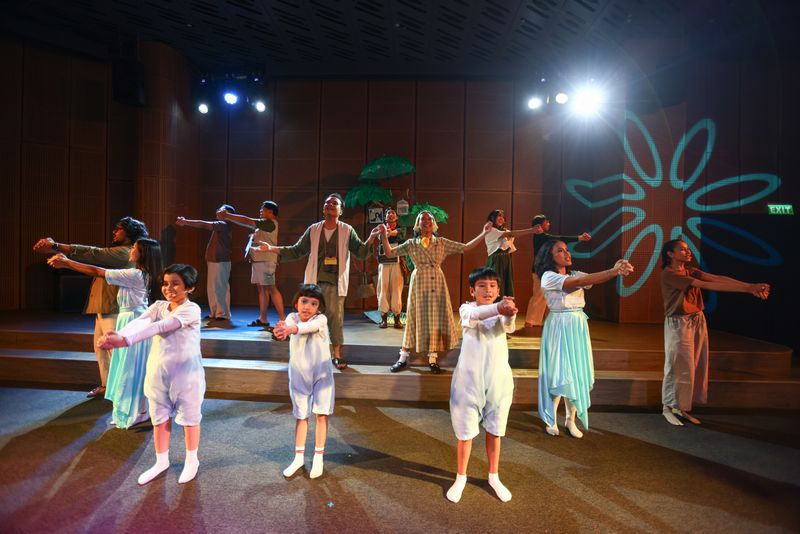
As for the artistic design, the compact venue comes with a variety of challenges. Although some of the blocking is a bit awkward – such as when the giant octopus stumbles a bit when climbing two steps of stairs – the tiny venue still overall worked for the intimate show. The usage of DIY props also made the production feel warm and welcoming. And, despite the handmade feel, all the props imbued the show with a magical atmosphere, from the shimmering blue fabrics simulating waves to the titular yellow boat (which could locomote).
KAKEK DAN PERAHU KUNING is a wonderfully crafted show made with love and care. Not only for its audience, but also for the art of storytelling itself. Presenting a story about grief that’s accessible to everyone, including children, is no easy feat, but the team at WAKTUNYA MAIN has proven that they’re up to the task. They accomplished this by blending music, acting, props, lighting, and even puppetry.
Just like Kakek Domi on his yellow boat, the voyage might not be smooth sailing, but what they found at the end is worth the ordeal.
See more BroadwayWorld in Google
Our stories show up more often in Top Stories and Google’s AI answers.
Breaking Broadway alerts by text
Get the biggest stories sent straight to your phone.
Sign up for all the news on the Fall season, discounts & more...

Reader Reviews
To post a comment, you must register and login.