


Interview: Luis Castelló, Peter Corey, and Molly Jones at High Stakes Productions
"When it comes to a murder mystery, there's so much low hanging fruit for good comedy, good improv, and character building."
Chicago is known for its stellar improv scene, and there is a spooktacular improv show happening through Halloween at The Second City’s UP! Comedy Club. After seeing Clued In: Travel Can Be Murder, I was honored to speak with three very talented improv artists, Luis Castelló, Peter Corey, and Molly Jones with High Stakes Productions, about all things improv, murder, and Agatha Christie.
The interview has been edited for clarity and length.
How did you all get started in improv, and how did you find yourselves in the middle of a murder mystery?
MJ: Growing up, I always really liked to perform. Summer camp was a big part of my life, big camp counselor energy. I loved to lead people and sing and make up camp songs. Once I learned that making things up on the spot was something I could on a deeper level with the purpose of entertaining, I got into improv a little bit in college. My older brother moved to Chicago, and I visited him a couple times, and I was like, ‘Oh, wow, this is really the city to be in if you want to be involved with comedy, specifically improv.’ So I moved here in 2010, started taking classes at the various programs across the city. Started to make teams, meet folks, get more and more involved in the different types of improv all over the city. Through that, I met our artistic director, Caleb George. He invited me in 2016 to audition for High Stakes Productions. It was that year that I started with Clued In, the improvised murder mystery, and Hitch*Cocktails, the improvised Alfred Hitchcock thriller and drinking game. I've been at it now for 16 years, and it's the most essential part of my life.
LC: I started improv because I always liked theater and acting, and improv just so happens to be a very approachable art form, in that it's more practice than memorizing. It's very community centered. What I love the most about improv is that, in order for you to be good, you have to practice how to be selfless. You have to practice how to sacrifice your joke in favor of the piece that you're creating, because then those moves are the ones that really stand out.
I joined High Stakes Productions in 2021 right after the pandemic. I used to do genre improv before. like telenovelas, so joining Clued In was a very fun transition for me. In Chicago, there's a lot of independent groups, but there are a few groups that are highways of very talented people — and High Stakes is one of those. High Stakes has close to 30 cast members, and the caliber of talent that you get to play with is uncommon. I get to play with Molly and James Dugan, who directs Blueprint at iO and performs with the Armando, the longest running show. I get to perform with Kristen and Alonso and C.J. and Audrey, and so many people who are either part of the Second City Touring Company, or understudies for the Mainstage, like Molly. We have former Mainstage members as well, like E.J. Cameron. It’s just a supercharged team in which we all stand out in our own right, but we all bring our improv expertise to tell stories.
PC: I started with improv in high school, and eventually went to school for acting. Ed Trout was the artistic director of ComedySportz at the time who gave me a way in, and I've been doing improv for way over 20 years. For me, it was kind of a weird path because I went to school for acting and was taking it very seriously. So I moved to Chicago, and I was like, ‘Okay, no more of this improv stuff. I'm gonna focus up, get into the theater scene, and I'm gonna do this.’ I got into the theater scene, and it's like what Luis was saying. I was looking for an ego-less world and sometimes it's not there. So I was like, ‘Let me go to iO, take a class, see if I want to do this more.’ I created a show that's still running. Armando's the longest running, but we're not far behind. It's called Ten Dollar Comedy at The Second City. I met C.J. Tuor, one of the guys who found Hitch*Cocktails, through another show he was directing, Improvised X-Files. This was back when we had maybe eight people in the cast. I was a substitute for a couple years with Maddie Murphy, and we just kept growing and growing. Eventually, we picked up this idea of doing another show Clued In. Luckily, we had that connection to The Second City through Ten Dollar Comedy and all the people Luis mentioned. We started running it, not knowing how long it would go, and she just kept going. It became an evergreen show for us.
The other fun part is I don't think I was ever into murder mysteries, but then you get so immersed in this stuff. I had watched a couple Hitchcock films before. I think I've watched all of them now except for four. Now I'm reading murder mystery books for fun. The ensemble has a book club, we have a movie watching party. We all saw Sheep Detective with our families and significant others, and it's just a very tight knit group. Familiarity and being close with people is everything in improv. This stuff is not easy. When people see it and think it's a magic trick, there's a reason for that. We have put in the work and the time.
Clued In is in its 10th year, this is our 3rd year doing the UP! Comedy Club. We love working with The Second City. Every time we try to change the show and enhance it. You'll never see the same murder — it's totally made up, it's all new — but we're also working the show and changing it and growing it in our own ways and bringing in new awesome cast members. We started touring too. I'm one of the oldest in the company, but it's nice to see humble beginnings. Now we get a lot of opportunities, and it's made possible because we take a big swing and we have a lot of talent, and I'm proud of that.
What about the murder mystery genre lends itself to be a good improv show?
PC: I think it's in the zeitgeist always. We try to get something that an audience will relate to and murder mysteries don't go away. We also pull from Glass Onion and the Knives Out series, Sheep Detective and stuff like that. It's got such a resonance with so many people who love that genre. And even if they don't, what's great for improv is that there's so many twists and turns with murder mysteries, and we ‘yes and’ a lot. We're dumping out so much information in these shows, and a detective can really take charge at the end and we’ll ‘yes and’ whatever that person is doing. For an improv thing, it is tricky. There's a lot of intricacy, but also the basic tenets of improv lead us to success in our shows. This show is a 90 minute show, and most people would come see it and not say, ‘Wow, it was really lacking energy.” The high paced and the fun improv, the way we like to build on each other, also works and it feeds the show.
MJ: The fun thing about doing a murder mystery is that you get extremely different and distinct characters. We get to live in those characters and have fun and play in those characters, and sometimes we get to do a French accent. We get to live in that world, and then, throughout the show, naturally find and reveal to the audience these connections that we have to each other. In yesterday's show, you knew that Peter and I were a married couple, and that Jessica and Heather were also married. That's what you knew at the beginning, but throughout the show, there are reveals, there are affairs, and these are things that we're finding together. Not only does that affect the relationship layer, but that affects what the detective is going to include in their summation. When it comes to a murder mystery, there's so much low hanging fruit for good comedy, good improv, and character building.
LC: I would love to piggyback on that because as a person of color whose English is a second language, diving into the uniqueness of these characters lets me bring my heritage and my language and my own world into this. The connections organically happen. High Stakes Productions, in general, makes it very easy for us to play. Caleb George, Bruce Phillips, Peter, a lot of the people who are in charge try to figure out how to approach it from a smart way — work smarter, not harder. How can we shape the interrogation in a way that's engaging to the audience, or we're making sure that we look suspicious ourselves? How can we structure this storyline to make sure that we emphasize travel? How can we make this character shine brighter through this monologue or shared monologue? All the pieces are very intentional because there are people who really study the genre deeply. I highly value that because for somebody who doesn't study the genre as deeply, they make me look really good because they give me all the cliff notes and key tools to deliver a strong murder mystery at the end of the day.
PC: Also, just locations. You see it in this show, but travel can be murder. We go all over the place usually, and just the fun of not being bogged with sets, the improv can be looser like that. Just the way we get to move and be in all these fun places for characters to meet, I think that's a great part of improv where the murder mystery can really go anywhere.
Do you have a favorite location that an audience has suggested?
MJ: It immediately comes to mind: Stonehenge. It's one of the Wonders of the World, so it lends itself to a great deal of mystery. But also, the six of us that were on stage, we probably don't know too much about Stonehenge, so we get to make up what it is. I came out as the narrator, and I was like, ‘Each stone, 10 feet tall, 10 feet wide,’ and that's the reality now. Now that's what Stonehenge is. We got to have some very British accents, or American tourists. We have also done in space. We've done a submarine, we've done in a sewer, in a baseball stadium. Every fast food restaurant, every supermarket. The more unique, the better.
PC: I didn't think it was going to be my favorite location, but it ended up being one of my favorite shows. It was a kindergarten. And we were like, ‘Oh, no. Well, we can't kill the kids. What are we gonna do here?’ So we all played children, and then we had a stuffed teddy bear that had been dismembered, and that was the murder. It was just such a smart way to tackle kindergarten. I think back to that show, and I was like, ‘No, I probably hated that suggestion, but we made it work.’
LC: There's so many, but selfishly, I like convent because I made it very Mexican. I played a historic character, Sor Juana de la Cruz, and I made all my white castmates colonizers wanting to steal some manuscripts from Sor Juana. What I love about it is everybody's so talented, they're like, ‘Alright bet, let's do this.’ And it was really fun.
Molly, you mentioned earlier your amazing French accent in the show yesterday. Did you know you were going to do an accent when you stepped on stage or do you surprise yourself even when you open your mouth and you're like, ‘Oh no, I'm committed to this for 90 minutes’?
MJ: I was waiting to hear who the other characters were and what their relationships were. Based on the light sequence, I knew I was gonna be speaking last. Everyone had a job on the ship, there's a juggler and the magician and the dancer, and there's the owner of the ship. My first instinct — and it's what I will always do in a Clued In show — is be in love with or married to someone. So I knew I wanted to be part of the family. My first instinct was, ‘I'm gonna be married to Peter,’ and he had said his name was Edwin St. Clair, and I was like, ‘What’s a funny name?’ And I was like, ‘Oh, Claire St. Clair.’ And I was like, ‘She sounds French.’ And then the light comes to me. That's how fast it goes. We don't curate anything. We're just inspired by what's going on around us.
PC: Molly, you're talking about such a good phenomenon with improv. You have to have 15% of your brain actively doing the admin stuff, and still taking in all this information and just being a sponge for everything that's being said. That in of itself is a muscle you have to train.
So you have that 15% of your brain that’s always calculating and doing all this mental math, and that’s just with improv in general. With a long-form improv story that is Travel Can Be Murder, there’s the added layer of actively laying out clues and motives and making deductions about the characters. There is an ending to land, there is an actual murder to solve, so it feels like within the murder mystery format, it’s an even more complex thing to keep track of. Can you talk about how this show feels different from a typical improv show?
PC: Definitely, it even feels different than Hitch*Cocktails. Especially if you're in that detective role, you're taking in a barrage of information. You're trying to make sense of it and track all the parts and bring all the pieces together that you can. So yeah, I think it's definitely a different improv brain. Something I love about our cast is we all have great show awareness. When we rehearse, we're doing something over and over again to get good at that part of the interrogation, good at the opening interludes and the prologues. When we see somebody's gotta look a little more guilty, so I'm gonna put that on them. Oh I don't look guilty enough, so I'm going to admit a secret or reveal something. Are we kind of low energy? Let's throw Peter around on the stage a little bit and bring up the energy. We call on each other. Show awareness is the extra oomph we have to do for this show, and we have to know when those things are needed.
LC: A good improviser will always ‘yes and’, but a great improviser has different ways to ‘yes and’. That's the magic of High Stakes Productions — we teach ourselves how to ‘yes and’ in a way that we help each other tell a better story. For instance, the detective is a very challenging role because you have to do a summation for 10 minutes. That's a lot of speaking without knowing what you're gonna say as you're going to each suspect. The way that we are ‘yes and’-ing, we're listening to be like, ‘Oh, the detective's trying to tell me this. I'm gonna try to ‘yes, and’ by saying ‘Of course, I tried to do that, but I didn't because I wasn't there.’ You try to listen to respond in a way that you make them look good within the world, not just with a joke or not just with a pun. What Peter was saying about the difference between Hitch*Cocktails and Clued In is so true, because one thing is ‘yes and’-ing when you're trying to build intrigue, and it is a different way to “yes and” when you're trying to build thriller and suspense. That's what makes High Stakes so special, is that you're going to ‘yes and’ obviously, it's improv, but you're gonna “yes and” in the right way for the genre. That's what makes it special.
Speaking of being the detective, do you guys like to be the detective? Do you anticipate it? Do you dread it?
MJ: It's definitely a heavier lift. That interrogation scene that you saw, you have to drive that completely — sure, everybody else is ringing bells and popping in and out — but you are on stage talking the entire time. I recently have loved being the detective because I like to take a small detail from the show and make that the reason as to here's how we knew they did it. Oftentimes, my little hack is something in a flashback that I heard the audience react to, that 30 minutes later, they probably forgot about it, but I'm gonna remind them, and they're gonna go, ‘Oh, we liked that so much earlier.’ And I'm like, ‘I know, you laughed at it!’ I've been having some fun with it recently, but it is definitely a challenge. When we get newer cast members, they're always really nervous to get their card drawn.
PC: But when it happens the first time, it’s all good.
MJ: It’s all good. It’s fun and hard.
LC: I have a love-hate relationship with it. I love it but there are days that I'm like, ‘Please do not pick my card today. I cannot detect today.’ Each of us has a different train of thought. Because of my telenovela background, I like to dive a lot into the motives of things. I make it very dramatic, and I love when my summations have a little gasp because I'm revealing that stuff. Laughter is great, but a gasp feels so good.
PC: I love being detective. I have since we started this, I think it's great. I think it's fun. I think, to Luis's part, I don't have to be extremely overtly funny and really do the bits that hard. What I can do is take care of the show a little bit. I can be a good steward and get us there at the end. Yes, the gasp is great. Sometimes I surprise myself as detective. That's my favorite, where I'm in the summation and I go, ‘What about this?’ I try to not overly plan, but to Molly’s point, you have to pull on the threads that are ripe. You just have to go for the jokes sometimes, it's fun. I love doing it. You also saw Edgar last night. He loves doing it.
The show’s format is built specifically to honor Agatha Christie with the real detective work that goes into it. Do you have a favorite Agatha Christie novel?
LC: 4:50 from Paddington. That's my favorite one, because, first and foremost, Mrs. Marple is an old lady who does not give a crap about anything. She will solve the murder from her garden delegating. It's also very cool because — talking about travel can be murder — the murder takes place on a train that is not the train that the woman was riding. She witnessed a murder on an opposite train, and that is so cool. How do you even begin to solve that type of murder?
MJ: I’m a big Death on the Nile fan. My favorite lesser known is called Five Little Pigs. It’s really neat because it is mapped over the nursery rhyme of, ‘This little piggy went to market, this little piggy stayed home.’ That is one of my favorites. If you all haven't read that, it's great.
PC: I like this one because we read this together in book club: At Bertram’s Hotel. It’s a 1960s Agatha Christie novel, so that's kind of cool. She's later in her game and really on it. I loved it because we really dive in once we brunch. There's also Prosecco flowing and good food. I just have this good memory of our crew talking about it and hanging out.
LC: This isn’t an Agatha Christie one, but the first Knives Out — I personally love that the stakes are high because the main character’s mom is undocumented. I feel like that's a very cool part of the story
MJ:. The Knives Out movies are literally classic Agatha Christie, classic Marple and Poirot. THe format of our show follows Knives Out. When we saw it together, it was like, ‘Oh, they're doing the interrogation! Here's the summation! [Molly Jones does a great Benoit Blanc impersonation here] Could I see everyone in the parlor for a moment?’ It's like, ‘That's what we do!’
PC: Poker Face on Peacock is amazing. It's a cool way to play detective, just sniff out that you can see that anybody who lies, you know they're lying. Just some cool stuff like that we take parts from because then we bring that cool detective angle in at later times.
Thank you to Luis Castelló, Peter Corey, Molly Jones, and High Stakes Productions for this interview!
Performances for Clued In: Travel Can Be Murder at The Second City’s UP! Comedy Club are Thursdays at 7:30pm and Sundays at 4pm through October 29, plus Halloween weekend shows Friday, October 30 at 10pm and Saturday, October 31 at 4pm. Tickets are $30.
Breaking Broadway alerts by text
Get the biggest stories sent straight to your phone.
Weekly top stories - unsubscribe anytime.

|
Love Story: A Tribute to Taylor Swift Raue Center For The Arts (11/07-11/07) |

|
Million Dollar Quartet Stolp Island Theatre (10/07-1/03) |

|
Rotary Rocks The Raue: James Garner's Tribute to Johnny Cash Raue Center For The Arts (10/24-10/24) |

|
The Christmas Carol Paramount Theatre (11/11-1/03) |

|
Topdog/Underdog Steppenwolf's Downstairs Theater (9/17-11/01) |

|
Blond Ambition: A Tribute to Madonna Raue Center For The Arts (11/07-11/07) |
|
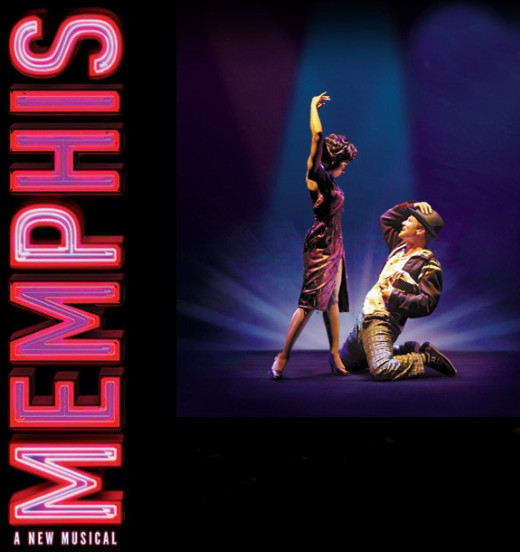
Memphis The Musical Studebaker Theater at the Fine Arts Building (10/24-10/25) |
|
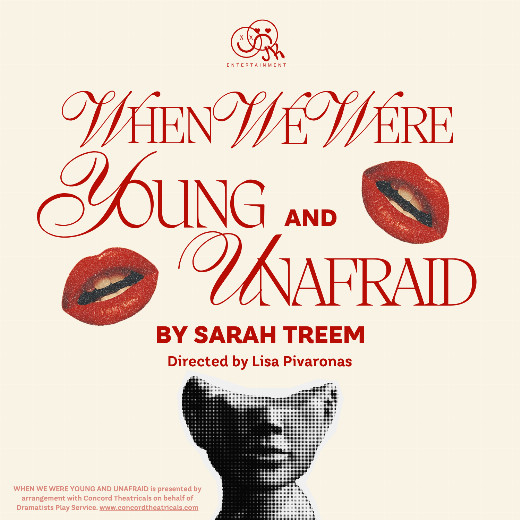
When We Were Young and Unafraid Greenhouse Theater Center (11/12-11/29) |

|
Lucy's Comedy Raue Center For The Arts (11/13-11/13) |
|
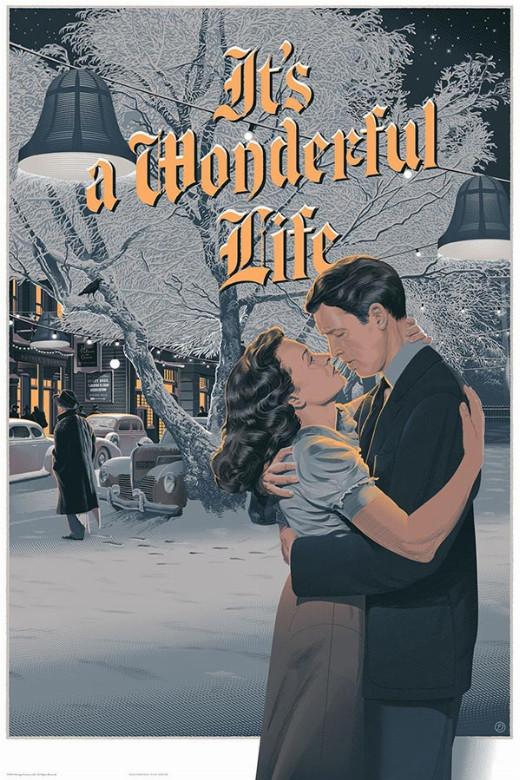
It's A Wonderful Life: A Live Radio Play Theatre At The Center (12/09-12/20) |
