


Review: ANTONÍN DVOŘÁK’S NEW WORLD SYMPHONY at Knight Theater
Dvořák’s NEW WORLD Nearly Upstaged by GRAMMY Victors
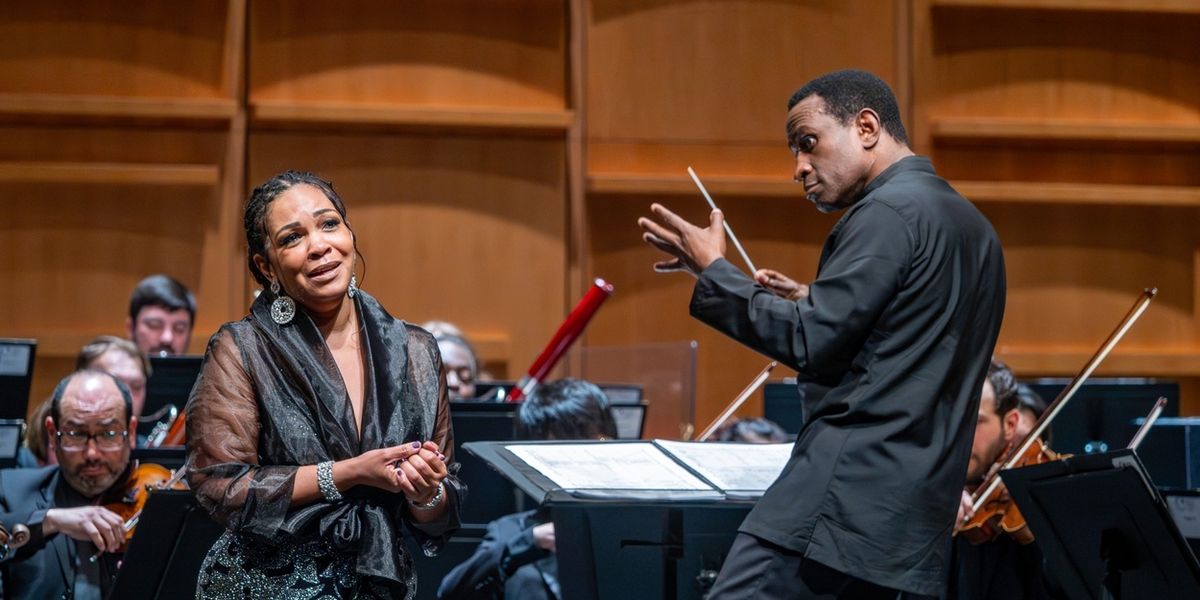
When Charlotte Symphony announced their 2025-26 schedule last March, they couldn’t have predicted the serendipity of two recent concerts a year later. Three subsequent events had to align. Houston Grand Opera’s world premiere recording of Jake Heggie’s Intelligence had to be released in August, and the recording, conducted by Charlotte Symphony music director Kwamé Ryan and starring soprano Janai Brugger, had to be nominated for a Grammy Award.
Then, five nights before Ryan was scheduled to lead Symphony in Tchaikovsky No. 5, he, Heggie, and Brugger had to win. That happened in mid-winter, when Ryan also welcomed singer-composer Gabriel Kahane to the stage as Symphony’s first Spotlight Artist.
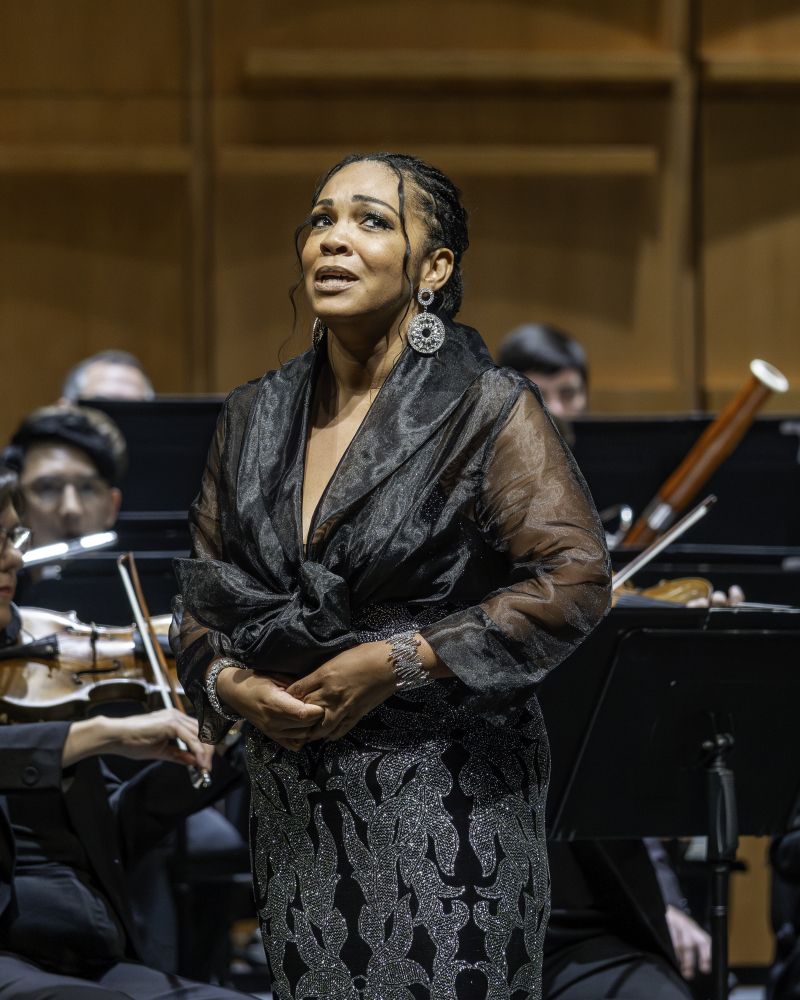
Six weeks later, at Knight Theater, Ryan and Brugger made their first joint appearance onstage since their Grammy triumph in LA. While it would have been redundant for CSO president David Fisk to introduce our maestro as a recent award winner, Ryan’s intro for Brugger served as a satisfying reminder. Although no Intelligence excerpts were superadded to the program, we drew the privilege of seeing the first live demonstrations of why they won.
Perhaps because Samuel Barber’s Knoxville: Summer of 1915 was waiting in the wings with Brugger, George Walker’s Lyric for Strings reminded me of Barber’s more famous – and equally funereal – Adagio for Strings. Both pieces also exist in string quartet versions, and both are arguably more lugubrious than beautiful. There’s a swell that perked up Ryan’s performance toward the end of the piece, but the National Symphony recording with Gianandrea Noseda conducting convinced me that some of the earlier charms of the score were left on the page.
A segment from Walker’s Pulitzer Prize-winning Lilacs would have made a more promising splash. Or a choice movement from one of his Sinfonias.
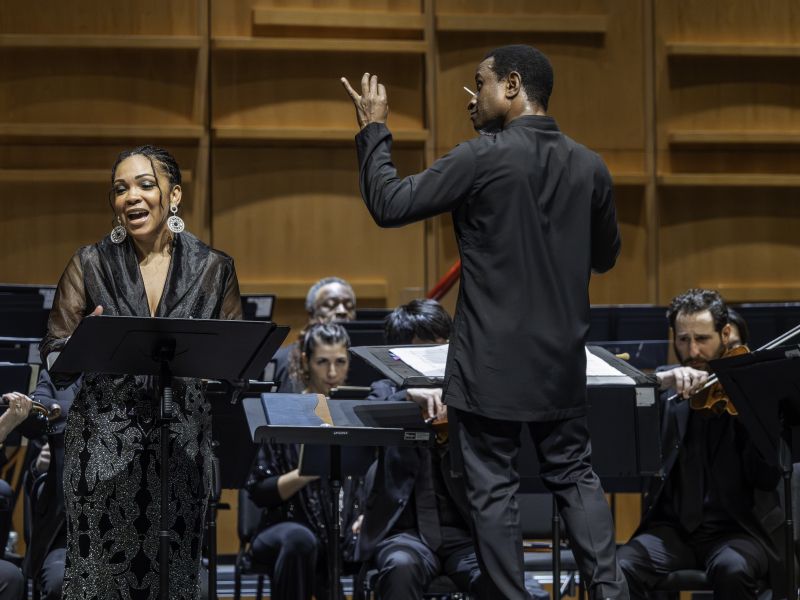
Many famed sopranos have put their stamp on Barber’s Knoxville, set to James Agee’s prose poem, including Leontyne Price, Barbara Hendricks, and Renée Fleming. Brugger’s creamy voice and the CSO’s rapt playing easily nestled Friday’s performance among these recorded renditions, only failing to match the clarity of Kathleen Battle’s enunciation and the beauty of Dawn Upshaw’s vocal, my two favorites.
So there were further heights for this concert left to scale. These twin peaks or crown jewels were operatic exploits gleaned from Igor Stravinsky’s The Rake’s Progress, with English lyrics by the estimable W.H. Auden, and from Carlisle Floyd’s Susannah. Yet Opera Carolina learned long ago that projected subtitles are a must, even for librettos written in our native tongue. That omission by Symphony toughened the climb for the audience, though all lyrics were provided in print and digitally.
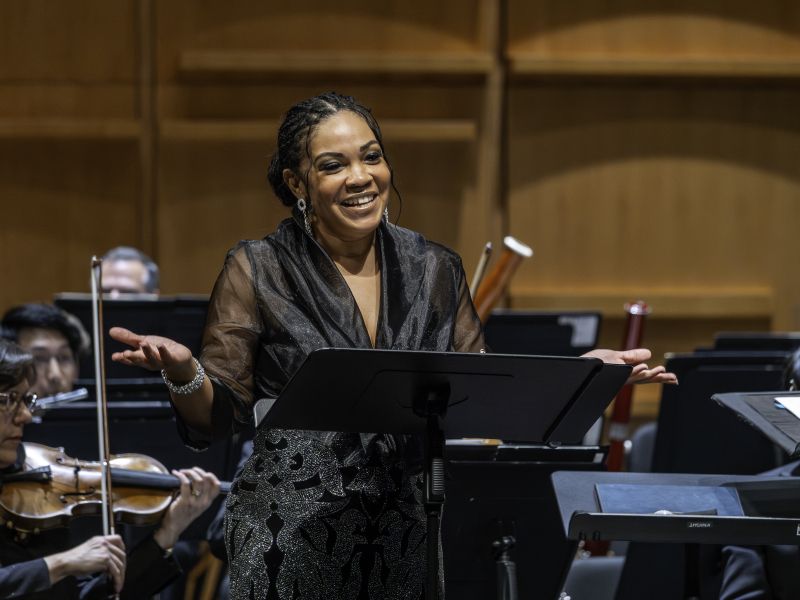
Upshaw’s rendition of “No Word from Tom” appears on the same CD as her Knoxville, and it is absolutely sensational in its coloratura, but her characterization of Anne Trulove – a throwback to Restoration Comedy – was surpassed by Brugger’s richer reading. Floyd’s “The Trees on the Mountain” was even more securely in Brugger’s wheelhouse, the one song she performed with her full-out charisma, without a score between us.
This live immersion into Floyd’s incantatory repetitions of Susannah’s heartbroken “Come back” pleas was easily on the same lofty plane as Fleming’s recording on her I Want Magic! album and not too far from the sublimity Kate Royal achieved on her Midsummer Night collection. So now the bar was as high as possible when Brugger made her final diva exit – with nothing less than Antonín Dvořák’s New World Symphony left to be played.
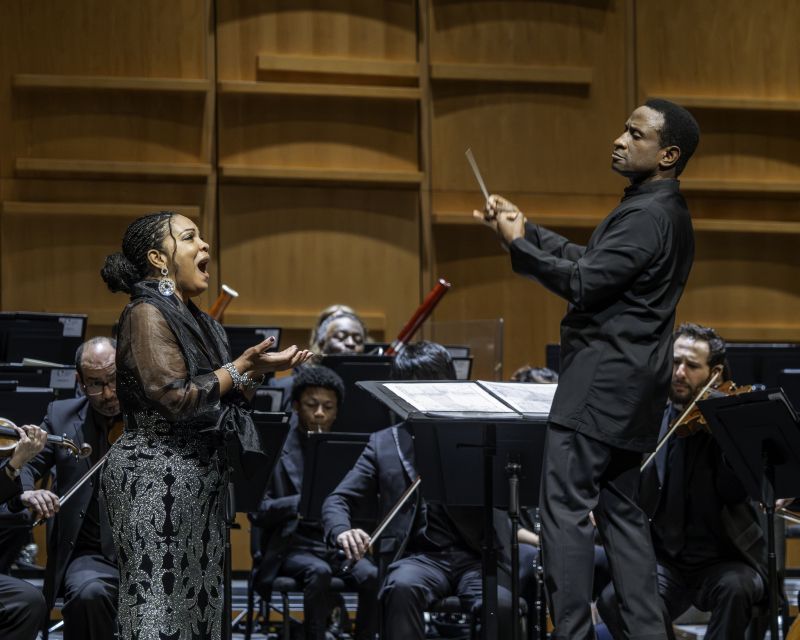
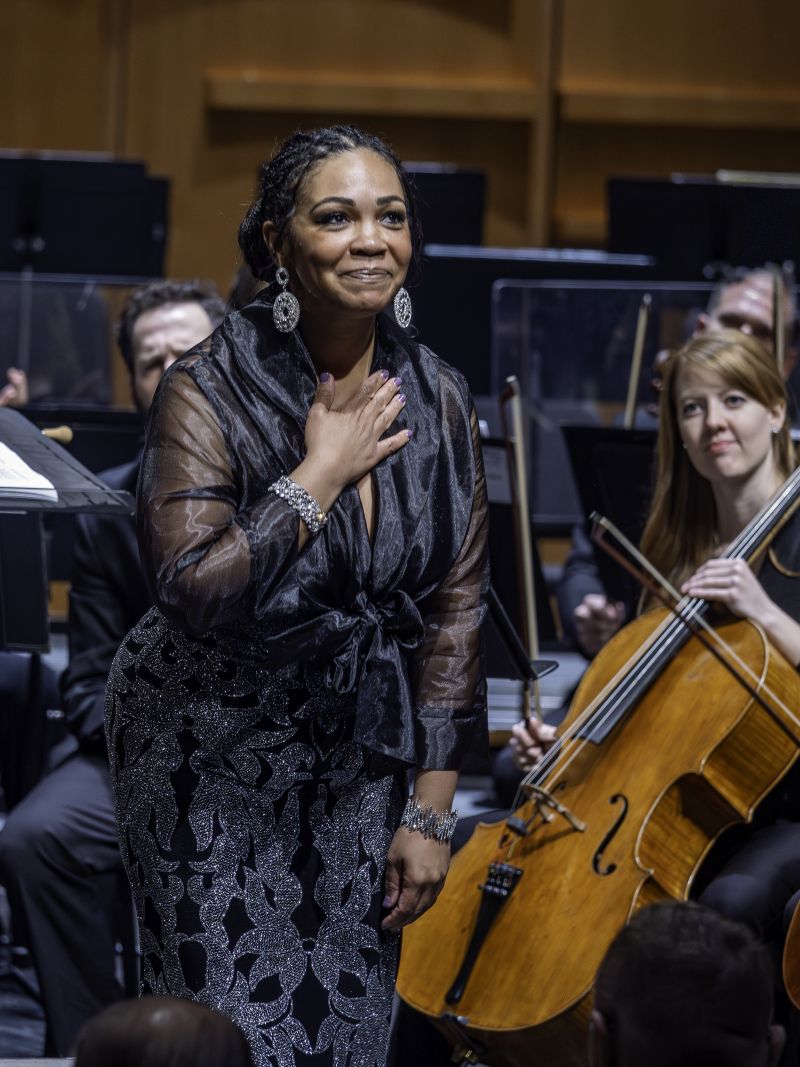
There was no clue, of course, in Brugger’s performance that indicated she was feeling any increased pressure in living up to her newest award-winning status – and performing with her co-winner for the first time since their triumph. If anything, an aura of extra confidence emanated from her when she sang the Floyd aria by heart, the extra liberation and confidence of knowing that admiration for you is, to an extent, pre-sold to your audience by your recent laurels.
You wonder whether performing in the wake of all the delights that Brugger had already brought to Knight Theater became a little daunting for Ryan when he turned the page to Dvořák’s New World, surely one of the greatest works of music ever written in this hemisphere. Or for Charlotte Symphony’s longtime oboist, Erica Cice, performing the beloved English horn solo in the second movement Largo for the first time.
Cice’s predecessor, Terry Maskin, certainly steepened the challenge. When Christopher Warren-Green last conducted From the New World in 2015, the maestro left his podium after the performance, waded through the violas, and personally embraced Maskin in recognition of his excellence.
Nor is this Symphony No. 9 anything less than a favorite among Charlotte music lovers and subscribers. An extra row was added to the Belk’s grand tier last time it was played there in 2019, with guest conductor Ilyich Rivas wielding the baton.
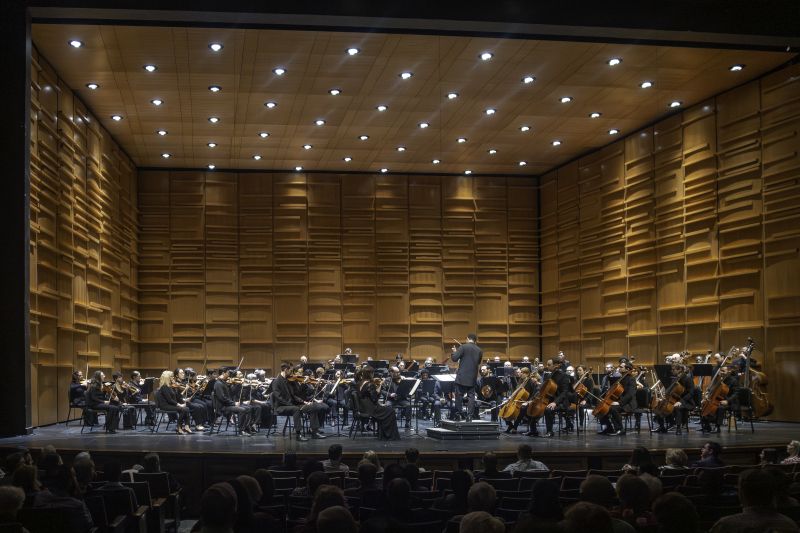
This was the first time that the New World was presented at the Knight, a somewhat more finicky venue for orchestral work. Without proper care, you can overpower the place. Properly gauged, the Knight can give back special rewards: Ryan coaxed a special crispness from the ensemble in the outer Allegro movements, and the strings and woodwinds vied with one another, luxuriating in the Largo, capped with Cice’s magnificence. One little clam peeped through from a French horn, yielding an extra note Dvořák almost could have written.
At times, the Czech composer actually sounds modest in naming his masterwork From a New World, for the music seems to create new worlds of its own – out of Nature’s mightiest forces and out of primeval silence. French horns and brass conspired in gilding the mightiest heraldry, but the strings and percussion penetrated the innards of the beast, giving it pulse and breath.
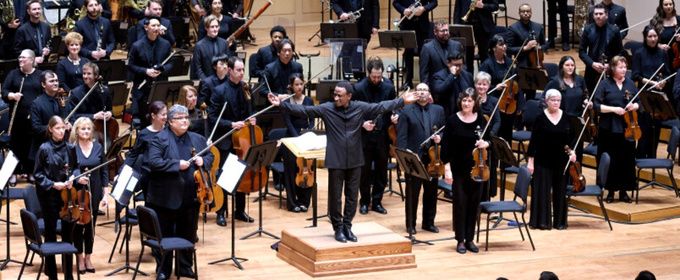
This was one walloping performance, and the audience may have been smiling at the end of it even more gleefully than Ryan. Of course, Cice was accorded the first bow.
Sign up for all the news on the Fall season, discounts & more...
|
2026-27 First Bank Broadway Season - Sunday Night Plan Steven Tanger Center for the Performing Arts (8/22-8/22) |
|
Masterworks: Mystic Horizons P.E. Monroe Auditorium (10/24-10/24) |

|
BKLYN The Musical Theatre Charlotte (5/14-5/30) |

|
Masterworks: Romantic Masters P.E. Monroe Auditorium (5/22-5/22) |
|
Come From Away Theatre Charlotte (9/11-10/04) |
|
Liberation Three Bone Theatre (11/06-11/22) |
|
Home for the Holidays: A Joyful Noise Mountain Theatre Company (12/11-12/28) |
|
2026-27 First Bank Broadway Season - Wednesday Night Plan Steven Tanger Center for the Performing Arts (8/18-8/18) |

|
A Flat Rock Playhouse Christmas Show Flat Rock Playhouse (11/27-12/20) |
|
Wicked Peace Center (4/21-5/09) |


Reader Reviews
To post a comment, you must register and login.