


Opera Philadelphia presents Premiere of THE WAKE WORLD
This September, Opera Philadelphia launches O17, the inaugural edition of its game-changing new annual season-opening festival. A twelve-day immersion that promises to "blanket the city with opera" (Washington Post), the festival kicks off new partnerships with two key local cultural institutions. Each will host one of the festival's seven operatic happenings, both of them new operas developed - like 2016's award-winning sensation Breaking the Waves - under the auspices of the company's celebrated Composer in Residence program.
The world premiere of The Wake World (2017) - a hallucinatory new one-act opera inspired by Aleister Crowley's fairy tale of that name - sees current Composer in Residence David Hertzberg and director R.B. Schlather take visitors on a fantastical journey through the Impressionist, Post-Impressionist, and early Modern masterpieces of Philadelphia's Barnes Foundation (Sep 18-25). Likewise, the Philadelphia premiere of War Stories (2014) takes place against the dramatic backdrop of the iconic Philadelphia Museum of Art. Finding common ground between 17th-century Italy and contemporary America to explore gender and identity through the prism of war, this site-specific double-bill pairs Monteverdi's Il combattimento di Tancredi e Clorinda (1624) with I Have No Stories to Tell You (2014), a modern response to it by Composer in Residence alum Lembit Beecher and librettist Hannah Moscovitch (Sep 16-23).
"An Opera Walks Into The Barnes": a preview of The Wake World Two of the early 20th century's most eccentric and polarizing artistic visionaries come together in The Wake World, which draws on the work of American chemist, art collector, educator, and writer Dr. Albert C. Barnes (1872-1951), a Philadelphia native, and British poet, magician, and occultist Aleister Crowley (1875-1947), who cultivated a reputation as the "wickedest man in the world." A larger-than-life figure, Crowley was not only a prolific writer who founded his own religion after a supernatural experience, but also an international mountaineer, recreational drug user, and individualist social critic whose libertine bisexual lifestyle led to his denunciation in the British press and eviction by the Italian government. Across the Atlantic, his close contemporary Barnes grew up in a tough, working-class neighborhood in Philadelphia, went on to earn a medical degree from the University of Pennsylvania, and made his fortune by co-developing a silver nitrate antiseptic, Argyrol, which was used to prevent newborn infant blindness caused by gonorrhea. He went on to amass one of the world's finest collections of late 19th- and early 20th-century art and create the Barnes Foundation, an educational institution dedicated to promoting the appreciation of fine art and horticulture - the latter being a passion of his wife, Laura Leggett Barnes. The over 3,000 items in his collection include 181 Renoirs and 69 Cézannes - the largest single groups of the artists' paintings in the world - as well as 59 Matisses, 46 Picassos, and major works by Degas, Modigliani, Rousseau, Seurat, Soutine, and Van Gogh. Barnes arranged his collection in an untraditional manner - the art is arranged in "ensembles" which are organized following the formal principles of light, line, color, and space.
Philadelphia premiere of Lembit Beecher's War Stories at Philadelphia Museum of Art
Now composer-in-residence of the Saint Paul Chamber Orchestra, Lembit Beecher previously served a three-year term as Opera Philadelphia's inaugural Composer in Residence in collaboration with Gotham Chamber Opera and Music-Theatre Group. Featuring sound sculptures developed with Massachusetts Institute of Technology Media Lab, his chamber opera Sophie's Forest was created - like I Have No Stories to Tell You, the newly-composed half of War Stories - with librettist Hannah Moscovitch, and is due to receive its world premiere by soprano Maggie Finnegan and the Aizuri Quartet in Philadelphia on September 8 and 9, just days before O17.
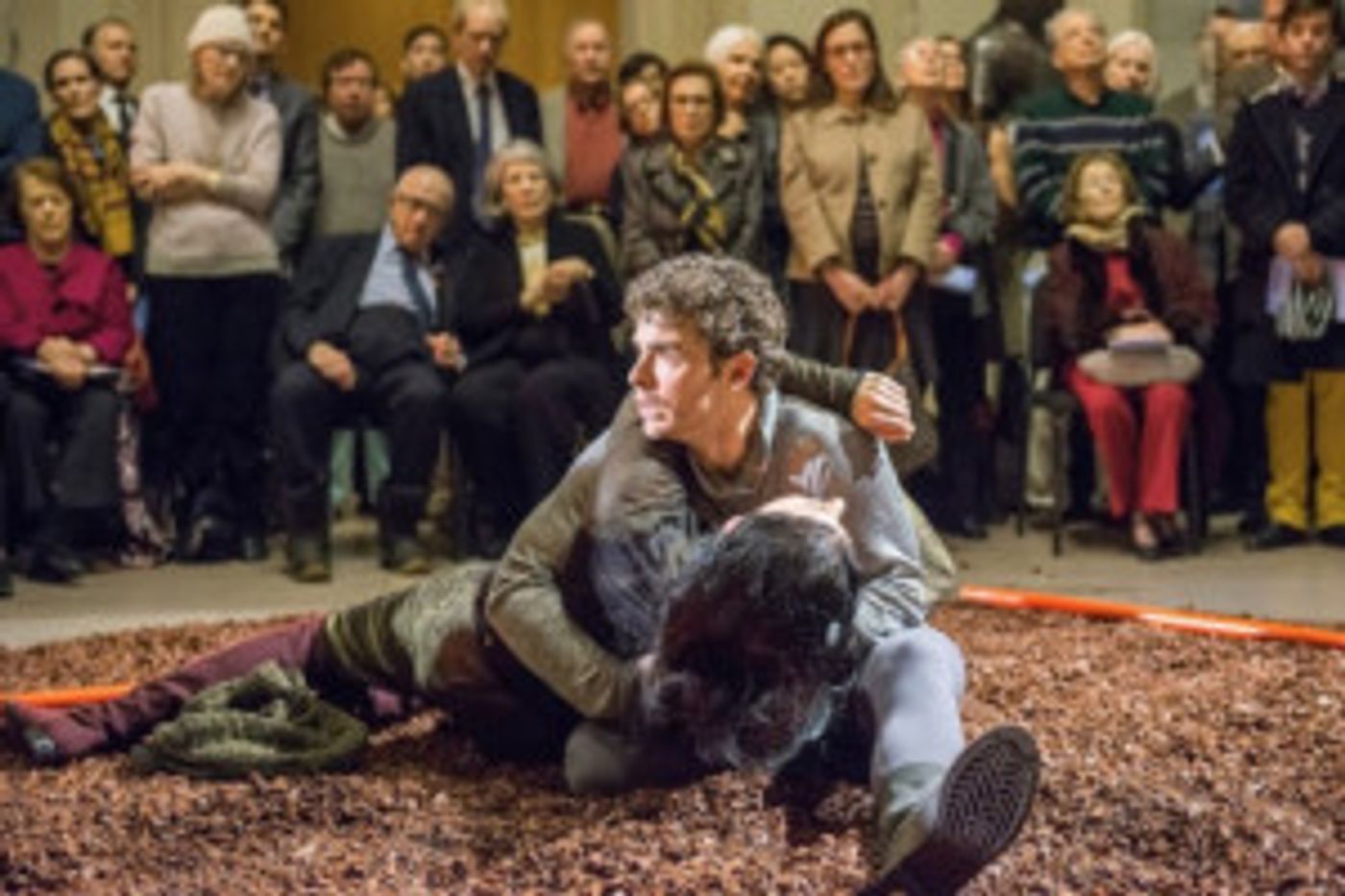
Beecher's first major dramatic work, the interdisciplinary documentary oratorio And Then I Remember, won the Opera Vista Competition for new opera, and has been produced as a concert piece, semi-staged oratorio, and fully staged opera in Ann Arbor, Houston, New York and San Francisco. His other recent and upcoming premieres include new works for Detroit Chamber Winds and Strings, and the Diderot and Juilliard Quartets. In War Stories (2014), Beecher and Moscovitch harness the evocative atmosphere of the Philadelphia Museum of Art to address the aftereffects of war through a pairing of Monteverdi with their own original companion piece. Monteverdi's Il combattimento di Tancredi e Clorinda (1624) is the story of Tancredi, a Christian soldier, and Clorinda, the woman he loves. When she disguises herself in armor to lead a successful attack on a Christian fortress, Tancredi challenges this unknown Muslim soldier to a fight. The battle is waged all night and by dawn Clorinda is mortally wounded. Only then, when she has fallen at Tancredi's feet, does he raise her visor and recognize her. Clorinda forgives him and asks to be baptized, and Tancredi grants her this wish as she dies in his arms. Opera Philadelphia brings their tragedy to life among the carved limestone cornices and twelfth-century fountain of the museum's medieval stone cloister. War Stories (photo: Stephanie Berger)Drawing on Moscovitch's interviews with soldiers and army psychologists, I Have No Stories to Tell You (2014) depicts Sorrel, a soldier recently returned from deployment in the Middle East, who paces the corridors of her home at night as she struggles with PTSD. Night after night, her husband, Daniel, awakens and comforts her. With each fresh confrontation, the two become increasingly raw and frustrated. Daniel urges Sorrel to talk to him about her experiences, convinced that this will help mend their relationship, but she refuses, clinging to a safe but lifeless middle ground between memories of the past and engagement with the present. Pressured by Daniel and haunted by memories of a fellow soldier, Noah, Sorrel gradually relents. But the story she manages to tell is only half the truth and both she and Daniel are forced to confront the chasm that has opened between them. Scored for a period instrument ensemble, and set in the museum's soaring Great Stair Hall - one of the city's most iconic civic spaces - I Have No Stories to Tell You explores the effects of war on one's identity and sense of home. When it premiered at New York's Metropolitan Museum of Art, the New York Times found the new opera "alluring," and the Wall Street Journal declared it "ingenious," admiring the way it "turned the home front into a place where nightmares hide in corners and war is never in the past." Beecher explains: "In the contemplative, stone-lined atmosphere of a large museum gallery, surrounded by strangely well-preserved relics of past battles and past lives, it was hard not to think about the aftereffects of war - the way the repercussions of brief moments can linger on for days, years and decades. Together with director Robin Guarino and librettist Hannah Moscovitch, ... I thought about the intensity of relationships between soldiers and the difficulty of coming home after time spent in a war zone. Writing this opera was a true collaboration between librettist, composer and director, and it was wonderful to see the ways in which the Monteverdi fed into each of our work, with dramatic moments, themes, and images sometimes directly mirroring the Monteverdi and sometimes standing in contrast. Musically, much of my writing sought to coax a new, unusual sound world out of these historical instruments, but I found myself continually drawn back towards a Baroque-style bass line, which emerged throughout the piece in the cello part. Perhaps the most significant influence of the Monteverdi was structural: the Monteverdi presents itself as a series of three battles or confrontations between the two protagonists. In I Have No Stories To Tell You, these battles are domestic but no less intense, and appear as four telescoping scenes, each one longer than the previous one. This was our way of capturing, in a short piece, the development of a relationship across time, and the way post-traumatic stress shapes days into a repetitive grind, a continual struggle to stay afloat. The opera was developed in conjunction with Opera Philadelphia's Composer-in-Residence program, and I am deeply thankful for the opportunities the residency provided me to workshop the piece, and in particular, to experiment with the sonic possibilities of Baroque instruments." In Philadelphia, as in New York, Craig Verm sings the dual roles of Tancredi and Daniel, in which he "let his robust, cutting baritone imbue his lines with the impassioned frustration of not being able to connect with his wife" (Opera News). He will be joined by mezzo-soprano Cecelia Hall, praised for her "easy flexibility, arresting poise and enveloping warmth" (Financial Times), who makes her role debuts as Clorinda and Sorrel, with award-winning conductor Gary Thor Wedow on the podium. As at the Metropolitan Museum, the site-specific production is by Robin Guarino, whose "direction brilliantly developed the unstable heroine's sense of anxiety" (Opera News). Timothy Rub, the George D. Widener Director and Chief Executive Officer at the Philadelphia Museum of Art, says: "The Philadelphia Museum of Art offers a rich and evocative setting for the performance of several works in Opera Philadelphia's 2017-18 season. We are committed to civic engagement and to the role we can play in fostering creative spirit in our community. A collaboration like this is ideal for us, and a great opportunity for Opera Philadelphia to engage new audiences. The Museum is a place that, uniquely, brings the art of the past into conversation with the art of the present. Therefore, it is especially fitting that we host this exciting double bill - the pairing of a classic work by Monteverdi with a contemporary work that responds to it."
* * * * *
The Wake World represents the most recent of the "ambitious, accomplished and dramatically direct" (New York Times)" new works yielded by Opera Philadelphia's innovative American Repertoire Program. Founded in 2011 with a commitment to producing a recent American work in each of ten consecutive seasons, this was established to foster a new generation of homegrown opera composers to tell authentically American stories. As a result, besides mounting East Coast premieres of such important contemporary works as Cold Mountain, A Coffin in Egypt, Oscar, and Pulitzer Prize-winner Silent Night, in recent seasons the company has also presented its first three world premieres in four decades. These are Charlie Parker's YARDBIRD, an Opera Philadelphia commission that went on to launch new partnerships with Harlem's Apollo Theater and London's Hackney Empire; ANDY: A Popera, an opera-cabaret hybrid inspired by Andy Warhol; and Breaking the Waves, a 2017 International Opera Award finalist that not only won the Music Critics' Association of North America's inaugural "Best New Opera" award, but is already reputed to be "among the finest operas of the new century" (New York Times). In addition to The Wake World, the upcoming season-launching O17 festival (Sep 14-25) features two further world premieres: Elizabeth Cree, a chamber opera by Pulitzer Prize-winning composer Kevin Puts and librettist Mark Campbell, in collaboration with the Hackney Empire; and We Shall Not Be Moved, an interdisciplinary new chamber opera that draws on the collective talents of Haitian-American composer Daniel Bernard Roumain, spoken word artist Marc Bamuthi Joseph, and peerless director, choreographer, and dramaturge Bill T. Jones.

|
August Wilson's Fences Bristol Riverside Theatre (6/01-6/20) |
|
The Lemonade Stand Fringe Hub Plays & Players (9/08-9/27) |
|
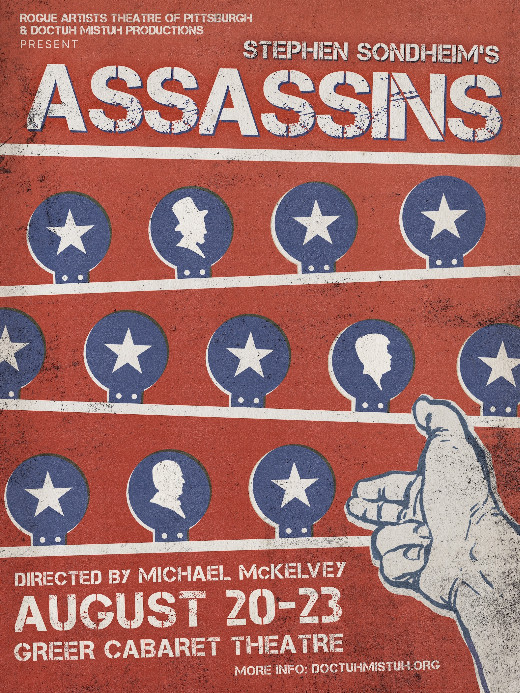
Assassins The Greer Cabaret Theater (8/20-8/23) |
|
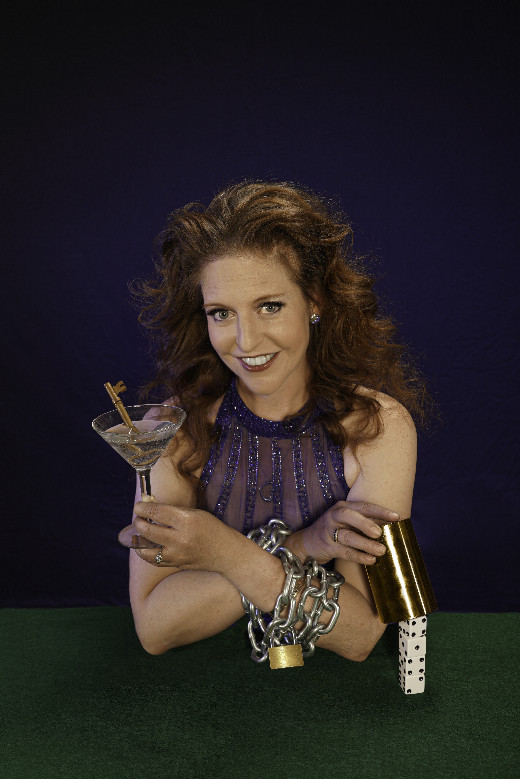
Joan Dukore ♦ Elegant Magic Smoke & Mirrors Theater (8/14-8/15) |
|
The Moth Storyslam: Nine To Five Punch Line Philly (9/01-9/01) |
|
Annie Bristol Riverside Theatre (3/23-5/02) |

|
Mamma Mia! Ensemble Arts [Academy Of Music] (9/29-10/04) |

|
Liberation Philadelphia Theatre Company (10/09-10/25) |
|
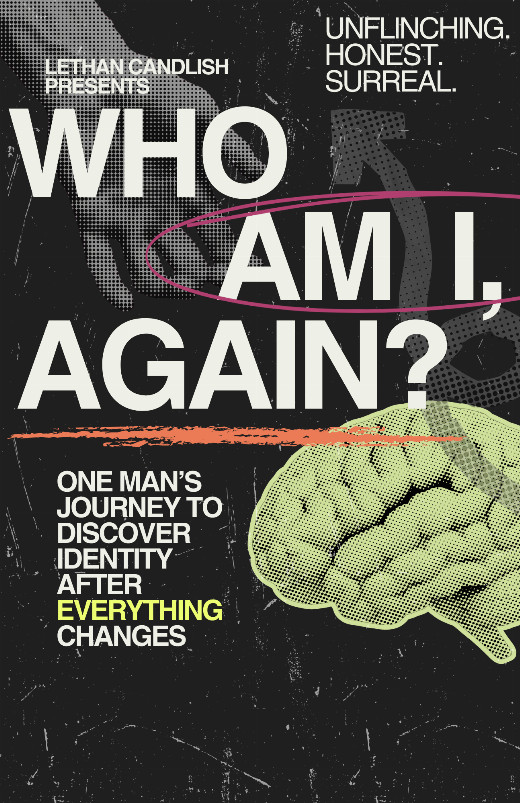
Who Am I, Again? Bloomsburgh Theatre Ensemble (8/15-8/15) |
|
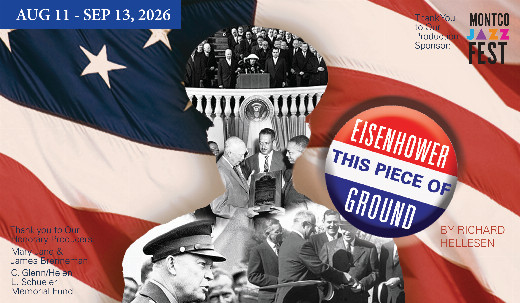
Eisenhower: This Piece of Ground Act II Playhouse (8/11-9/13) |